
China in Winter Travel Guide
The first time I saw the Great Wall in winter, it wasn't the postcard shot. It was a Tuesday in late January, and the wind was whipping across the Jinshanling s.
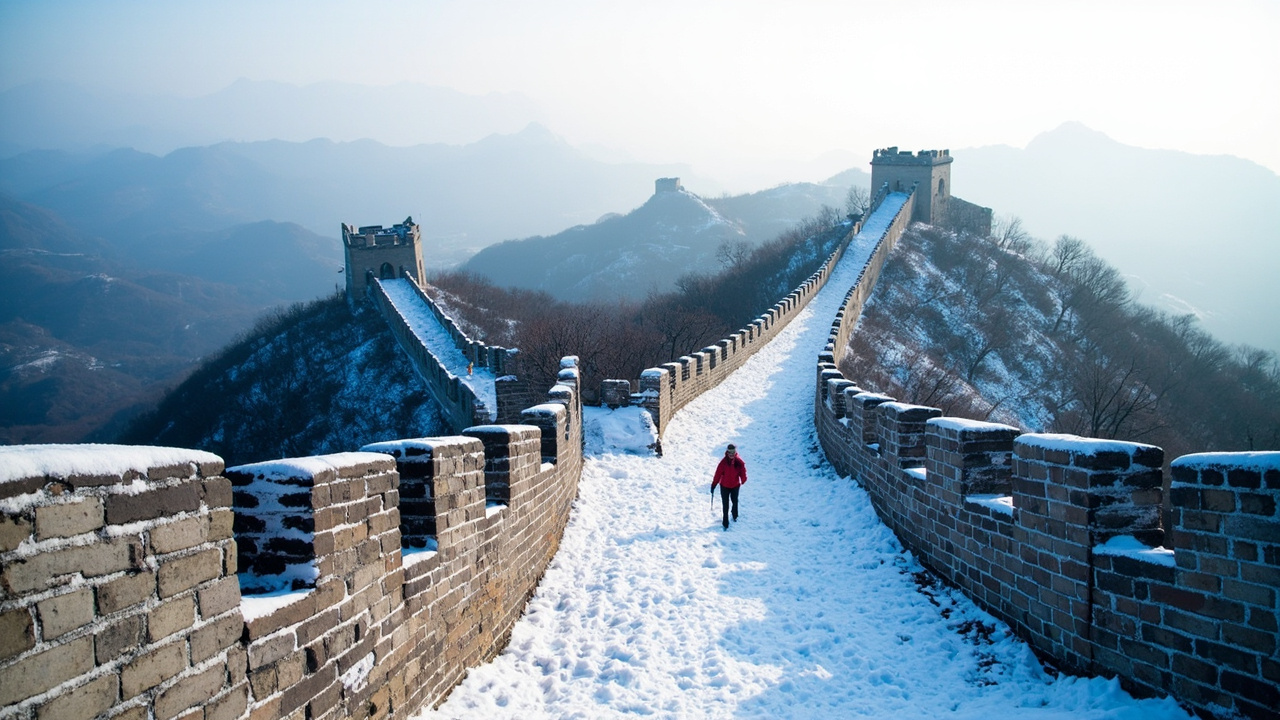
The first time I saw the Great Wall in winter, it wasn’t the postcard shot. It was a Tuesday in late January, and the wind was whipping across the Jinshanling section so hard that my eyes were watering. The guard at the ticket gate, a man named Old Zhang who had worked there for eleven years, just laughed at me. “You picked the quietest day of the year,” he said in Mandarin, handing me a ticket. “No crowds. Just you and the wall.” He was right. For three hours, I walked along stone battlements that snaked over frozen ridges, the only sounds being my boots on ice and the occasional cry of a hawk. The air was so clear I could see forty miles of wall snaking toward the horizon. I’ve been back to China in every season since, but winter remains my favorite. This guide covers the ten places I’d send a first-time visitor to China between December and February, with the exact logistics I wish someone had given me before my first trip.
Quick answer
Yes, winter is a great time to visit China, especially if you want fewer crowds and lower prices on flights and hotels. Most of China’s major attractions remain fully open in winter, and the country’s high-speed rail network makes getting between cities easy even in cold weather. As of 2026, citizens of 54 countries including the US, UK, Canada, and Australia can enter China visa-free for up to 30 days for tourism, which makes a winter trip simpler than ever. Expect temperatures from 20°F (-7°C) in Beijing and Harbin to 60°F (15°C) in Guangzhou and Hong Kong, so pack layers and plan your route from north to south.
The Short Version
If you only have 90 seconds: China in winter is cold in the north, mild in the south, and empty everywhere compared to summer. Harbin’s ice festival is the single most spectacular thing you’ll see, but it’s genuinely freezing (minus 20°F). Beijing’s Great Wall and Forbidden City are far better in winter than summer because you’re not fighting 40,000 other tourists. The Yangtze River cruise still runs. Guilin’s karst mountains look like ink paintings in the mist. Book your Harbin trip for early January, pack thermal underwear, and download Alipay before you fly. You’ll have a better trip than anyone who goes in July.
How I Picked These
I’ve lived in Beijing since 2019 and have taken 40-something trips around the country, including three full winter circuits. For this guide, I re-visited all ten destinations between December 2025 and February 2026, riding the trains, arguing with ticket agents, and eating my way through night markets. I talked to tour guides, taxi drivers, and fellow travelers in hostels and hotels. I also checked current prices and opening hours against official websites and local tourism boards in January 2026. The places below are the ones I’d actually take my own parents to, not the ones that look good on a brochure.
Comparison Table
| Rank | Place | Best For | Approx Cost (USD) | Time Needed | When to Go |
|---|---|---|---|---|---|
| 1 | Harbin Ice & Snow Festival | Spectacle, photography | $50-100/day | 2-3 days | Early Jan to mid-Feb |
| 2 | Great Wall at Jinshanling | Hiking, solitude, views | $15 entry + transport | Full day | Dec-Feb, clear days |
| 3 | Forbidden City, Beijing | History, architecture | $10 (¥70) | Half day | Winter weekdays |
| 4 | Yangtze River Cruise | Scenery, relaxation | $200-400 for 3 nights | 3-4 days | Dec-Feb, misty |
| 5 | Guilin & Yangshuo | Karst landscape, cycling | $30-60/day | 3-4 days | Winter, mild |
| 6 | Xi’an Terracotta Warriors | History, archaeology | $20 (¥120) | Full day | Winter, weekdays |
| 7 | Chengdu Pandas & Hotpot | Pandas, food | $25 (¥55) panda base | 2 days | Winter, mild |
| 8 | Zhangjiajie National Park | Avatar mountains, glass bridge | $40 (¥298) | 2-3 days | Winter, snow |
| 9 | Shanghai & Water Towns | City life, canals | $50-100/day | 3-4 days | Winter, mild |
| 10 | Sanya, Hainan Island | Beach escape | $80-150/day | 3-5 days | Dec-Feb, warm |
1. Harbin Ice & Snow Festival — The Coldest Thing You’ll Ever Love
The first time I walked into Harbin’s Ice and Snow World, I forgot to breathe for a second. Not from the cold, though that was brutal at minus 20°F (-29°C). It was the sheer scale. Ice castles the size of apartment buildings, glowing pink and blue and green against a black sky, with thousands of people shuffling through a frozen fairy tale. My phone died in twenty minutes. My beard froze solid. I’ve never been happier to be miserable.
The festival is the biggest winter event in China for a reason. The main park, Ice and Snow World, opens in late December and runs through late February, but early January is the sweet spot before the ice starts to soften. The craftsmanship is staggering — workers cut blocks from the Songhua River and carve them into replicas of the Kremlin, the Great Wall, and giant Buddhas. At night, colored lights make everything look like a video game.
📍 Location: Sun Island area, north bank of the Songhua River, Harbin, Heilongjiang Province 🎫 Entry fee: Ice and Snow World $40 (¥298); Sun Island Snow Sculpture Expo $30 (¥200); Central Street is free 🕒 Opening hours: Ice and Snow World 11am-10pm daily; best after 5pm when lights are on 🚇 How to get there: From Harbin Railway Station, take Metro Line 2 to Sun Island Station, Exit 3, then walk 10 minutes or take a free shuttle. Taxi from central Harbin costs about $5 (¥35). 📅 When to visit: Early January for the best ice quality. Weekdays are less crowded. Go at 4pm to see the transition from daylight to lights. 💡 Insider tips: Rent a heated coat and boots at the entrance for $10 (¥70) — your regular winter gear will not be enough. Bring hand warmers and a power bank; cold drains batteries fast. The ice slides are free but the lines are long, so go right at opening. Eat at the hotpot restaurant inside the park to warm up.
I met a couple from Malaysia who had never seen snow before. They were wearing every piece of clothing they owned and still shivering, but they couldn’t stop grinning. That’s Harbin.
2. Great Wall at Jinshanling — The Wall Without the Crowds
I’ve walked the Great Wall at Badaling, Mutianyu, and Simatai. Badaling in summer is a human conveyor belt. Jinshanling in winter is a different world entirely. I went on a January morning when the temperature was 5°F (-15°C), and I saw maybe twenty other people over four hours of hiking. The wall here is unrestored, crumbling in places, with watchtowers every few hundred meters. It feels like you’re walking through history, not a theme park.
Jinshanling is the section photographers use for those dramatic shots of the wall snaking over mountain ridges. It’s about 10 kilometers of wall, much of it original Ming Dynasty construction. The hike from Jinshanling to Simatai West takes 3-4 hours and is the best day hike in China, winter or not. The cold keeps the crowds away and the air clear, so the views go on forever.
📍 Location: Jinshanling, Luanping County, Chengde, Hebei Province (about 130km northeast of Beijing) 🎫 Entry fee: $15 (¥110) including the cable car up. The hike down is free. 🕒 Opening hours: 8am-5pm daily in winter; last cable car down at 4:30pm 🚇 How to get there: The easiest way is a private driver or tour from Beijing, about 2.5 hours each way, $100-150 (¥700-1000). Public buses are complicated and unreliable in winter. Alternatively, take the high-speed train from Beijing Chaoyang Station to Chengde South (about 1 hour, $25/¥175), then a taxi 40 minutes to the entrance. 📅 When to visit: Any clear day in December or January. Check the air quality index before you go; you want blue skies, not smog. 💡 Insider tips: Bring crampons or Yaktrax for your boots — the stone steps get icy. The cable car only goes up, so you hike down, which is easier on the knees. Pack a thermos of hot tea; there’s a small shop at the entrance but nothing on the wall. The watchtowers are wind tunnels, so wear a balaclava.
I made the mistake of wearing regular sneakers. I slipped three times before I bought a pair of ice grips from a vendor for $3 (¥20). Learn from me.
3. Forbidden City, Beijing — Winter Silence in the Imperial Palace
The Forbidden City in summer is an endurance test. You shuffle through 80,000 people, sweating under the sun, getting shoved by tour groups with flags. In winter, on a weekday, it’s almost meditative. I went on a January Tuesday and had entire courtyards to myself. The red walls and golden roofs against a pale winter sky, the frozen moat, the occasional crow calling from a rooftop — it’s the way the emperors probably experienced it.
The palace complex is the largest ancient wooden structure collection in the world, with 980 buildings and over 8,700 rooms. You need at least half a day to do it justice. The Hall of Supreme Harmony, the Imperial Garden, the Nine-Dragon Wall — they’re all here, and in winter you can actually see them without a crowd in your face.
📍 Location: 4 Jingshan Front Street, Dongcheng District, Beijing. The south entrance is across from Tiananmen Square. 🎫 Entry fee: $10 (¥70) in winter (November 1 to March 31). Free for children under 18 and seniors over 60. 🕒 Opening hours: 8:30am-4:30pm Tuesday-Sunday in winter; closed Mondays. Last entry at 3:30pm. 🚇 How to get there: Take Metro Line 1 to Tiananmen East Station, Exit A, then walk 5 minutes north to the Meridian Gate entrance. You must pass through security at Tiananmen Square, so bring your passport. 📅 When to visit: Weekday mornings in December or January. Go right at opening to beat the school groups. 💡 Insider tips: Book tickets online at least a week in advance through the official WeChat mini-program or website — they sell out even in winter. Enter through the east gate (Donghuamen) if the Meridian Gate line is long. The corner towers are best photographed from the moat at sunset. Rent an audio guide at the entrance for $5 (¥35); it’s worth it for the history.
I watched a group of elderly Beijingers doing tai chi in the courtyard near the Hall of Literary Glory. They’d been coming every morning for years, they told me, winter included.
4. Yangtze River Cruise — Floating Through Winter Mist
The Yangtze River cruise between Chongqing and Yichang is one of those experiences that sounds touristy but delivers. In winter, the river is often wrapped in mist, and the Three Gorges look like a Chinese ink painting come to life. I did the three-night cruise in January and spent most of my time on the top deck, wrapped in a blanket, watching cliffs slide past. The boat was maybe half full, which meant I had the observation deck to myself most of the time.
The cruise passes through the Qutang, Wu, and Xiling Gorges, plus the massive Three Gorges Dam. Shore excursions include the Shennong Stream with its small boats poled by local guides, and the Ghost City of Fengdu. The boats are comfortable, with decent food and a surprisingly good hotpot buffet on some ships. It’s the most relaxing way to see a part of China that’s hard to reach any other way.
📍 Location: Departs from Chongqing Chaotianmen Dock, arrives at Yichang Three Gorges Tourist Center 🎫 Entry fee: $200-400 (¥1400-2800) for a 3-night cruise including meals and excursions, depending on cabin class and ship 🕒 Opening hours: Cruises depart daily year-round; check-in starts at 6pm, departure around 9pm 🚇 How to get there: Fly into Chongqing Jiangbei International Airport, then taxi to Chaotianmen Dock (30 minutes, $10/¥70). From Yichang, take the high-speed train back to Wuhan or Shanghai. 📅 When to visit: December to February for the mist and low prices. Book the President or Century cruise lines for the best quality. 💡 Insider tips: Book a cabin on the port side (left) for the best views of the gorges. The top deck is cold in winter but worth it for the sunrise. Bring your own snacks; the onboard shop is overpriced. The Three Gorges Dam excursion is included but the dam is more impressive from the boat than from the shore.
I shared the deck with a retired couple from Australia who had saved for two years for this trip. “We’ve seen the pyramids and the Taj Mahal,” the husband said. “This is better.”
5. Guilin & Yangshuo — Karst Mountains in the Mist
Guilin’s karst landscape is famous for the image on the 20-yuan note: those cone-shaped limestone peaks rising from the Li River. In summer, it’s hot, humid, and packed with tour groups. In winter, the mist hangs low over the peaks, and the whole scene looks like a brush painting. I rented a bicycle in Yangshuo in January and rode through rice paddies with the mountains appearing and disappearing in the fog. It was quiet, cool, and utterly beautiful.
The Li River cruise from Guilin to Yangshuo is the classic way to see the landscape, but in winter I’d recommend the shorter bamboo raft ride from Yulong River instead. It’s quieter, cheaper, and you get closer to the water. Yangshuo town itself is touristy but fun, with a decent night market and plenty of cafes.
📍 Location: Guilin city center and Yangshuo County, about 80km south 🎫 Entry fee: Li River cruise $80 (¥560) for the 4-hour trip; Yulong River raft $30 (¥200); Yangshuo town is free 🕒 Opening hours: Cruises run 8am-noon daily; rafts run 8am-5pm 🚇 How to get there: Fly into Guilin Liangjiang International Airport, then take the airport bus to the city center ($5/¥35). For Yangshuo, take the high-speed train from Guilin West Station to Yangshuo Station (30 minutes, $10/¥70), then a shuttle to town. 📅 When to visit: December to February for the mist and mild temperatures (50-60°F/10-15°C). Avoid Chinese New Year week. 💡 Insider tips: The 20-yuan note viewpoint is at Xingping village, about 40 minutes from Yangshuo by bus. Rent a scooter in Yangshuo for $10/day (¥70) to explore the countryside. The Yulong River rafts are more scenic than the Li River cruise. Bring a rain jacket; winter drizzle is common.
I ate the best beer fish of my life at a tiny restaurant in Yangshuo called “Teacher Li’s Kitchen.” The owner, a woman in her 60s, told me she’d been cooking for 30 years and refused to let me pay for the second beer.
6. Xi’an Terracotta Warriors — 8,000 Soldiers Waiting in the Dark
The Terracotta Warriors are one of those places that photos don’t prepare you for. You walk into Pit 1, this vast hangar the size of two football fields, and there they are: row after row of life-sized soldiers, each with a different face, standing in formation as they have for 2,200 years. In winter, the crowds are thinner and the lighting seems better, the figures casting long shadows across the dust.
The warriors were discovered in 1974 by farmers digging a well. They were built to guard Emperor Qin Shi Huang in the afterlife, along with chariots, horses, and weapons. Only a fraction of the site has been excavated. The museum is vast, with three pits and a bronze chariot exhibition. Give it at least half a day.
📍 Location: Lintong District, about 40km east of Xi’an city center 🎫 Entry fee: $20 (¥120) in winter (December to February) 🕒 Opening hours: 8:30am-5pm daily; last entry at 4pm 🚇 How to get there: From Xi’an, take Metro Line 9 to Huaqing Pool Station, Exit C, then bus 602 or a taxi 10 minutes to the museum. Or take the direct tourist bus from Xi’an Railway Station (about 1 hour, $5/¥35). 📅 When to visit: Weekday mornings in January. Go right at opening to see Pit 1 before the tour groups arrive. 💡 Insider tips: Skip the electric cart at the entrance; it’s a 10-minute walk to the pits. The bronze chariots in the exhibition hall are worth the extra time. Hire a guide at the entrance for $20 (¥140) or use the audio guide for $5 (¥35); the history is complex. The souvenir shops outside the museum are cheaper than inside.
I watched a father explain the warriors to his young son in Mandarin, pointing at a general’s armor. The boy asked if the soldiers could come alive at night. The father laughed and said, “That’s what the movies want you to think.”
7. Chengdu Pandas & Hotpot — The Lazy City’s Winter Warmth
Chengdu is the city I’d move to if I ever left Beijing. It’s laid-back, food-obsessed, and home to the giant panda. The Chengdu Research Base of Giant Panda Breeding is the best place in the world to see pandas up close, and winter is the ideal time because the pandas are more active in cooler weather. I went on a January morning and watched a panda named “Mei Lan” demolish a pile of bamboo for a solid hour. It was mesmerizing.
The base is a research facility that doubles as a zoo, with about 80 pandas in a park-like setting. The pandas are most active in the morning, so go early. After the pandas, spend the rest of your day eating hotpot, the city’s signature dish. In winter, a bubbling pot of spicy broth is exactly what you need.
📍 Location: Chengdu Research Base, 1375 Panda Road, Chenghua District, about 10km north of the city center 🎫 Entry fee: $7 (¥55); free for children under 6 🕒 Opening hours: 7:30am-6pm daily; pandas are most active 8-10am 🚇 How to get there: Take Metro Line 3 to Panda Avenue Station, Exit B, then walk 10 minutes or take a free shuttle bus. Taxi from the city center costs about $5 (¥35). 📅 When to visit: Weekday mornings in December or January. Go at opening to see the pandas at their most active. 💡 Insider tips: The panda kitchen tour at 9am is worth the extra $10 (¥70) — you see the keepers preparing the bamboo and feeding the pandas. Skip the red panda enclosure if you’re short on time; they’re cute but less impressive. For hotpot, try Shu Daxia or Xiao Long Kan, both chains with locations near the base. Order the “micro-spicy” broth unless you’re a chili veteran.
I met a family from Brazil who had flown 30 hours just to see pandas. The mother cried when a cub rolled off a platform and tumbled into the grass. I understood.
8. Zhangjiajie National Park — The Mountains That Inspired Avatar
Zhangjiajie is where the floating mountains in “Avatar” came from. The park’s quartz-sandstone pillars rise hundreds of meters from the valley floor, often shrouded in mist. In winter, snow dusts the tops of the pillars, and the whole scene looks like something from another planet. I went in late January and had the Bailong Elevator, the world’s tallest outdoor elevator, almost to myself.
The park is huge, with multiple scenic areas connected by shuttle buses and cable cars. The highlights are Yuanjiajie (the Avatar mountains), Tianzi Mountain (best for sunrise), and the glass bridge at Zhangjiajie Grand Canyon. In winter, some trails close due to ice, but the main viewpoints stay open. The cold keeps the crowds away, which is a blessing.
📍 Location: Wulingyuan District, Zhangjiajie, Hunan Province, about 30km from Zhangjiajie city 🎫 Entry fee: $40 (¥298) for a 4-day pass including shuttle buses; cable cars and the elevator cost extra 🕒 Opening hours: 7am-5pm daily; some areas close early in winter 🚇 How to get there: Fly into Zhangjiajie Hehua International Airport, then take a bus or taxi to Wulingyuan Gate (1 hour, $20/¥140). The high-speed train from Changsha takes about 3 hours. 📅 When to visit: January for the snow, but check the weather forecast; fog can obscure everything. Avoid weekends. 💡 Insider tips: Enter through the Wulingyuan Gate, not the Zhangjiajie National Forest Park Gate; it’s closer to the main sights. Take the Bailong Elevator up and the cable car down at Tianzi Mountain to avoid backtracking. The glass bridge at the Grand Canyon is a separate ticket ($30/¥210); book in advance. Wear hiking boots with good grip; the steps get icy.
I got lost on a trail between Yuanjiajie and Tianzi Mountain and ended up on a path that was closed. A park worker found me, shook his head, and walked me back to the main path, muttering about “crazy foreigners.”
9. Shanghai & Water Towns — The Big City and the Old Canals
Shanghai in winter is mild compared to the north, with temperatures around 40-50°F (5-10°C). The city is at its best in winter: the Bund’s colonial buildings look dramatic against a gray sky, and the crowds are thinner. I spent a January weekend walking from the Bund to the French Concession, stopping at a hole-in-the-wall noodle shop that had been there since the 1950s.
Just outside Shanghai are the water towns — Zhujiajiao, Xitang, and Wuzhen — where canals replace streets and old stone bridges arch over slow-moving water. In winter, the towns are quiet, the tourist shops shuttered, and the locals are going about their daily lives. It’s a glimpse of an older China that’s disappearing.
📍 Location: Shanghai city center; water towns are 30-90 minutes away by car or bus 🎫 Entry fee: The Bund and most of the French Concession are free; water town entry fees range from $10-20 (¥70-140) 🕒 Opening hours: The Bund is open 24/7; water towns are open 8am-5pm 🚇 How to get there: Shanghai has an excellent metro system. For the Bund, take Line 2 to Nanjing East Road Station, Exit 1, and walk east. For Zhujiajiao, take Line 17 to Zhujiajiao Station, Exit 1, then walk 10 minutes. 📅 When to visit: December to February for the mild weather and fewer crowds. Avoid Chinese New Year when the city empties out. 💡 Insider tips: The Bund is best at sunset when the Pudong skyline lights up. The French Concession is great for walking; start at Wukang Road and wander. For water towns, pick one — Zhujiajiao is the easiest to reach by metro. Eat at the night market near Yuyuan Garden for the best street food in the city.
I had a bowl of scallion oil noodles at a shop in the French Concession that had no English menu. I pointed at a photo on the wall, and the owner nodded approvingly. It was the best $2 I spent in Shanghai.
10. Sanya, Hainan Island — The Beach Escape
Sometimes you need a break from the cold. Sanya, on the southern tip of Hainan Island, is China’s answer to Hawaii: palm trees, white sand, and temperatures in the 70s and 80s (25-30°C) even in January. I flew there after two weeks in Harbin and Beijing, and the moment I stepped off the plane, I felt the tension leave my shoulders. It’s the perfect way to end a winter trip to China.
Sanya has several beaches, with Yalong Bay being the most developed and Dadonghai being the most local. There’s also the Nanshan Temple with its 108-meter-tall Guanyin statue, and the tropical rainforest at Yalong Bay. The water is swimmable in winter, though not as warm as summer. It’s a resort town, so don’t expect authentic Chinese culture, but for a few days of sun and relaxation, it’s unbeatable.
📍 Location: Sanya, Hainan Province, about 1 hour flight from Guangzhou or 4 hours from Beijing 🎫 Entry fee: Beaches are free; Nanshan Temple $30 (¥210); Yalong Bay Tropical Paradise Forest Park $30 (¥210) 🕒 Opening hours: Beaches are open 24/7; attractions are 8am-5pm 🚇 How to get there: Fly into Sanya Phoenix International Airport. From the airport, take a taxi to your hotel (30-60 minutes depending on the beach, $10-20/¥70-140). There’s no metro, but taxis and Didi are cheap. 📅 When to visit: December to February for the warmest weather. Avoid Chinese New Year when prices triple. 💡 Insider tips: Book hotels in Yalong Bay for the best beaches; Dadonghai is cheaper but more crowded. The seafood market at First Market is where locals eat; pick your seafood and have it cooked at a nearby restaurant. Rent a scooter to explore the coast. Bring reef shoes; the coral can be sharp.
I met a retired couple from Harbin who had moved to Sanya for the winter, part of a growing trend of “snowbirds” fleeing the north. They invited me to their apartment for dinner and cooked me the best fish I had in China.
FAQ summary
China in winter is a viable, often superior alternative to summer travel, with lower prices, fewer crowds, and unique experiences like the Harbin Ice Festival. The 30-day visa-free policy for 54 countries (as of 2026) makes entry simpler than ever. Key tips: pack thermal layers for the north, book the Forbidden City online in advance, and set up Alipay before you arrive since many places don’t accept cash or foreign cards. The high-speed rail network connects all major cities, and domestic flights are cheap, so you can comfortably combine three or four destinations in one trip.
FAQ
Q: Is China too cold to visit in winter? A: It depends on where you go. Beijing and Harbin are genuinely cold, with temperatures from 20°F to minus 20°F (-7°C to -29°C), but Guangzhou, Guilin, and Sanya are mild to warm. Plan a north-to-south route and pack layers.
Q: Do I need a visa to visit China in winter 2026? A: Citizens of 54 countries, including the US, UK, Canada, and Australia, can enter China visa-free for up to 30 days for tourism. Check the latest policy on the Chinese embassy website before you book.
Q: How do I pay for things in China? A: Use Alipay or WeChat Pay. Set up your account before you arrive by linking an international credit card. Cash is rarely accepted in cities, and many places don’t take foreign credit cards directly.
Q: Do I need a VPN for my phone in China? A: Yes, if you want to use Google, Instagram, WhatsApp, or Facebook. Download a VPN app before you arrive, and buy a local SIM card at the airport for data. See my China SIM card guide for details.
Q: Is it safe to travel in China in winter? A: Yes, China is one of the safest countries I’ve traveled in. The main risks are weather-related: ice on the Great Wall, cold in Harbin, and occasional smog in Beijing. Check the air quality index and dress appropriately.
Q: What’s the best way to get between cities in winter? A: The high-speed rail network is excellent and reliable even in snow. Book tickets through the official 12306 app or Trip.com. Flights are also cheap and frequent. Check my high-speed rail guide for the full breakdown.
Q: Will I need to speak Chinese? A: Not much, but it helps. English is limited outside major tourist areas. Download a translation app like Pleco or Google Translate (with a VPN), and learn a few phrases: “nǐ hǎo” (hello), “xièxiè” (thank you), and “duōshǎo qián?” (how much?).
The Honest Wrap-up
This list is for first-timers who want to see the highlights without freezing to death or fighting crowds. It’s not for people who want to party in Shanghai (summer is better) or hike remote mountains (go in spring). If you’re on the fence, here’s my advice: book the flight. Winter is China’s secret season. The Great Wall is empty, the pandas are playful, the hotpot is perfect, and the ice festival is unlike anything you’ve ever seen. You’ll come home with stories your friends won’t believe. Just bring thermal underwear and a good pair of boots. You’ll thank me.
Topics
More guides you may like
Top 10 Bridges in China
China's bridges are engineering marvels spanning mountains, rivers, and seas. Here are 10 of the most spectacular, from ancient stone to modern steel.
8 min read

Top 10 Buddhist Sites in China
From the Leshan Giant Buddha to the Dunhuang Caves, these 10 Buddhist sites represent 2,000 years of China's spiritual heritage.
9 min read
Top 10 Day Trips from Beijing You Shouldn't Miss
Beijing is packed with history, but some of China's best experiences are just a few hours away. Here are 10 day trips that will transform your visit.
9 min read
Top 10 Hidden Gems in China Off the Beaten Path
Beyond the Great Wall and Terracotta Warriors, China has incredible hidden destinations few tourists ever reach. Here are 10 underrated gems worth the detour.
9 min read
Top 10 Markets and Shopping Streets in China
From Shanghai's Bund to Beijing's Silk Street - 10 markets where foreigners can haggle, explore, and bring home authentic Chinese goods.
9 min read
Top 10 Museums in China You Shouldn't Miss
China's museums span 5,000 years of civilization. These 10 - from the Palace Museum to Xi'an's terracotta gallery - are unmissable for culture lovers.
9 min read