
Chinese Noodles Guide
The first time I truly understood Chinese noodles wasn't in a fancy restaurant. It was 2 AM in a tiny shop in Xi'an, sitting on a plastic stool that wobbled.
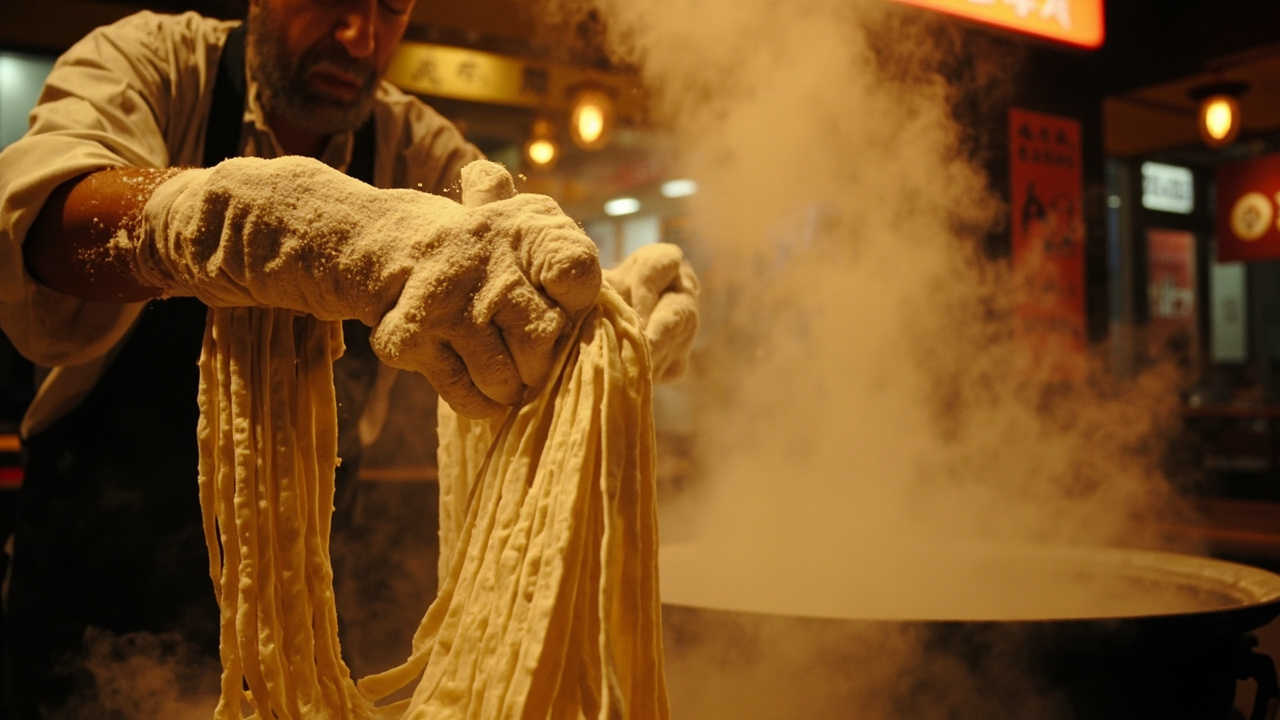
The first time I truly understood Chinese noodles wasn’t in a fancy restaurant. It was 2 AM in a tiny shop in Xi’an, sitting on a plastic stool that wobbled, watching a man slam a thick slab of dough against a steel counter so hard the windows rattled. He folded it, slammed it again, and again, until the dough was a dozen long strands he tossed into a cauldron of boiling water. The whole shop smelled of chili oil and cumin. The woman next to me, a factory worker on her night shift, pointed at my bowl and said the only English she knew: “Good. Eat.”
That was seven years ago. I’ve eaten noodles in every province since, probably 400 bowls, and I’m still not tired of them. If you’re planning your first trip to China, here’s the thing nobody tells you: you will eat noodles more than you expect, and the ones you remember won’t be the ones you planned for.
This guide covers the ten noodle styles you need to know before you land, where to eat them, what they should cost, and how to order without looking like a total tourist. I’ve included exact directions, prices in both currencies, and the little tricks locals use that you won’t find in a guidebook.
Quick answer
Chinese noodles vary wildly by region, from hand-pulled la mian in the north to rice noodles in the south, and a bowl typically costs $2-6 (15-45 CNY) at a local shop. The best way to try them is to go where locals eat, order the house specialty, and don’t be afraid to slurp. Most noodle shops are cashless now, so set up Alipay or WeChat Pay before you arrive.
The Short Version
If you only remember three things: eat dan dan mian in Chengdu, Lanzhou la mian anywhere with a Muslim-run shop, and zha jiang mian in Beijing. Skip the hotel breakfast buffet noodles. Go to a shop that’s crowded at 11:30 AM. Point at what the person next to you is eating if you can’t read the menu. You’ll pay less than $5 and eat better than most $50 meals back home.
How I Picked These
I’ve lived in Beijing since 2018 and traveled to every province except Tibet and Hainan. For this guide, I went back to ten cities over the past year and re-ate the classics, plus a few regional specialties most tourists never hear about. I talked to noodle shop owners, taxi drivers, and a retired chef in Guangzhou who spent 40 years making wonton noodles. I also made plenty of mistakes along the way, which I’ll share, so you don’t repeat them. Prices reflect what I paid in late 2025 and early 2026, rounded to give you a realistic range.
Comparison Table
| Rank | Noodle Style | Best City | Approx Cost (USD) | Time Needed | When to Go |
|---|---|---|---|---|---|
| 1 | Lanzhou La Mian | Lanzhou or anywhere | $3-5 (20-35 CNY) | 30 min | Year-round |
| 2 | Dan Dan Mian | Chengdu | $2-4 (15-30 CNY) | 20 min | Year-round |
| 3 | Zha Jiang Mian | Beijing | $3-5 (20-35 CNY) | 30 min | Spring/Fall |
| 4 | Wonton Noodles | Guangzhou | $3-6 (20-40 CNY) | 30 min | Year-round |
| 5 | Hot Dry Noodles | Wuhan | $2-3 (15-20 CNY) | 15 min | Morning only |
| 6 | Chongqing Xiaomian | Chongqing | $2-4 (15-30 CNY) | 20 min | Year-round |
| 7 | Shanxi Dao Xiao Mian | Taiyuan | $3-5 (20-35 CNY) | 30 min | Year-round |
| 8 | Guilin Rice Noodles | Guilin | $2-4 (15-30 CNY) | 20 min | Year-round |
| 9 | Yunnan Crossing-the-Bridge | Kunming | $6-12 (40-80 CNY) | 45 min | Year-round |
| 10 | Cold Noodles | Beijing or Xi’an | $2-4 (15-30 CNY) | 15 min | Summer |
1. Lanzhou La Mian 鈥?The One You’ll Eat Everywhere
The first time I ordered Lanzhou noodles, I pointed at a photo and said “this one.” The guy behind the counter laughed, said something to his coworker, and they both looked at me like I was a child who’d just asked for dessert before dinner. I’d accidentally ordered the extra-large bowl with extra chili. I ate it anyway. No regrets.
Lanzhou la mian is the noodle you’ll find in every city in China, usually in shops with green signs and a picture of a bearded man in a white cap. It’s a Muslim (Hui) specialty, hand-pulled to order, served in a clear beef broth with radish slices, cilantro, and chili oil. The magic is the pulling: one lump of dough becomes hundreds of strands, and you can request your thickness, from xiao kuang (thin) to da kuan (wide ribbons).
The broth is the soul. Good shops simmer beef bones for hours, sometimes overnight, and the result is clean and savory, not heavy. You add vinegar and chili to taste. The beef comes in thin slices on top, and you’re supposed to eat the noodles first, then the meat, then drink the broth.
- 馃搷 Location: Every city, but the best are in Lanzhou itself or in Muslim neighborhoods. In Beijing, try the shops near Niujie (Ox Street) mosque.
- 馃帿 Entry fee: Free, obviously. A bowl costs $3-5 (20-35 CNY).
- 馃晲 Opening hours: Most shops open 6 AM to 9 PM. Go early for the freshest broth.
- 馃殕 How to get there: In Lanzhou, take Line 1 to Xiguan, Exit B, and walk toward the Yellow River. You’ll find a dozen shops within 10 minutes.
- 鈴?When to visit: Breakfast or lunch. The broth is at its best before 2 PM.
- 馃挕 Insider tips: Ask for er xi (medium thickness) if you can’t decide. Add a spoonful of chili oil and a splash of vinegar. Don’t be shy about slurping; it’s how you show appreciation. If you see a shop with a crowd at 11:30 AM, go in. If it’s empty at noon, walk away.
I once watched a 70-year-old man in Lanzhou pull noodles for a full hour without stopping, his arms moving like a machine. He’d been doing it since he was 14. I asked him how he learned. He said, “By watching.” Then he handed me a bowl and refused to take my money.
2. Dan Dan Mian 鈥?Chengdu’s Peppery Punch
I remember the first time I ate dan dan mian in Chengdu. I was sweating by the third bite, not from the heat but from the numbness. Sichuan peppercorns do that. Your lips tingle, then go slightly numb, then the chili hits. It’s a strange, addictive sensation that you’ll either love or never understand.
Dan dan mian is a dry noodle dish, meaning there’s no soup. The noodles are tossed with a sauce made from sesame paste, chili oil, Sichuan pepper, preserved vegetables, and minced pork. The name comes from the bamboo pole (dan dan) that street vendors used to carry their pots. The best versions are in small shops, not fancy restaurants, and they’re almost always served with a bowl of soup on the side to cool your mouth.
The key is the you po la jiao, the chili oil that’s been slowly infused with spices. Good shops make their own, and you can taste the difference. The noodles themselves are thin, slightly chewy, and coated evenly with the sauce. You mix everything together before eating, scraping the bottom of the bowl to get all the sauce.
- 馃搷 Location: Chengdu, especially in the old city near Kuanzhai Alley. Look for shops with “dan dan mian” in the name and a line out the door.
- 馃帿 Entry fee: Free. A bowl is $2-4 (15-30 CNY).
- 馃晲 Opening hours: Most shops open 7 AM to 8 PM. Lunch is the busiest.
- 馃殕 How to get there: Take Chengdu Metro Line 4 to Kuanzhai Alley Station, Exit B, and walk into the alley. The shops are everywhere.
- 鈴?When to visit: Any time, but go before 12:30 PM to avoid the lunch rush.
- 馃挕 Insider tips: Order the small bowl first. The big one is deceptively filling. Ask for wei la (mild) if you’re not used to Sichuan spice. The soup on the side is meant to be sipped between bites. If you see a shop with a sign saying “certified by the Sichuan Noodle Association,” that’s a good sign.
I ate at a shop in Chengdu where the owner, a woman in her 60s, had been making the same noodles for 35 years. She recognized me on my second visit and added extra pork without being asked. I never learned her name, but I think about that bowl a lot.
3. Zha Jiang Mian 鈥?Beijing’s Working-Class Classic
The first time I ordered zha jiang mian in Beijing, I made the mistake of eating it like pasta. The waitress watched me struggle with the thick, salty sauce and finally came over, grabbed my chopsticks, and demonstrated the proper technique: mix everything thoroughly, add a splash of vinegar, then eat. I felt like a child being taught to tie my shoes.
Zha jiang mian is Beijing’s answer to comfort food. Thick wheat noodles topped with a dark, salty sauce made from fermented soybean paste and minced pork, then garnished with shredded cucumber, radish, and bean sprouts. It’s hearty, savory, and completely unpretentious. The name means “fried sauce noodles,” and the sauce is the star.
The best versions are in old-school shops in the hutongs (narrow alleys), not in tourist restaurants. The sauce should be rich but not cloying, the noodles chewy, and the vegetables fresh. You mix everything together until every strand is coated, then add a splash of vinegar to cut the richness. Some places serve it with a bowl of noodle water on the side, which you drink after you finish.
- 馃搷 Location: Beijing, especially in the Dongcheng district near the Drum Tower. Try the shops on Fangzhuanchang Hutong.
- 馃帿 Entry fee: Free. A bowl is $3-5 (20-35 CNY).
- 馃晲 Opening hours: Most shops open 10 AM to 9 PM. Lunch is the busiest.
- 馃殕 How to get there: Take Beijing Subway Line 8 to Shichahai Station, Exit A2, and walk east toward the Drum Tower. The hutong shops are a 10-minute walk.
- 鈴?When to visit: Lunch, when the sauce is freshly made.
- 馃挕 Insider tips: Ask for extra cucumber if you want to balance the saltiness. Add a splash of vinegar before eating. Don’t order the “deluxe” version with extra toppings; the classic is better. If you’re in Beijing, check out my full Beijing guide for more food recommendations.
I once watched a construction worker in a Beijing noodle shop eat his zha jiang mian in under four minutes, then drink the noodle water and leave. The whole thing was a ritual, practiced daily for years. I tried to copy his speed. I failed.
4. Wonton Noodles 鈥?Guangzhou’s Delicate Art
The wonton noodle shop in Guangzhou was empty when I walked in at 4 PM, which should have been my first clue. In Guangzhou, the best wonton noodle shops are packed at odd hours because people eat them as snacks. The owner, a thin man in his 50s, was rolling wonton wrappers by hand, his fingers moving so fast they were a blur.
Wonton noodles, or yun tun mian, are a Cantonese specialty that looks simple but is brutally hard to do well. The noodles are thin and springy, made with egg and lye water, giving them a distinctive yellow color and a slight chew. The wontons are filled with shrimp and pork, wrapped so the filling peeks through the thin skin. The broth is clear, made from dried shrimp and fish, and should taste clean and slightly sweet.
The trick is the texture. The noodles should be qiang (springy), the wontons delicate, and the broth light. Good shops make everything in-house, and you can taste the difference. The best versions are in old shops that have been around for decades, often with a single dish on the menu.
- 馃搷 Location: Guangzhou, especially in the old city near Shangxiajiu Pedestrian Street. Look for shops with “yun tun mian” in the name.
- 馃帿 Entry fee: Free. A bowl is $3-6 (20-40 CNY).
- 馃晲 Opening hours: Most shops open 7 AM to 9 PM, but the best ones close by 8 PM.
- 馃殕 How to get there: Take Guangzhou Metro Line 1 to Changshou Lu Station, Exit A, and walk toward Shangxiajiu. The shops are in the side alleys.
- 鈴?When to visit: Mid-afternoon, when the locals have their snack break.
- 馃挕 Insider tips: Order the “noodle with wontons” (yun tun mian) not the “wonton soup” (yun tun). The noodles are the point. Add a small amount of red vinegar to the broth. If the shop offers “dry” (gan) noodles, meaning the noodles are served separately from the soup, try that version too.
I asked the owner in Guangzhou how long he’d been making wontons. He held up his hands, calloused and scarred, and said, “Forty years. These hands know.” Then he went back to rolling, and I ate my bowl in silence, trying to make it last.
5. Hot Dry Noodles 鈥?Wuhan’s Breakfast Obsession
Wuhan’s re gan mian (hot dry noodles) is the only noodle dish I know that’s specifically a breakfast food. The shops open at 5 AM, and by 9 AM, most of them have sold out. If you miss the window, you miss the noodles. I learned this the hard way when I showed up at 10:30 AM and found a locked door.
The noodles are thin, alkaline wheat noodles, boiled, then tossed with sesame paste, chili oil, pickled vegetables, and scallions. There’s no soup, but the noodles aren’t completely dry either; they’re coated in a glossy, nutty sauce. The texture is the thing: chewy, slightly firm, and completely coated. You’re supposed to mix it fast, while it’s hot, and eat it before it cools.
The best shops are in residential neighborhoods, not tourist areas, and they’re usually run by families who’ve been doing it for generations. The sesame paste is the key; good shops grind their own, and you can taste the difference. Some add a splash of soy sauce, others a pinch of pepper.
- 馃搷 Location: Wuhan, especially in the old city near Hubu Alley. But the best shops are in residential areas, away from the tourists.
- 馃帿 Entry fee: Free. A bowl is $2-3 (15-20 CNY).
- 馃晲 Opening hours: 5 AM to 10 AM, or until sold out. Go early.
- 馃殕 How to get there: Take Wuhan Metro Line 2 to Jianghan Road Station, Exit C, and walk toward the old city. Ask a local where the best re gan mian is; they’ll have an opinion.
- 鈴?When to visit: 7 AM to 8:30 AM, when the shops are at their busiest and the noodles are freshest.
- 馃挕 Insider tips: Order the small bowl; it’s more filling than it looks. Mix it fast, within 30 seconds of it arriving. Add a spoonful of chili oil if you want heat. Don’t ask for a fork; the chopsticks are part of the experience.
I ate re gan mian at a shop in Wuhan where the owner, a woman in her 40s, had inherited the recipe from her father. She told me she’d been waking up at 3 AM every day for 20 years to make the noodles. I asked if she was tired. She shrugged and said, “It’s what I do.”
6. Chongqing Xiaomian 鈥?The Spicy One That Sneaks Up On You
Chongqing xiaomian (little noodles) looks innocent. A small bowl, thin noodles, a reddish-brown sauce. Then you take the first bite and your mouth goes on fire, your eyes water, and you wonder what you’ve gotten yourself into. By the fifth bite, you’re addicted.
Xiaomian is a breakfast and lunch staple in Chongqing, a city known for its brutal humidity and even more brutal spice. The noodles are thin and slightly chewy, served in a small bowl with a thick, spicy sauce made from chili oil, Sichuan pepper, garlic, and a secret blend of spices that every shop guards. There’s no meat in the classic version, just the sauce, some scallions, and maybe a handful of peanuts.
The heat builds slowly. It’s not like eating a hot pepper; it’s a creeping numbness that spreads across your tongue. The best shops are tiny, often just a window in a wall, with a few plastic stools outside. You eat standing or squatting, and you don’t complain.
- 馃搷 Location: Chongqing, everywhere. The best ones are in the old city near Jiefangbei, but every neighborhood has its favorite.
- 馃帿 Entry fee: Free. A bowl is $2-4 (15-30 CNY).
- 馃晲 Opening hours: Most shops open 6 AM to 2 PM. Some reopen for dinner.
- 馃殕 How to get there: Take Chongqing Rail Transit Line 1 to Xiaoshizi Station, Exit 5, and walk toward the Yangtze River. You’ll find shops on every corner.
- 鈴?When to visit: Breakfast, when the sauce is freshly made.
- 馃挕 Insider tips: Order wei la (mild) if you’re not used to Sichuan spice. The “small” bowl is still a full meal. Add a soft-boiled egg if you want protein. Don’t drink cold water while eating; it makes the spice worse. Sip the soup on the side instead.
I ate xiaomian at a shop in Chongqing where the owner, a man in his 30s, had been making the sauce since he was 12. He told me the recipe was a family secret, passed down through four generations. I asked if he’d ever tell me. He laughed and said, “When you’re family.”
7. Shanxi Dao Xiao Mian 鈥?The Knife-Cut Noodles
The first time I saw dao xiao mian being made, I thought the chef was trying to kill someone. He held a block of dough in one hand and a curved knife in the other, then shaved thin slices of dough directly into a pot of boiling water. The noodles came out uneven, some thick, some thin, all with a satisfying chew.
Dao xiao mian (knife-cut noodles) is a Shanxi specialty, and it’s all about the technique. The dough is firm, almost stiff, and the chef uses a special curved knife to slice it into ribbons. The result is noodles with a rough texture that holds sauce beautifully. They’re usually served in a rich meat broth or tossed with a tomato-egg sauce.
The best shops are in Shanxi, especially in the capital Taiyuan, but you’ll find decent versions in most northern cities. The key is the texture: the noodles should be chewy but not tough, with a slight irregularity that tells you they were cut by hand, not machine.
- 馃搷 Location: Taiyuan, especially in the old city near the Twin Pagoda Temple. Look for shops with “dao xiao mian” in the name.
- 馃帿 Entry fee: Free. A bowl is $3-5 (20-35 CNY).
- 馃晲 Opening hours: Most shops open 10 AM to 9 PM.
- 馃殕 How to get there: Take Taiyuan Metro Line 2 to Dabeimen Station, Exit A, and walk toward the old city. The shops are in the side streets.
- 鈴?When to visit: Lunch, when the noodles are freshly cut.
- 馃挕 Insider tips: Watch the chef cut the noodles; it’s a performance. Order the “mixed sauce” (za jiang) version if you want variety. Add a splash of Shanxi vinegar, which is darker and more aromatic than the regular kind. If you’re visiting Xi’an, you’ll find good versions there too.
I watched a chef in Taiyuan cut noodles for 20 minutes without stopping, his knife moving in a steady rhythm. He told me he’d been doing it for 25 years, and his father before him. I asked if he ever got bored. He said, “The dough is never the same twice.”
8. Guilin Rice Noodles 鈥?The South’s Answer to Everything
Guilin mifen (rice noodles) is the dish that makes northerners question everything they know about noodles. These aren’t wheat noodles; they’re made from rice, which gives them a softer, more slippery texture. They’re served in a light broth with pickled beans, peanuts, and a choice of meat, usually pork or beef.
The first time I ate mifen in Guilin, I was confused. The broth was almost clear, the noodles were white and soft, and the toppings were scattered on top like a salad. But the flavor was anything but bland. The broth had a deep, savory depth, and the pickled vegetables added a tangy kick.
The best shops are small, with a few tables and a big pot of broth bubbling in the back. You order at the counter, watch the cook assemble your bowl, and take it to a table. Some shops offer “dry” (gan) versions, where the noodles are tossed with sauce instead of broth. Both are worth trying.
- 馃搷 Location: Guilin, especially in the old city near the Sun and Moon Pagodas. Look for shops with “mifen” in the name.
- 馃帿 Entry fee: Free. A bowl is $2-4 (15-30 CNY).
- 馃晲 Opening hours: Most shops open 6 AM to 8 PM. Breakfast is the busiest.
- 馃殕 How to get there: Take Guilin Bus 11 to the Sun and Moon Pagodas stop, then walk into the side streets. The shops are everywhere.
- 鈴?When to visit: Breakfast, when the broth is freshest.
- 馃挕 Insider tips: Order the “dry” version if you want more flavor. Add pickled chilies if you want heat. The peanuts are meant to be eaten with the noodles, not picked out. If you’re traveling south, the Guilin rice noodle scene is worth a detour.
I ate mifen at a shop in Guilin where the owner, a woman in her 50s, had been making the broth for 30 years. She told me the secret was patience: “You can’t rush the bones.” I believed her.
9. Yunnan Crossing-the-Bridge Noodles 鈥?The One With the Ritual
Guoqiao mian (crossing-the-bridge noodles) is the most theatrical noodle dish in China. It comes with a bowl of boiling broth, a plate of raw ingredients, and a set of instructions that you’ll probably mess up the first time. I did. I put the raw egg in first, then the vegetables, then the meat, and by the time I got to the noodles, the broth had cooled. The result was a lukewarm mess.
The name comes from a legend about a scholar who studied on an island and his wife who brought him noodles across a bridge. To keep them hot, she separated the broth from the ingredients, and the dish was born. The proper way is to add the raw ingredients in a specific order: meat first, then vegetables, then noodles, then the egg, which cooks in the hot broth.
The broth is the star: a rich, clear chicken and pork broth that’s been simmered for hours. It arrives boiling hot, and the ingredients cook in front of you. The noodles are rice noodles, soft and slippery, and you eat everything with a spoon and chopsticks.
- 馃搷 Location: Kunming, especially in the old city near Green Lake Park. The best shops are the ones with long histories.
- 馃帿 Entry fee: Free. A bowl is $6-12 (40-80 CNY), more expensive than other noodles because of the ingredients.
- 馃晲 Opening hours: Most shops open 10 AM to 9 PM. Lunch is the busiest.
- 馃殕 How to get there: Take Kunming Metro Line 3 to Wuyi Road Station, Exit C, and walk toward Green Lake. The shops are in the side streets.
- 鈴?When to visit: Lunch, when the broth is freshest.
- 馃挕 Insider tips: Watch the table next to you before you start. Add the ingredients in the right order. Don’t touch the bowl; it’s boiling hot. The broth will stay hot for a long time, so take your time. If you’re in Chengdu, you’ll find decent versions there too.
I ate crossing-the-bridge noodles at a shop in Kunming where the owner, a man in his 60s, had been making the broth for 40 years. He told me the secret was the ratio of chicken to pork bones: “Seven to three. Never change it.” I haven’t.
10. Cold Noodles 鈥?The Summer Essential
Cold noodles (liang mian) are the dish you’ll crave in July, when the heat is oppressive and the thought of hot soup is unbearable. They’re served cold, tossed with a sesame sauce, vinegar, chili oil, and shredded vegetables. The noodles are usually wheat, but some versions use rice noodles.
The first time I ate cold noodles in Beijing, I was skeptical. Cold noodles sounded like a gimmick. But the combination of chewy noodles, nutty sesame paste, and tangy vinegar was surprisingly refreshing. The chili oil adds warmth without making you sweat.
The best versions are in the north, especially in Beijing and Xi’an, where the summers are brutal. You’ll find them at street stalls and small shops, usually served in a paper bowl with a pair of chopsticks. They’re cheap, fast, and perfect for a hot day.
- 馃搷 Location: Beijing and Xi’an, especially in the Muslim Quarter in Xi’an. Look for stalls with a big pot of cold noodles on display.
- 馃帿 Entry fee: Free. A bowl is $2-4 (15-30 CNY).
- 馃晲 Opening hours: Most stalls open 10 AM to 8 PM. They’re busiest at lunch.
- 馃殕 How to get there: In Xi’an, take Metro Line 2 to Zhonglou Station, Exit C, and walk into the Muslim Quarter. In Beijing, try the shops near Wangfujing.
- 鈴?When to visit: Summer, obviously. But they’re available year-round.
- 馃挕 Insider tips: Add a splash of vinegar before eating. The sesame sauce is the star; don’t ask for extra chili if you want to taste it. If you’re in Xi’an, the cold noodles in the Muslim Quarter are the best I’ve had.
I ate cold noodles at a stall in Xi’an where the owner, a young man in his 20s, had learned the recipe from his grandfather. He told me the secret was the sesame paste: “Roast it yourself. Never buy it pre-made.” I nodded, even though I had no idea how to roast sesame paste.
FAQ summary
Chinese noodles are cheap, filling, and wildly regional, with a typical bowl costing $2-6 (15-45 CNY) at local shops. The most important thing for tourists is to go where locals eat, order the house specialty, and set up Alipay or WeChat Pay before arriving, since most shops are cashless. Slurping is normal and encouraged, and you can always ask for wei la (mild) if you’re not used to Sichuan spice.
FAQ
Q: How much do noodles cost in China? A: A bowl at a local shop costs $2-6 (15-45 CNY), depending on the city and the ingredients. Street stalls are cheaper, around $1-3 (10-20 CNY), while fancier restaurants can charge $10+ (70+ CNY).
Q: Do I need to speak Chinese to order noodles? A: No, but it helps to know a few phrases. “Yi wan” (one bowl) and pointing at what someone else is eating works fine. Many shops have picture menus, and translation apps like Google Translate (with a VPN) work well for reading menus.
Q: Are Chinese noodles spicy? A: Not all of them. Northern noodles like Lanzhou la mian and Beijing zha jiang mian are mild, while Sichuan and Chongqing noodles can be very spicy. You can always ask for wei la (mild) or bu la (not spicy).
Q: Can I pay with cash at noodle shops? A: Most shops are cashless now, accepting Alipay or WeChat Pay. Some still take cash, but it’s getting rare. Set up Alipay before you arrive to avoid problems.
Q: What’s the difference between wheat noodles and rice noodles? A: Wheat noodles are chewier and used in the north, while rice noodles are softer and used in the south. Both are delicious, but they’re very different textures. Try both.
Q: Is it rude to slurp noodles in China? A: No, slurping is normal and even encouraged. It shows you’re enjoying the food. Don’t worry about table manners; just eat.
Q: What’s the best time of day to eat noodles? A: Lunch is the safest bet, but some dishes like Wuhan’s re gan mian are breakfast-only. Go early for the freshest broth and the best selection.
The Honest Wrap-up
This list isn’t for everyone. If you want white-tablecloth dining and wine pairings, you’ll find that in China too, but you won’t find it here. This guide is for the traveler who wants to eat like a local, who’s willing to sit on a plastic stool and point at things they can’t pronounce, who understands that the best meals often cost less than a cup of coffee back home.
If you take one thing from this guide, let it be this: don’t overthink it. Walk into a crowded shop, point at what the person next to you is eating, and trust the process. You’ll be wrong sometimes. I’ve been wrong a hundred times. But the times you’re right, you’ll remember those bowls for the rest of your life.
And when you get home, and someone asks you about your trip to China, you won’t talk about the Great Wall or the Forbidden City. You’ll talk about the noodles.
Topics
More guides you may like

Top 10 Bridges in China
China's bridges are engineering marvels spanning mountains, rivers, and seas. Here are 10 of the most spectacular, from ancient stone to modern steel.
8 min read

Top 10 Buddhist Sites in China
From the Leshan Giant Buddha to the Dunhuang Caves, these 10 Buddhist sites represent 2,000 years of China's spiritual heritage.
9 min read

Top 10 Day Trips from Beijing You Shouldn't Miss
Beijing is packed with history, but some of China's best experiences are just a few hours away. Here are 10 day trips that will transform your visit.
9 min read

Top 10 Hidden Gems in China Off the Beaten Path
Beyond the Great Wall and Terracotta Warriors, China has incredible hidden destinations few tourists ever reach. Here are 10 underrated gems worth the detour.
9 min read

Top 10 Markets and Shopping Streets in China
From Shanghai's Bund to Beijing's Silk Street - 10 markets where foreigners can haggle, explore, and bring home authentic Chinese goods.
9 min read

Top 10 Museums in China You Shouldn't Miss
China's museums span 5,000 years of civilization. These 10 - from the Palace Museum to Xi'an's terracotta gallery - are unmissable for culture lovers.
9 min read