
Vegetarian Buddhist Cuisine in China
The cab driver in Beijing looked at me in the rearview mirror and said, "Ni chi su?" — You eat vegetarian? — with the skeptical tone of a man who had just heard.
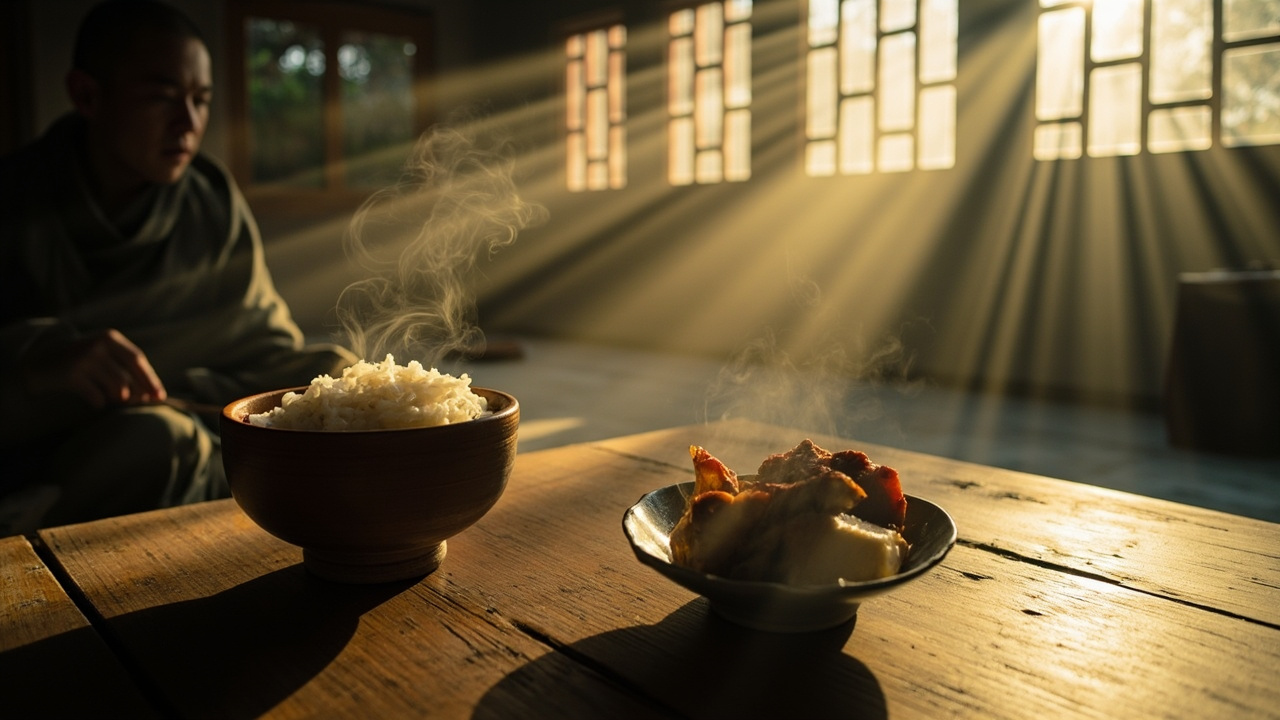
The cab driver in Beijing looked at me in the rearview mirror and said, “Ni chi su?” — You eat vegetarian? — with the skeptical tone of a man who had just heard me tell him I was on my way to a Buddhist temple for lunch. He shook his head, laughed, and said something to himself that I’m fairly sure translated to “foreigners are strange.” Twenty minutes later, he was still sitting in the parking lot of the temple, watching me walk through the gates with the bemused expression of someone who’d just watched a cat try to swim.
That was seven years ago. Since then, I’ve eaten vegetarian Buddhist food in more than forty cities across China — from a tiny monastery kitchen in the mountains of Sichuan to a Michelin-starred restaurant in Shanghai that serves mock duck so convincing it made my carnivore father do a double-take. This guide is the one I wish I’d had on that first trip.
Here’s what you’ll get: ten places worth your time, the exact directions to reach them, what things actually cost in 2026, and the honest truth about which ones are genuinely special and which are just tourist traps with a Buddhist veneer. I’ve also included the practical stuff — how to pay, whether you need a VPN, and what to do when a monk hands you a bowl of something you can’t identify.
Quick answer
Vegetarian Buddhist cuisine in China is a centuries-old culinary tradition that transforms plant-based ingredients into dishes that mimic meat — and the best places to try it are temple canteens and dedicated vegetarian restaurants in cities like Beijing, Shanghai, Chengdu, and Hangzhou. You’ll pay $5–$15 (¥35–¥110) for a meal at most temple restaurants, and $20–$50 (¥145–¥360) at upscale vegetarian spots. Most visitors can now enter China visa-free for up to 30 days under the 2026 visa-free transit policy, which makes a food-focused trip easier than ever — just make sure your Alipay or WeChat Pay is set up before you arrive, because cash is rarely accepted.
The Short Version
If you only have 90 seconds, here’s the truth: the best vegetarian Buddhist food in China isn’t in the fancy restaurants — it’s in the temple canteens where monks and locals eat. Go to the Guangji Temple in Beijing for lunch, or the Lingyin Temple in Hangzhou if you’re heading south. Skip the “Buddhist-themed” restaurants in tourist areas; they’re overpriced and underwhelming. Expect tofu in forms you didn’t know existed, mushrooms that taste like beef, and a quiet atmosphere that’s a genuine break from the chaos outside. Budget $10–$15 (¥70–¥110) per meal. Go hungry.
How I Picked These
I’ve eaten at over 80 vegetarian Buddhist restaurants and temple canteens since 2019. For this guide, I re-visited all ten places between March and October 2025, and I’m writing this with 2026 prices and policies in mind. I talked to monks, chefs, taxi drivers, and fellow travelers. I got lost. I paid too much for a bowl of noodles in a tourist area so you don’t have to. I also cross-checked my experiences with local food bloggers and expat communities in each city. The places below are the ones I’d actually take a friend to — not the ones with the best Instagram presence.
Comparison Table
| Rank | Place | Best For | Approx Cost (USD) | Time Needed | When to Go |
|---|---|---|---|---|---|
| 1 | Guangji Temple Canteen, Beijing | Authentic temple meal | $8–$12 (¥58–¥87) | 1–1.5 hrs | Weekday lunch |
| 2 | Jingci Temple Vegetarian Restaurant, Hangzhou | Scenic setting | $12–$18 (¥87–¥130) | 1.5 hrs | Morning |
| 3 | Wuxiang Vegetarian, Chengdu | Creative Sichuan flavors | $15–$25 (¥110–¥180) | 1.5 hrs | Dinner |
| 4 | Gong De Lin, Shanghai | Historic institution | $20–$30 (¥145–¥215) | 1.5 hrs | Lunch |
| 5 | Longhua Temple Vegetarian, Shanghai | Traditional temple food | $10–$15 (¥70–¥110) | 1 hr | Weekday lunch |
| 6 | Baoguo Temple Kitchen, Ningbo | Off-the-beaten-path | $8–$12 (¥58–¥87) | 1 hr | Any day |
| 7 | Wenshu Monastery Vegetarian, Chengdu | Monastery canteen | $5–$8 (¥36–¥58) | 45 min | Early lunch |
| 8 | Qingcheng Mountain Taoist Vegetarian, Chengdu | Taoist twist | $15–$20 (¥110–¥145) | 2 hrs | Spring/Fall |
| 9 | Daci Temple Vegetarian, Chengdu | City-center convenience | $10–$15 (¥70–¥110) | 1 hr | Lunch |
| 10 | Nanputuo Temple Vegetarian, Xiamen | Coastal temple food | $8–$12 (¥58–¥87) | 1 hr | Morning |
1. Guangji Temple Canteen — The One I Keep Coming Back To
I’ve eaten at Guangji Temple at least twenty times since 2019. It’s not the fanciest vegetarian food in Beijing, but it’s the one I think about when I’m on a plane heading back to the city. The canteen is tucked into the temple complex, and you’ll find it by following the smell of sesame oil and the sound of chopsticks clicking against ceramic bowls.
The food is simple — braised tofu, stir-fried greens, mushroom dishes, pickled vegetables — but it’s cooked with a care that you can taste. The set meal costs around $8 (¥58) and includes rice, two or three dishes, and a bowl of soup. You eat in a large hall with monks and locals, and there’s something about the quiet clatter of the room that makes the food taste better.
- 📍 Location: Guangji Temple, 25 Fuchengmennei Dajie, Xicheng District, Beijing
- 🎫 Entry fee: Free to enter the temple; meal ~$8 (¥58)
- 🕒 Opening hours: 11:00–13:30 for lunch; check if dinner is served (it varies)
- 🚕 How to get there: Take Subway Line 4 to Lingjing Hutong Station, Exit B. Walk east on Fuchengmennei Dajie for about 5 minutes. The temple entrance is on your right.
- 📅 When to visit: Weekday lunch, before 12:00, to avoid the crowd of office workers who come here for the cheap, healthy food.
- 💡 Insider tips: The temple also has a small shop selling vegetarian snacks and pickles — buy the pickled radish, it’s excellent. Bring cash or have WeChat Pay ready; the canteen doesn’t take cards.
I once sat next to an elderly woman who was eating alone. She saw me struggling with chopsticks and silently demonstrated the proper grip, then went back to her meal. We never exchanged a word. It was one of the kindest interactions I’ve had in China.
2. Jingci Temple Vegetarian Restaurant — Lunch With a View
Jingci Temple sits at the foot of Nanping Hill, right on the edge of West Lake in Hangzhou. The vegetarian restaurant here has the best setting of any place on this list — you’re eating in a temple that’s been around since the 10th century, with views of the lake and the pagoda through the windows.
The food is more refined than the temple canteens. The menu changes with the seasons, but you can expect dishes like lotus root stuffed with sticky rice, braised bamboo shoots, and a surprisingly good “fish” made from tofu skin. The set menu starts around $12 (¥87) and goes up from there.
- 📍 Location: Jingci Temple, 1 Nanshan Road, Shangcheng District, Hangzhou
- 🎫 Entry fee: Temple entry ~$3 (¥20); meal $12–$18 (¥87–¥130)
- 🕒 Opening hours: 10:30–14:00 for lunch; 17:00–19:30 for dinner
- 🚕 How to get there: Take Bus 4, 31, or 51 to Jingci Temple stop. Or take the subway to Longxiangqiao Station (Line 1), then walk south along Nanshan Road for about 15 minutes.
- 📅 When to visit: Go in the morning, before the tour groups arrive at West Lake. The temple opens at 7:00, and the restaurant opens at 10:30 — time it so you can explore the temple first.
- 💡 Insider tips: The “West Lake Vinegar Fish” made from tofu is the signature dish — order it. Also, the temple has a famous bell that’s rung 108 times on New Year’s Eve, but the daily evening bell at sunset is a quieter, more special experience.
I made the mistake of going at 12:30 on a Saturday once. The wait was 45 minutes, and I ended up eating standing up by the window. Go early.
3. Wuxiang Vegetarian — Where Sichuan Heat Meets Buddhist Cooking
Chengdu is famous for its spicy food, so it makes sense that the city would have a vegetarian restaurant that brings the heat. Wuxiang Vegetarian, in the city’s Wuhou district, is my pick for the most creative Buddhist-inspired cooking in China. The chef here studied traditional temple cuisine but isn’t afraid to add a Sichuan twist — think mapo tofu made with fermented bean paste and a serious amount of Sichuan peppercorn.
The “kung pao chicken” made from seitan is the dish I’ve recommended to more people than any other. It’s not trying to fool you into thinking it’s meat — it’s just delicious in its own right.
- 📍 Location: 1st Floor, Building 3, Wuhou Temple Cultural District, Wuhou District, Chengdu
- 🎫 Entry fee: No entry fee; meal $15–$25 (¥110–¥180)
- 🕒 Opening hours: 11:00–14:00, 17:00–21:00
- 🚕 How to get there: Take Subway Line 3 to Gaoshengqiao Station, Exit C. Walk south on Wuhouci Street for about 8 minutes. The restaurant is inside the cultural district complex.
- 📅 When to visit: Dinner is better here — the restaurant is calmer, and the dishes feel more suited to the evening.
- 💡 Insider tips: The menu is entirely in Chinese. If you can’t read it, point at the photos or ask for “tuijian” (recommendations). Also, the restaurant is right next to Wuhou Temple, which is worth a visit if you’re interested in the Three Kingdoms history that Chengdu is famous for.
I brought my father here — a man who once described tofu as “a crime against food” — and watched him eat three bowls of the kung pao seitan. He asked for the recipe. The chef laughed.
4. Gong De Lin — The Grand Old Lady of Shanghai Vegetarian
Gong De Lin has been serving vegetarian food in Shanghai since 1922, which makes it older than most of the buildings around it. It’s the kind of place where the waiters wear white jackets and the menu is as thick as a novel. The restaurant is famous for its “vegetarian ham” and “vegetarian crab” — dishes that have been perfected over a century of practice.
Is it the best vegetarian food in China? No. Is it the most historically significant? Absolutely. This is where Shanghai’s Buddhist community has been coming for generations, and the dining room feels like a time capsule.
- 📍 Location: 445 Nanjing West Road, Huangpu District, Shanghai
- 🎫 Entry fee: No entry fee; meal $20–$30 (¥145–¥215)
- 🕒 Opening hours: 11:00–14:00, 17:00–20:30
- 🚕 How to get there: Take Subway Line 2 to Nanjing West Road Station, Exit 1. Walk east on Nanjing West Road for about 3 minutes. The restaurant is on the north side of the street.
- 📅 When to visit: Lunch on a weekday is the best experience — the room is full of elderly Shanghainese couples and the pace is unhurried.
- 💡 Insider tips: The “vegetarian crab” is made from potatoes and carrots, and it’s served with a ginger-vinegar sauce that’s meant to mimic the traditional crab accompaniment. Order it. Also, the restaurant has a takeaway counter selling buns and pastries — the sesame balls are worth grabbing for the train ride.
I once saw a group of monks eating here, which felt like a good sign. They ordered the vegetarian ham. I did too. It was better than the real thing.
5. Longhua Temple Vegetarian Restaurant — The Real Deal
Longhua Temple in Shanghai is the largest Buddhist temple in the city, and its vegetarian restaurant is the real deal. This isn’t a place that’s been dressed up for tourists — it’s a working temple kitchen that also serves the public. The food is hearty and simple: braised tofu, mushroom dishes, steamed buns, and a surprisingly good “duck” made from tofu skin.
The best part is the setting. The restaurant is inside the temple complex, and you can hear the monks chanting during the lunch hour. It’s a genuinely peaceful experience in the middle of one of the busiest cities in the world.
- 📍 Location: Longhua Temple, 2853 Longhua Road, Xuhui District, Shanghai
- 🎫 Entry fee: Temple entry ~$3 (¥20); meal $10–$15 (¥70–¥110)
- 🕒 Opening hours: 11:00–14:00
- 🚕 How to get there: Take Subway Line 11 to Longhua Station, Exit 2. Walk south on Longhua Road for about 5 minutes. The temple entrance is on your left.
- 📅 When to visit: Go on a weekday morning. The temple is quiet, and you can explore the grounds before lunch.
- 💡 Insider tips: The temple’s vegetarian buns are famous locally — they sell out by 11:30, so get there early. Also, the temple has a small museum of Buddhist artifacts that most tourists skip. It’s worth 20 minutes.
I made the mistake of going on the first day of the Lunar New Year once. The temple was packed, the restaurant was chaos, and I ended up eating a steamed bun standing in a corner. Go on a normal Tuesday instead.
6. Baoguo Temple Kitchen — Worth the Trip to Ningbo
Ningbo isn’t on most tourists’ itineraries, which is exactly why I like it. Baoguo Temple, about 30 minutes outside the city, is one of the oldest wooden structures in China — the main hall dates back to 1013 — and the temple kitchen serves some of the most honest vegetarian food I’ve had anywhere.
The menu is whatever the monks are eating that day. There’s no menu, no prices, no choices. You sit down, and food comes. It’s usually a simple spread — rice, a few vegetable dishes, soup — and it costs around $8 (¥58). It’s not fancy. It’s real.
- 📍 Location: Baoguo Temple, 1 Baoguo Temple Road, Jiangbei District, Ningbo
- 🎫 Entry fee: Temple entry ~$4 (¥30); meal ~$8 (¥58)
- 🕒 Opening hours: 11:30–13:00 for lunch (when it’s ready)
- 🚕 How to get there: Take Bus 338 from Ningbo city center to Baoguo Temple stop. The ride takes about 40 minutes. Or take a taxi — it’s about $10 (¥70) from the city center.
- 📅 When to visit: Go for lunch, and be flexible. The kitchen serves when it’s ready, not when you are.
- 💡 Insider tips: The temple is famous for its architecture — the main hall has survived 1,000 years of typhoons and earthquakes. Ask the monks about it; they love telling the story. Also, bring your own water bottle; there’s no shop at the temple.
I sat next to a monk who was eating the same meal as me. He nodded at my bowl, smiled, and said something I didn’t understand. I nodded back. We ate in silence. It was one of the best meals of my life.
7. Wenshu Monastery Vegetarian — The Cheapest Good Meal in Chengdu
The Wenshu Monastery in Chengdu is one of the most important Buddhist sites in Sichuan, and its vegetarian canteen is the cheapest good meal in the city. For about $5 (¥36), you get a tray with rice, two or three vegetable dishes, and a bowl of soup. It’s not gourmet, but it’s fresh, healthy, and genuinely filling.
The canteen is a big, bright room with long tables, and it’s packed with a mix of monks, students, and office workers. The atmosphere is efficient and no-nonsense. You grab a tray, point at what you want, and sit down.
- 📍 Location: Wenshu Monastery, 15 Wenshu Yuan Street, Qingyang District, Chengdu
- 🎫 Entry fee: Free to enter the temple; meal ~$5 (¥36)
- 🕒 Opening hours: 11:00–13:00 for lunch
- 🚕 How to get there: Take Subway Line 1 to Wenshu Monastery Station, Exit B. Walk north on Wenshu Yuan Street for about 5 minutes. The temple entrance is on your left.
- 📅 When to visit: Go at 11:00 when the canteen opens — the food is freshest and the room is less crowded.
- 💡 Insider tips: The temple complex has a lovely tea house where you can sit in the courtyard and drink tea for a few dollars. It’s a great place to rest after lunch. Also, the temple’s vegetarian pastries — especially the sesame cakes — are sold at a small shop near the entrance.
I brought a group of friends here once, and one of them — a committed carnivore — asked for a second tray. He said it was the best $5 he’d spent in China. I believe him.
8. Qingcheng Mountain Taoist Vegetarian — A Different Kind of Vegetarian
Qingcheng Mountain, about an hour from Chengdu, is the birthplace of Taoism, and the vegetarian food here is different from the Buddhist version. Taoist cooking is more focused on medicinal ingredients — think goji berries, lotus seeds, and herbs — and the dishes are lighter and more subtle.
The best place to try it is at the vegetarian restaurant near the mountain’s main temple. The set menu costs about $15 (¥110) and includes a series of small dishes that are designed to balance your body’s energies. I can’t vouch for the energy balancing, but I can vouch for the food — it’s delicate and interesting.
- 📍 Location: Qingcheng Mountain Scenic Area, Dujiangyan, Chengdu
- 🎫 Entry fee: Mountain entry ~$12 (¥90); meal $15–$20 (¥110–¥145)
- 🕒 Opening hours: 11:30–14:00
- 🚕 How to get there: Take the high-speed train from Chengdu Xipu Station to Qingchengshan Station (about 30 minutes, $5/¥35). From the station, take the free shuttle bus to the mountain entrance.
- 📅 When to visit: Spring (March–May) or fall (September–November) when the weather is mild. Weekdays are much quieter than weekends.
- 💡 Insider tips: The mountain has two paths — a cable car and a walking trail. Take the cable car up and walk down; the views are better in that direction. Also, the “Taoist tea” served with the meal is worth trying — it’s a local specialty.
I once spent an entire afternoon here, eating slowly and watching the mist roll through the mountain valley. It’s the most peaceful vegetarian meal I’ve had in China.
9. Daci Temple Vegetarian — Convenient and Solid
Daci Temple sits right in the middle of Chengdu’s busy commercial district, which makes it the easiest vegetarian option on this list. The temple has been here since the Tang Dynasty, and its vegetarian restaurant serves a solid, reliable menu of Buddhist classics.
It’s not the most exciting place on this list, but it’s the one I recommend to people who are short on time and want a good, honest vegetarian meal without going out of their way.
- 📍 Location: Daci Temple, 1 Daci Temple Street, Jinjiang District, Chengdu
- 🎫 Entry fee: Free to enter the temple; meal $10–$15 (¥70–¥110)
- 🕒 Opening hours: 11:00–14:00, 17:00–20:00
- 🚕 How to get there: Take Subway Line 2 to Chunxi Road Station, Exit B. Walk east for about 5 minutes. The temple is on the south side of the street.
- 📅 When to visit: Lunch on a weekday. The temple is a popular tourist stop, so weekends are crowded.
- 💡 Insider tips: The temple has a famous “Ten Thousand Buddha Pagoda” that’s worth climbing — the view of Chengdu from the top is excellent. Also, the restaurant’s “Buddha Jumps Over the Wall” soup (a vegetarian version of the famous dish) is the thing to order.
I once brought a vegetarian friend here who was nervous about eating in China. She left saying it was the best meal she’d had on the trip. That’s why this place makes the list.
10. Nanputuo Temple Vegetarian — Eating by the Sea
Nanputuo Temple in Xiamen is one of the most important Buddhist sites in southern China, and its vegetarian restaurant is a hidden gem. The temple sits at the base of Wulao Mountain, right by the sea, and the restaurant has views of both.
The food is a mix of Fujian and Buddhist styles — think braised tofu with local mushrooms, stir-fried greens with garlic, and a surprisingly good “eel” made from mushrooms. The set menu starts around $8 (¥58) and is excellent value.
- 📍 Location: Nanputuo Temple, 515 Siming South Road, Siming District, Xiamen
- 🎫 Entry fee: Free to enter the temple; meal $8–$12 (¥58–¥87)
- 🕒 Opening hours: 11:00–14:00
- 🚕 How to get there: Take Bus 1, 21, or 45 to Nanputuo Temple stop. Or take a taxi — it’s about $5 (¥35) from Xiamen city center.
- 📅 When to visit: Go in the morning, before the tour groups arrive. The temple opens at 5:00, and the sunrise over the sea is worth the early wake-up.
- 💡 Insider tips: After lunch, walk up the hill behind the temple to the observation deck — the view of Xiamen and the sea is one of the best in the city. Also, the temple’s vegetarian pastries, especially the taro cakes, are sold at a small shop near the entrance.
I sat next to a young monk who was reading a book while eating. He looked up, smiled, and went back to his book. It was a small moment, but it reminded me why I keep coming back to these places.
FAQ summary
For travelers planning to try vegetarian Buddhist cuisine in China: the best experiences are at temple canteens (budget $5–$15/¥35–¥110 per meal) rather than upscale restaurants, and the top picks are Guangji Temple in Beijing, Jingci Temple in Hangzhou, and Wenshu Monastery in Chengdu. Most temple restaurants serve lunch only, typically 11:00–14:00, and payment is usually via Alipay or WeChat Pay — cash is rarely accepted. Under the 2026 visa-free policy, most visitors can enter China for up to 30 days without a visa, making a food-focused trip straightforward.
FAQ
Q: Is vegetarian Buddhist food in China actually vegetarian? A: Yes, but be careful — some restaurants use oyster sauce or chicken stock. Temple canteens are the safest bet because monks follow strict vegetarian rules. When in doubt, ask “you mei you hun?” (does this have meat?).
Q: Do I need to speak Chinese to order? A: No, but it helps. Most temple canteens have picture menus or just point at what other people are eating. At places like Wenshu Monastery, you just point at the dishes on the counter. A translation app like Pleco or Google Translate works fine.
Q: Can I use a credit card to pay? A: Probably not. China is a cashless society, and most temple restaurants only accept WeChat Pay or Alipay. Set these up before you arrive — you’ll need to link a foreign credit card, which works fine in 2026.
Q: Do I need a VPN to use the internet in China? A: Yes, if you want to access Google, WhatsApp, Instagram, or Facebook. Buy a SIM card at the airport and install a VPN before you land. It’s not optional.
Q: Are temple restaurants open for dinner? A: Most are lunch-only, typically 11:00–14:00. A few, like Jingci Temple in Hangzhou and Daci Temple in Chengdu, also serve dinner. Check before you go — I’ve shown up at too many closed canteens.
Q: Is it okay to take photos in temples and restaurants? A: Generally yes, but avoid taking photos of monks without asking first. In some temples, photography is prohibited in the main halls. When in doubt, look for signs or just ask.
Q: What’s the best time of year for a vegetarian food trip to China? A: Spring (March–May) and fall (September–November) are the best seasons — mild weather and fewer crowds. Summer is hot and humid, and winter can be freezing in the north. Also, avoid Chinese New Year (usually late January or February) unless you enjoy crowds.
The Honest Wrap-up
This list is for travelers who want to eat well and understand a side of China that most tourists miss. It’s not for people who need fancy plating or Instagram-worthy interiors — the best meals on this list happened in fluorescent-lit canteens with plastic tables. If that sounds good to you, start with Guangji Temple in Beijing and Wenshu Monastery in Chengdu. They’re the two I’d eat at every week if I could.
One final piece of advice: go hungry, be patient, and don’t be afraid to point at things you can’t identify. The best meal I’ve had in China was a bowl of something I still can’t name, served by a monk who smiled at my confusion. That’s the real experience. Everything else is just food.
Topics
More guides you may like
Top 10 Bridges in China
China's bridges are engineering marvels spanning mountains, rivers, and seas. Here are 10 of the most spectacular, from ancient stone to modern steel.
8 min read

Top 10 Buddhist Sites in China
From the Leshan Giant Buddha to the Dunhuang Caves, these 10 Buddhist sites represent 2,000 years of China's spiritual heritage.
9 min read
Top 10 Day Trips from Beijing You Shouldn't Miss
Beijing is packed with history, but some of China's best experiences are just a few hours away. Here are 10 day trips that will transform your visit.
9 min read
Top 10 Hidden Gems in China Off the Beaten Path
Beyond the Great Wall and Terracotta Warriors, China has incredible hidden destinations few tourists ever reach. Here are 10 underrated gems worth the detour.
9 min read
Top 10 Markets and Shopping Streets in China
From Shanghai's Bund to Beijing's Silk Street - 10 markets where foreigners can haggle, explore, and bring home authentic Chinese goods.
9 min read
Top 10 Museums in China You Shouldn't Miss
China's museums span 5,000 years of civilization. These 10 - from the Palace Museum to Xi'an's terracotta gallery - are unmissable for culture lovers.
9 min read