
Best Lakes in China
The first time I saw Qinghai Lake, I was eating a bag of sunflower seeds on a bus that had been climbing for four hours. Then the driver pulled over for a…
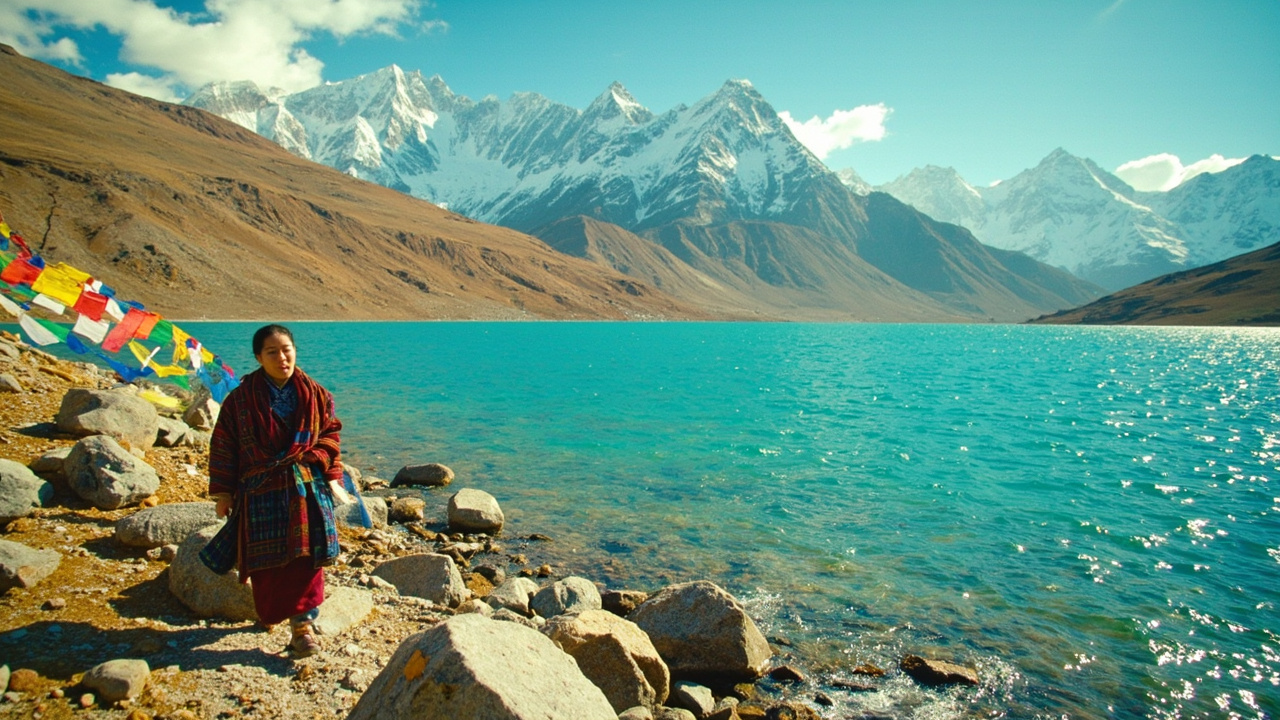
The first time I saw Qinghai Lake, I was eating a bag of sunflower seeds on a bus that had been climbing for four hours. Then the driver pulled over for a smoke break, and everyone got out, and there it was — a lake so big and so blue it looked like someone had dropped a piece of ocean into the middle of the Tibetan Plateau. An old Tibetan woman next to me started laughing at my face. I must have looked ridiculous. I didn’t care.
That was seven years ago. Since then I’ve been back to China more than forty times, and I’ve learned that lakes here are a different category of thing than lakes back home. In the US or Europe, a lake is usually a weekend. You drive two hours, rent a kayak, eat a sandwich. In China, a lake can be a 3,200-meter-high saltwater sea, a UNESCO wetland full of migratory birds, or a city park in Hangzhou that poets have been writing about for a thousand years. Some of them require a permit. Some of them require a train, a bus, and a horse.
This guide covers the ten lakes I’d actually send a first-time visitor to, ranked by how much I think you’ll get out of them. I’ve been to all of them at least once, most of them twice. I’ve made mistakes at several — missed buses, paid too much for a boat, showed up in the wrong season. I’ll tell you about those too, because that’s the useful part.
Quick answer
The best lakes in China for a first-time visitor are Qinghai Lake (for sheer scale), West Lake in Hangzhou (for easy access and culture), and Jiuzhaigou’s lakes (for color that looks fake in photos but isn’t). Most international visitors can now enter China visa-free for up to 30 days under the 2025–2026 expanded policy, and high-speed rail connects most lake destinations to major cities. Budget $40–$120 per day depending on the lake, and go in late spring or early autumn to avoid both crowds and rain.
The Short Version
If you only have one lake in you: West Lake. It’s free, it’s in a major city, and it’s genuinely beautiful. If you have two weeks and want the one that will actually change how you think about landscape: Qinghai Lake. If you want the Instagram one that’s worth the hype: Jiuzhaigou. Skip Taihu unless you’re already in Suzhou. Don’t try to do more than two lakes in one trip — the distances are bigger than they look on the map.
How I Picked These
I’ve visited every lake on this list at least once, and I’ve gone back to five of them. I picked based on three things: whether the lake is worth the trip on its own (not just as a stopover), whether a foreign visitor with limited Mandarin can realistically get there, and whether the experience holds up after the first ten minutes of “wow.” I also asked a lot of people — a Tibetan bus driver in Xining, a Hangzhou tea farmer, a hostel receptionist in Chengdu who’d been to Jiuzhaigou eleven times. Some of their advice made the cut. Some of it didn’t.
Comparison Table
| Rank | Lake | Best For | Approx Cost (USD) | Time Needed | When to Go |
|---|---|---|---|---|---|
| 1 | Qinghai Lake | Scale, road trip, Tibetan culture | $150–250 (3 days) | 2–3 days | June–September |
| 2 | West Lake (Hangzhou) | Easy access, classical China | $0–80 | 1–2 days | March–May, Sept–Nov |
| 3 | Jiuzhaigou Lakes | Color, photography | $180–280 | 2 days | Sept–Oct |
| 4 | Lugu Lake | Remote culture, slow travel | $120–200 | 3 days | April–June, Sept–Oct |
| 5 | Namtso Lake | High-altitude pilgrimage | $200–300 | 2–3 days | June–September |
| 6 | Kanas Lake | Forest, far-west China | $250–400 | 3–4 days | Sept (autumn) |
| 7 | Erhai Lake (Dali) | Cycling, cafés, chill | $80–150 | 2–3 days | March–May, Oct–Nov |
| 8 | Thousand Island Lake | Weekend escape from Shanghai | $100–180 | 2 days | April–June, Sept–Nov |
| 9 | Taihu Lake | Proximity to Suzhou/Wuxi | $60–120 | 1 day | March–May |
| 10 | Sayram Lake | Xinjiang scenery, road trip | $200–350 | 2 days | June–September |
1. Qinghai Lake — The One That Makes You Reconsider Your Sense of Scale
The second time I went to Qinghai Lake, I rented a car in Xining with two Australians I’d met at a hostel. We drove west for two hours, and then for another hour, and the lake just kept being there. At one point we stopped on the shoulder because one of them wanted to take a photo of a yak. The yak was standing in front of the lake. The lake was still going.
Qinghai Lake (青海湖) is China’s largest inland lake, roughly 4,300 square kilometers, sitting at 3,200 meters above sea level. It’s saltwater, which is why the color goes that specific blue — the kind that makes your phone camera look broken. The Tibetan name is Tso Ngonbo, “blue lake,” and the Chinese name means the same thing. Nobody was being creative. They didn’t need to be.
The best way to do it is a loop. The full circuit is about 360 kilometers, and you can do it in two days by car or three by bike if you’re serious. Most tourists only see the southern shore, which is the easiest to reach from Xining and also the most crowded. The northern shore is quieter and, I think, better — fewer tour buses, more sheep.
📷 Location: Qinghai Province, about 150 km west of Xining. Main access points are Erlangjian (south shore) and Heimahe (northwest corner).
🎫 Entry fee: Erlangjian Scenic Area is ¥100 ($14). Most of the lake itself is open — you can pull over at roadside viewpoints for free or ¥10–20 ($1.50–3) if a local has set up a small gate.
🕐 Opening hours: Erlangjian is 7:00–19:00 in summer, shorter in winter. The lake is accessible year-round, but roads can close in winter.
🚗 How to actually get there: From Xining, buses leave from Bayi Road Bus Station (八一路汽车站) to Erlangjian, about 2.5 hours, ¥37 ($5). Or rent a car — the drive on G109 is straightforward. If you’re coming from Beijing or Shanghai, take the high-speed rail to Xining first; the train system in China is genuinely easy to use once you’ve done it once.
⏰ When to visit: Late June through August. July is peak — the rapeseed flowers bloom along the south shore and it’s spectacular, but also the busiest. Go early morning to beat the tour groups.
💡 Insider tips: The altitude is real. 3,200 meters will make you winded if you’re not used to it — spend a night in Xining (2,200m) first. Bring cash for roadside stops; not every small vendor takes WeChat Pay. The Tibetan families running horse-riding and photo ops by the lake will negotiate, but they’re not trying to rip you off — ¥20–30 ($3–4) for a photo with a decorated yak is normal.
I ate yak yogurt at a roadside stall and it was so sour I had to add three spoons of sugar. Worth it.
2. West Lake — The One That’s Actually Worth the Hype
I went to West Lake expecting to be disappointed. It’s the most famous lake in China, it’s free, it’s in the middle of a city of 12 million people, and I assumed it would be a tourist trap. It is not. It’s a 6-square-kilometer lake surrounded by willow trees, causeways, pagodas, and tea houses, and it has been considered beautiful for over a thousand years. That kind of consensus doesn’t happen by accident.
West Lake (西湖) is in Hangzhou, about 45 minutes by high-speed rail from Shanghai. It’s the setting for countless poems, the subject of the classic “Legend of the White Snake,” and the reason Hangzhou exists as a tourist destination at all. The famous “Ten Scenes of West Lake” are specific spots — like “Three Pools Mirroring the Moon” and “Melting Snow on Broken Bridge” — that are best seen at particular times of day or year. Locals know this. Tourists don’t.
The trick is to walk the Su Causeway early in the morning, before 8am, when it’s mostly retirees doing tai chi and a few serious photographers. By 10am the tour groups arrive and it’s a different lake. I’ve done both. The early version is one of my favorite places in China.
📷 Location: Xihu District, Hangzhou. The lake is bordered by Beishan Road (north), Nanshan Road (south), and Su Causeway (west).
🎫 Entry fee: Free. Individual attractions around the lake (Leifeng Pagoda, Huagang Park) charge ¥40–80 ($6–11).
🕐 Opening hours: The lake is always open. Attractions typically 8:00–17:30.
🚄 How to actually get there: High-speed rail from Shanghai Hongqiao to Hangzhou East (杭州东站), 45–60 minutes, ¥73 ($10). From Hangzhou East, take Metro Line 1 to Longxiangqiao (龙翔桥), Exit B, and you’re two minutes from the lake. From Shanghai, this is a genuinely easy day trip.
⏰ When to visit: March–May for spring blossoms, late September–November for osmanthus season. Avoid Chinese public holidays entirely — Golden Week (Oct 1–7) turns the causeways into a slow-moving river of people.
💡 Insider tips: Rent a bike from one of the red public bike stations — ¥1.5 ($0.20) per 30 minutes via the app, but you’ll need Alipay set up. If you haven’t done that yet, read the payment guide before you arrive. The best tea is at the China National Tea Museum, up the hill south of the lake, and it’s free. Skip the boat tours unless you really want to be on the water — the views are better from the shore.
A tea farmer named Chen poured me a cup of Longjing that had been picked that morning and told me the good stuff never leaves Zhejiang. I believe him.
3. Jiuzhaigou Lakes — The Ones That Look Fake
I’ll be honest: the first photo I saw of Jiuzhaigou, I assumed it was edited. The lakes are that color. Turquoise, emerald, sometimes a milky blue-white that looks like someone poured milk into a swimming pool. It’s real. It’s caused by calcium carbonate deposits and specific algae, and no filter can replicate it.
Jiuzhaigou (九寨沟) is a valley of about 100 lakes in northern Sichuan, near the Tibetan border. It’s a UNESCO site, a national park, and — since the 2017 earthquake and subsequent restoration — a carefully managed tourist experience. You can’t wander freely; you follow a shuttle-bus system along a Y-shaped valley. This sounds restrictive. It’s actually fine. The buses are frequent and the stops are well-marked.
The famous lakes are Five Flower Lake (五花海), Long Lake (长海), and Panda Lake (熊猫海). Five Flower is the one on all the postcards. It’s genuinely as good as the photos, which is rare.
📷 Location: Jiuzhaigou County, Aba Prefecture, Sichuan Province. The park entrance is at Zhangzha Town.
🎫 Entry fee: ¥190 ($27) in peak season (April 1–Nov 15), ¥80 ($11) off-season. Shuttle bus inside the park is ¥90 ($13) and is mandatory.
🕐 Opening hours: 7:00–18:00 in peak season, 8:30–17:00 off-season. Last entry is usually 2 hours before close.
🚌 How to actually get there: Fly to Jiuzhai Huanglong Airport (JZH) from Chengdu, 1 hour, ¥600–1,200 ($85–170) depending on season. Or take a bus from Chengdu Chadianzi Station, 8–10 hours, ¥145 ($20). Most people fly. If you’re already in Chengdu, the flight is the obvious choice.
⏰ When to visit: Late September to late October is peak — the autumn colors are extraordinary. It’s also the most crowded. Early November is a good compromise: still colorful, fewer people, colder.
💡 Insider tips: Buy tickets online in advance through the official WeChat mini-program; they sell out in autumn. Altitude ranges from 2,000m to 3,100m — not extreme, but take it easy on day one. Bring your own snacks; food inside is expensive and mediocre. The park is at the edge of Tibetan regions, so you’ll see prayer flags and small monasteries on the drive in.
I made the mistake of wearing sneakers. The trails are wet and slippery. Bring shoes with grip.
4. Lugu Lake — The One Where You Slow Down
The first thing I noticed at Lugu Lake was the silence. I’d come from Lijiang, which is loud, and I got off the bus at the lake and it was just… quiet. Water lapping. A woman rowing a wooden boat. That was it.
Lugu Lake (泸沽湖) sits on the border of Yunnan and Sichuan, at 2,690 meters. It’s home to the Mosuo people, a matrilineal ethnic group where property passes through the mother’s line and women run the household. This isn’t a tourist gimmick — it’s how the community actually works, though tourism has changed things in the last twenty years. The lake itself is deep blue-green, surrounded by mountains, with five small islands you can visit by boat.
The main villages are Luoshui (Yunnan side) and Caohai (Sichuan side). Luoshui is more developed; Caohai is quieter and has the famous “walking marriage bridge.” I stayed in Luoshui because it was easier, and I regret it slightly — next time I’d go to Caohai.
📷 Location: Border of Yunnan and Sichuan, about 200 km northeast of Lijiang.
🎫 Entry fee: ¥70 ($10) for the scenic area, plus ¥100 ($14) for a boat trip to the islands.
🕐 Opening hours: Open year-round, but boats only run in daylight hours.
🚌 How to actually get there: From Lijiang, buses leave from Lijiang Bus Station at 8:00 and 9:30am, 5–6 hours, ¥100 ($14). Or hire a private car, ¥600–800 ($85–115) for the day. There’s no train.
⏰ When to visit: April–June and September–October. Winter is cold and some guesthouses close. Summer is rainy.
💡 Insider tips: Bring cash — ATMs are limited and not all guesthouses take foreign cards. The Mosuo cultural shows in the evenings are touristy but actually kind of interesting; go with low expectations. The local “pig’s膘肉” (cured pork) is a specialty — try it once. Wi-Fi is spotty; download offline maps before you arrive.
A Mosuo woman named A-ke rowed me out to one of the islands and told me she’d been doing it for 22 years. She pointed at a mountain and said her grandmother was buried there. I didn’t ask more.
5. Namtso Lake — The One at the Top of the World
Namtso sits at 4,718 meters. I want to be clear about this because it matters: you will feel it. I got off the bus, took ten steps, and had to sit down. The lake is stunning — a vast turquoise expanse with snow mountains behind it — but your body will remind you constantly that you’re higher than most of the Alps.
Namtso (纳木错) means “heavenly lake” in Tibetan. It’s one of the three sacred lakes of Tibet, and pilgrims still walk around it — the full kora takes about 7–10 days. Most tourists just visit the south shore, which is accessible by road from Lhasa. The water is saltwater, the color is unreal, and the prayer flags strung everywhere give the whole place a feeling I can’t quite describe without sounding pretentious.
📷 Location: About 240 km north of Lhasa, Damxung County, Tibet Autonomous Region.
🎫 Entry fee: ¥120 ($17) in peak season, plus the cost of getting there. Foreign visitors need a Tibet Travel Permit arranged through a licensed agency — this is not optional.
🕐 Opening hours: Day visits only for most tourists; overnight stays at the lakeside guesthouses are possible but rough.
🚐 How to actually get there: You cannot go independently. Foreign passport holders must join an organized tour with a licensed Tibetan travel agency, which arranges the permit. Group tours from Lhasa run ¥400–800 ($55–115) per person for a 2-day trip.
⏰ When to visit: June–September. The road is often closed by snow October–May.
💡 Insider tips: Acclimatize in Lhasa for at least 2 days before going. Bring diamox if your doctor approves it. The guesthouses at the lake are basic — shared bathrooms, no heat. Bring a sleeping bag liner. The stars at night are the best I’ve seen anywhere.
I met a Belgian guy at the lake who’d been traveling for 14 months and said this was the first place that made him cry. I didn’t cry, but I understood.
6. Kanas Lake — The One That Takes Effort
Kanas is in the far northwest of Xinjiang, near the Kazakhstan border, and getting there is a project. You fly to Urumqi, then fly or drive to Burqin, then drive four more hours. It’s a lot. The lake is a long, deep, glacier-fed body of water surrounded by Siberian larch forest, and in late September the whole valley turns gold. It’s the kind of place where Chinese tourists take a thousand photos and foreign tourists wonder why they’d never heard of it.
There’s a persistent local legend about a giant lake monster. I didn’t see it. I did see a fox.
📷 Location: Burqin County, Altay Prefecture, Xinjiang.
🎫 Entry fee: ¥160 ($23) plus ¥90 ($13) for the shuttle bus inside the park.
🕐 Opening hours: 8:00–20:00 in summer, shorter in shoulder seasons.
✈️ How to actually get there: Fly to Urumqi (URC), then fly to Kanas Airport (KJI) — 1.5 hours, ¥800–1,500 ($115–215). Or drive from Urumqi, 10+ hours. Most people fly to Kanas directly.
⏰ When to visit: Mid-to-late September for autumn colors. June–August for green. Winter is possible but extreme.
💡 Insider tips: Xinjiang has its own security situation — carry your passport at all times, expect bag checks. Mobile signal is patchy in the park. The Tuvan and Kazakh herder families in the valley sell kumis (fermented mare’s milk) — it’s an acquired taste. Bring layers; it drops to near freezing at night even in summer.
7. Erhai Lake — The One for Cycling
Erhai (洱海) is the lake next to Dali, in Yunnan, and it’s become the go-to spot for Chinese domestic tourists who want a slow, café-filled, bike-friendly vacation. It’s about 40 km long and 8 km wide, with a paved loop road around the whole thing. You can rent an electric scooter and do the loop in a day, or take three days and stop at villages.
The water is clear, the Cangshan Mountains rise behind it, and the Bai ethnic minority villages around the shore are genuinely charming. It’s also quite developed — Dali’s old town is full of guesthouses and coffee shops. Whether that’s a feature or a bug depends on what you want.
📷 Location: Dali Bai Autonomous Prefecture, Yunnan. Main towns: Dali Old Town (west shore), Shuanglang (east shore).
🎫 Entry fee: Free. Some small attractions charge ¥20–50 ($3–7).
🕐 Opening hours: Always accessible.
🚄 How to actually get there: High-speed rail from Kunming to Dali, 2 hours, ¥145 ($20). From Dali Station, take bus 8 to the old town, ¥2.
⏰ When to visit: March–May and October–November. Summer is rainy; winter is clear but cold at night.
💡 Insider tips: Rent an e-bike in Dali Old Town for ¥80–120 ($11–17) per day. The east shore (Shuanglang) is quieter and prettier. Try the “rushan” cheese — it’s a Bai specialty, grilled on a stick. The altitude is 2,000m; not extreme, but you’ll notice it on the bike.
8. Thousand Island Lake — The One for a Weekend
Qiandao Lake (千岛湖) is an artificial lake in Zhejiang, created in 1959 when a dam flooded a valley and submerged two ancient towns. There are 1,078 islands, most of them tiny forested bumps. It’s not dramatic like Qinghai or Jiuzhaigou, but it’s close to Shanghai (2 hours by high-speed rail) and it’s a genuinely pleasant weekend.
I went in October, rented a bike, and spent two days riding around the shoreline. It’s not a life-changing lake. It’s a nice lake. Sometimes that’s what you need.
📷 Location: Chun’an County, Zhejiang Province.
🎫 Entry fee: Free to access. Boat tours ¥150–300 ($21–43).
🕐 Opening hours: Boat tours typically 8:30–16:00.
🚄 How to actually get there: High-speed rail from Shanghai Hongqiao to Qiandaohu Station, 2 hours, ¥120 ($17). From the station, buses run to the lake, ¥10.
⏰ When to visit: April–June and September–November.
💡 Insider tips: The fish head soup (鱼头汤) is the local specialty and it’s excellent. Book boat tours through your hotel — easier than online. The underwater ancient city is a diving site but requires certification.
9. Taihu Lake — The One You Visit Because You’re Already There
Taihu (太湖) is China’s third-largest freshwater lake, spanning Jiangsu and Zhejiang. It’s near Suzhou and Wuxi, both of which are worth visiting for their own reasons. The lake itself is… fine. It’s big, it’s got some nice spots (Yuantouzhu Peninsula in Wuxi is the best), but it’s not a destination on its own.
I’m including it because a lot of itineraries pass through Suzhou, and if you’re there, an afternoon at Taihu is a good use of time. Just don’t plan a trip around it.
📷 Location: Border of Jiangsu and Zhejiang. Best access from Wuxi or Suzhou.
🎫 Entry fee: Yuantouzhu ¥90 ($13). Most of the lake is free.
🕐 Opening hours: Yuantouzhu 8:00–17:30.
🚄 How to actually get there: High-speed rail from Shanghai to Wuxi, 30–45 minutes, ¥50 ($7). Then bus or taxi to Yuantouzhu.
⏰ When to visit: March–May for cherry blossoms at Yuantouzhu (they’re famous).
💡 Insider tips: The “Taihu silver fish” is a local delicacy — small, translucent, usually steamed. Avoid weekends if you can; it gets packed with Shanghai day-trippers.
10. Sayram Lake — The One at the End of the Road
Sayram Lake (赛里木湖) is in far western Xinjiang, near the Kazakhstan border, at 2,070 meters. It’s a high-altitude alpine lake surrounded by grassland and snow peaks, and it’s one of the most beautiful places I’ve been in China. It’s also one of the hardest to reach. You basically have to be doing a Xinjiang road trip to end up there.
I went in July. The wildflowers were out, Kazakh herders were moving their flocks along the shore, and there was almost nobody else there. I sat on a rock for an hour and didn’t say anything.
📷 Location: Bortala Mongol Autonomous Prefecture, Xinjiang.
🎫 Entry fee: ¥70 ($10).
🕐 Opening hours: 8:00–20:00 in summer.
🚗 How to actually get there: Fly to Yining (YIN) from Urumqi, then drive 1.5 hours. Or drive from Urumqi, 6 hours. There’s no train.
⏰ When to visit: June–September. July for wildflowers.
💡 Insider tips: This is a road-trip lake — you’ll want a car. The Kazakh yurts along the shore offer homestays, ¥150–300 ($21–43) per night. Bring cash. The wind is constant; bring a jacket even in summer.
FAQ summary
The best lakes in China depend on what you want: West Lake in Hangzhou is the easiest and most culturally rich, Qinghai Lake is the most impressive for scale, and Jiuzhaigou has the most striking colors. Most international visitors can enter China visa-free for up to 30 days in 2026, and high-speed rail connects most lake destinations to major hubs like Shanghai, Chengdu, and Xining. Budget $40–$120 per day, set up Alipay or WeChat Pay before you arrive, and visit in late spring or early autumn for the best weather and fewest crowds.
FAQ
Q: Do I need a visa to visit these lakes in China? A: Most international visitors from the US, EU, UK, Australia, and many Southeast Asian countries can enter China visa-free for up to 30 days under the 2025–2026 expanded policy. Check the visa-free transit guide for your specific nationality, and note that Tibet (for Namtso) requires a separate permit regardless.
Q: How do I pay for things at these lakes? A: Set up Alipay or WeChat Pay before you arrive — both accept foreign credit cards now, and most vendors at lakeside stalls, guesthouses, and ticket offices use QR codes. Bring ¥500–1,000 ($70–140) in cash as backup for remote areas like Lugu and Sayram. See the full payment guide for setup steps.
Q: Do I need a VPN or a local SIM card? A: Yes to both, ideally. Google, Instagram, WhatsApp, and most Western apps are blocked in mainland China. Get an eSIM or local SIM before you arrive — see the SIM and internet guide — and install a VPN before you land, because you can’t download one once you’re inside.
Q: What’s the best time of year for a lake-focused trip? A: Late April to early June, or September to late October. You avoid the summer rains, the peak crowds, and the extreme heat. Jiuzhaigou and Kanas are best in autumn specifically. Qinghai and Namtso are only really accessible June–September.
Q: Can I visit these lakes independently, or do I need a tour? A: Most are doable independently with high-speed rail and local buses. Exceptions: Namtso requires a licensed tour and Tibet permit for foreign passport holders, and Kanas/Sayram are much easier with a car or organized trip. West Lake, Erhai, and Thousand Island Lake are trivially easy solo.
Q: How much should I budget per day? A: $40–$80 per day for budget travel (hostels, local food, public transport), $80–$150 for mid-range (nice guesthouses, occasional taxis, some tours), $150+ for comfort. Remote lakes like Kanas and Sayram cost more because transport is expensive.
Q: Is English spoken at these destinations? A: Not much outside of West Lake and Dali, where tourism has pushed some English into hotels and cafés. Everywhere else, download a translation app (Baidu Translate handles Chinese better than Google) and learn a few phrases. Hotel staff at chain hotels in Xining, Chengdu, and Lhasa usually speak some English.
The Honest Wrap-up
This list is for people who want to see a lake that feels like an event, not a backdrop. If you’re the kind of traveler who wants a nice view from a café and a short walk, West Lake and Erhai are your lakes — they’re beautiful, easy, and you’ll have a great time. If you want the ones that require effort and give you something you’ll think about for years, Qinghai, Namtso, and Sayram are the ones. Don’t try to do all ten. Pick two. Maybe three if you have a month.
One last thing: book your high-speed rail tickets as soon as your dates are locked. They open 15 days in advance, and the good trains sell out. Set an alarm. I’ve missed trains because I didn’t, and it’s a stupid way to lose a day.
More guides you may like

Top 10 Bridges in China
China's bridges are engineering marvels spanning mountains, rivers, and seas. Here are 10 of the most spectacular, from ancient stone to modern steel.
8 min read

Top 10 Buddhist Sites in China
From the Leshan Giant Buddha to the Dunhuang Caves, these 10 Buddhist sites represent 2,000 years of China's spiritual heritage.
9 min read

Top 10 Day Trips from Beijing You Shouldn't Miss
Beijing is packed with history, but some of China's best experiences are just a few hours away. Here are 10 day trips that will transform your visit.
9 min read

Top 10 Hidden Gems in China Off the Beaten Path
Beyond the Great Wall and Terracotta Warriors, China has incredible hidden destinations few tourists ever reach. Here are 10 underrated gems worth the detour.
9 min read

Top 10 Markets and Shopping Streets in China
From Shanghai's Bund to Beijing's Silk Street - 10 markets where foreigners can haggle, explore, and bring home authentic Chinese goods.
9 min read

Top 10 Museums in China You Shouldn't Miss
China's museums span 5,000 years of civilization. These 10 - from the Palace Museum to Xi'an's terracotta gallery - are unmissable for culture lovers.
9 min read