
Qingming Festival Travel China
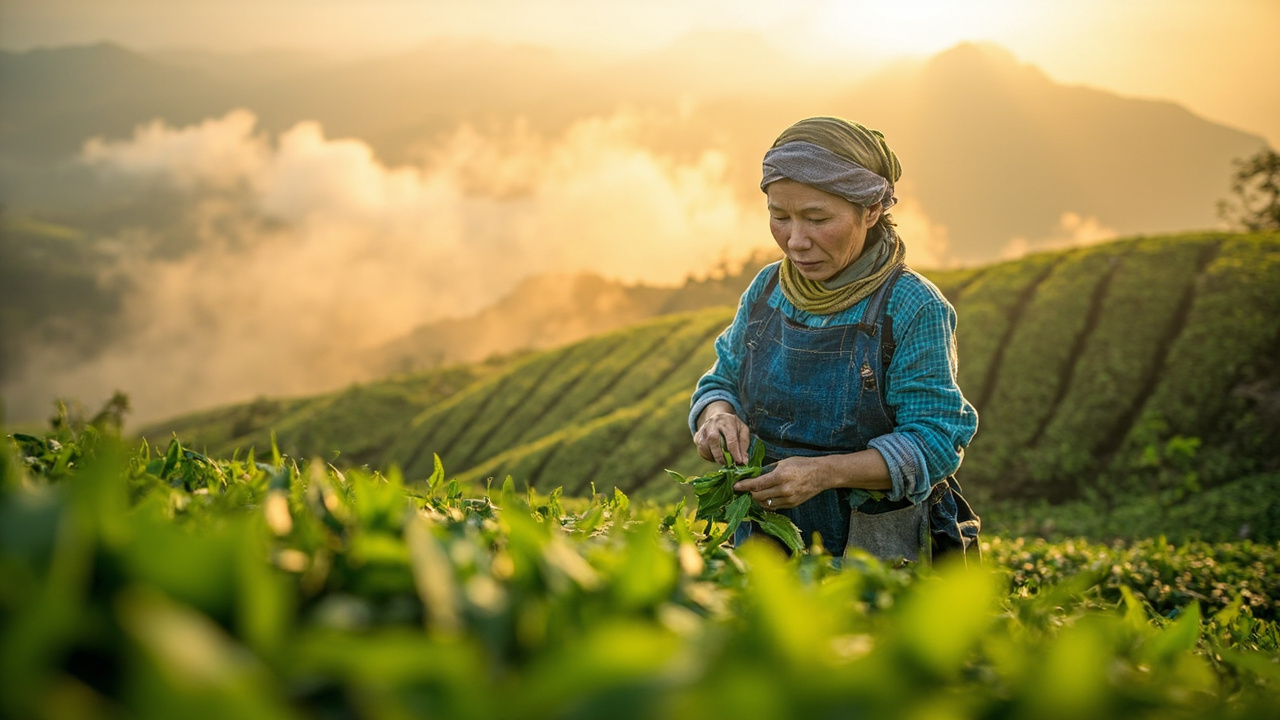
The first time I hit Qingming in China, I was standing in a tea field outside Hangzhou at 6:40 in the morning, watching a woman in a blue apron pluck two…
Qingming Festival Travel China
The first time I hit Qingming in China, I was standing in a tea field outside Hangzhou at 6:40 in the morning, watching a woman in a blue apron pluck two leaves and a bud with the speed of someone texting. She looked up, saw my camera, and laughed. “You’re early,” she said in Mandarin my phone translated badly. “Everyone else comes next week and pays triple.”
That was the whole lesson of Qingming in one sentence. The festival — Tomb-Sweeping Day, usually April 4 or 5 — is when China collectively stops, visits ancestral graves, eats cold food, and then, crucially for travelers, goes outside. The plum blossoms are peaking in the south. The tea harvest is on. The weather in most of the country is the best it will be all year. And because it’s a public holiday, 300 million people are also trying to do the same thing you are.
Qingming travel is a specific kind of trip. It’s not the chaos of Spring Festival, when half the country is shut. It’s not the crowds of Golden Week in October. It sits in a sweet spot: three days off (sometimes four with a bridge day), spring weather, and a genuine cultural event you can actually witness rather than just read about. But it also has real logistical traps — train tickets sell out weeks ahead, hotel prices in scenic areas double, and some restaurants close because staff go home to sweep graves.
This guide covers the ten places I’d actually send a first-time visitor during Qingming in 2026, based on seven years of living in Beijing and roughly forty trips around the country. I’ve included the specific trains, the specific exits, the prices in dollars and yuan, and the mistakes I made so you don’t have to.
Quick answer
Qingming Festival 2026 falls on April 5 (Sunday), with the official holiday running April 4–6. For foreign tourists, the best Qingming trips are Hangzhou for Longjing tea harvest and West Lake blossoms, Suzhou for classical gardens in peak spring, and Huangshan for mountain scenery before summer crowds. Book high-speed rail tickets on the 12306 app at least 10–14 days in advance — Qingming is one of the busiest travel weekends of the year in China, and same-week seats on popular routes simply don’t exist. Most nationalities currently benefit from China’s visa-free entry (up to 30 days for many European and Asian passports), but check your specific passport against the current visa-free transit rules before booking flights.
The Short Version
If you have 90 seconds: go to Hangzhou. Take the high-speed train from Shanghai (45 minutes, about $11/¥80), stay near West Lake, wake up early, and walk the tea villages around Longjing on April 4 or 5. It is the single best Qingming experience for a first-timer — manageable, beautiful, English-friendly enough, and the tea harvest only happens once a year. Skip Beijing during Qingming unless you specifically want the Great Wall with spring flowers; the city itself is fine but the point of the holiday is to be outside, and Beijing’s spring is short and windy.
How I Picked These
I’ve spent seven Qingmings in China. Two in Beijing, two in Zhejiang, one in Anhui, one in Sichuan, one in Yunnan. I’ve also made the mistake of trying to book a Shanghai–Hangzhou train four days before Qingming (don’t). The ten places below are the ones I’d send a friend to, ranked by how well they work for a first-time visitor during this specific three-day window. I weighted four things: weather reliability in early April, whether the place has a genuine Qingming-specific thing happening (tea, blossoms, grave-sweeping traditions, temple fairs), how easy it is to navigate without Mandarin, and whether the crowds are manageable. Some famous places didn’t make the cut — Guilin is gorgeous but the Li River is often foggy and drizzly in early April, and Zhangjiajie’s cable car queues during Qingming are genuinely miserable. I’ve noted those in the FAQ.
Comparison Table
| Rank | Place | Best For | Approx Cost (USD) | Time Needed | When to Go |
|---|---|---|---|---|---|
| 1 | Hangzhou | Tea harvest, West Lake blossoms | $150–250/day | 2–3 days | April 4–5 |
| 2 | Suzhou | Classical gardens, canals | $120–200/day | 2 days | April 3–5 |
| 3 | Huangshan | Mountain scenery, sea of clouds | $180–280/day | 2 days | April 4–6 |
| 4 | Chengdu | Pandas, teahouses, Sichuan food | $100–180/day | 3 days | Any of the 3 days |
| 5 | Wuyishan | Tea mountains, hiking, rafting | $130–220/day | 2–3 days | April 4–6 |
| 6 | Beijing | Great Wall in bloom, temples | $140–230/day | 3 days | April 4–6 |
| 7 | Yangzhou | Slender West Lake, spring gardens | $110–190/day | 2 days | April 3–5 |
| 8 | Dali | Erhai Lake, Bai villages | $90–160/day | 3–4 days | April 4–7 |
| 9 | Kaifeng | Qingming Riverside scroll festival | $80–140/day | 1–2 days | April 4–6 |
| 10 | Nanjing | Plum blossoms, Ming history | $120–200/day | 2 days | April 3–5 |
1. Hangzhou — The Tea Harvest Is the Whole Point
I’ve been to West Lake maybe fifteen times and I still get slightly emotional walking the Su Causeway at 7 a.m. in early April, when the willows are that specific yellow-green and the lake is flat and there are maybe six other people on the whole path. By 10 a.m. it’s a different place. By noon on a Qingming Saturday it’s a crush.
Hangzhou works during Qingming because the Longjing (Dragon Well) tea harvest peaks in the first two weeks of April. The villages of Meijiawu and Longjing, in the hills southwest of the lake, are full of pickers, and the tea you buy there is the freshest it will ever be. A 50g tin of pre-Qingming Longjing runs $30–80 (¥200–550) depending on grade; the stuff picked before April 5 is the most expensive and the most prized. You can also just sit in a teahouse by the lake and drink it, which is honestly the better move.
📍 Location: West Lake district (Shangcheng), plus Meijiawu and Longjing villages in Xihu District, about 30 minutes by taxi from the lake.
🎫 Entry fee: West Lake itself is free. Leifeng Pagoda is $5 (¥40). Lingyin Temple is $10 (¥75) including the Feilai Feng grottoes.
🕐 Opening hours: West Lake is always open. Lingyin Temple 7 a.m.–6 p.m. Tea villages operate roughly 8 a.m.–6 p.m., longer on weekends.
🚇 How to get there: From Shanghai Hongqiao, high-speed train to Hangzhou East (45 min, $11–16 / ¥80–115). From Hangzhou East, Metro Line 1 to Longxiangqiao (Exit B), walk 10 minutes to the lake. For tea villages, take Metro Line 1 to Wushan Square then bus 4 or a $6 (¥45) Didi.
⏰ When to visit: April 4–5 for the harvest. Go to West Lake before 8 a.m. or after 5 p.m. Tea villages are best 8–10 a.m. Avoid Saturday if you can.
💡 Insider tips: Buy tea directly from a farmer, not a shop on the lake — prices are 3x. Set up Alipay or WeChat Pay before you arrive; many tea stalls don’t take cash or foreign cards. English is limited outside hotels, so have a translation app ready. The China SIM and internet guide covers the VPN situation — you’ll want one for Google Maps.
I once paid $90 for 100g of tea from a shop near the lake, then found the same grade for $25 in Meijiawu the next day. Learn from me.
2. Suzhou — Gardens Without the Summer Humidity
Suzhou in early April is what people imagine when they say “classical China.” The gardens are small, dense, and designed for exactly this weather — cool, slightly damp, with blossoms just opening. The Humble Administrator’s Garden (Zhuozheng Yuan) at 8 a.m. on a weekday is genuinely one of the most beautiful places in the country. At 11 a.m. on a Qingming Saturday it is a queue.
The thing most tourists miss: Suzhou’s gardens are best experienced as a sequence, not individually. Do the Humble Administrator’s Garden first, then walk 15 minutes to the Lion Grove Garden, then take a canal boat to the Master of the Nets. The whole thing takes half a day and gives you a sense of how the city was designed.
📍 Location: Gusu District (old town), walkable between most major gardens.
🎫 Entry fee: Humble Administrator’s Garden $10 (¥70), Lion Grove $5 (¥40), Master of the Nets $5 (¥40). Combined tickets around $18 (¥130).
🕐 Opening hours: Most gardens 7:30 a.m.–5:30 p.m., last entry 4:30 p.m. Closed Mondays at some sites — check ahead.
🚄 How to get there: High-speed train from Shanghai (25 min, $6–10 / ¥40–70) to Suzhou or Suzhou North. From Suzhou Station, Metro Line 4 to Beisita, Exit 3, walk 10 minutes to the garden district.
⏰ When to visit: Weekday mornings. April 3 or 4 if you can shift your schedule. Qingming day itself is packed.
💡 Insider tips: Buy garden tickets on the official Suzhou Garden WeChat mini-program, not at the gate — you skip a 40-minute line. The canal boat from Pingjiang Road to the Master of the Nets is $20 (¥150) and worth it. Try the local squirrel-shaped mandarin fish at Songhelou — it’s a Suzhou specialty and about $15 (¥110). English signage is decent in gardens but poor in the old town alleys.
3. Huangshan — Sea of Clouds, If You’re Lucky
Huangshan is a gamble in early April. I’ve been twice during Qingming: once I got the famous sea of clouds and stood on Bright Summit at sunrise feeling like I’d walked into a Song dynasty painting. Once I got fog so thick I couldn’t see the person next to me. Both trips were worth it, but you need to know what you’re signing up for.
The mountain is a 2-day trip minimum. You take the cable car up, stay overnight in one of the summit hotels (book 3–4 weeks ahead — they sell out for Qingming), and hike the loop. The famous spots are Bright Summit, Flying Over Stone, and the West Sea Grand Canyon. The West Sea loop is the best hike on the mountain and takes about 4 hours.
📍 Location: Huangshan Scenic Area, about 1 hour by bus from Huangshan North Railway Station.
🎫 Entry fee: Park entry $27 (¥190), Yungu cable car $12 (¥80) each way, West Sea cable car $15 (¥100).
🕐 Opening hours: Park 6:30 a.m.–4:30 p.m. (last entry). Cable cars 7 a.m.–4:30 p.m.
🚄 How to get there: High-speed train to Huangshan North from Shanghai (2.5 hrs, $40 / ¥280) or Hangzhou (1.5 hrs, $25 / ¥170). From the station, shuttle bus to the scenic area transfer center ($4 / ¥30), then park bus to the cable car.
⏰ When to visit: April 4–6. Arrive on the 4th, hike the 5th, descend the 6th. Avoid the 6th afternoon — everyone leaves at once.
💡 Insider tips: Bring cash for the summit hotels — some don’t take foreign cards. Pack layers; it can be 5°C at the summit and 20°C at the base. The sunrise at Bright Summit is worth the 4:30 a.m. wake-up, but only if the forecast is clear. Book summit hotels through Trip.com or the official Huangshan WeChat account. English is very limited on the mountain; download offline maps.
I met a retired teacher from Hefei on the West Sea trail who insisted on sharing his boiled eggs with me. We couldn’t really talk. It was one of the best meals of the trip.
4. Chengdu — Pandas, Teahouses, and the Best Food in China
Chengdu doesn’t have a specific Qingming event, and that’s exactly why I’m recommending it. While the rest of the country is fighting for train tickets to scenic spots, Chengdu just… is Chengdu. The pandas are there. The teahouses are there. The food is the best in China and I will argue about this with anyone.
The panda base is the obvious draw. Go at 7:30 a.m. when it opens — the pandas are active and the crowds are thin. By 10 a.m. it’s a zoo in the bad sense. After pandas, spend the afternoon at People’s Park in a teahouse doing absolutely nothing, which is the correct Chengdu activity. Then eat. Then eat again.
📍 Location: Chengdu Research Base of Giant Panda Breeding is in Chenghua District, 30 min north of downtown. Teahouses cluster around People’s Park in Qingyang District.
🎫 Entry fee: Panda base $8 (¥55). People’s Park free. Teahouse tea $3–8 (¥20–55).
🕐 Opening hours: Panda base 7:30 a.m.–6 p.m. (last entry 5 p.m.). Teahouses roughly 8 a.m.–10 p.m.
🚇 How to get there: Metro Line 3 to Panda Avenue, Exit B, then bus 87 or a $3 (¥20) Didi. For People’s Park, Metro Line 2 to People’s Park, Exit B.
⏰ When to visit: Any of the three Qingming days. Chengdu is less affected by holiday crowds than coastal cities.
💡 Insider tips: Book panda base tickets online — they cap daily entries. The Chengdu guide has a full food map. Hotpot is a must but ask for 微辣 (mild) if you’re not used to Sichuan pepper. English is more common here than in most Chinese cities, but still limited outside hotels.
5. Wuyishan — The Tea Mountain Nobody Tells You About
Wuyishan is where oolong tea comes from, and in early April the mountains are green, the rivers are full, and the tourists are mostly Chinese. It’s a UNESCO site with a landscape that looks like someone drew it: vertical rock pillars, a slow river winding between them, and tea bushes growing in every crack.
The classic experience is the Nine-Bend River bamboo raft, which takes about 90 minutes and floats you through the whole scenic area. It’s $20 (¥140) and worth every yuan. Then hike the Tianyou Peak trail for the view back over the river. Two days is enough.
📍 Location: Wuyishan Scenic Area, Fujian Province. The town is Wuyishan City.
🎫 Entry fee: Scenic area $20 (¥140) for 2 days, bamboo raft $20 (¥140) extra.
🕐 Opening hours: Scenic area 6:30 a.m.–6 p.m. Rafts run 7:30 a.m.–4 p.m.
🚄 How to get there: High-speed train to Wuyishan North from Shanghai (3.5 hrs, $55 / ¥380) or Fuzhou (1 hr, $20 / ¥140). From the station, bus 6 or a taxi ($5 / ¥35) to the scenic area.
⏰ When to visit: April 4–6. Book the raft the moment you arrive — they sell out daily.
💡 Insider tips: Buy rock tea (yancha) directly from a farmer in the village of Tianxin — the good stuff is $40–100 (¥280–700) per 50g. The raft is best at 8 a.m. before the sun gets harsh. Bring a rain jacket; April showers are common. English is very limited here.
6. Beijing — The Great Wall in Bloom
Beijing in early April is a gamble. It can be 22°C and gorgeous, or it can be 8°C with sand blowing in from the Gobi. But if the weather cooperates, the Great Wall at Mutianyu with wild peach and apricot blossoms is one of the great travel experiences.
The city itself is also excellent in spring — the Temple of Heaven, the Summer Palace, and the hutongs are all at their best before the summer heat and crowds. Qingming is a public holiday so domestic tourists will be at the Wall, but Beijing is big enough to absorb them if you avoid the obvious times.
📍 Location: Mutianyu is in Huairou District, 70 km northeast of central Beijing. City sights are in Dongcheng and Haidian.
🎫 Entry fee: Mutianyu $6 (¥45) plus cable car $20 (¥140) round trip. Forbidden City $8 (¥60). Temple of Heaven $5 (¥35).
🕐 Opening hours: Mutianyu 7:30 a.m.–6 p.m. Forbidden City 8:30 a.m.–5 p.m., closed Mondays.
🚇 How to get there: For Mutianyu, take the 916 Express bus from Dongzhimen to Huairou, then a local taxi. Or book a private car ($60–80 / ¥420–560). For the Forbidden City, Metro Line 1 to Tian’anmen East, Exit A.
⏰ When to visit: Mutianyu on a weekday morning. The Forbidden City requires advance booking — do it 7 days ahead.
💡 Insider tips: The Beijing guide has the full transit breakdown. Skip the Forbidden City on Qingming day itself — it’s a crush. The Temple of Heaven at 7 a.m. is where locals do tai chi and it’s free to watch.
7. Yangzhou — The Underrated Spring City
Yangzhou is what Suzhou was 20 years ago — same canal-town aesthetic, fewer tourists, cheaper. Slender West Lake in early April is genuinely beautiful, with willows and blossoms and a pace that feels like a different century.
The city is small enough to walk. The main sights are Slender West Lake, the Ge Garden, and Dongguan Street. Two days is plenty. The food is also excellent — Yangzhou fried rice is from here, and the morning dim sum tradition (zaocha) is worth waking up for.
📍 Location: Hanjiang District (Slender West Lake) and Guangling District (old town).
🎫 Entry fee: Slender West Lake $15 (¥100), Ge Garden $5 (¥40).
🕐 Opening hours: Slender West Lake 6:30 a.m.–6 p.m. Ge Garden 7:30 a.m.–5:30 p.m.
🚄 How to get there: High-speed train from Shanghai (2 hrs, $20 / ¥140) or Nanjing (40 min, $10 / ¥70). From Yangzhou Station, bus 1 or a taxi ($4 / ¥30) to the lake.
⏰ When to visit: April 3–5. Weekday mornings for the lake.
💡 Insider tips: The zaocha breakfast at Fuchun or Gongdelin is a Yangzhou institution — go at 7 a.m. The lake is best entered from the south gate and walked north. English is limited.
8. Dali — Erhai Lake and Bai Villages
Dali is a longer trip — you need 3–4 days — but if you have the time, it’s the most relaxed Qingming destination on this list. The old town sits between Erhai Lake and the Cangshan mountains, and the surrounding Bai villages are full of temples, markets, and tea.
The classic move is to rent a scooter or e-bike and circle the lake, stopping at villages like Xizhou and Shuanglang. It takes a full day and costs about $15 (¥100) in rental. The old town itself is touristy but pleasant.
📍 Location: Dali Old Town, Yunnan Province. Erhai Lake loop is about 130 km.
🎫 Entry fee: Old town free. Three Pagodas $11 (¥75). Cangshan cable car $40 (¥280) round trip.
🕐 Opening hours: Three Pagodas 8 a.m.–6 p.m. Cable car 8:30 a.m.–4:30 p.m.
✈️ How to get there: Fly to Dali Airport from major cities, or high-speed train from Kunming (2 hrs, $20 / ¥140). From the airport or station, taxi to the old town ($10 / ¥70).
⏰ When to visit: April 4–7. The lake loop is best on a weekday.
💡 Insider tips: The Bai market in Xizhou runs every morning and is the real thing. Altitude is 2,000m — take it easy the first day. English is more common here than in most of Yunnan.
9. Kaifeng — The Qingming Festival Capital
Kaifeng is the only city on this list with a Qingming-specific festival. The Qingming Riverside Landscape Garden is a theme park built around the famous Song dynasty painting “Along the River During Qingming,” and during the festival it hosts reenactments, performances, and a genuinely fun atmosphere.
It’s a smaller city and less polished than the others, but if you want to actually experience Qingming as a cultural event rather than just a long weekend, this is the place. One or two days is enough.
📍 Location: Longting District, Kaifeng, Henan Province.
🎫 Entry fee: Qingming Riverside Garden $17 (¥120). Dragon Pavilion $5 (¥35).
🕐 Opening hours: 8:30 a.m.–6 p.m., extended to 9 p.m. during the festival.
🚄 How to get there: High-speed train from Zhengzhou (20 min, $5 / ¥35) or Beijing (3 hrs, $40 / ¥280). From Kaifeng North, bus or taxi to the garden ($4 / ¥30).
⏰ When to visit: April 4–6 specifically for the festival.
💡 Insider tips: The night performances during the festival are better than the daytime ones. Kaifeng’s night market on Gulou Square is excellent and cheap. English is very limited.
10. Nanjing — Plum Blossoms and Ming History
Nanjing in early April is a history trip with flowers. The plum blossoms on Purple Mountain peak in late March and early April, and the Ming Xiaoling Mausoleum and Sun Yat-sen Mausoleum are both set in the same forested area. The city is also home to the Nanjing Massacre Memorial, which is heavy but important.
Two days covers the main sights. The city is walkable in the central areas and has good metro coverage.
📍 Location: Xuanwu District (Purple Mountain) and Qinhuai District (old town).
🎫 Entry fee: Ming Xiaoling $10 (¥70), Sun Yat-sen Mausoleum free (book ahead), Massacre Memorial free.
🕐 Opening hours: Most sights 8:30 a.m.–5 p.m., closed Mondays.
🚄 How to get there: High-speed train from Shanghai (1 hr, $20 / ¥140) or Beijing (3.5 hrs, $60 / ¥420). Metro Line 2 to Muxuyuan for Purple Mountain.
⏰ When to visit: April 3–5. Purple Mountain is best on a weekday morning.
💡 Insider tips: The Massacre Memorial requires a reservation and is emotionally intense — plan a quiet evening after. The Confucius Temple area at night is the best food spot. English signage is good at major sights.
FAQ summary
Qingming Festival 2026 runs April 4–6, with the actual festival day on April 5. For first-time visitors, Hangzhou is the single best Qingming destination because of the Longjing tea harvest and West Lake blossoms, followed by Suzhou and Huangshan. High-speed rail tickets sell out 10–14 days in advance, so book on the 12306 app as soon as your dates are set. Most Western and Southeast Asian passports currently qualify for visa-free entry to China for up to 30 days, but policies change — verify your specific passport before booking. Expect to spend $100–250 per day including hotels, food, and transport, with scenic-area hotels roughly doubling in price during the holiday.
FAQ
Q: Is Qingming a good time to visit China as a first-timer? A: Yes, with caveats. The weather is some of the best of the year in most of the country, and the tea harvest and blossoms are genuinely special. The downside is that it’s a major domestic travel holiday, so trains and hotels book out early. If you plan 3–4 weeks ahead, it’s an excellent window.
Q: Do I need a visa for China in 2026? A: Many nationalities — including most EU countries, Australia, Japan, and several Southeast Asian nations — currently have visa-free entry for up to 30 days. US and UK passport holders generally still need a visa, though transit-without-visa options exist. Check the China visa guide for your specific case.
Q: How far in advance should I book trains for Qingming? A: 10–14 days minimum for popular routes like Shanghai–Hangzhou, Beijing–Shanghai, and anything to Huangshan. Tickets open 15 days before travel on the 12306 app. If you’re booking less than a week out, expect to pay for flights or take slower trains.
Q: What’s the weather like during Qingming? A: Variable. South of the Yangtze (Hangzhou, Suzhou, Nanjing) is usually 12–22°C with some rain. Beijing is 8–20°C and windy. Yunnan is warm and dry. Huangshan can be cold and foggy at the summit. Pack layers and a rain jacket regardless.
Q: Can I use Alipay or WeChat Pay as a foreigner? A: Yes. Both apps now support foreign cards, and setup takes about 10 minutes. The payment guide walks through it. You’ll still want some cash for small tea stalls and rural areas.
Q: Is English widely spoken at these destinations? A: Not really. Hotels in major cities have some English, but restaurants, taxis, and scenic areas mostly don’t. Download a translation app (Baidu Translate handles Chinese better than Google) and learn a few phrases. It’s manageable but not effortless.
Q: What should I avoid during Qingming? A: Zhangjiajie (cable car queues are brutal), Guilin (often foggy and drizzly), and any major scenic spot on Qingming day itself. Also avoid trying to book same-week train tickets on popular routes — you’ll be stuck.
The Honest Wrap-up
This list is for first-time visitors who want a real Qingming experience without the chaos of a fully domestic holiday itinerary. It’s not for people who want to wing it — Qingming rewards planning, and the difference between a great trip and a frustrating one is usually whether you booked the train three weeks ago. If you’re the type who likes to show up and figure it out, come in late April instead. If you’re willing to plan, Qingming is one of the best windows of the year. My one piece of advice: pick two places, not five. China’s high-speed rail makes everything look close on the map, but the holiday crowds turn a 45-minute train into a two-hour ordeal. Slow down. Drink the tea. Watch the blossoms. That’s the point.
More guides you may like
Top 10 Bridges in China
China's bridges are engineering marvels spanning mountains, rivers, and seas. Here are 10 of the most spectacular, from ancient stone to modern steel.
8 min read

Top 10 Buddhist Sites in China
From the Leshan Giant Buddha to the Dunhuang Caves, these 10 Buddhist sites represent 2,000 years of China's spiritual heritage.
9 min read
Top 10 Day Trips from Beijing You Shouldn't Miss
Beijing is packed with history, but some of China's best experiences are just a few hours away. Here are 10 day trips that will transform your visit.
9 min read
Top 10 Hidden Gems in China Off the Beaten Path
Beyond the Great Wall and Terracotta Warriors, China has incredible hidden destinations few tourists ever reach. Here are 10 underrated gems worth the detour.
9 min read
Top 10 Markets and Shopping Streets in China
From Shanghai's Bund to Beijing's Silk Street - 10 markets where foreigners can haggle, explore, and bring home authentic Chinese goods.
9 min read
Top 10 Museums in China You Shouldn't Miss
China's museums span 5,000 years of civilization. These 10 - from the Palace Museum to Xi'an's terracotta gallery - are unmissable for culture lovers.
9 min read