
China Tech City Shenzhen Guide
The first thing I noticed walking out of Futian Station wasn't the skyscrapers. It was the sound. A wall of electric scooters, all humming at once, weaving…
China Tech City Shenzhen Guide
The first thing I noticed walking out of Futian Station wasn’t the skyscrapers. It was the sound. A wall of electric scooters, all humming at once, weaving between pedestrians who didn’t flinch. I stood there with my suitcase like an idiot for maybe two minutes before a delivery rider in a yellow helmet swerved around me and yelled something I’m still not sure was an insult or a warning. Welcome to Shenzhen.
This city didn’t exist as a city 45 years ago. In 1980 it was a fishing town of about 30,000 people. Today it’s a megacity of over 17 million, the hardware capital of the world, and the place where your iPhone’s screen, your drone, and half the electronics in your apartment were probably designed or assembled. It’s younger than most of the people reading this.
What makes Shenzhen worth your time as a tourist isn’t the theme parks or the shopping malls, though those exist. It’s the collision of a hyper-modern tech economy with pockets of old Cantonese village life, and the fact that almost nobody outside China puts it on their first-trip itinerary. That’s a mistake. You get the infrastructure of a first-tier Chinese city with a fraction of the tourist crowds you’ll fight through in Beijing or Shanghai.
This guide covers the ten places I’d actually send a friend to, with real directions, real prices, and the stuff I wish someone had told me before my first trip here in 2019.
Quick answer
Shenzhen is a first-tier Chinese city in Guangdong province, directly across the border from Hong Kong, best visited between October and December when humidity drops and temperatures sit around 20-25°C (68-77°F). Most Western passport holders can enter visa-free for up to 30 days under China’s 2026 visa-free policy, and the city runs entirely on WeChat Pay and Alipay, so set those up before you land. Plan 3-4 days minimum, budget $80-150 per day including hotel, and use the Metro (Line 1, 2, 4, and 11 cover most tourist spots) rather than taxis during rush hour.
The Short Version
Come for 3 days. Stay near Futian or Nanshan. Spend one day doing hardware markets and Huaqiangbei, one day at OCT Loft and the art districts, and one day on the coast at Dapeng or Dameisha. Skip Window of the World unless you have kids under 10. Bring a VPN if you need Google, WhatsApp, or Instagram. Learn to say “duōshǎo qián” (how much) and let your phone do the rest.
How I Picked These
I’ve been through Shenzhen six times since 2019, mostly for work but twice just to wander. I’ve stayed in four different districts, gotten lost in the Huaqiangbei electronics maze more than once, and eaten my body weight in Cantonese roast goose. For this list I skipped anything that felt like a tourist trap and leaned on recommendations from people who actually live there: a hardware engineer I met at a co-working space in Nanshan, a hostel receptionist named Wei who grew up in Dapeng, and a taxi driver who took me to his favorite seafood spot in Shekou and refused to let me pay for the beer. If a place only shows up on English-language blogs and nowhere else, I left it out.
Comparison Table
| Rank | Place | Best For | Approx Cost (USD) | Time Needed | When to Go |
|---|---|---|---|---|---|
| 1 | Huaqiangbei Electronics Market | Tech nerds, gadget shopping | Free to browse, $20-200 to buy | 3-4 hours | Weekday morning |
| 2 | OCT Loft Creative Culture Park | Art, coffee, design | Free | 2-3 hours | Weekday afternoon |
| 3 | Dapeng Fortress & Ancient Village | History, old China | $3 (¥20) | Half day | Weekday |
| 4 | Dameisha & Xiaomeisha Beaches | Beach day, swimming | Free (beach), $7 (¥50) parking | Full day | May-Sept |
| 5 | Ping An Finance Centre Observation Deck | Views, photos | $26 (¥180) | 1-2 hours | Sunset, clear day |
| 6 | Shenzhen Museum (Civic Center) | Understanding the city | Free | 2 hours | Weekday |
| 7 | Lianhuashan Park | Walking, skyline views | Free | 1.5 hours | Early morning or sunset |
| 8 | Shekou Sea World & Nanshan | Food, nightlife, expats | Free to walk, $15-40 for dinner | Evening | Any night |
| 9 | Window of the World | Families with kids | $32 (¥220) | Half day | Weekday |
| 10 | Nantou Ancient Town | Street food, urban village | Free | 2-3 hours | Evening |
Huaqiangbei Electronics Market — Where the World’s Gadgets Are Born
I walked into the SEG Electronics Market on a Tuesday morning and immediately felt like I’d wandered into a sci-fi bazaar. Six floors of stalls, each one the size of a closet, stacked with circuit boards, camera modules, drone parts, and phone screens in every size imaginable. A woman at one stall sold nothing but USB-C connectors. That was her entire business.
This is the largest electronics market in the world, and it’s not a tourist attraction in any polished sense. It’s a working wholesale and retail hub where engineers from all over Asia come to source components. You can buy almost anything here: knockoff AirPods, legitimate DJI drone parts, custom mechanical keyboards, Raspberry Pi clones, and repair services that will fix your cracked phone screen in 40 minutes for $15 (¥110).
The famous “fake iPhone” stalls still exist but they’re less common than they used to be, and honestly the real draw is the components and accessories. Bring cash or make sure your Alipay and WeChat Pay are set up before you come, because many stalls don’t take foreign cards.
📍 Location: Futian District, centered on Huaqiang North Road. The main buildings are SEG, Huaqiang Electronics World, and the Mingtong Digital City. 🎟️ Entry fee: Free to enter and browse. 🕒 Opening hours: Roughly 10am-7pm daily, though many stalls close on Sundays. Individual vendors vary. 🚇 How to actually get there: Take Metro Line 2 or Line 7 to Huaqiang North Station, Exit A. Walk 2 minutes north and you’re in it. ⏰ When to visit: Weekday mornings are calmest. Weekends are chaos. Avoid the first week of October (Golden Week). 💡 Insider tips: Bring a photo of what you want on your phone and show it to vendors. Prices are negotiable, usually 20-30% off the first quote. Test anything electronic before you pay. Don’t buy “brand name” items expecting them to be genuine. I bought a $12 mechanical keyboard here that’s still working three years later. The vendor, a guy in his 50s named Chen, threw in a free keycap puller when I paid without haggling.
OCT Loft Creative Culture Park — Shenzhen’s Answer to 798
OCT Loft used to be a factory complex. Now it’s where designers, gallery owners, and coffee obsessives hang out in converted industrial buildings with exposed pipes and ivy crawling up the brick. I spent a rainy afternoon here in 2023, ducking between galleries and drinking a flat white that cost more than my lunch.
The park is small, maybe 30 minutes to walk end to end, but the density of interesting stuff is high. There’s a contemporary art museum (OCAT), several independent galleries, a bookstore that stocks English titles, and a rotating cast of pop-up shops selling ceramics, prints, and clothing from local designers. It’s not as big as Beijing’s 798 or Shanghai’s M50, but it’s more focused and less exhausting.
This is also where you’ll find some of the best coffee in the city. Shenzhen has a serious third-wave coffee scene and OCT Loft is its epicenter. If you’re coming from Beijing or Shanghai, you’ll notice the difference immediately.
📍 Location: Nanshan District, OCT (Overseas Chinese Town) area, near Enping Road. 🎟️ Entry fee: Free to walk around. Individual galleries and the OCAT museum may charge $3-7 (¥20-50). 🕒 Opening hours: Park is open 24/7. Most shops and galleries run 10am-10pm, some close Mondays. 🚇 How to actually get there: Metro Line 1 to Qiaocheng East Station, Exit A2. Walk 8 minutes north. ⏰ When to visit: Weekday afternoons. Weekends get crowded with photo-taking crowds. 💡 Insider tips: The OCAT museum has free entry on the first Tuesday of each month. Most galleries have English labels. The coffee is genuinely good, not just Instagram-good. Bring a light jacket if you’re visiting in winter, the buildings are drafty. I met a ceramicist here named Lin who sold me a small tea cup for $18 (¥130) and then spent 20 minutes explaining how she fires her glazes. That conversation was better than any museum tour I’ve paid for.
Dapeng Fortress and Ancient Village — The Old Shenzhen Nobody Talks About
Before Shenzhen was a tech city, it was a walled military outpost. Dapeng Fortress was built in 1394 during the Ming dynasty to defend against pirates and Japanese raiders, and it’s still standing, mostly intact, about 50km east of the city center.
Walking through the stone gates feels like stepping out of Shenzhen entirely. Narrow alleys, old Hakka and Cantonese houses, a few temples, and a handful of families who still live inside the walls. It’s quiet. Almost nobody speaks English. I got lunch at a tiny noodle shop run by an elderly woman who pointed at a pot and handed me a bowl without asking what I wanted. It was excellent.
The fortress is small enough to cover in two hours, but the surrounding Dapeng Peninsula is worth a full day. There are beaches, hiking trails, and a few boutique guesthouses if you want to stay overnight. This is where Shenzhen locals go to escape the city, and it’s the closest thing you’ll find to “old China” within the city limits.
📍 Location: Dapeng New District, about 50km east of Futian. The village is called Dapeng Suocheng. 🎟️ Entry fee: $3 (¥20) for the fortress. Beaches nearby are free or charge $2-5 (¥15-35) for parking. 🕒 Opening hours: Fortress 8:30am-5:30pm daily. Village streets are always accessible. 🚇 How to actually get there: No direct Metro. Take Metro Line 3 to Shuanglong Station, then bus M471 or a Didi (ride-hailing app) for about $15 (¥110) and 40 minutes. Or book a driver through your hotel. ⏰ When to visit: Weekday mornings. Weekends and holidays are packed with domestic tourists. 💡 Insider tips: Bring cash, many small vendors don’t take WeChat Pay. Wear comfortable shoes, the alleys are uneven. The seafood restaurants near the harbor are better and cheaper than the ones inside the fortress. Download a translation app, English is rare here. I got mildly lost trying to find the exit and ended up in someone’s courtyard. The owner laughed, pointed me back toward the main gate, and offered me tea. I declined because I was already late, which I still regret.
Dameisha and Xiaomeisha Beaches — Shenzhen’s Coastline
Shenzhen has beaches. This surprises people. Dameisha and Xiaomeisha are the two most accessible, both on the eastern coast about 30km from the city center, and both get packed on summer weekends with locals escaping the heat.
Dameisha is the bigger and more developed of the two, with a long boardwalk, rental umbrellas, and a strip of seafood restaurants. Xiaomeisha is smaller and slightly quieter, though it’s been under renovation on and off for years. The water is warm from May through October, and while it’s not the Maldives, it’s clean enough for swimming and the sand is soft.
What I like about this area is that it feels like a real beach day, not a tourist performance. Families bring tents and portable BBQs. Teenagers play volleyball. Old men fish off the rocks. It’s the kind of place where you can spend six hours doing nothing and feel like you used your time well.
📍 Location: Yantian District, eastern Shenzhen. Dameisha and Xiaomeisha are two adjacent coves. 🎟️ Entry fee: Free. Umbrella and chair rentals run $7-15 (¥50-110). Parking is $5-10 (¥35-70). 🕒 Opening hours: Beaches are open 24/7 but swimming is only permitted during daylight hours with lifeguards on duty (roughly 9am-6pm in summer). 🚇 How to actually get there: Metro Line 8 to Dameisha Station, Exit A. You’re a 5-minute walk from the sand. This line opened in 2020 and made the beaches way more accessible. ⏰ When to visit: May to September for swimming. Weekday mornings to avoid crowds. Avoid public holidays entirely. 💡 Insider tips: Bring your own towel and sunscreen, prices at beach vendors are inflated. The seafood restaurants along the boardwalk are fine but the ones a block inland are cheaper and better. Lockers are available for $3-5 (¥20-35). The Metro back to the city gets very crowded after 5pm on summer weekends. I made the mistake of going on a Saturday in July. I spent more time waiting for the Metro home than I did on the beach. Go on a Tuesday.
Ping An Finance Centre Observation Deck — The View That Explains the City
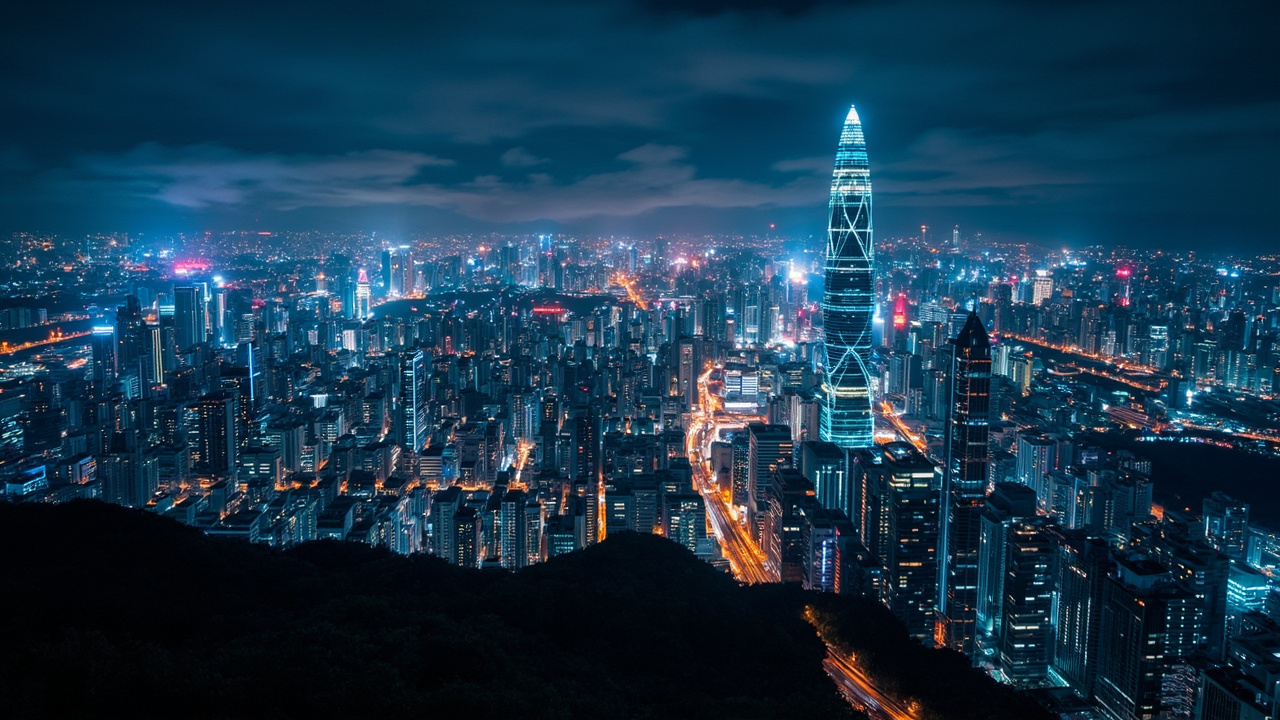
The Ping An Finance Centre is the tallest building in Shenzhen and the second-tallest in China, at 599 meters. The observation deck, called Free Sky, sits on floors 116 and 118, and on a clear day you can see all the way to Hong Kong.
I went up at sunset on a Thursday in November. The line was short, the view was absurd, and I stood there for 40 minutes watching the city light up below me. You can see the border with Hong Kong, the sprawl of Nanshan and Futian, the ports, the mountains in the distance. It’s the single best way to understand how big and how new this city is.
The deck itself is well-designed, with glass floors in one section and a small cafe. It’s not cheap, but it’s worth doing once. Book tickets online in advance if you’re going on a weekend, and check the weather forecast before you go. On a hazy day you’ll see nothing.
📍 Location: Futian District, Ping An Finance Centre, 5033 Yitian Road. 🎟️ Entry fee: $26 (¥180) for adults, $18 (¥125) for children and seniors. 🕒 Opening hours: 10am-9pm daily, last entry at 8pm. Hours can change seasonally. 🚇 How to actually get there: Metro Line 1 or Line 3 to Shopping Park Station, Exit D. Walk 5 minutes. Or Line 11 to Futian Station, Exit B. ⏰ When to visit: Sunset on a clear weekday. Check the Air Quality Index, anything above 100 means haze. 💡 Insider tips: Buy tickets on the official WeChat mini-program or through Trip.com to skip the line. Bring your passport, they check ID. The glass floor section is fun but the outdoor-ish viewing area on 118 is better for photos. No tripods allowed. The elevator ride takes 55 seconds and my ears popped twice. Worth it.
Shenzhen Museum — The 40-Year Story of a City That Didn’t Exist
If you want to understand how Shenzhen went from fishing villages to megacity in four decades, spend two hours at the Shenzhen Museum in Civic Center. The permanent exhibition on the city’s modern history is genuinely fascinating, with photos, documents, and artifacts from the early reform era.
I went on a rainy Tuesday and had entire galleries to myself. The museum covers the Opium War, the establishment of the Special Economic Zone in 1980, the first wave of migrant workers, and the tech boom. There’s an English audio guide available for $3 (¥20) that’s actually good, which is rare in Chinese museums.
The building itself is worth seeing, a massive modern structure near Lianhuashan Park. Combine it with a walk in the park afterward if the weather’s nice.
📍 Location: Futian District, Civic Center area, 3 Fuzhong Road. 🎟️ Entry fee: Free. Bring your passport for the security check. 🕒 Opening hours: 10am-6pm, closed Mondays. Last entry 5:30pm. 🚇 How to actually get there: Metro Line 3 or Line 4 to Children’s Palace Station, Exit B. Walk 3 minutes. ⏰ When to visit: Weekday mornings. Weekends have school groups. 💡 Insider tips: The English signage is decent but the audio guide is better. There’s a second branch of the museum in the old city near Dongmen that focuses on ancient history, worth a visit if you have time. The gift shop is surprisingly good. I spent 20 minutes in front of a photo of the first container ship to dock at Shekou in 1979. The caption said it carried 300 tons of cargo. Today the port handles over 25 million containers a year.
Lianhuashan Park — The Best Free View in Shenzhen
Lianhuashan (Lotus Hill) Park sits right in the middle of Futian, and the top of the hill gives you a panoramic view of the Civic Center, the Ping An tower, and the whole skyline. It’s free, it’s easy, and it’s where locals go to fly kites and take wedding photos.
The walk up takes about 25 minutes at a normal pace. There’s a paved path and a few sets of stairs. At the top there’s a large plaza with a statue of Deng Xiaoping, the leader who launched the reforms that created modern Shenzhen. It’s a pilgrimage site of sorts for Chinese visitors.
I went at 6:30am on a Sunday and it was already busy with tai chi groups and joggers. I went again at sunset on a Wednesday and it was quieter. Both were worth it.
📍 Location: Futian District, north of Civic Center. Main entrance on Hongli Road. 🎟️ Entry fee: Free. 🕒 Opening hours: 6am-11pm daily. 🚇 How to actually get there: Metro Line 3 or Line 4 to Children’s Palace Station, Exit B. Walk 5 minutes to the south entrance. ⏰ When to visit: Early morning or sunset. Avoid midday in summer, there’s little shade on the upper paths. 💡 Insider tips: The south entrance is the easiest climb. Bring water, vendors charge $2-3 (¥15-20) for a bottle. The kite sellers near the top will rent you a kite for $5 (¥35). The view is best after rain when the air is clear. An old man named Zhou taught me how to launch a kite properly. I still can’t do it.
Shekou Sea World and Nanshan — Where the Expats Eat
Shekou is the neighborhood where Shenzhen’s expat community lives, works, and eats. It’s near the ferry terminal to Hong Kong and Macau, and it has the highest concentration of international restaurants in the city. Sea World is a pedestrian plaza surrounded by bars, restaurants, and a grounded cruise ship that’s been converted into a shopping and dining complex.
I came here on a Friday night with a friend who’s lived in Shenzhen for eight years. We ate Sichuan food, then walked to a craft beer bar, then ended up at a late-night dumpling spot that didn’t have an English menu. The whole evening cost maybe $40 (¥290) for two people.
This isn’t the “real China” experience, and I’m not going to pretend it is. But it’s a good place to decompress, eat food that isn’t Cantonese, and meet people who can give you recommendations. The Nanshan district around it has some of the best restaurants in the city, from high-end Japanese to hole-in-the-wall noodle shops.
📍 Location: Shekou, Nanshan District. Sea World plaza is the center of the action. 🎟️ Entry fee: Free to walk around. 🕒 Opening hours: Restaurants and bars typically run until midnight or later. Some close on Mondays. 🚇 How to actually get there: Metro Line 2 to Sea World Station, Exit D. You’re right there. ⏰ When to visit: Friday or Saturday evening. Weeknights are quieter. 💡 Insider tips: The ferry to Hong Kong (China Ferry Terminal) leaves from Shekou, useful if you’re combining the two cities. Bring your passport if you’re crossing. Most restaurants take WeChat Pay but a few smaller ones are cash-only. The area is very walkable. My friend ordered for us in Mandarin and the waitress asked if I was Korean. I said American. She nodded and brought extra chili oil, which I chose to interpret as a compliment.
Window of the World — Skip It Unless You Have Kids
I’ll be honest: Window of the World is not for me. It’s a theme park with miniature replicas of global landmarks, the Eiffel Tower, the Taj Mahal, the Pyramids, all scaled down and clustered together. It opened in 1994 and feels like it.
That said, if you’re traveling with children under 10, they’ll probably love it. There are rides, shows, and a lot of space to run around. It’s well-maintained and the scale models are genuinely impressive in a kitschy way. Adults traveling without kids can skip it without regret.
The park is huge, over 48 hectares, and you’ll walk 5-6km if you try to see everything. Bring sunscreen and comfortable shoes.
📍 Location: Nanshan District, 9037 Shennan Boulevard. 🎟️ Entry fee: $32 (¥220) for adults, $18 (¥125) for children under 1.5m. 🕒 Opening hours: 9:30am-9:30pm daily, with evening shows starting around 7pm. 🚇 How to actually get there: Metro Line 1 or Line 2 to Window of the World Station, Exit J. You walk straight into the entrance. ⏰ When to visit: Weekday mornings if you’re going at all. Avoid summer weekends. 💡 Insider tips: Buy tickets online for a small discount. The evening show is the best part if you do go. Food inside is overpriced, eat before you arrive. The park is genuinely exhausting, plan for a rest day after. I went once in 2019 and haven’t been back. The Eiffel Tower replica is 108 meters tall, which is about a third of the real one. Make of that what you will.
Nantou Ancient Town — The Urban Village Time Forgot
Nantou is the oldest part of Shenzhen, a walled village that predates the city by centuries. It’s been partially restored and partially left alone, and the result is a strange, wonderful mix of old temples, street food stalls, and trendy cafes that have moved into renovated buildings.
I came here on a Thursday evening and ate my way through the main street: grilled squid, stinky tofu, mango sticky rice, and a bowl of noodles that cost $2 (¥15). The whole area is pedestrian-only after 6pm and it fills up with locals and students.
This is the Shenzhen that existed before the tech boom, and it’s worth seeing precisely because it’s disappearing. The government has been renovating the area for years, and each time I visit, more of the old character has been sanded down. Go soon.
📍 Location: Nanshan District, Nantou Ancient Town, near Shennan Boulevard. 🎟️ Entry fee: Free. 🕒 Opening hours: Streets are always open. Most food stalls run 5pm-midnight. 🚇 How to actually get there: Metro Line 1 to Taoyuan Station, Exit A. Walk 10 minutes north. ⏰ When to visit: Evening, any day. Weekends are busiest. 💡 Insider tips: Bring cash for the smaller food stalls. The temple in the center of the village is active, be respectful if you go in. The coffee shops on the side streets are quieter than the main drag. Try the roast goose if you see it. I ate a bowl of noodles at a stall run by a woman who’d been there for 30 years. She told me the neighborhood used to be mostly factories. Now it’s mostly tourists. She seemed fine with it.
FAQ summary
Shenzhen is visa-free for most Western passport holders for up to 30 days in 2026, runs almost entirely on WeChat Pay and Alipay, and is best visited October through December. Budget $80-150 per day including accommodation, plan 3-4 days, and use the Metro rather than taxis. English is limited outside of hotels and expat areas, so download a translation app and set up your payment apps before you arrive. The city is safe, modern, and far less touristy than Beijing or Shanghai, which is exactly why it’s worth your time.
FAQ
Q: Do I need a visa to visit Shenzhen in 2026? A: Most Western passport holders (US, UK, EU, Australia, Canada) can enter China visa-free for up to 30 days under the current policy. If you’re coming from Hong Kong, there’s also a 5-day visa-free entry specifically for Shenzhen. Check the latest visa rules before you book, since policies can change.
Q: How do I pay for things in Shenzhen? A: WeChat Pay and Alipay are accepted almost everywhere, from Metro stations to street food stalls. Set them up before you arrive and link an international card. Cash works at some places but is increasingly rare. See our full payment guide for setup steps.
Q: Is English widely spoken in Shenzhen? A: Not really. Hotels and expat areas like Shekou are fine, but outside of that you’ll need a translation app. I use Baidu Translate or Google Translate (with a VPN). Learn a few basic Mandarin phrases and you’ll get much further.
Q: Do I need a VPN in Shenzhen? A: Yes, if you want to use Google, WhatsApp, Instagram, or Facebook. Install and test your VPN before you arrive, since VPN websites are blocked in China. See our SIM and internet guide for details.
Q: How do I get from Hong Kong to Shenzhen? A: Three main options. The high-speed train from West Kowloon Station to Futian takes 14 minutes and costs about $10 (¥75). The Metro (East Rail Line to Lo Wu or Lok Ma Chau) is cheaper but slower. Ferries run from Hong Kong’s China Ferry Terminal to Shekou. See our train guide for booking details.
Q: Is Shenzhen safe for solo travelers? A: Very. Violent crime is rare, the streets are well-lit and busy late into the night, and public transport is safe. Petty theft happens occasionally in crowded markets. Standard precautions apply.
Q: What’s the best time of year to visit Shenzhen? A: October through December. Temperatures sit between 20-25°C (68-77°F), humidity drops, and skies are clearest. Avoid July and August (hot, humid, typhoon season) and the first week of October (Golden Week, everything is packed).
The Honest Wrap-up
This guide is for travelers who want a modern, fast, slightly chaotic Chinese city without the tour buses and selfie sticks of Beijing or Shanghai. It’s not for anyone looking for ancient temples and traditional culture, though you can find pockets of that if you know where to look. It’s also not for people who want everything in English and pre-packaged, because Shenzhen doesn’t work that way.
If you’re on the fence, here’s my advice: book three nights, stay near Futian or Nanshan, and treat the first day as a scouting mission. Wander, get lost, eat something you can’t identify. The city rewards curiosity more than planning. And bring an extra bag for the electronics you’ll inevitably buy at Huaqiangbei.
More guides you may like

Top 10 Bridges in China
China's bridges are engineering marvels spanning mountains, rivers, and seas. Here are 10 of the most spectacular, from ancient stone to modern steel.
8 min read

Top 10 Buddhist Sites in China
From the Leshan Giant Buddha to the Dunhuang Caves, these 10 Buddhist sites represent 2,000 years of China's spiritual heritage.
9 min read

Top 10 Day Trips from Beijing You Shouldn't Miss
Beijing is packed with history, but some of China's best experiences are just a few hours away. Here are 10 day trips that will transform your visit.
9 min read

Top 10 Hidden Gems in China Off the Beaten Path
Beyond the Great Wall and Terracotta Warriors, China has incredible hidden destinations few tourists ever reach. Here are 10 underrated gems worth the detour.
9 min read

Top 10 Markets and Shopping Streets in China
From Shanghai's Bund to Beijing's Silk Street - 10 markets where foreigners can haggle, explore, and bring home authentic Chinese goods.
9 min read

Top 10 Museums in China You Shouldn't Miss
China's museums span 5,000 years of civilization. These 10 - from the Palace Museum to Xi'an's terracotta gallery - are unmissable for culture lovers.
9 min read