
China UNESCO Sites List
The guard at the Mogao Caves shone his flashlight across a 1,200-year-old painted ceiling and whispered, 'Look up. Don't take photos. Just look.' I stood…
China UNESCO Sites List
The guard at the Mogao Caves shone his flashlight across a 1,200-year-old painted ceiling and whispered, “Look up. Don’t take photos. Just look.” I stood there in the dark of Cave 45 for maybe four minutes, neck craned, and forgot I was supposed to be somewhere else. That’s what UNESCO sites in China do to you. They wreck your schedule.
China has 59 UNESCO World Heritage Sites as of 2026, tied with Italy for the most of any country. Most first-timers only see two or three of them. That’s fine. You don’t need to collect them like stamps. But knowing which ones actually justify the flight, the train, the 6 a.m. wake-up, and the ¥120 ticket matters.
I’ve been to 21 of them over seven years. Some I’d fly back for tomorrow. A couple I’d tell you to skip unless you have a specific reason. This list is the honest version, with real prices, real transport details, and the stuff nobody tells you until you’re standing at the wrong exit of the wrong metro station.
Quick answer
China’s most essential UNESCO sites for a first trip are the Great Wall (Mutianyu or Jinshanling sections), the Forbidden City in Beijing, the Terracotta Warriors in Xi’an, and the Classical Gardens of Suzhou. Most are reachable by high-speed rail, entry fees run $8–$30 (¥60–¥220), and the best months are April–May and September–October. If you’re transiting visa-free for 240 hours, you can realistically hit three of these in one trip.
The Short Version
If you only have 10 days: Beijing (Great Wall + Forbidden City), Xi’an (Terracotta Warriors), and one southern site like Suzhou or Huangshan. Skip Lijiang unless you love crowds. Skip the Potala Palace unless you’ve already acclimatized to altitude. Book the Forbidden City online 7 days ahead or you’re not getting in. Bring a power bank, because your phone will die from translation apps and ticket QR codes.
How I Picked These
I’ve physically visited 21 of China’s 59 sites. The other 38 I’ve either skipped on purpose, run out of time for, or decided weren’t worth a 14-hour train. I talked to local guides, hostel staff, and a Xi’an taxi driver named Liu who insisted the Terracotta Warriors were “just a bunch of dirt men” before driving me there anyway and waiting two hours. I weighted three things: how much a first-timer actually gets out of it, how easy it is to reach without a tour group, and whether the ticket price feels fair. Some famous sites didn’t make the cut. Some less-famous ones did.
Comparison Table
| Rank | Place | Best For | Approx Cost (USD) | Time Needed | When to Go |
|---|---|---|---|---|---|
| 1 | Great Wall (Mutianyu) | First-timers, photos | $6–$20 (¥45–¥140) | Half day | Apr–May, Sep–Oct |
| 2 | Forbidden City | Imperial history | $9 (¥60) | 3–4 hours | Weekday mornings |
| 3 | Terracotta Warriors | Archaeology | $17 (¥120) | Half day | Mar–May, Sep–Nov |
| 4 | Mogao Caves | Art, Buddhism | $34 (¥238) | Full day | May–Oct |
| 5 | Classical Gardens of Suzhou | Gardens, slow travel | $8–$12 (¥55–¥80) | 1–2 days | Apr, Oct |
| 6 | Huangshan | Hiking, scenery | $28 (¥190) | 2 days | Apr–May, Oct–Nov |
| 7 | Potala Palace | Tibetan culture | $29 (¥200) | Half day | May–Oct |
| 8 | Jiuzhaigou Valley | Lakes, nature | $25 (¥169) | 2 days | Sep–Oct |
| 9 | Lijiang Old Town | Naxi culture | Free entry | 1–2 days | Mar–May |
| 10 | Fujian Tulou | Architecture, rural life | $14 (¥90) | Full day | Mar–May, Oct–Nov |
1. The Great Wall at Mutianyu — The Section That Won’t Ruin Your Day
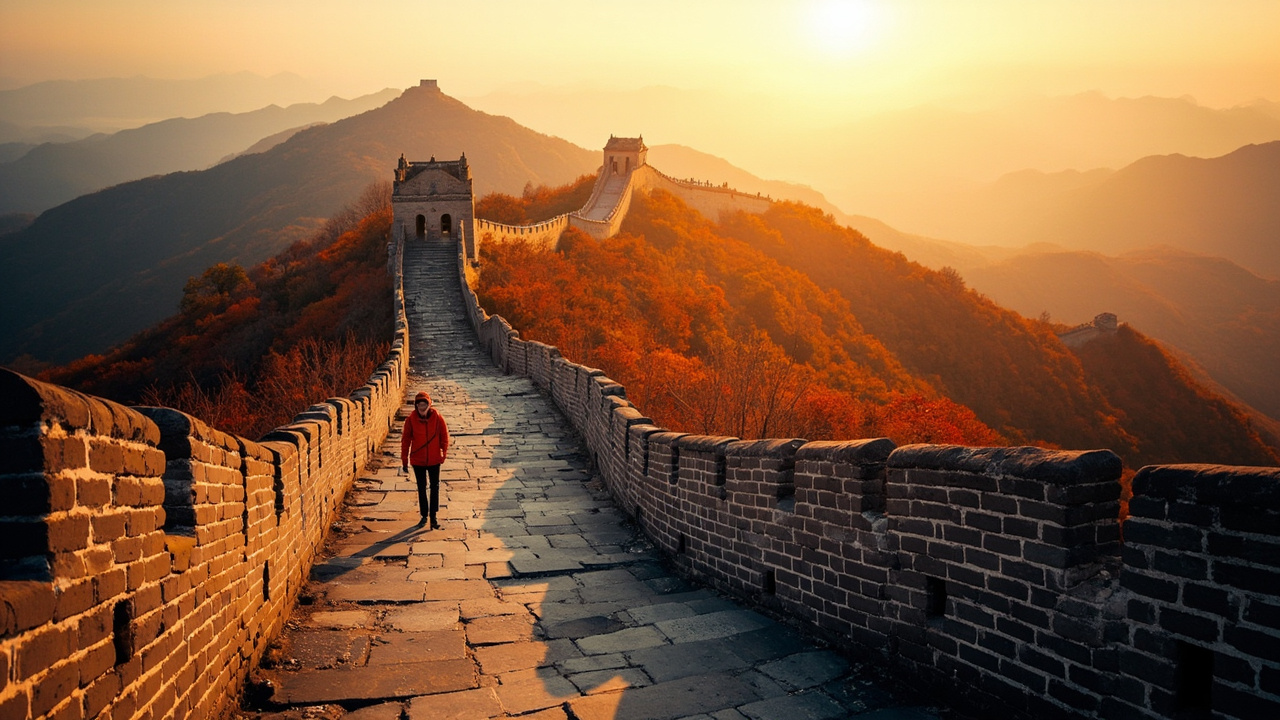
The first time I went to Badaling, I got stuck behind a tour group of 400 people from a cruise ship. I never went back. Mutianyu is the section I take everyone to now.
It’s about 90 minutes from central Beijing, restored but not Disney-fied, and the cable car saves your legs for the actual walking. The wall here climbs steeply through forested hills, and on a clear morning you can see watchtowers stacked into the distance like dominoes. The toboggan ride down is genuinely fun, not a gimmick.
📌 Location: Huairou District, about 73 km northeast of central Beijing.
🎫 Entry fee: $6 (¥45) for the wall, plus $17 (¥120) round-trip cable car. Toboggan is $14 (¥100).
🕒 Opening hours: 7:30 a.m.–5:30 p.m. (Nov–Mar), 7:00 a.m.–6:00 p.m. (Apr–Oct). Last entry 90 minutes before close.
🚇 How to actually get there: Take the 916 Express bus from Dongzhimen Bus Station (Line 2/13, Exit B), then transfer to a local minibus at Huairou. Or book a shared van from your hostel for $15–$20 (¥110–¥145) round trip. The 916 alone takes 2 hours.
⏰ When to visit: Arrive by 8 a.m. Weekdays in April or October are ideal. Avoid Chinese public holidays at all costs.
💡 Insider tips: Buy tickets on WeChat’s “Mutianyu” mini-program the night before. Bring cash for the toboggan because the card reader breaks constantly. The left fork (Tower 14 side) is less crowded than the right. There’s a Subway sandwich shop at the base, which is oddly comforting after 3 hours of stairs.
I once watched a French couple argue for 20 minutes about whether to take the cable car up or hike. Take the cable car. You’ll thank me.
2. The Forbidden City — Book the Ticket, or Don’t Bother
I made the mistake my first month in Beijing of showing up at the Meridian Gate with no reservation. The guard pointed at a sign in Chinese that basically said “come back in a week.” The Forbidden City has been reservation-only since 2015, and tickets sell out fast in peak season.
Once you’re inside, though, it’s overwhelming in the best way. 980 buildings, 8,700 rooms, and a courtyard that holds 100,000 people. The Hall of Supreme Harmony is where emperors were crowned. The smaller eastern palaces are where the real drama happened — concubines, eunuchs, poison plots. The clock gallery near the exit is a weirdly delightful detour.
📌 Location: Dongcheng District, north of Tiananmen Square.
🎫 Entry fee: $9 (¥60) Apr–Oct, $6 (¥40) Nov–Mar. Treasure Gallery extra $2 (¥10).
🕒 Opening hours: 8:30 a.m.–5:00 p.m. (Apr–Oct), 8:30 a.m.–4:30 p.m. (Nov–Mar). Closed Mondays.
🚇 How to actually get there: Take Line 1 to Tian’anmen East, Exit A. Walk north through the square. Security check takes 20–40 minutes.
⏰ When to visit: Tuesday–Thursday, right at opening. Afternoon light in the western palaces is beautiful but you’ll be fighting the exit crowds.
💡 Insider tips: Tickets release exactly 7 days ahead at 8 p.m. Beijing time on the official WeChat mini-program. Bring your passport — it’s your ticket. The audio guide ($6 / ¥40) is worth it. Skip the Starbucks inside; it’s overpriced and the line is absurd.
A woman at the ticket gate once told me in broken English, “You are lucky. Today not full.” She was right.
3. Terracotta Warriors — Worth the Hype, Barely
Everyone says the Terracotta Warriors are overrated. I don’t think they are, but I understand why people say it. You walk into Pit 1, and it’s a giant airplane hangar with 6,000 soldiers standing in formation. It’s genuinely staggering. Then you realize you’re looking at them from 30 meters away behind a railing, and the crowd is 12 people deep.
The trick is to go to Pit 3 first, then Pit 2, then Pit 1 last. Everyone does it backwards. Pit 3 is small and quiet, Pit 2 has the famous kneeling archer, and by the time you reach Pit 1, you’ve already absorbed the context and the crowd feels less crushing.
📌 Location: Lintong District, 40 km east of Xi’an.
🎫 Entry fee: $17 (¥120). Free for kids under 1.4m.
🕒 Opening hours: 8:30 a.m.–6:00 p.m. (Mar–Nov), 8:30 a.m.–5:30 p.m. (Dec–Feb).
🚇 How to actually get there: Take Line 9 to Huaqingchi, then bus 613. Or take the tourist bus 5 (306) from Xi’an Railway Station east square, $1 (¥7), 1 hour.
⏰ When to visit: Right at opening or after 3 p.m. Avoid weekends and July–August entirely.
💡 Insider tips: Hire a guide at the entrance for $15 (¥110) — the site is meaningless without context. Bring your passport for the ticket. The on-site restaurant is terrible; eat before you go. The nearby Huaqing Hot Springs are worth a 90-minute detour.
My taxi driver Liu dropped me off, ate a bowl of noodles in the parking lot, and was still waiting when I came out. “Told you,” he said. “Dirt men.”
4. Mogao Caves — The Best UNESCO Site in China
I’ll say it plainly: Mogao Caves are the single most impressive UNESCO site in China. Better than the Great Wall. Better than the Forbidden City. The problem is they’re in Dunhuang, in the middle of the Gobi Desert, 1,100 miles from Beijing.
The caves hold 45,000 square meters of Buddhist murals painted between the 4th and 14th centuries. You see maybe 8 caves on a standard tour. Each one is a time capsule: Tang dynasty dancers, Persian merchants, flying apsaras, entire sutras painted in gold. Photography is banned, which is a blessing — people actually look.
📌 Location: 25 km southeast of Dunhuang, Gansu Province.
🎫 Entry fee: $34 (¥238) for the standard A ticket (8 caves). B ticket (4 caves) is $14 (¥100).
🕒 Opening hours: 8:00 a.m.–6:00 p.m. (May–Oct), 9:00 a.m.–5:30 p.m. (Nov–Apr).
🚇 How to actually get there: Fly to Dunhuang Airport from Xi’an or Lanzhou, then take bus 12 or a taxi ($8 / ¥60) to the site.
⏰ When to visit: May, June, or September. Book the A ticket 30 days ahead on the official website — it sells out.
💡 Insider tips: The A ticket includes two short films and a guided tour; the B ticket doesn’t. Bring a scarf — the desert wind is brutal. The Dunhuang night market has excellent lamb skewers for $1 (¥7) each. Stay two nights; one is not enough.
An old caretaker there told me, in Mandarin I barely understood, that his grandfather had guarded the caves too. “Same dust,” he said. “Same light.”
5. Classical Gardens of Suzhou — The Slowest UNESCO Site
Suzhou’s gardens are not for everyone. If you’re the type who wants to “see the highlights,” you’ll be done in 40 minutes and wonder why you came. If you’re willing to sit on a stone bench for an hour and watch how the light moves across a pond, they’re transcendent.
The Humble Administrator’s Garden is the biggest and most famous. The Master of the Nets is smaller and quieter. The Lion Grove has a rock maze that kids love. I’d pick two, not four. The gardens are about 30 minutes apart by taxi, and after the third one, they blur.
📌 Location: Gusu District, central Suzhou.
🎫 Entry fee: $8–$12 (¥55–¥80) per garden. Combination tickets available.
🕒 Opening hours: 7:30 a.m.–5:30 p.m. (Mar–Nov), 7:30 a.m.–5:00 p.m. (Dec–Feb).
🚇 How to actually get there: Take the high-speed rail from Shanghai (25 min, $6 / ¥40) to Suzhou Station, then Line 4 to Beisita, Exit 4.
⏰ When to visit: April or October. Early morning on a weekday. Avoid weekends.
💡 Insider tips: Buy tickets on the Suzhou Garden WeChat mini-program. The gardens are cash-free — Alipay or WeChat Pay only. Pingjiang Road nearby has excellent tea houses. Don’t try to see all nine gardens in one day; you’ll hate them by the end.
A tea shop owner in Pingjiang Road once refused to let me pay for a second cup. “You came all this way,” she said. “Sit.”
6. Huangshan — The Mountain That Inspired a Thousand Paintings
Huangshan is what happens when a mountain decides to be a painting. Granite peaks, twisted pine trees, and clouds that roll through the valleys like slow water. It’s the mountain that Chinese landscape painters have been copying for 1,000 years.
The hike is real. The cable car takes you partway, but you’ll still climb hundreds of stone steps. The sunrise from Bright Summit is the classic experience, which means waking at 4 a.m. and standing in a crowd of 200 people. It’s still worth it.
📌 Location: Huangshan City, Anhui Province.
🎫 Entry fee: $28 (¥190) for the scenic area, plus $12–$14 (¥80–¥100) per cable car.
🕒 Opening hours: 6:30 a.m.–4:30 p.m. (peak), 7:00 a.m.–4:00 p.m. (off-peak).
🚇 How to actually get there: High-speed rail to Huangshan North Station, then bus 30 minutes to the cable car base.
⏰ When to visit: April–May or October–November. Winter is beautiful but icy.
💡 Insider tips: Stay overnight on the mountain — hotels are expensive ($100–$200 / ¥700–¥1,400) but you get the sunrise without a 3 a.m. hike. Bring layers; it’s 10°C colder up top. The “sea of clouds” is not guaranteed — check the weather forecast obsessively.
I met a retired teacher from Shanghai on Bright Summit who had come 14 times. “Every time different,” she said. “Every time same.”
7. Potala Palace — The Altitude Will Humble You
Lhasa sits at 3,650 meters. The Potala Palace climbs another 200 meters up a hillside. If you fly in from Chengdu and try to do this on day one, you will regret it. I did, and I spent the afternoon in my hotel room with a headache that felt like a vice.
The palace itself is extraordinary — 13 stories, 1,000 rooms, the winter residence of the Dalai Lamas until 1959. The tombs of past Dalai Lamas are covered in gold and jewels. The view from the top over Lhasa is worth the climb alone.
📌 Location: Chengguan District, central Lhasa, Tibet.
🎫 Entry fee: $29 (¥200) peak season, $14 (¥100) off-peak. Tickets are limited to 2,300 per day.
🕒 Opening hours: 9:00 a.m.–4:00 p.m. Timed entry only.
🚇 How to actually get there: Fly to Lhasa Gonggar Airport, then 1-hour taxi ($20 / ¥140). Or take the Qinghai-Tibet Railway from Xining (21 hours).
⏰ When to visit: May–October. Book tickets weeks ahead through a licensed tour operator — foreigners cannot buy directly.
💡 Insider tips: You need a Tibet Travel Permit, which requires booking through an agency. Budget $150–$300 for the permit and mandatory guide. Acclimatize in Lhasa for 2 days before climbing. Drink more water than you think you need.
A monk at the top, watching me gasp for air, handed me a cup of butter tea and laughed. “Slow,” he said. “Everything slow here.”
8. Jiuzhaigou Valley — Turquoise Lakes, Real Altitude
Jiuzhaigou’s lakes are so blue they look Photoshopped. They’re not. The color comes from calcium carbonate and algae, and on a sunny day the water shifts from emerald to sapphire to something close to neon. It’s the most photographed natural site in China for a reason.
The downside: it’s remote, expensive, and crowded. The park uses a shuttle bus system, and you’ll spend a lot of time waiting. The 2017 earthquake damaged some areas, but most have reopened.
📌 Location: Jiuzhaigou County, Sichuan Province.
🎫 Entry fee: $25 (¥169) plus $12 (¥90) for the shuttle bus.
🕒 Opening hours: 7:00 a.m.–6:00 p.m. (Apr–Nov), 8:30 a.m.–5:00 p.m. (Dec–Mar).
🚇 How to actually get there: Fly to Jiuzhai Huanglong Airport (30 min drive), or bus from Chengdu (8–10 hours).
⏰ When to visit: September–October for autumn colors. Avoid Golden Week.
💡 Insider tips: Stay in Zhangzha Town, not inside the park. Bring cash — ATMs are unreliable. Altitude is 2,000–3,100m; take it slow. The Five Flower Lake is the icon, but Long Lake at the top is quieter and equally beautiful.
I watched a Sichuanese family set up a picnic by the water, complete with a thermos of tea and a bag of sunflower seeds. They stayed for three hours. That’s the right way to do it.
9. Lijiang Old Town — Beautiful, Crowded, Complicated
Lijiang is the UNESCO site I have the most mixed feelings about. The old town is genuinely beautiful — cobblestone lanes, Naxi women in traditional dress, canals running through the streets. It’s also overrun with souvenir shops, karaoke bars, and tourists in rented ethnic costumes taking selfies.
Go early. Before 8 a.m., the town is quiet and you can hear the water in the canals. By 10 a.m., it’s a mob. The nearby Baisha Village is smaller, quieter, and has better murals.
📌 Location: Gucheng District, Lijiang, Yunnan Province.
🎫 Entry fee: Free to enter the old town. Individual attractions $4–$8 (¥30–¥60).
🕒 Opening hours: Always open. Attractions 8:30 a.m.–5:30 p.m.
🚇 How to actually get there: Fly to Lijiang Sanyi Airport, then 30-minute taxi ($12 / ¥85). Or train from Kunming (3.5 hours).
⏰ When to visit: March–May or October–November. Weekdays only if possible.
💡 Insider tips: Stay in Shuhe Old Town instead — quieter, cheaper, 20 minutes away. The Naxi ancient music performance is genuinely worth $15 (¥110). Skip the “traditional” restaurants on the main drag; eat at the family places on the side streets.
A Naxi woman selling embroidered bags told me, “Everyone photographs the town. Nobody talks to the town.”
10. Fujian Tulou — The Round Houses Nobody Talks About
The Fujian Tulou are circular earthen buildings, some 300 years old, up to four stories tall, housing entire clans. They look like something from another planet — massive donuts of rammed earth with a single entrance and an open courtyard in the middle.
The most famous cluster is at Hongkeng and Chuxi in Yongding County. Some are still lived in. You can walk through the courtyard, look up at the wooden galleries, and understand why UNESCO listed them in 2008.
📌 Location: Yongding and Nanjing counties, Fujian Province.
🎫 Entry fee: $14 (¥90) per cluster.
🕒 Opening hours: 8:00 a.m.–6:00 p.m.
🚇 How to actually get there: High-speed rail to Longyan, then bus or taxi ($30 / ¥210) to Hongkeng. Or join a day tour from Xiamen ($50 / ¥350).
⏰ When to visit: March–May or October–November. Avoid summer heat.
💡 Insider tips: Stay overnight in one of the tulous — basic guesthouses cost $25–$40 (¥180–¥280). Bring cash; card readers are rare. The local Hakka food is excellent — try the stuffed tofu and the salted chicken.
An elderly woman in Chuxi invited me into her family’s tulou for tea. She’d lived there her whole life. “Same house,” she said. “Different world outside.”
FAQ summary
China has 59 UNESCO World Heritage Sites, and first-time visitors should prioritize the Great Wall, Forbidden City, Terracotta Warriors, and Suzhou Gardens — all reachable by high-speed rail and bookable online. Entry fees range from free to about $34 (¥238), and most sites require advance reservations via WeChat mini-programs. The best months to visit are April–May and September–October, and 240-hour visa-free transit covers most of these destinations for eligible nationalities.
FAQ
Q: How many UNESCO World Heritage Sites does China have in 2026? A: China has 59 UNESCO World Heritage Sites as of 2026, tied with Italy for the most in the world. This includes 40 cultural sites, 15 natural sites, and 4 mixed sites.
Q: Do I need a visa to visit China’s UNESCO sites? A: Many nationalities qualify for 240-hour (10-day) visa-free transit if transiting through China to a third country. Check the China visa-free transit guide for eligible countries and entry ports. Otherwise, apply for a standard tourist visa through the China visa guide.
Q: How do I book tickets for the Forbidden City and other UNESCO sites? A: Most major sites use WeChat mini-programs for ticketing. The Forbidden City releases tickets exactly 7 days ahead at 8 p.m. Beijing time. Mogao Caves release 30 days ahead. Set up Alipay and WeChat Pay before you arrive — most sites are cash-free.
Q: What’s the best way to travel between UNESCO sites in China? A: High-speed rail connects most major sites. Beijing–Xi’an is 4.5 hours, Shanghai–Suzhou is 25 minutes, and Beijing–Shanghai is 4.5 hours. Book through the official 12306 app or Trip.com. See the China train travel guide for details.
Q: Do I need a VPN in China? A: Yes, if you want to use Google, Instagram, WhatsApp, or Gmail. Download and test a VPN before you arrive — they’re hard to install once you’re inside China. See the China SIM card and internet guide.
Q: Is English spoken at China’s UNESCO sites? A: English signage is common at major sites like the Forbidden City and Terracotta Warriors, but rare at smaller sites like Fujian Tulou. Download a translation app like Pleco or Baidu Translate with offline Chinese before you go.
Q: How much should I budget per day for visiting UNESCO sites? A: Budget $80–$150 (¥560–¥1,050) per day including entry fees, transport, food, and accommodation. Entry fees alone run $8–$34 (¥60–¥238) per site. High-speed rail tickets add $20–$80 (¥140–¥560) per leg.
The Honest Wrap-up
This list is for the traveler who wants to see the real thing, not the postcard. If you’re looking for a resort vacation with a UNESCO sticker on it, skip half of these. If you’re willing to take a 21-hour train to Lhasa, eat noodles in a parking lot with a taxi driver, and stand in the dark of a cave staring at a ceiling painted 1,200 years ago — this is your list.
Book the Forbidden City ticket the moment you know your dates. Everything else can wait. And bring a power bank. Your phone will die. Mine always does.
More guides you may like

Top 10 Bridges in China
China's bridges are engineering marvels spanning mountains, rivers, and seas. Here are 10 of the most spectacular, from ancient stone to modern steel.
8 min read

Top 10 Buddhist Sites in China
From the Leshan Giant Buddha to the Dunhuang Caves, these 10 Buddhist sites represent 2,000 years of China's spiritual heritage.
9 min read

Top 10 Day Trips from Beijing You Shouldn't Miss
Beijing is packed with history, but some of China's best experiences are just a few hours away. Here are 10 day trips that will transform your visit.
9 min read

Top 10 Hidden Gems in China Off the Beaten Path
Beyond the Great Wall and Terracotta Warriors, China has incredible hidden destinations few tourists ever reach. Here are 10 underrated gems worth the detour.
9 min read

Top 10 Markets and Shopping Streets in China
From Shanghai's Bund to Beijing's Silk Street - 10 markets where foreigners can haggle, explore, and bring home authentic Chinese goods.
9 min read

Top 10 Museums in China You Shouldn't Miss
China's museums span 5,000 years of civilization. These 10 - from the Palace Museum to Xi'an's terracotta gallery - are unmissable for culture lovers.
9 min read