
Fenghuang Ancient Town Guide
The first thing I noticed wasn't the stilt houses or the river. It was the sound of a woman slapping laundry against a stone slab at 6:40 in the morning,…
Fenghuang Ancient Town Guide
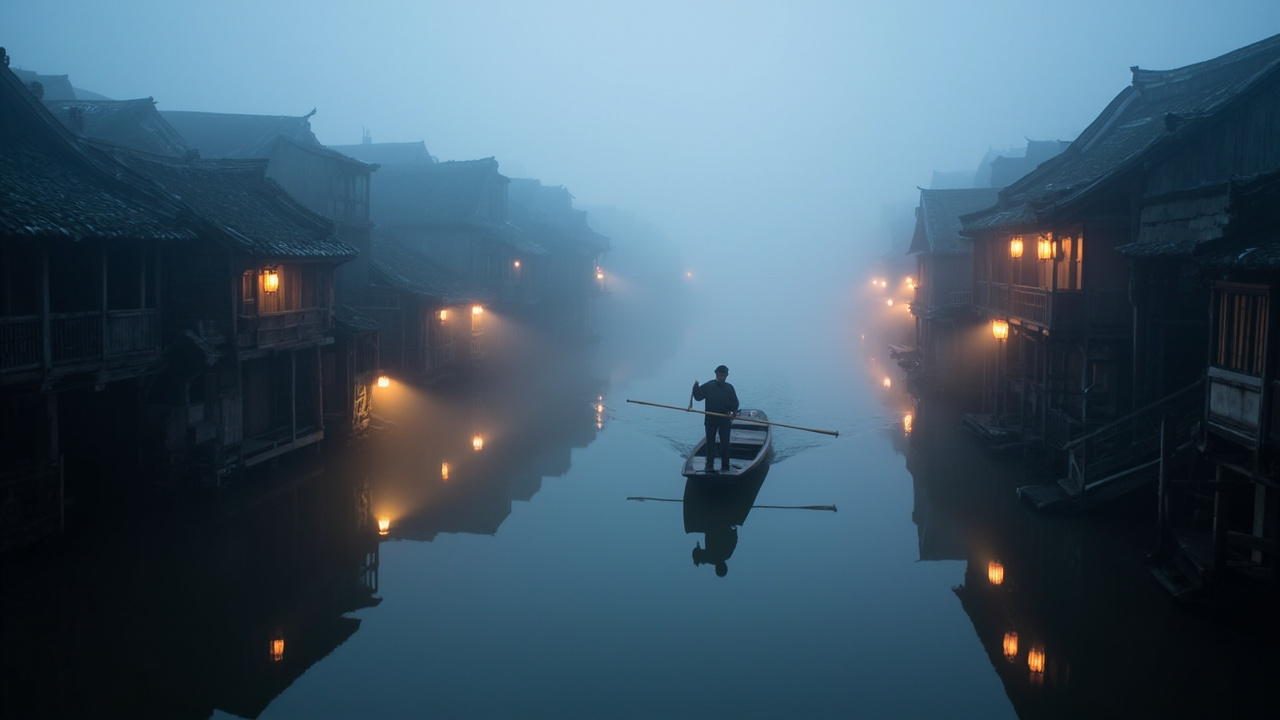
The first thing I noticed wasn’t the stilt houses or the river. It was the sound of a woman slapping laundry against a stone slab at 6:40 in the morning, the echo bouncing off the walls of the narrow alley where I’d gotten hopelessly lost looking for my guesthouse. I’d arrived on the last bus from Zhangjiajie the night before, stumbled through a maze of wet flagstones in the dark, and paid 80 yuan too much for a room with a view of a wall. But that morning, standing on the wrong bridge with my backpack still on, I watched the Tuo River turn from grey to gold as the sun came over the hills, and a man in a blue Mao cap rowed past standing up, poling his boat like he’d done it ten thousand times.
Fenghuang isn’t the most famous old town in China. It’s not as polished as Lijiang, not as convenient as Pingyao. It’s four hours by bus from the nearest airport, the signage is almost entirely in Chinese, and half the “ancient” buildings were rebuilt after a 2014 flood. None of that matters. What matters is that on a Tuesday morning in late October, I ate a bowl of sour fish soup for breakfast, watched three generations of one family hang chili peppers to dry on a Ming-dynasty wall, and understood why Chinese tourists have been writing poems about this place for 400 years.
This guide is for first-timers who’ve never set foot in China. I’ll tell you exactly how to get here, what to skip, where the good food is, and the one mistake I made that cost me half a day.
Quick answer
Fenghuang Ancient Town is a riverside Miao and Tujia minority town in western Hunan Province, about 4 hours by bus from Zhangjiajie or 2.5 hours by high-speed rail from Huaihua. Entry to the town itself is free; individual sights like the Tuo River boat ride cost ¥80–120 ($11–17). Most foreign visitors can enter China visa-free for up to 30 days under the 2026 expanded policy, and the best time to visit is late September to early November, when the crowds thin and the river runs clear.
The Short Version
Come for two nights, not one. Arrive on a weekday. Skip the “nine scenic spots” combo ticket (¥148 / $21) unless you’re a completist — the town itself is the attraction. Book a riverside guesthouse with a balcony, wake up before 7am to see the river without tour groups, and eat the blood duck (血粑鸭) even if it sounds weird. Bring cash for small vendors and a translation app, because English is rare here.
How I Picked These
I’ve been to Fenghuang three times — once in summer 2022 when it was so crowded I couldn’t walk down the main street, once in a rainy November when I had entire alleys to myself, and once last spring when I brought my parents. Between those trips I’ve eaten at maybe 30 restaurants, stayed in six guesthouses, and had long conversations with a boatman named Old Zhou who’s been poling tourists up the Tuo since 1998. Everything below is from those visits. Where I’m unsure about a 2026 price, I say so. I don’t recommend places I haven’t personally eaten at or slept in.
Comparison Table
| Rank | Place | Best For | Approx Cost (USD) | Time Needed | When to Go |
|---|---|---|---|---|---|
| 1 | Tuo River Boat Ride | First impressions, photos | $11–17 (¥80–120) | 30 min | Sunrise or dusk |
| 2 | East Gate Tower (东门城楼) | Views, history | Free | 20 min | Morning |
| 3 | Hong Bridge (虹桥) | Tea, people-watching | Free (tea $4–8) | 1 hr | Late afternoon |
| 4 | Shen Congwen Residence | Literature fans | $6 (¥40) | 40 min | Weekday |
| 5 | Miaojiang Great Wall | Hiking, views | $7 (¥50) | 2 hrs | Cool morning |
| 6 | Tuo River Stone Jumps | Photos, kids | Free | 15 min | Low water season |
| 7 | Old Town Night Market | Street food | $5–15 | 1.5 hrs | After 7pm |
| 8 | Tujia Diaojiaolou Stilt Houses | Architecture | Free | 1 hr | Anytime |
| 9 | Southern Great Wall (南方长城) | Day trip | $6 (¥45) | Half day | Clear day |
| 10 | Qiliang Cave (奇梁洞) | Rainy day backup | $8 (¥55) | 2 hrs | Any weather |
Tuo River Boat Ride — The 30 Minutes That Explain Everything
The boatman didn’t say a word for the first five minutes. He just poled us upstream past the stilt houses, and I watched a woman lean out her window to dump a bucket of water into the river, then wave at us like we were old neighbors. That’s Fenghuang in one image: tourism and daily life sharing the same square meter of water.
The ride itself is short — maybe 30 minutes if the water’s high, 20 if it’s low — but it’s the single best way to understand the town’s layout. You start near the North Gate, glide past the row of diaojiaolou (吊脚楼, the wooden stilt houses that hang over the river), pass under Hong Bridge, and turn around near the Wanming Pagoda. The boatmen are mostly Miao men in their 50s and 60s who’ve been doing this for decades and will sing a folk song if you ask nicely and tip ¥20.
Here’s what nobody tells you: the boats are shared, and if you’re solo you’ll be grouped with whoever’s next in line. I once ended up with a family of six from Chongqing who spent the whole ride filming TikToks. It was annoying and also kind of wonderful.
📍 Location: Boats depart from two docks — the main one near North Gate (北门码头) and a smaller one near the Wind Bridge (风桥).
🎫 Entry fee: ¥80–120 ($11–17) depending on season and route. Cash or WeChat Pay.
🕒 Opening hours: 7:30am–6pm, later in summer. Last boats around 5:30pm.
🚕 How to actually get there: From the town center, walk to North Gate — it’s signposted in Chinese only (北门码头). If you’re coming from the bus station, take a tuk-tuk for ¥10 and say “北门.”
⏰ When to visit: First boat at 7:30am is magic — mist on the water, no crowds. Avoid 11am–2pm when tour groups flood in.
💡 Insider tips: Bring small bills; boatmen rarely have change. Sit on the left side going upstream for the best photos of the stilt houses. If it’s been raining hard, boats may be cancelled for safety — check with your guesthouse. And yes, that woman dumping water is not part of the show.
The soup I ate afterward, at a tiny place near the dock with plastic stools, was sour fish soup (酸汤鱼) — ¥45 for a bowl big enough for two, and I still think about it.
East Gate Tower — The Free View Everyone Misses
I almost skipped this. It’s just a gate, right? Wrong. Climb the narrow wooden stairs to the top of the East Gate Tower (东门城楼) and you get the view that all those paintings are trying to capture: the river curving below, the tiled roofs stacked like scales, the hills fading into grey behind. It’s free, it takes 20 minutes, and it’s the best photo spot in town.
The tower itself dates to the Ming dynasty (originally 1556, rebuilt several times since), and it’s one of four surviving gates from the old city wall. The stone base is original; the wooden upper story is a reconstruction. I don’t care. Standing up there on a clear morning, watching a heron land on a rock in the middle of the Tuo, is worth the climb.
What makes it special is the angle. From street level you see the town as a tourist. From the tower you see it as a settlement — you can trace the wall’s path, spot the courtyards hidden behind the facades, and understand why this spot was chosen. The Miao and Tujia people who built this town picked the geography deliberately: river on one side, hills on the other, easily defended.
📍 Location: East end of the old town, at the top of East Gate Street (东门正街).
🎫 Entry fee: Free.
🕒 Opening hours: Roughly 8am–6pm; the gate closes at dusk.
🚕 How to actually get there: From Hong Bridge, walk east along the river for 8 minutes. You’ll see the gate at the end of the street.
⏰ When to visit: Before 9am for soft light and no one else. Sunset is also good but crowded.
💡 Insider tips: The stairs are steep and the railing is loose in places — watch your footing. There’s a small tea stall at the base where the owner, a woman in her 70s, sells cups for ¥5 and will happily chat if you speak any Mandarin. Bring a translation app if you don’t. The gate is wheelchair-inaccessible.
I met a retired teacher there named Mr. Huang who insisted on showing me the correct way to photograph the river. He was right.
Hong Bridge — Where to Sit for Two Hours and Do Nothing
Hong Bridge (虹桥) is the town’s living room. It’s a covered bridge — originally built in 1670, rebuilt in 2000 after a flood — with two levels: a walkway on the bottom and a tea house on top. Everyone passes through it. Vendors sell dried ginger candy on the steps, old men play xiangqi (Chinese chess) on the benches, and at any given moment there are at least four people taking the same photo of the same pagoda.
I spent an entire afternoon here once, drinking cup after cup of ¥30 tea, watching the light change on the water. It’s the kind of place where doing nothing feels like the right thing to do.
The tea house upstairs charges a minimum of about ¥50–80 per person, which sounds steep until you realize you can sit there for three hours with unlimited refills and a view that beats any restaurant in town. The tea is local — mostly green and dark varieties from Hunan — and the servers will keep pouring as long as your cup is empty.
📍 Location: Center of the old town, spanning the Tuo River. You can’t miss it.
🎫 Entry fee: Free to walk across. Tea house upstairs has a minimum spend.
🕒 Opening hours: Bridge open 24/7; tea house roughly 9am–10pm.
🚕 How to actually get there: Anywhere in the old town is within a 10-minute walk. From the bus station, take a tuk-tuk to “虹桥” for ¥10–15.
⏰ When to visit: Late afternoon (4–6pm) for golden light. Avoid midday when tour groups bottleneck on the bridge.
💡 Insider tips: The tea house has two sections — the cheaper one faces the river, the pricier one faces the pagoda. Ask to see both before committing. WeChat Pay and Alipay both work; if you haven’t set them up yet, this payment guide walks you through it. There’s a public toilet at the south end of the bridge, ¥1, bring coins.
A woman selling hand-embroidered Miao cloth on the bridge steps refused to let me pay full price. “You’re a guest,” she said, and gave me a ¥15 discount I didn’t ask for.
Shen Congwen Residence — For the Literature Nerds
Shen Congwen (沈从文) is the reason many Chinese tourists come to Fenghuang at all. He was born here in 1902, wrote some of the most beautiful prose in modern Chinese literature, and set his most famous novella, Border Town, in a town almost exactly like this one. His former home is now a small museum, and if you’ve read him, it’s worth the ¥40.
If you haven’t read him, it’s still worth 40 minutes. The house is a classic Tujia courtyard — dark wood, small windows, a stone well in the middle — and the exhibits include his manuscripts, his desk, and photographs of the town in the 1920s. There’s very little English signage, which is frustrating, but the atmosphere carries it.
The reason I’m ranking this at #4 rather than higher is that it’s small and you’ll be through it in half an hour. But the context it gives you — the sense that this town has been producing art and literature for centuries, not just selling souvenirs — is important. It reframes everything else you see.
📍 Location: Middle of the old town, on a side alley off East Gate Street. Signposted in Chinese (沈从文故居).
🎫 Entry fee: ¥40 ($6). Included in the ¥148 combo ticket if you buy that.
🕒 Opening hours: 8am–6pm, last entry 5:30pm. Closed Mondays in low season.
🚕 How to actually get there: From Hong Bridge, walk 5 minutes north, then follow the brown tourist signs.
⏰ When to visit: Weekday mornings. Weekends are packed with Chinese tour groups.
💡 Insider tips: The combo ticket (¥148) covers this plus eight other sights — only worth it if you plan to do at least five. Photography is allowed but no flash. The small bookshop next door sells English translations of Border Town for ¥60, which is a fair price. If you’re a student, bring your ID — there’s a discount.
I bought the book. I read it on the bus back to Zhangjiajie and cried a little, which I’m not proud of.
Miaojiang Great Wall — The Hike Nobody Does
Here’s the thing about the “Southern Great Wall” (南方长城): it’s not the Great Wall. It’s a Ming-dynasty defensive wall built in the 1550s to keep the Miao people out of Han territory, and it runs for about 190 km through the hills. The section near Fenghuang, called Miaojiang Great Wall, is a restored 2-km stretch that you can hike in about 90 minutes.
I did this on a cool November morning and saw exactly four other people. The wall climbs steeply up a ridge, and from the top you can see the whole valley — terraced fields, scattered villages, and the Tuo River winding through. It’s the kind of view that makes you forget you’re in a tourist town.
The restoration is obvious — the stones are too clean, the watchtowers too square — but the setting is real, and the hike is genuinely good exercise. Bring water; there’s nothing on the wall itself.
📍 Location: About 15 km north of Fenghuang, near the village of Liaojiacao.
🎫 Entry fee: ¥50 ($7).
🕒 Opening hours: 8am–5:30pm.
🚕 How to actually get there: Hire a tuk-tuk or taxi from the old town for ¥60–80 round trip, or join a half-day tour from your guesthouse (¥120–150 including transport).
⏰ When to visit: October–November or March–April. Summer is brutally hot; winter can be icy.
💡 Insider tips: Wear real shoes — the steps are uneven. There’s a small village at the base where you can buy water and instant noodles. If you’re doing this on your own, arrange for your driver to wait, because there’s no reliable transport back. The high-speed rail network doesn’t reach here — this is bus-and-taxi territory.
My driver, a man named Liu, waited two hours and then drove me to a roadside restaurant where we ate together for ¥35 total. He wouldn’t let me pay for his bowl.
Tuo River Stone Jumps — The Photo Everyone Takes
You’ve seen this photo. A row of square stone blocks crossing the river, water rushing between them, someone in a red dress balancing in the middle. That’s the stone jumps (跳岩), and yes, it’s as photogenic as it looks.
There are two sets — an upper one near the North Gate and a lower one further downstream. The lower one is less crowded and, in my opinion, better, because you get the stilt houses in the background. In low-water season (October–March) the stones are fully exposed and easy to cross. In summer, after rain, they can be submerged and genuinely dangerous.
I watched a woman in heels attempt the crossing, slip, and get soaked to the knees. Everyone laughed, including her. It’s that kind of place.
📍 Location: Two crossings on the Tuo River — upper near North Gate, lower near Wanming Pagoda.
🎫 Entry fee: Free.
🕒 Opening hours: Always accessible, but don’t cross in the dark.
🚕 How to actually get there: Walk along the river; you’ll find them.
⏰ When to visit: Early morning for mist and empty stones. Sunset for silhouettes.
💡 Insider tips: Water shoes or sandals are better than sneakers here. If the water is above the stones, don’t cross — people have been swept away. There’s a small café on the south bank where you can sit and watch other people fall in. It’s ¥25 for a coffee and worth every yuan.
I crossed three times. I fell in once. My phone survived. Barely.
Old Town Night Market — Eat the Blood Duck
Every Chinese old town has a night market, and most of them sell the same skewers and stinky tofu. Fenghuang’s is different because the local food is genuinely distinctive — this is Miao and Tujia country, and the flavors are sour, smoky, and heavy on chili.
The star is blood duck (血粑鸭), a dish of duck braised with sticky rice cakes made from duck blood. It sounds alarming and tastes incredible — rich, sour, slightly fermented. A portion for two is about ¥80 ($11). I also recommend the sour fish soup (酸汤鱼), the Miao-style cured pork (腊肉), and anything with pickled vegetables.
The market runs along the river near Hong Bridge and spills into the side streets. It starts around 6pm and winds down by 11. Bring cash for the smaller stalls — many don’t take WeChat Pay, and if you haven’t set up Alipay or WeChat Pay before you arrive, you’ll be stuck.
📍 Location: Riverside near Hong Bridge, plus the alleys off East Gate Street.
🎫 Entry fee: Free.
🕒 Opening hours: 6pm–11pm, nightly.
🚕 How to actually get there: Walk. Everything in the old town is walkable.
⏰ When to visit: 7–9pm for peak energy.
💡 Insider tips: The stalls closest to Hong Bridge are the most expensive and least authentic. Walk five minutes into the side streets for better food at half the price. Ask for “微辣” (wēi là, mildly spicy) if you can’t handle heat — they’ll still make it spicy, just less. Skip the “exotic meat” skewers; they’re usually not what they claim.
I ate blood duck three nights in a row. On the third night, the owner recognized me and gave me a free bowl of rice wine.
Tujia Diaojiaolou Stilt Houses — Look Up, Not at the Shops
The stilt houses (吊脚楼) are the architectural signature of Fenghuang, and most tourists photograph them from the river without ever looking at them properly. Do this instead: walk along the south bank at river level, then look up. You’ll see how the houses are actually built — wooden posts driven into the riverbank, cantilevered balconies, roofs that overhang by a meter to shed rain.
These are Tujia and Miao buildings, and the design is functional, not decorative. The stilts protect against flooding. The overhanging roofs keep the walls dry. The balconies catch the breeze off the water. It’s vernacular architecture at its best, and it’s been adapted to this specific river for centuries.
The best stretch is between the North Gate and Hong Bridge on the south bank. Some of the houses are now guesthouses and cafés; others are still family homes. You can tell the difference by the laundry.
📍 Location: South bank of the Tuo River, between North Gate and Hong Bridge.
🎫 Entry fee: Free.
🕒 Opening hours: Always visible from outside.
🚕 How to actually get there: Walk along the river path.
⏰ When to visit: Late afternoon, when the light hits the wooden facades.
💡 Insider tips: Don’t photograph people’s windows — these are homes, not exhibits. If you want to see inside one, book a night at a stilt-house guesthouse; prices run ¥200–500 ($28–70) per night. The best-preserved examples are on the quieter southern stretch, away from the main tourist drag.
An old man sitting on his balcony waved at me and pointed at my camera, then at the river, then gave me a thumbs up. I think he was telling me to photograph the view, not his house. I did both.
Southern Great Wall — The Day Trip Worth the Drive
Not to be confused with the Miaojiang section above, the Southern Great Wall (南方长城) proper is a longer, more remote stretch about 30 km from Fenghuang, and it’s the one to do if you have a full day. It’s less restored, more atmospheric, and almost empty.
The wall was built in 1554 by the Ming to control the Miao frontier, and it originally ran over 190 km. What remains is fragmentary — some sections restored, some just a line of stones through the grass — but the setting is spectacular. You hike up a ridge, and suddenly you’re walking on a wall that’s 470 years old, with nothing around you but hills and sky.
I went with a small group from my guesthouse (¥180 including transport and a guide), and it was the highlight of my third trip. The guide, a young Miao woman named A-Mei, explained the history in a way no museum placard could. She also pointed out edible wild plants along the trail, which I did not eat.
📍 Location: About 30 km northwest of Fenghuang, near the town of Huangsiqiao.
🎫 Entry fee: ¥45 ($6).
🕒 Opening hours: 8am–5pm.
🚕 How to actually get there: No public transport. Hire a car (¥300–400 round trip) or join a tour from your guesthouse.
⏰ When to visit: Clear days in spring or autumn. Summer is hot and humid.
💡 Insider tips: Bring more water than you think you need. There are no shops on the wall. Wear long pants — the grass is tall and there are ticks. The nearby Huangsiqiao Ancient Town (free) is worth a 30-minute stop on the way back. If you’re combining this with a broader China trip, the top destinations guide can help you sequence things.
A-Mei told me her grandmother used to walk the wall as a child, before it was a tourist site. She said it was just “the old rocks” to her.
Qiliang Cave — The Rainy Day Backup
If it rains — and in Fenghuang, it will rain — Qiliang Cave (奇梁洞) is your plan B. It’s a large limestone cave about 5 km from town, with the usual stalactites, underground river, and colored lighting that makes everything look like a 1980s disco. It’s not subtle. It’s also genuinely impressive.
The cave is about 6 km long, but you only tour the first 2 km, which takes roughly 90 minutes. There’s a boat section, a walking section, and a lot of stairs. The temperature inside is a constant 16°C (61°F), which feels amazing in summer and freezing in winter.
I went on a wet November afternoon when the town was grey and miserable, and the cave was a welcome change. The lighting is kitsch — pink, green, blue — but the rock formations underneath are the real thing, millions of years old.
📍 Location: 5 km north of Fenghuang, on the road to Zhangjiajie.
🎫 Entry fee: ¥55 ($8).
🕒 Opening hours: 8:30am–5:30pm.
🚕 How to actually get there: Tuk-tuk or taxi from the old town, ¥30–40 one way. Ask the driver to wait or arrange a pickup.
⏰ When to visit: Any weather, but especially good on rainy days.
💡 Insider tips: Wear shoes with grip — the floors are wet and slippery. The cave is not wheelchair-accessible. Bring a light jacket even in summer. Photography is allowed but the lighting makes photos look worse than reality, so just enjoy it.
I slipped on a wet step and caught myself on a stalagmite. A Chinese tourist behind me said, in perfect English, “Careful, that one’s older than your country.” She was probably right.
FAQ summary
Fenghuang Ancient Town is free to enter, best visited over two nights on a weekday in autumn, and reachable by bus from Zhangjiajie (4 hours) or high-speed rail to Huaihua plus a 2.5-hour bus. Foreign visitors can typically enter China visa-free for up to 30 days under the 2026 policy. The town is walkable, English is rare, and you’ll need WeChat Pay or Alipay plus a translation app. Budget roughly $60–100 per day including accommodation, food, and one paid attraction.
FAQ
Q: Do I need a visa to visit Fenghuang? A: Most American, European, and Southeast Asian passport holders can enter China visa-free for up to 30 days under the 2026 expanded policy, which covers tourism. Check your specific nationality before booking — the rules changed several times in 2025. If you’re not eligible, apply for a standard tourist visa at least a month in advance.
Q: How do I get to Fenghuang from Zhangjiajie? A: Buses leave Zhangjiajie Central Bus Station roughly every hour from 8am to 5pm, take about 4 hours, and cost ¥100–120 ($14–17). Alternatively, take the high-speed rail to Huaihua South (1.5 hours from Zhangjiajie), then a 2.5-hour bus to Fenghuang. The train is faster and more comfortable, but the bus is direct.
Q: Is Fenghuang worth visiting compared to Lijiang or Pingyao? A: Yes, if you want a less polished, more lived-in old town. Lijiang is bigger and more commercial; Pingyao is more historically intact. Fenghuang is smaller, grittier, and more scenic — the river setting is unmatched. It’s also harder to reach, which keeps the international crowds down.
Q: What’s the best time of year to go? A: Late September to early November is ideal — cool, clear, and less crowded. Spring (March–April) is also good. Avoid Chinese public holidays (especially Golden Week in early October and Lunar New Year) when the town is shoulder-to-shoulder. Summer is hot and humid; winter is cold and grey but atmospheric.
Q: Do I need a VPN or a local SIM card? A: Yes to both, ideally. Google, WhatsApp, Instagram, and most Western apps are blocked in China. Install a VPN before you arrive — it’s much harder to get one once you’re inside. For internet, buy a China Unicom or China Mobile SIM at the airport (¥100–200 for a tourist plan) or use an eSIM. This guide to SIM cards and internet in China covers the details.
Q: Is English widely spoken in Fenghuang? A: No. Outside of a few high-end guesthouses, English is rare. Download a translation app (Google Translate works offline if you pre-download Chinese; Baidu Translate is better inside China) and learn a few phrases — “多少钱” (duōshǎo qián, how much) and “谢谢” (xièxie, thank you) will take you far.
Q: How much should I budget per day? A: Roughly $60–100 (¥430–720) per day for a mid-range traveler. That covers a riverside guesthouse ($30–60), three meals ($15–25), one paid attraction ($6–17), and transport. Budget travelers can do it for $35–45 by staying in hostels and eating street food.
The Honest Wrap-up
This guide is for travelers who want a real Chinese old town, not a theme park. If you need English menus, air-conditioned malls, and easy transport, Fenghuang will frustrate you. If you’re willing to get a little lost, eat food you can’t pronounce, and wake up early to see a river before the tour boats arrive, it’ll be one of the best two days of your trip.
My one piece of advice: book two nights, not one. Everyone I met who came for a single night regretted it. The town doesn’t reveal itself in 24 hours — it reveals itself on the second morning, when you walk the same alley you walked yesterday and notice something you missed.
Go in autumn. Bring cash. Learn to say thank you in Mandarin. And eat the blood duck.
More guides you may like
Top 10 Bridges in China
China's bridges are engineering marvels spanning mountains, rivers, and seas. Here are 10 of the most spectacular, from ancient stone to modern steel.
8 min read

Top 10 Buddhist Sites in China
From the Leshan Giant Buddha to the Dunhuang Caves, these 10 Buddhist sites represent 2,000 years of China's spiritual heritage.
9 min read
Top 10 Day Trips from Beijing You Shouldn't Miss
Beijing is packed with history, but some of China's best experiences are just a few hours away. Here are 10 day trips that will transform your visit.
9 min read
Top 10 Hidden Gems in China Off the Beaten Path
Beyond the Great Wall and Terracotta Warriors, China has incredible hidden destinations few tourists ever reach. Here are 10 underrated gems worth the detour.
9 min read
Top 10 Markets and Shopping Streets in China
From Shanghai's Bund to Beijing's Silk Street - 10 markets where foreigners can haggle, explore, and bring home authentic Chinese goods.
9 min read
Top 10 Museums in China You Shouldn't Miss
China's museums span 5,000 years of civilization. These 10 - from the Palace Museum to Xi'an's terracotta gallery - are unmissable for culture lovers.
9 min read