
China Wheelchair Accessible Travel
I watched a man in a wheelchair get lifted onto a Beijing bus by two strangers last October. Not awkwardly — efficiently, like they'd done it before. The…
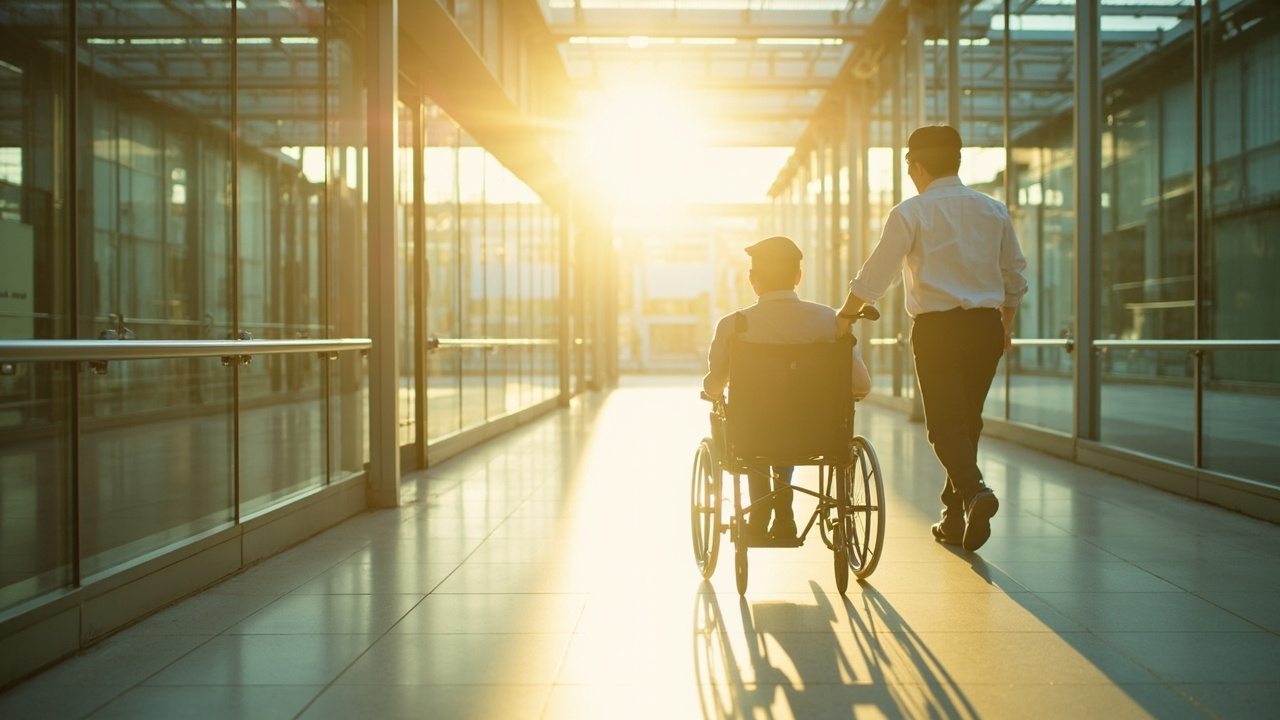
I watched a man in a wheelchair get lifted onto a Beijing bus by two strangers last October. Not awkwardly — efficiently, like they’d done it before. The driver waited. Nobody sighed. That moment told me more about accessibility in China than any government report could.
Here’s the thing nobody tells you before you book: China has spent the last decade building some of the most accessible public infrastructure on earth, and almost none of it is documented in English. The subway systems in Beijing, Shanghai, and Chengdu have elevators at nearly every station. The high-speed rail network has wheelchair spaces on every train. The problem isn’t the infrastructure. It’s that the information is scattered across Chinese-language apps, WeChat posts, and word of mouth.
I’ve been traveling through China for seven years, and for the last three I’ve been doing it with a partner who uses a wheelchair. That changes how you see a country. You notice curb cuts. You notice whether the “accessible” hotel room actually has a roll-in shower or just a grab bar bolted next to a bathtub. You learn which temples have ramps and which ones have 108 stone steps and no alternative.
This guide covers what actually works, what doesn’t, and how to plan a trip that doesn’t leave you stranded on a subway platform at 9pm. I’ll give you specific stations, specific hotels, specific prices. No inspiration porn. Just the practical stuff I wish someone had told me before our first trip.
Quick answer
China is more wheelchair-accessible than most first-time visitors expect, especially in major cities. All high-speed rail stations and most metro stations in Beijing, Shanghai, Guangzhou, and Chengdu have elevators, and every high-speed train has at least one wheelchair space with a tie-down. The biggest barriers are sidewalks (uneven, often blocked by scooters), older attractions (steps, no ramps), and the near-total absence of English-language accessibility information. Budget $120–180 per day for accessible hotels, use Didi (China’s Uber) instead of taxis, and download Amap for wheelchair-accessible routing.
The Short Version
Go to Beijing, Shanghai, and Chengdu. Skip Xi’an’s terracotta warriors unless you can handle a long walk from the parking lot. Book accessible hotel rooms at least 6 weeks ahead — there are fewer than you think. Use Didi’s “accessible vehicle” option in major cities. Bring a lightweight folding chair as backup for the days when the “accessible” route turns out to have three steps. And learn to use Amap, because Google Maps doesn’t work here and Apple Maps is unreliable for accessibility features.
How I Picked These
I didn’t pull this from tourism board brochures. Every destination here comes from personal experience — either I’ve pushed a wheelchair through it, or I’ve watched my partner navigate it independently. I’ve also talked to staff at accessible hotels, asked metro workers which exits have elevators, and spent hours on Chinese-language forums where disabled travelers share real information.
I’ve excluded places that look good on paper but fail in practice. The Forbidden City, for example, has made real improvements but still requires a 2km walk with limited seating. I’ve included it with caveats rather than pretending it’s easy. Same with the Great Wall — there’s exactly one accessible section, and most tour companies don’t know about it.
Where I’m unsure about current prices or hours, I’ve given ranges and flagged them. China changes fast. A station that had no elevator in 2023 might have one now.
Comparison Table
| Rank | Place | Best For | Approx Cost (USD/day) | Time Needed | When to Go |
|---|---|---|---|---|---|
| 1 | Beijing | Metro accessibility, major sights | $140–200 | 4–5 days | Apr–May, Sep–Oct |
| 2 | Shanghai | Flattest city, best infrastructure | $150–220 | 3–4 days | Mar–May, Oct–Nov |
| 3 | Chengdu | Pandas, relaxed pace, good hotels | $100–150 | 3 days | Mar–Jun, Sep–Nov |
| 4 | Hangzhou | West Lake, flat paths, tea culture | $110–160 | 2–3 days | Apr–May, Sep–Oct |
| 5 | Suzhou | Gardens (some accessible), canals | $100–140 | 2 days | Apr–May, Oct |
| 6 | Guangzhou | Warm winter, modern metro | $120–170 | 2–3 days | Nov–Mar |
| 7 | Shenzhen | Newest infrastructure, tech hub | $130–180 | 2 days | Oct–Apr |
| 8 | Xi’an | History (with caveats) | $100–150 | 2–3 days | Apr–May, Sep–Oct |
| 9 | Guilin/Yangshuo | River scenery, some accessible boats | $90–140 | 3 days | Apr–Oct |
| 10 | Hong Kong | Most accessible city in China | $180–250 | 3–4 days | Oct–Dec |
Beijing — Where the Infrastructure Actually Works
The first time I took the Beijing subway with a wheelchair, I expected disaster. Instead, a station attendant appeared within 30 seconds, pulled out a portable ramp, and walked us to the elevator. This happened at every station we used. It’s not advertised anywhere, but it’s standard practice.
Beijing’s metro is genuinely excellent for wheelchair users. Line 1, Line 2, Line 10, and the Airport Express all have elevators at virtually every station. The newer lines (14, 16, 17) were built with accessibility from the start. The older stations sometimes require you to use a specific exit — Line 1’s Tiananmen East station, for example, has an elevator at Exit A but not Exit B.
The Forbidden City is the tricky one. It’s technically accessible via a designated route that avoids the main steps, but it’s still a 2km walk each way with limited benches. The route starts at the Meridian Gate and follows a side path. Ask staff at the ticket office — they have a map. Entry is free for wheelchair users and one companion.
The Temple of Heaven is easier. The main hall has a ramp, and the surrounding park is flat and paved. Go early morning to watch locals doing tai chi. Entry is about $4 (¥30).
📷 Location: Dongcheng District, central Beijing 🎫 Entry fee: Forbidden City $8 (¥60), Temple of Heaven $4 (¥30) 🕒 Opening hours: Forbidden City 8:30am–5pm (closed Mondays), Temple of Heaven 6am–9pm 🚇 How to get there: Line 1 to Tiananmen East, Exit A (has elevator). For Temple of Heaven, Line 5 to Tiantandongmen, Exit A. ⏰ When to visit: April–May or September–October. Weekdays are less crowded. 💡 Insider tips: Download the Beijing Metro app for elevator locations. Station staff will radio ahead to your destination if you ask. Most hotels near Wangfujing have accessible rooms. The Beijing guide covers more general logistics.
I met a station attendant named Liu who insisted on riding with us to our transfer point to make sure the next station knew we were coming. That’s not in any guidebook.
Shanghai — The Flattest City in China
Shanghai is the easiest major Chinese city for wheelchair users, full stop. The terrain is flat, the metro is modern, and the sidewalks in the French Concession and Bund area are wider than in Beijing. The city feels designed for wheels.
The Bund is fully accessible — a wide promenade with no steps and plenty of space. The Bund Sightseeing Tunnel is not accessible (narrow cars, steps), but you don’t need it. Just roll along the waterfront. The Shanghai Tower has elevators to the observation deck and accessible restrooms. Entry is about $25 (¥180).
Yu Garden is the disappointment. The classical garden has narrow paths, uneven stones, and steps everywhere. There’s a wheelchair route through the surrounding bazaar, but you’ll miss the garden itself. Skip it unless you’re okay with viewing from the entrance.
The Shanghai Metro is excellent. Line 2 (which connects both airports and the main train stations) has elevators at every station. Line 10 and Line 12 are also reliable. The Maglev train to Pudong Airport is accessible and takes 8 minutes.
📷 Location: Huangpu District (Bund), Pudong (Shanghai Tower) 🎫 Entry fee: Bund free, Shanghai Tower $25 (¥180) 🕒 Opening hours: Bund 24 hours, Shanghai Tower 10am–9pm 🚇 How to get there: Line 2 to East Nanjing Road, Exit 2 for the Bund. Line 2 to Lujiazui for Shanghai Tower. ⏰ When to visit: March–May or October–November. Avoid July–August heat. 💡 Insider tips: The Shanghai guide has more on getting around. Didi has an “accessible vehicle” option in Shanghai — select “无障碍” in the app. Many French Concession cafes have step-free entrances. The Shanghai Metro app shows elevator locations.
A cafe owner in the French Concession saw us struggling with a curb and came out with a wooden ramp he kept behind the counter. He said he’d made it himself after watching too many people struggle.
Chengdu — Pandas and a Slower Pace
The Chengdu Research Base of Giant Panda Breeding is the reason most people come, and it’s surprisingly accessible. The main paths are paved and mostly flat, with ramps to the viewing platforms. The electric shuttle buses have wheelchair spaces. Go at 7:30am when the pandas are active.
Chengdu itself is more relaxed than Beijing or Shanghai. The metro is newer and has elevators at all stations on Lines 1, 2, 3, and 7. The city is flat. The food is amazing. The tea houses in People’s Park are accessible and worth an afternoon.
The Leshan Giant Buddha, about 2 hours away by train, is not accessible. The main viewing area requires climbing steep stairs. You can see the Buddha from a boat, but the boat isn’t wheelchair-accessible either. Skip it.
📷 Location: Chenghua District (pandas), Qingyang District (city center) 🎫 Entry fee: Panda Base $8 (¥55), People’s Park free 🕒 Opening hours: Panda Base 7:30am–6pm 🚇 How to get there: Line 3 to Panda Avenue, then shuttle bus. Line 2 to People’s Park for the tea houses. ⏰ When to visit: March–June or September–November. Pandas are most active in the morning. 💡 Insider tips: The Chengdu guide covers more. Book panda tickets on WeChat in advance. The shuttle bus drivers will help with wheelchairs if you ask. Most Sichuan restaurants have step-free entrances but narrow aisles.
I watched a panda eat bamboo for 20 minutes while a Chinese grandmother next to me narrated the entire thing to her grandson. Neither of them noticed I was crying. It was a good cry.
Hangzhou — West Lake Without the Stairs
West Lake is the postcard image of China, and most of it is accessible. The lakeside promenade is flat and paved for about 15km. You can roll the entire loop if you have the energy. Boat rides on the lake have wheelchair spaces on the larger ferries.
The problem is the temples and pagodas around the lake. Leifeng Pagoda has an escalator to the base and an elevator to the top — genuinely accessible. Lingyin Temple has steps and no ramp. Skip Lingyin unless you’re okay with viewing from the entrance.
The tea plantations in Longjing are hilly and not accessible. But the tea houses at the bottom of the hills are, and the tea is just as good.
📷 Location: Xihu District, Hangzhou 🎫 Entry fee: West Lake free, Leifeng Pagoda $6 (¥40) 🕒 Opening hours: West Lake 24 hours, Leifeng Pagoda 8am–8pm 🚇 How to get there: Line 1 to Longxiangqiao, then walk 10 minutes to the lake. Leifeng Pagoda is a 15-minute taxi from the lake. ⏰ When to visit: April–May or September–October. Avoid weekends. 💡 Insider tips: The lake loop is 15km — rent an electric scooter if you need one. Boat tickets are about $8 (¥55). The Hangzhou metro has elevators at all stations. Didi works well here.
A boat operator named Chen refused to let us pay. He said his mother used a wheelchair and he wished more people would visit. We gave him tea instead.
Suzhou — Gardens With Caveats
Suzhou’s classical gardens are UNESCO sites and mostly not accessible. The Humble Administrator’s Garden has a wheelchair route but it’s limited. The Master of the Nets Garden has steps at the entrance and no ramp. The Lingering Garden is the most accessible — flat paths, wide doorways.
The canals are the better bet. The Suzhou Canal boat tours have wheelchair-accessible boats if you book ahead. The Pingjiang Road area is flat and pedestrian-friendly, with shops and tea houses along the water.
📷 Location: Gusu District, Suzhou 🎫 Entry fee: Lingering Garden $8 (¥55), canal boat $20 (¥140) 🕒 Opening hours: Gardens 7:30am–5:30pm 🚇 How to get there: Line 2 to Shilu, then taxi to gardens. Line 4 to San Yuan Fang for Pingjiang Road. ⏰ When to visit: April–May or October. Weekdays only. 💡 Insider tips: Book accessible canal boats at least 3 days ahead. The Suzhou metro is newer and accessible. Most gardens have free wheelchair loans at the entrance — ask.
I got lost in the Lingering Garden for 40 minutes because the wheelchair route signs were only in Chinese. A gardener pointed me back to the entrance without laughing. Much.
Guangzhou — Warm Winter, Modern Metro
Guangzhou is underrated for accessibility. The metro is modern, the city is flat, and the winter weather is perfect for traveling. The Canton Tower has accessible elevators and observation decks. Shamian Island is flat and colonial-era pretty, with wide sidewalks.
The Chen Clan Ancestral Hall has a ramp and accessible restrooms. Yuexiu Park is hilly but has paved paths to the main sights. The Pearl River cruise boats have wheelchair spaces.
📷 Location: Tianhe District (Canton Tower), Liwan District (Shamian Island) 🎫 Entry fee: Canton Tower $22 (¥150), Chen Clan Hall $2 (¥10) 🕒 Opening hours: Canton Tower 9am–10pm 🚇 How to get there: Line 3 to Canton Tower, Exit B. Line 1 to Huangsha for Shamian Island. ⏰ When to visit: November–March. Avoid summer humidity. 💡 Insider tips: Guangzhou’s metro has elevators at every station. The Canton Tower has accessible restrooms on multiple floors. Most dim sum restaurants are step-free.
A dim sum waiter brought us an extra basket of har gow because he said we looked hungry. We were. We ate them. No regrets.
Shenzhen — The Newest Infrastructure
Shenzhen was built recently enough that accessibility was part of the plan. The metro is fully accessible. The city is flat. The Window of the World theme park has paved paths and ramps. The OCT Loft art district is flat and full of cafes.
The problem is that Shenzhen is less interesting than other Chinese cities. It’s a tech hub, not a cultural one. Come if you’re curious about modern China, not if you want history.
📷 Location: Nanshan District (Window of the World), Futian District (OCT Loft) 🎫 Entry fee: Window of the World $30 (¥200) 🕒 Opening hours: 9am–9pm 🚇 How to get there: Line 1 to Window of the World, Exit J. Line 1 to Qiaocheng East for OCT Loft. ⏰ When to visit: October–April 💡 Insider tips: Shenzhen’s metro is the most accessible in China. The city is easy to navigate. Most hotels have accessible rooms.
I met a tech worker named Wei who gave us a personal tour of the OCT Loft because he overheard us asking for directions. He was proud of his city. I understood why.
Xi’an — History With Caveats
The Terracotta Warriors are the reason to come to Xi’an, and they’re partially accessible. The main pit has a ramp and elevator. The other pits have steps. The walk from the parking lot to the entrance is about 1km with no shade.
The City Wall is not accessible — the ramps are too steep and the wall itself is uneven. The Muslim Quarter is flat but crowded. The Big Wild Goose Pagoda has a ramp to the base but no elevator to the top.
📷 Location: Lintong District (Terracotta Warriors), Beilin District (city center) 🎫 Entry fee: Terracotta Warriors $17 (¥120) 🕒 Opening hours: 8:30am–5pm 🚇 How to get there: Line 2 to Beikezhan, then bus 306 to the warriors. The bus is not accessible — take a Didi instead. ⏰ When to visit: April–May or September–October 💡 Insider tips: Book a Didi to the Terracotta Warriors — it’s about $20 (¥140) each way. The site has wheelchair loans at the entrance. Bring water — the walk is long.
I made the mistake of taking the public bus to the warriors. It was crowded, hot, and the driver didn’t know how to help with the wheelchair. Take a Didi. Learn from me.
Guilin and Yangshuo — River Scenery With Limits
The Li River cruise from Guilin to Yangshuo is the main attraction, and some boats have wheelchair spaces. You need to book ahead and confirm. The smaller boats are not accessible. The larger ferries usually are.
Yangshuo itself is flat and walkable, with plenty of cafes and shops. The countryside around it is hilly and not accessible. The Reed Flute Cave in Guilin has a paved path and is accessible.
📷 Location: Guilin city, Yangshuo county 🎫 Entry fee: Li River cruise $50–80 (¥350–550), Reed Flute Cave $15 (¥90) 🕒 Opening hours: Cruises depart 9am–11am 🚇 How to get there: High-speed rail to Guilin, then taxi to the cruise dock. The train guide covers booking. ⏰ When to visit: April–October 💡 Insider tips: Confirm wheelchair access when booking the cruise. The Guilin metro is limited — use Didi. Yangshuo’s West Street is flat and accessible.
A cruise staff member named Li helped us board and brought us tea during the trip. The scenery was so good I forgot to take photos for the first hour.
Hong Kong — The Most Accessible City in China
Hong Kong is technically part of China and technically the most accessible city in the region. The MTR has elevators at every station. The sidewalks are wide. The buses have wheelchair ramps. The Star Ferry is accessible.
The Peak Tram is not accessible — take the bus instead. The Big Buddha requires a cable car (accessible) and then stairs (not accessible). Victoria Harbour promenade is flat and beautiful.
📷 Location: Central, Tsim Sha Tsui, Lantau Island 🎫 Entry fee: Peak Tram $12 (HK$95), Big Buddha cable car $30 (HK$235) 🕒 Opening hours: Varies by attraction 🚇 How to get there: MTR to Central for the Peak, MTR to Tung Chung for the Big Buddha. ⏰ When to visit: October–December 💡 Insider tips: The MTR app shows elevator locations. Most hotels have accessible rooms. English is widely spoken. Hong Kong is the easiest place in China for wheelchair users.
I rode the Star Ferry at sunset and a local man told me it was the best $0.50 he’d ever spent. He was right.
FAQ summary
China’s major cities are more wheelchair-accessible than most visitors expect, with elevators at nearly all metro stations in Beijing, Shanghai, Guangzhou, and Chengdu, and wheelchair spaces on every high-speed train. The main barriers are uneven sidewalks, older attractions with steps, and the lack of English-language accessibility information. Budget $120–180 per day for accessible hotels, use Didi instead of taxis, download Amap for routing, and book accessible hotel rooms at least 6 weeks in advance.
FAQ
Q: Is China wheelchair-friendly for tourists? A: Yes, in major cities. Beijing, Shanghai, Guangzhou, and Chengdu have accessible metros, high-speed trains with wheelchair spaces, and accessible hotels. Smaller cities and older attractions are harder. The infrastructure exists but English information is limited.
Q: How do I book an accessible hotel room in China? A: Book directly with international chains (Marriott, Hilton, Hyatt) or use Trip.com and filter for “accessible rooms.” Confirm the room has a roll-in shower, not just grab bars. Book at least 6 weeks ahead — accessible rooms are limited.
Q: Can I use Didi with a wheelchair? A: Yes. Didi has an “accessible vehicle” option in major cities. Select “无障碍” in the app. Not all cities have it — Beijing, Shanghai, Guangzhou, and Shenzhen do. In other cities, regular Didi drivers will usually help fold a wheelchair into the trunk.
Q: Are high-speed trains accessible? A: Yes. Every high-speed train has at least one wheelchair space with a tie-down and accessible restroom. Book through Trip.com or the official 12306 app and request assistance at the station. Staff will help you board.
Q: Do I need a VPN in China? A: Yes, if you want to use Google, WhatsApp, or Instagram. Download a VPN before you arrive. See the internet guide for setup details. Amap works without a VPN and is better than Google Maps for China.
Q: How do I pay for things in China? A: Set up Alipay or WeChat Pay before you arrive. Both work with international credit cards. See the payment guide for setup. Cash is rarely used. Some small vendors only accept mobile payment.
Q: What’s the biggest mistake wheelchair travelers make in China? A: Assuming “accessible” means the same thing everywhere. A hotel might say “accessible” but have a 10cm step at the entrance. A metro station might have an elevator but only at one exit. Always ask for photos or specific details before booking.
The Honest Wrap-up
This guide is for wheelchair users and their travel companions who want to see China without pretending it’s easy. It’s not for people who want a resort vacation — China is not that. It’s for people who are willing to plan ahead, ask for help, and accept that some days will be harder than others.
If you’re about to book a flight, my one piece of advice: start in Shanghai. It’s the flattest, most accessible city in China, and it will give you confidence for the rest. Learn the metro, learn Didi, learn to ask for help. Then go to Beijing. Then go wherever you want.
China will surprise you. Mostly in good ways.
More guides you may like

Top 10 Bridges in China
China's bridges are engineering marvels spanning mountains, rivers, and seas. Here are 10 of the most spectacular, from ancient stone to modern steel.
8 min read

Top 10 Buddhist Sites in China
From the Leshan Giant Buddha to the Dunhuang Caves, these 10 Buddhist sites represent 2,000 years of China's spiritual heritage.
9 min read

Top 10 Day Trips from Beijing You Shouldn't Miss
Beijing is packed with history, but some of China's best experiences are just a few hours away. Here are 10 day trips that will transform your visit.
9 min read

Top 10 Hidden Gems in China Off the Beaten Path
Beyond the Great Wall and Terracotta Warriors, China has incredible hidden destinations few tourists ever reach. Here are 10 underrated gems worth the detour.
9 min read

Top 10 Markets and Shopping Streets in China
From Shanghai's Bund to Beijing's Silk Street - 10 markets where foreigners can haggle, explore, and bring home authentic Chinese goods.
9 min read

Top 10 Museums in China You Shouldn't Miss
China's museums span 5,000 years of civilization. These 10 - from the Palace Museum to Xi'an's terracotta gallery - are unmissable for culture lovers.
9 min read