
Guizhou Travel Guide
The first thing I noticed was the sound. Not traffic, not people — water. A woman in a blue indigo apron was pounding cloth against a flat rock in a stream…
Guizhou Travel Guide
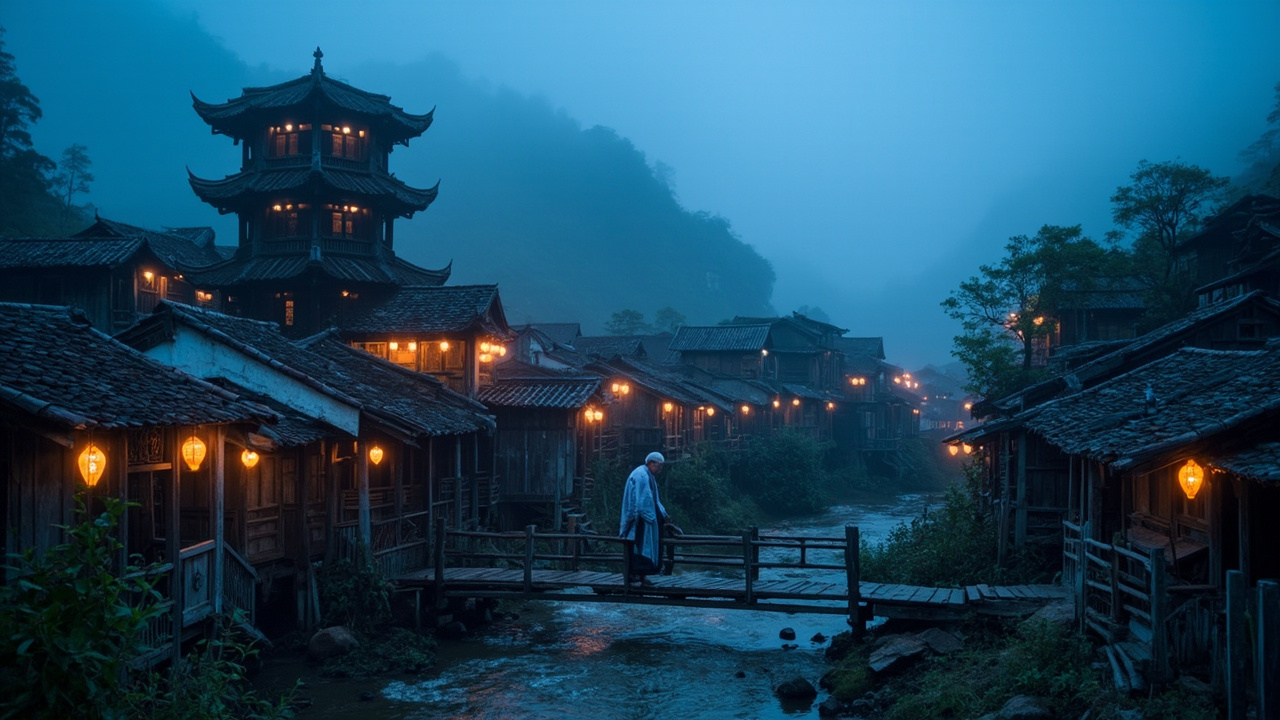
The first thing I noticed was the sound. Not traffic, not people — water. A woman in a blue indigo apron was pounding cloth against a flat rock in a stream that ran straight through the middle of a village, and the echo bounced off wooden houses stacked up the hillside like they’d been there for six hundred years. Which they had. I’d taken a bus from Guiyang that morning, fallen asleep somewhere around the third tunnel, and woken up in a place where nobody spoke Mandarin as a first language and the map on my phone was basically useless.
Guizhou is the province people skip. It’s poor by Chinese standards, mountainous, wet, and genuinely hard to get around if you don’t read Chinese. It’s also the most rewarding place I’ve been in seven years of living in China. There are 18 officially recognized ethnic minority groups here, more than anywhere else in the country, and many of them still live in villages you can actually visit without feeling like you’re walking through a theme park.
This guide covers the ten places worth your time, with real prices, real transport directions, and the mistakes I made so you don’t have to. It assumes you’ve never been to China before. If that’s you, read the visa and entry guide first, then come back.
Quick answer
Guizhou is best visited between April and June or September and October, when it’s not raining constantly and the terraces are either flooded green or golden with rice. Most Western passport holders can enter China visa-free for 30 days in 2026, and Guizhou is fully covered. Budget around $60–90 (430–650 CNY) per day for accommodation, food, and transport, plus $30–50 (215–360 CNY) for a private driver on village days. The province is served by high-speed rail from Guiyang, but the best villages require a car, a driver, and patience.
The Short Version
Come for the villages, not the cities. Guiyang is a transport hub and nothing more. Base yourself in Zhaoxing or Xijiang for Miao and Dong culture, Anshun for the Huangguoshu waterfall and Tunpu villages, and Libo for karst scenery that rivals Guilin without the crowds. Learn to use WeChat Pay before you arrive — cash is genuinely awkward here. Bring rain gear even in the dry season. And hire a driver for at least two days; public buses to the small villages run once or twice a day and stop before dark.
How I Picked These
I’ve been to Guizhou four times since 2019, most recently in October 2025. I don’t trust listicles written from a desk, so everything here comes from places I’ve actually slept in, eaten in, or gotten lost in. I talked to guesthouse owners, a Dong choir conductor in Zhaoxing, a Tunpu woman in Tianlong who explained why her ancestors still wear Ming dynasty clothing, and a driver named Mr. Yang who took me up a mountain road so narrow I made him stop twice. I cut places that were overpriced, oversold, or required a tour group to access. What’s left is what I’d send a friend to.
Comparison Table
| Rank | Place | Best For | Approx Cost (USD/day) | Time Needed | When to Go |
|---|---|---|---|---|---|
| 1 | Zhaoxing Dong Village | Dong culture, drum towers | $45–70 | 2–3 days | Apr–Jun, Sep–Oct |
| 2 | Xijiang Miao Village | Miao festivals, night views | $50–80 | 2 days | Apr, Oct–Nov |
| 3 | Huangguoshu Waterfall | Asia’s biggest waterfall | $60–90 | 1–2 days | Jun–Oct |
| 4 | Libo Karst | Seven Small Arches, forests | $55–85 | 2–3 days | May–Sep |
| 5 | Tianlong Tunpu Village | Ming dynasty Han culture | $40–60 | Half day | Year-round |
| 6 | Fanjingshan | Sacred Buddhist mountain | $70–100 | 2 days | Apr–Oct |
| 7 | Zhenyuan Ancient Town | Riverside old town | $45–70 | 1–2 days | Mar–Nov |
| 8 | Jiaxiu Pavilion & Qingyan | Guiyang day trip | $30–50 | 1 day | Year-round |
| 9 | Miao terraces at Jiabang | Rice terraces, hiking | $40–65 | 1–2 days | May, Sep |
| 10 | Guiyang city | Food, transport base | $50–80 | 1 day | Year-round |
1. Zhaoxing Dong Village — Where the drums tell time
I arrived in Zhaoxing at dusk and heard singing before I saw anything. A Dong choir, twenty or so people, practicing in an open pavilion with no instruments at all — just voices in that strange, layered polyphony the Dong are famous for. I stood there for forty minutes with my backpack still on.
Zhaoxing is the largest Dong village in China and, unlike Xijiang, it hasn’t been fully rebuilt for tourists. Five drum towers rise above the wooden houses, each one belonging to a different clan. The Dong are famous for building without nails, and you can see it in the covered bridges (called wind-and-rain bridges) that cross the stream running through the village center. It’s a working village, not a museum — people farm, weave, and argue about card games in the square.
📷 Location: Liping County, southeastern Guizhou, about 4 hours by bus from Guiyang or 1.5 hours from Congjiang high-speed rail station.
🎫 Entry fee: 100 CNY ($14) for the scenic area, valid 3 days. Some outer village paths are free.
🕐 Opening hours: Village is always open. Ticket office 8am–6pm.
🚕 How to actually get there: Take the high-speed train from Guiyang North to Congjiang (about 1h40m, 130 CNY/$18). From Congjiang station, buses run to Zhaoxing roughly every hour until 5pm, 25 CNY ($3.50), 40 minutes. If you miss the last bus, a taxi is around 150 CNY ($21).
⏰ When to visit: April–June for green terraces, September–October for harvest. Weekdays are dramatically quieter. Avoid Chinese New Year and the first week of October.
💡 Insider tips: The Dong opera performance happens most evenings around 8pm near the main drum tower — free, but bring small cash for the collection box. Guesthouses inside the village cost 150–350 CNY ($21–50) and are worth it over the ones by the parking lot. Learn to say “meng” (hello in Dong) and watch faces light up. The village is genuinely quiet after 9pm, so don’t expect nightlife.
I ate a bowl of sour fish soup at a tiny stall near the second drum tower that cost 15 CNY ($2) and was one of the best things I’ve eaten in China.
2. Xijiang Miao Village — Beautiful, crowded, still worth it
Let me be honest: Xijiang is the most touristy place in this guide. It’s a Miao village of about 6,000 people that receives millions of visitors a year, and on a Saturday in October it feels like it. But the setting — a valley of wooden stilt houses climbing both sides of a river, lit up at night with thousands of lanterns — is genuinely spectacular, and the Miao culture here is real even if it’s packaged.
The Miao are one of China’s largest minority groups, and Xijiang is their cultural showpiece. Silver jewelry, embroidery, and batik are everywhere. The long-table banquet (changyan) is the signature experience: dozens of dishes on a single table stretching down the street, with rice wine poured down your throat by singing women. It’s a bit of a performance, but it’s a fun one.
📷 Location: Leishan County, about 2 hours by bus from Kaili, which is 40 minutes by high-speed rail from Guiyang.
🎫 Entry fee: 100 CNY ($14), plus 20 CNY ($3) for the shuttle bus inside the village.
🕐 Opening hours: Always open. Performances at 11am and 5pm daily.
🚕 How to actually get there: High-speed rail from Guiyang North to Kaili South (40 min, 60 CNY/$8.50). From Kaili South, direct buses to Xijiang run every 30 minutes from 8am–6pm, 35 CNY ($5), 1 hour. Don’t take the train to Kaili city station — it’s the wrong one.
⏰ When to visit: Late October for the Miao New Year (Miaonian), which is spectacular but crowded. Weekdays in April–May are the sweet spot. The night view is the main event, so stay overnight.
💡 Insider tips: Stay in a guesthouse high on the hillside for the view — 200–500 CNY ($29–72), and worth every yuan. The long-table banquet costs 80–120 CNY ($11–17) and you should book through your guesthouse. Silver jewelry sold in the main street is mostly machine-made; the real handcrafted stuff is in the smaller alleys. Bring cash for small vendors — many don’t take WeChat.
A woman named A-Mei sold me a hand-embroidered pouch for 40 CNY ($6) and refused to let me pay more when I tried.
3. Huangguoshu Waterfall — Yes, it’s as big as they say
I’ve seen a lot of waterfalls in China and most of them are a letdown after the photos. Huangguoshu is not. It’s 77.8 meters high and 101 meters wide, the largest in Asia, and when I visited in July the spray hit me from 50 meters away. You can walk behind it through a cave, which is the kind of thing that sounds gimmicky until you’re standing in the dark listening to a wall of water.
The waterfall is the centerpiece of a larger scenic area that includes Doupotang (a wider, shorter fall used in the opening of the 1986 Journey to the West TV series) and Tianxingqiao, a stone forest park with a cave system. Most people do it as a day trip from Anshun.
📷 Location: Zhenning County, 45 km southwest of Anshun.
🎫 Entry fee: 180 CNY ($26) for the main waterfall, 50 CNY ($7) for Doupotang, 60 CNY ($8.50) for Tianxingqiao. Combined ticket 280 CNY ($40).
🕐 Opening hours: 7am–6pm, last entry 5pm. Closed for maintenance occasionally in winter — check ahead.
🚕 How to actually get there: High-speed rail from Guiyang North to Anshun West (30 min, 45 CNY/$6.50). From Anshun, buses to Huangguoshu run every 30 minutes from the east bus station, 20 CNY ($3), 1 hour. Or hire a driver for the day, 400–500 CNY ($57–72).
⏰ When to visit: June–October for maximum water volume. July and August are spectacular but crowded. Go early — the first shuttle buses leave at 7am and the tour groups arrive at 9.
💡 Insider tips: Wear shoes you don’t care about; the paths are wet year-round. The walk-behind-the-waterfall cave costs an extra 30 CNY ($4) and is worth it. Bring a rain poncho — umbrellas are useless in the spray. Skip the escalator (30 CNY) unless you have knee problems; the walk is 20 minutes and pretty.
I paid 15 CNY ($2) for a plastic poncho that immediately ripped, then bought a second one. Bring your own.
4. Libo Karst — Guilin without the crowds
Everyone goes to Guilin. Almost nobody goes to Libo, which has the same kind of karst landscape — limestone peaks rising out of green water — but a fraction of the visitors. I spent three days here and saw maybe ten other foreigners.
The centerpiece is the Seven Small Arches (Xiaoqikong) scenic area, a 7-km walking route through forest, over stone bridges, past waterfalls and turquoise pools. It’s genuinely beautiful and mostly flat, so it’s doable even if you’re not a hiker. The nearby Big Seven Arches (Daqikong) is wilder and less visited. The town of Libo itself is small and pleasant, with a river running through it and a night market that’s actually for locals.
📷 Location: Libo County, southern Guizhou, about 2.5 hours by high-speed rail from Guiyang.
🎫 Entry fee: 130 CNY ($19) for Xiaoqikong, 55 CNY ($8) for Daqikong. Shuttle bus inside Xiaoqikong 40 CNY ($6).
🕐 Opening hours: 7:30am–5pm daily.
🚕 How to actually get there: High-speed rail from Guiyang North to Libo (2h20m, 130 CNY/$19). From Libo station, bus 11 goes to the Xiaoqikong east gate every 30 minutes, 7 CNY ($1), 40 minutes.
⏰ When to visit: May–September for full water flow. The pools are most photogenic in June. Avoid weekends if you can — it’s a popular domestic destination.
💡 Insider tips: Enter at the east gate and walk west; you’ll be going against the main flow of tour groups. The bamboo raft on the Yuanyang Lake section costs 30 CNY ($4) and is a nice break. Bring mosquito repellent — the forest is damp and buggy. The town’s night market has excellent sour fish hotpot for around 60 CNY ($8.50) for two.
I got caught in a downpour at the 68-step waterfall and stood under a rock overhang for twenty minutes with a Chinese family who shared their sunflower seeds with me.
5. Tianlong Tunpu Village — The Ming dynasty, still living
This one surprised me. Tianlong is a Tunpu village — descendants of Ming dynasty soldiers sent to garrison Guizhou in the 14th century, who never went home and kept their Han customs intact for 600 years. The women still wear Ming-style clothing, with distinctive embroidered aprons and wide-sleeved jackets. It’s not a costume for tourists. They wear it to the market.
The village itself is built like a fortress, with stone walls, narrow alleys, and a watchtower. It’s small — you can walk the whole thing in two hours — and it’s a 30-minute drive from Anshun, which makes it an easy add-on to a Huangguoshu trip. The Tunpu opera performances (called dixi) are the main draw, with actors wearing carved wooden masks.
📷 Location: Pingba District, 30 km from Anshun.
🎫 Entry fee: 60 CNY ($8.50).
🕐 Opening hours: 8am–6pm daily. Opera performances at 11am and 3pm.
🚕 How to actually get there: From Anshun, take a taxi or Didi for around 80 CNY ($11), 30 minutes. Or take bus 12 from Anshun east station, 8 CNY ($1.20), 45 minutes, then walk 10 minutes.
⏰ When to visit: Year-round. Weekday mornings are quietest. The opera performances are the reason to time your visit.
💡 Insider tips: The village is small and the entry fee feels high for what it is — go if you’re already in Anshun for Huangguoshu. Buy the rice cakes (粑粑) from the woman near the main gate; they’re 5 CNY ($0.70) and excellent. Ask before photographing people — some older residents don’t like it. The village’s small museum explains the Tunpu history well but is all in Chinese; use a translation app.
An old woman named Grandma Chen explained to me, through my terrible Mandarin and her patient repetition, that her family had lived in the same house for eighteen generations.
6. Fanjingshan — The mountain that breaks your legs
Fanjingshan is a sacred Buddhist mountain and a UNESCO site, and it is genuinely hard. The famous Red Cloud Golden Summit (Hongyun Jinding) sits on a rock pillar 2,336 meters up, reached by a staircase so steep you climb it on all fours. I’m reasonably fit and I needed three stops.
The mountain is also home to the Guizhou golden monkey, one of the rarest primates in the world, though I didn’t see one. What I did see was cloud forest, ancient temples, and a sunrise from the summit that made the 4am wake-up worth it.
📷 Location: Tongren, northeastern Guizhou, about 4 hours by high-speed rail from Guiyang.
🎫 Entry fee: 110 CNY ($16) entry, 90 CNY ($13) for the cable car up, 90 CNY ($13) down. Total around 290 CNY ($42).
🕐 Opening hours: 7am–5pm, last entry 3pm. Closed in bad weather.
🚕 How to actually get there: High-speed rail from Guiyang North to Tongren (2h30m, 180 CNY/$26). From Tongren, buses to Fanjingshan run hourly from 7am, 30 CNY ($4), 1.5 hours.
⏰ When to visit: April–October. The summit is often in cloud — check the weather forecast and go on a clear day if you can. Weekdays only if possible.
💡 Insider tips: Book tickets online in advance through the official WeChat mini-program; they sell out on weekends. Bring layers — the summit is 10°C colder than the base. The cable car is worth it; the alternative is a 4-hour climb. There’s a guesthouse at the base for 200 CNY ($29) if you want to start at dawn.
I met a retired teacher from Changsha at the summit who had climbed it eleven times and told me the sunrise is different every time. I believe her.
7. Zhenyuan Ancient Town — A riverside town that isn’t fake
Zhenyuan sits in a bend of the Wu River, with old houses on both banks and a Ming-era wall climbing the hill behind. It’s been a trading town for 2,000 years and it still feels like one — the riverside is lined with teahouses and small restaurants, and at night the whole place lights up in a way that’s genuinely pretty rather than tacky.
It’s not as polished as Fenghuang or Lijiang, which is exactly why I liked it. There are still people living in the old town, doing laundry in the river and arguing over mahjong in the alleys. The night boat ride is the main tourist activity and it’s worth the 80 CNY ($11).
📷 Location: Zhenyuan County, eastern Guizhou, 2 hours by high-speed rail from Guiyang.
🎫 Entry fee: Free to walk around. Individual attractions (Qinglong Cave, ancient wall) cost 30–60 CNY ($4–8.50) each.
🕐 Opening hours: Town always open. Attractions 8am–6pm.
🚕 How to actually get there: High-speed rail from Guiyang North to Zhenyuan (2 hours, 120 CNY/$17). The station is 15 minutes from the old town by taxi, 20 CNY ($3).
⏰ When to visit: March–November. The night view is the main event, so stay one night. Avoid the first week of October.
💡 Insider tips: Stay in a riverside guesthouse with a balcony — 250–400 CNY ($36–57) and worth it. The boat ride is best at dusk. The town’s specialty is sour fish soup (酸汤鱼), which is a Guizhou staple and excellent here. Skip the “ancient” street food that’s clearly for tourists and eat where the locals eat, one block back from the river.
I ate dinner at a tiny restaurant with no English menu, pointed at what the table next to me was having, and got the best sour fish soup of my trip for 45 CNY ($6.50).
8. Jiaxiu Pavilion and Qingyan Ancient Town — Guiyang’s easy day trips
Most people use Guiyang as a transport hub and leave. That’s a mistake, but a small one. Jiaxiu Pavilion is a three-story Ming tower in the middle of the Nanming River, right in the city center, and it’s free to walk around the outside (10 CNY/$1.40 to go in). It’s a nice hour.
Qingyan Ancient Town, 30 km south of the city, is more substantial — a Ming-era walled town with temples, a Confucian academy, and a long main street of shops. It’s touristy but pretty, and it’s the easiest “old China” experience you can have from Guiyang.
📷 Location: Jiaxiu Pavilion is in Nanming District, central Guiyang. Qingyan is in Huaxi District.
🎫 Entry fee: Jiaxiu Pavilion 10 CNY ($1.40). Qingyan 10 CNY ($1.40) for the town, plus 30–50 CNY ($4–7) for individual attractions.
🕐 Opening hours: Jiaxiu 8am–6pm. Qingyan 8:30am–5pm.
🚕 How to actually get there: Jiaxiu — Metro Line 1 to Zhongshan Road, Exit A, 5-minute walk. Qingyan — bus 210 from Guiyang’s Huaguoyuan station, 5 CNY ($0.70), 1 hour, or a Didi for 80 CNY ($11).
⏰ When to visit: Year-round. Qingyan is best on a weekday morning before the tour buses.
💡 Insider tips: Guiyang’s food scene is the real reason to spend a day here — try the “love tofu” (恋爱豆腐果) and the sour soup noodles. Qingyan’s rose candy (玫瑰糖) is the local specialty and makes a good gift. The town is small; three hours is enough. If you’re short on time, skip Qingyan and just do Jiaxiu plus a food tour of Guiyang.
I ate four bowls of different noodles in one afternoon in Guiyang and regretted nothing.
9. Jiabang Rice Terraces — The view that earns the drive
The Jiabang terraces in Congjiang County are the largest in Guizhou and among the most beautiful in China. They’re carved into the mountainside by Miao farmers over centuries, and in May they’re flooded and mirror-like; in September they’re golden and ready for harvest.
Getting there is the hard part. The road is winding, the buses are infrequent, and there’s no high-speed rail station nearby. But the reward is a landscape that feels genuinely remote, with villages perched on ridges and farmers working the terraces by hand.
📷 Location: Jiabang Township, Congjiang County, southeastern Guizhou.
🎫 Entry fee: Free to walk. Some viewpoints charge 20–30 CNY ($3–4).
🕐 Opening hours: Always open.
🚕 How to actually get there: High-speed rail to Congjiang (1h40m from Guiyang), then a bus or hired car to Jiabang, 2 hours, 50 CNY ($7) by bus or 400 CNY ($57) by car. The road is not for the faint of heart.
⏰ When to visit: May for flooded terraces, September for golden ones. Sunrise and sunset are the best light. Avoid the rainy season (June–July) if you can.
💡 Insider tips: Stay overnight in a village guesthouse (150–250 CNY/$21–36) to catch sunrise. Bring cash — there are no ATMs. The hike between the main viewpoints takes 2–3 hours and is moderately steep. Hire a local guide for 200 CNY ($29) if you want to find the best angles.
My driver Mr. Yang stopped the car three times on the way up to let me take photos, then refused a tip.
10. Guiyang — The city that feeds you
Guiyang is not a beautiful city. It’s a provincial capital of 5 million people with traffic, construction, and weather that’s either raining or about to. But it has the best food in Guizhou and it’s the transport hub for everything else in this guide, so you’ll spend at least a night here.
The food is the reason to stay longer. Guizhou cuisine is sour, spicy, and fermented — sour fish soup, sour noodle soup, pickled vegetables, and chili oil that will ruin you for other chili oils. The night markets around Hequn Road and Erqi Road are where to eat.
📷 Location: City center is around Yunyan and Nanming districts.
🎫 Entry fee: N/A.
🕐 Opening hours: N/A.
🚕 How to actually get there: Guiyang Longdongbao Airport has flights from major Chinese cities and a few international routes. High-speed rail connects Guiyang North to most of China. Metro Line 1 and 2 cover the center.
⏰ When to visit: Year-round. Spring and autumn are mildest.
💡 Insider tips: Set up Alipay or WeChat Pay before you arrive — Guizhou is more cash-averse than Beijing or Shanghai. Get a Chinese SIM or eSIM at the airport; you’ll need data for translation and Didi. English is rare here — download a translation app with offline Chinese. The Guiyang North railway station is huge; arrive 45 minutes early.
I spent my last night in Guiyang eating grilled skewers at a street stall with a group of students who adopted me for the evening.
FAQ summary
Guizhou is visa-free for most Western passport holders in 2026 under China’s 30-day unilateral visa-free policy. The best time to visit is April–June or September–October. Budget $60–90 (430–650 CNY) per day. High-speed rail connects Guiyang to most major sites, but the best villages require a hired driver. WeChat Pay and Alipay are essential — cash is awkward. English is rarely spoken outside major hotels, so a translation app is mandatory. The province is safe, affordable, and far less crowded than Yunnan or Guilin, but it rewards travelers who plan transport in advance.
FAQ
Q: Do I need a visa to visit Guizhou in 2026? A: Most Western passport holders (US, UK, EU, Australia, Canada) can enter China visa-free for up to 30 days in 2026, and Guizhou is fully covered. Check the current visa-free transit rules if you’re entering from a third country. If your nationality isn’t covered, apply for a standard tourist visa in advance.
Q: How do I get to Guizhou from Beijing or Shanghai? A: High-speed rail from Beijing West to Guiyang North takes about 8 hours (900 CNY/$129). From Shanghai Hongqiao it’s about 7 hours (750 CNY/$107). Flights are faster — 3 hours from Beijing, 2.5 from Shanghai, usually $80–150 (570–1,070 CNY) one-way. See the China high-speed rail guide for booking tips.
Q: Is Guizhou safe for solo travelers? A: Yes, very. Violent crime is rare, and the main risks are traffic, altitude on Fanjingshan, and getting lost on mountain roads. Solo female travelers report feeling safe, though catcalling happens occasionally in cities. Keep your passport on you — hotels require it for check-in.
Q: Can I use WeChat Pay or Alipay in Guizhou? A: Yes, and you should. Both work with foreign cards, though small village vendors sometimes only take cash. Set up Alipay or WeChat Pay before you arrive and carry 300–500 CNY ($43–72) in cash as backup.
Q: Do I need a VPN in Guizhou? A: Yes, if you want to use Google, Instagram, WhatsApp, or Gmail. Install a VPN before you arrive — they’re hard to download once you’re in China. Hotel Wi-Fi is generally fine for domestic apps. See the SIM and internet guide for details.
Q: How much does a trip to Guizhou cost? A: Budget $60–90 (430–650 CNY) per day for mid-range travel, including guesthouses, local food, and shared transport. Add $30–50 (215–360 CNY) per day if you hire a private driver. A 10-day trip with flights from the US runs $1,800–2,500 total.
Q: What should I pack for Guizhou? A: Rain gear, broken-in walking shoes, layers, mosquito repellent, a power bank, and a translation app with offline Chinese. Bring a physical bank card as backup and a small daypack for village walks. Leave the fancy clothes at home — Guizhou is casual.
The Honest Wrap-up
This guide is for travelers who don’t mind a bit of friction — people who’d rather spend three hours on a winding mountain road to see a real village than two hours on a tour bus to see a rebuilt one. If you want easy, polished, English-friendly travel, go to Yunnan or Guilin instead. Guizhou will frustrate you at least once. You’ll probably get lost, overpay for a taxi, and eat something you can’t identify. You’ll also see things most tourists in China never see, and you’ll come home with stories instead of photos of the same landmarks everyone else has.
If you’re booking the flight, do two things first: set up Alipay and download an offline translation app. Everything else you can figure out on the ground. And if you go to Zhaoxing, tell the woman at the second drum tower that the foreigner who bought the fish soup says hello.
More guides you may like
Top 10 Bridges in China
China's bridges are engineering marvels spanning mountains, rivers, and seas. Here are 10 of the most spectacular, from ancient stone to modern steel.
8 min read

Top 10 Buddhist Sites in China
From the Leshan Giant Buddha to the Dunhuang Caves, these 10 Buddhist sites represent 2,000 years of China's spiritual heritage.
9 min read
Top 10 Day Trips from Beijing You Shouldn't Miss
Beijing is packed with history, but some of China's best experiences are just a few hours away. Here are 10 day trips that will transform your visit.
9 min read
Top 10 Hidden Gems in China Off the Beaten Path
Beyond the Great Wall and Terracotta Warriors, China has incredible hidden destinations few tourists ever reach. Here are 10 underrated gems worth the detour.
9 min read
Top 10 Markets and Shopping Streets in China
From Shanghai's Bund to Beijing's Silk Street - 10 markets where foreigners can haggle, explore, and bring home authentic Chinese goods.
9 min read
Top 10 Museums in China You Shouldn't Miss
China's museums span 5,000 years of civilization. These 10 - from the Palace Museum to Xi'an's terracotta gallery - are unmissable for culture lovers.
9 min read