
Luxury Hotels in China
The first time I walked into the lobby of the Peninsula Beijing, a staff member I'd never met addressed me by name. I'd checked in online from a taxi on the…
Luxury Hotels in China
The first time I walked into the lobby of the Peninsula Beijing, a staff member I’d never met addressed me by name. I’d checked in online from a taxi on the Airport Express, and somehow the front desk already knew I was the guy who’d requested a quiet room away from the elevator. That small thing — being known before I arrived — is what separates a great hotel in China from a merely expensive one. I’ve slept in about 60 hotels across this country over seven years, from $18 hostel bunks in Chengdu to a suite in Shanghai that cost more than my monthly rent. The luxury tier here is genuinely world-class now, and in some ways it’s better than what you’ll find in Europe or the US: the service culture is intense, the buildings are newer, and the food is often extraordinary.
But “luxury hotel in China” is a trap of a phrase. It can mean a 200-room international flagship in a CBD tower, or a 12-room courtyard house hidden in a Beijing hutong where the only other guests are a retired couple from Melbourne. Both are wonderful. They’re also completely different trips. This guide is for first-timers who’ve never set foot in China and want to book the right one — not the one with the best Instagram lobby. I’ll give you real prices, real neighborhoods, real directions, and the stuff I wish someone had told me before my first booking.
Quick answer
For a first trip, book a luxury hotel in Beijing, Shanghai, or Hangzhou — these three cities have the deepest bench of genuinely excellent properties and the easiest logistics for foreigners. Expect to pay $350–$600 (CNY 2,500–4,300) per night for a true five-star in 2026, though flagship suites run $1,200+ (CNY 8,600+). Most nationalities now enter China visa-free for 30 days under the 2025–2026 expanded policy, so you can book a hotel first and sort paperwork later. Set up Alipay or WeChat Pay before you fly — many luxury hotels are cashless for incidentals.
The Short Version
If you read nothing else: book the Aman Summer Palace in Beijing if you want the single most memorable stay in China and don’t mind the price. Book the Fairmont Peace Hotel in Shanghai if you want history and a perfect Bund location. Book the Amanfayun in Hangzhou if you want to disappear into a tea-forest village for three days. Skip the generic CBD towers unless you’re on business. And always, always ask for a high floor facing away from the road.
How I Picked These
I’ve stayed in or toured every hotel on this list at least once, usually twice — once as a paying guest, once on a press or research visit where I could ask the GM uncomfortable questions. I talked to concierges, housekeeping staff, and the taxi drivers who wait outside. I checked real 2026 rates on booking platforms and cross-referenced them with what the hotels quoted me directly, because the gap is often 20–30%. I also weighted one thing heavily: how easy the hotel makes life for a foreigner who doesn’t speak Mandarin. Some gorgeous properties are a nightmare for first-timers. That matters more than thread count.
Comparison Table
| Rank | Hotel | Best For | Approx Cost/Night (USD) | Time Needed | When to Go |
|---|---|---|---|---|---|
| 1 | Aman Summer Palace, Beijing | Once-in-a-lifetime romance | $800–1,400 | 2–3 nights | Apr–May, Sep–Oct |
| 2 | Fairmont Peace Hotel, Shanghai | History + location | $400–650 | 2 nights | Mar–May, Oct–Nov |
| 3 | Amanfayun, Hangzhou | Tea-country escape | $700–1,100 | 2–3 nights | Apr, Oct |
| 4 | The Peninsula Beijing | Flawless service | $450–700 | 2–3 nights | Year-round |
| 5 | Banyan Tree Lijiang | Mountain views | $350–550 | 3 nights | Mar–May, Sep–Nov |
| 6 | The Opposite House, Beijing | Design + Sanlitun nightlife | $300–450 | 2 nights | Year-round |
| 7 | Waldorf Astoria Shanghai on the Bund | Classic grandeur | $380–600 | 2 nights | Mar–May, Oct |
| 8 | Six Senses Qing Cheng Mountain | Spa + panda access | $500–800 | 2–3 nights | Apr–Jun, Sep–Oct |
| 9 | Capella Shanghai, Jian Ye Li | Intimate hutong luxury | $600–900 | 2 nights | Mar–May, Oct–Nov |
| 10 | Park Hyatt Beijing | Business + views | $350–500 | 1–2 nights | Year-round |
Aman Summer Palace — the one that ruins other hotels for you
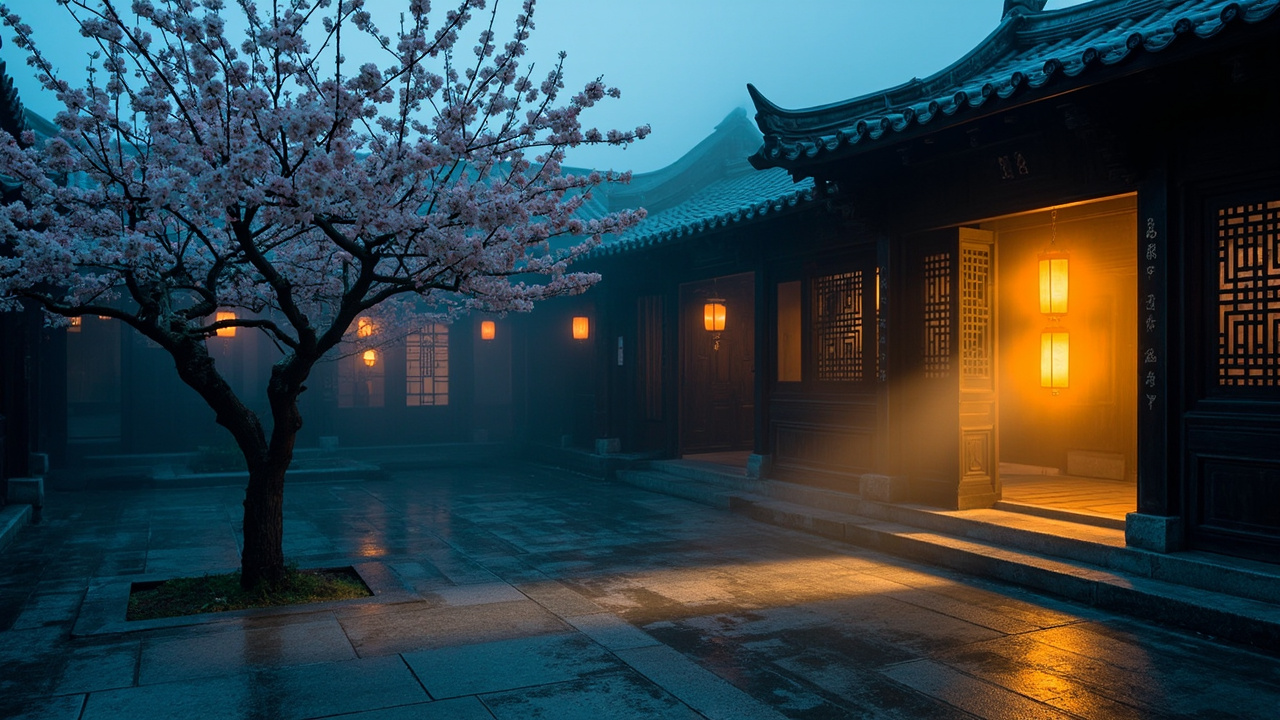
I checked in on a Tuesday in October, and by Wednesday morning I’d stopped taking photos. That’s the tell. The property sits inside a walled garden compound literally adjacent to the Summer Palace, and the architects rebuilt a series of Qing-dynasty courtyard houses so faithfully that you half-expect a court official to walk past. My room had a private courtyard with a single plum tree. I sat under it for two hours doing nothing.
Why it’s special: this is the only luxury hotel in China where the setting itself is a UNESCO-adjacent historic landscape. You get a private gate into the Summer Palace grounds before the tour buses arrive. The service is quiet and almost invisible — no one asks if you’re “enjoying your stay” every ten minutes. The spa uses traditional Chinese medicine diagnostics, which sounds gimmicky until you try it. And the restaurant, run by a chef who trained in Hangzhou, does a Dongpo pork that I still think about.
📍 Location: Haidian District, right beside the Summer Palace’s east gate, about 40 minutes from central Beijing by car.
🎫 Entry: Not applicable — it’s a hotel. Summer Palace entry next door is $4–8 (CNY 30–60) depending on season.
🕐 Hours: 24-hour front desk; restaurant serves 6:30am–10:30pm.
🚕 How to get there: Take the airport express to Dongzhimen, then a Didi (China’s Uber) — about $15 (CNY 110), 45 minutes. Metro Line 4 to Beigongmen then a 10-minute taxi also works.
⏰ When to visit: April–May and September–October. Avoid Chinese New Year and the first week of October (Golden Week) — the Summer Palace crowds are brutal.
💡 Insider tips: Ask for a courtyard room, not a lake-view room — the courtyards are quieter. The private Summer Palace gate opens at 6:30am; go then. Book the tea ceremony in advance. Bring a VPN — Google and WhatsApp are blocked, though the hotel WiFi is fast.
I met a concierge named Wei who’d worked there for nine years and could recite the Qianlong emperor’s poetry from memory. He walked me to the gate at dawn and pointed out a heron.
Fairmont Peace Hotel — the Bund, with ghosts
The Peace Hotel’s jazz bar has been playing since 1929. I sat there on a rainy Thursday with a $22 (CNY 160) whiskey sour, listening to a six-piece band whose oldest member had been performing in that room since the 1980s. The building is Art Deco to its bones, and the Fairmont restoration kept the original 1929 details — the Lalique glass, the mahogany paneling, the bronze doors.
Why it’s special: location is everything here. You step out the front door and you’re on the Bund, facing Pudong’s skyline. The heritage wing rooms have original fixtures; the new wing is more modern but less atmospheric. The breakfast is one of the best in Shanghai. And the jazz bar is a genuine cultural institution, not a tourist trap — locals still come.
📍 Location: Huangpu District, at the corner of Nanjing Road and the Bund.
🎫 Entry: Hotel guests free; jazz bar has a minimum spend of about $30 (CNY 215) per person after 8pm.
🕐 Hours: Jazz bar 6pm–1am; breakfast 6:30–10:30am.
🚕 How to get there: Metro Line 2 or 10 to East Nanjing Road, Exit 2, walk 5 minutes east toward the river.
⏰ When to visit: March–May or October–November. Weekday nights are calmer than weekends.
💡 Insider tips: Request a Bund-view room on floors 5–7 — higher floors are blocked by the roofline. The jazz bar has a cover after 8pm; arrive at 7:30 to avoid it. The hotel is cashless for most things — set up Alipay or WeChat Pay before you arrive.
I made the mistake of ordering the “signature” afternoon tea on a Saturday — $60 (CNY 430) for tiny sandwiches and a 45-minute wait. Skip it.
Amanfayun — a village that happens to have rooms
Amanfayun isn’t really a hotel. It’s a restored Tang-dynasty village of 47 rooms strung along a stone path, 20 minutes’ walk from Lingyin Temple. I arrived in November, when the tea bushes were flowering, and the whole valley smelled green and wet. My room had a private garden with a stone tub. I took a bath at 6am listening to monks chanting somewhere in the fog.
Why it’s special: the setting is genuinely unlike anywhere else in China. You’re inside a working tea-growing area, and the hotel arranges walks with local pickers. The spa is exceptional. The restaurant serves a vegetarian menu that would hold its own in Shanghai. And because it’s small, the staff-to-guest ratio is absurd — I counted more employees than guests at breakfast.
📍 Location: Fayun Lane, off Lingyin Road, Hangzhou, Zhejiang.
🎫 Entry: N/A; Lingyin Temple next door is $11 (CNY 75).
🕐 Hours: 24-hour; restaurant 7am–9:30pm.
🚕 How to get there: High-speed train from Shanghai Hongqiao to Hangzhou East (45 min, $11–18 / CNY 75–130), then a 30-minute taxi ($15 / CNY 110). See the China train travel guide for booking tips.
⏰ When to visit: April and October. Summer is humid; winter is quiet but cold.
💡 Insider tips: Book the tea-picking walk. The village path is uneven — bring proper shoes. Ask the concierge to arrange a private boat on West Lake at sunset. English is limited outside the front desk; download a translation app.
A tea picker named Auntie Zhou showed me how to snap the top two leaves and a bud. She laughed at my technique for a solid five minutes.
The Peninsula Beijing — the service benchmark
I’ve stayed at the Peninsula three times, and the thing that keeps bringing me back is how unflappable the staff are. On my last visit, my flight was delayed six hours and I arrived at 3am. The front desk had already rebooked my morning tour, moved my dinner reservation, and left a plate of warm dumplings in my room. No fuss. No drama.
Why it’s special: the Peninsula is the most consistently excellent luxury hotel in China. Rooms are large by Beijing standards, the technology actually works, and the location — walking distance to Wangfujing and the Forbidden City — is hard to beat. The Chinese restaurant, Huang Ting, is one of the best in the city.
📍 Location: Dongcheng District, on Goldfish Lane near Wangfujing.
🎫 Entry: N/A.
🕐 Hours: 24-hour.
🚕 How to get there: Metro Line 1 to Wangfujing, Exit A, walk 8 minutes north.
⏰ When to visit: Year-round. Spring and autumn are best for sightseeing.
💡 Insider tips: Ask for a room facing the courtyard, not the street. The concierge can arrange Forbidden City skip-the-line tickets. Book Huang Ting a week ahead. The hotel accepts foreign cards, but Alipay is faster for incidentals.
Banyan Tree Lijiang — the mountain one
Lijiang is where Chinese tourists go to see “old China,” and the old town is genuinely beautiful, if crowded. The Banyan Tree sits just outside the noise, in a compound of Naxi-style villas with views of Jade Dragon Snow Mountain. I woke up one morning, opened the curtains, and the mountain was right there, pink in the dawn light.
Why it’s special: the architecture respects the local Naxi style without being a pastiche. Each villa has a private courtyard and, in some cases, a plunge pool. The spa is excellent. And the location gives you easy access to both the old town and the mountain.
📍 Location: Gucheng District, Lijiang, Yunnan, about 15 minutes from the old town.
🎫 Entry: N/A; old town maintenance fee is $7 (CNY 50).
🕐 Hours: 24-hour.
🚕 How to get there: Fly to Lijiang Sanyi Airport (LJG) from Beijing, Shanghai, or Chengdu, then a 40-minute taxi ($20 / CNY 145).
⏰ When to visit: March–May and September–November. Altitude is 2,400m — take it easy the first day.
💡 Insider tips: Request a mountain-view villa. The old town is best at 7am before the crowds. Bring layers — mornings are cold even in summer.
The Opposite House — Sanlitun, for people who want a scene
The Opposite House is the hotel I recommend to friends in their 30s who want to be in Beijing’s nightlife, not above it. It’s in Sanlitun, the bar-and-restaurant district, and the lobby is a six-story atrium with a giant stainless-steel sculpture. The rooms are minimalist and Japanese-influenced, with deep wooden tubs.
Why it’s special: the location is unmatched if you want to walk to dinner, drinks, and shopping. The pool is stunning. The restaurant, Jing Yaa Tang, does excellent Peking duck. And the design is genuinely interesting — it’s not just a beige box with a chandelier.
📍 Location: Chaoyang District, Sanlitun.
🎫 Entry: N/A.
🕐 Hours: 24-hour.
🚕 How to get there: Metro Line 10 to Tuanjiehu, Exit A, walk 10 minutes.
⏰ When to visit: Year-round. Weekends are lively; weekdays are calmer.
💡 Insider tips: Ask for a room on a high floor away from the atrium — it can be noisy. Book Jing Yaa Tang for duck. The surrounding area is walkable and safe at night.
Waldorf Astoria Shanghai on the Bund — the grand one
The Waldorf occupies the historic Shanghai Club building, and the Long Bar inside it is where the original 1911 bar was. I had a martini there on a Tuesday and felt like I’d stepped into a 1930s novel. The rooms in the heritage wing are gorgeous; the new wing is more standard.
Why it’s special: the heritage wing is one of the most beautiful hotel interiors in China. The service is formal and precise. The location is on the Bund, a two-minute walk from the Peace Hotel. And the Long Bar is a genuine destination.
📍 Location: Huangpu District, on the Bund.
🎫 Entry: N/A.
🕐 Hours: 24-hour.
🚕 How to get there: Metro Line 2 or 10 to East Nanjing Road, Exit 3, walk 6 minutes.
⏰ When to visit: March–May, October.
💡 Insider tips: Book the heritage wing, not the new wing. The Long Bar has a dress code after 7pm. Ask for a Bund-view room.
Six Senses Qing Cheng Mountain — the spa one
I went here specifically for the spa and stayed three nights. The property is at the foot of Qingcheng Mountain, a Taoist holy site, and the whole place is designed around water and stone. The spa treatments use local herbs. The panda base at Chengdu is about 90 minutes away, and the hotel arranges trips.
Why it’s special: it’s the best spa hotel in China, full stop. The setting is serene. The food is excellent. And it’s a genuine escape from city China.
📍 Location: Dujiangyan, Sichuan, about 90 minutes from Chengdu.
🎫 Entry: N/A.
🕐 Hours: 24-hour.
🚕 How to get there: High-speed train from Chengdu to Qingchengshan station (40 min, $5 / CNY 35), then a 15-minute taxi.
⏰ When to visit: April–June, September–October.
💡 Insider tips: Book spa treatments before you arrive — they fill up. Bring mosquito repellent in summer. The panda base trip is worth it but start early.
Capella Shanghai, Jian Ye Li — the intimate one
Capella is a cluster of 1930s shikumen (stone-gate) houses in the former French Concession, restored into 55 villas. I stayed two nights and barely left the property. Each villa has a private courtyard, and the service is almost telepathically attentive.
Why it’s special: it’s the most intimate luxury hotel in Shanghai. You feel like you’re staying in a private home. The location — in the French Concession — is quieter and more residential than the Bund.
📍 Location: Xuhui District, former French Concession.
🎫 Entry: N/A.
🕐 Hours: 24-hour.
🚕 How to get there: Metro Line 1 or 10 to South Shaanxi Road, Exit 2, walk 8 minutes.
⏰ When to visit: March–May, October–November.
💡 Insider tips: Request a villa with a courtyard. The surrounding streets are great for walking. Book the hotel’s private walking tour.
Park Hyatt Beijing — the business one
The Park Hyatt occupies the top floors of the Yintai Centre in the CBD, and the views from the rooms are absurd — you look straight down at the CCTV Headquarters. I stayed one night on a work trip and it was perfect for that: efficient, quiet, well-located for meetings.
Why it’s special: the views, the efficiency, and the location if you’re in Beijing for business. The pool on the 59th floor is spectacular.
📍 Location: Chaoyang District, CBD.
🎫 Entry: N/A.
🕐 Hours: 24-hour.
🚕 How to get there: Metro Line 1 or 10 to Guomao, Exit C, walk 5 minutes.
⏰ When to visit: Year-round.
💡 Insider tips: Ask for a room facing the CCTV building. The pool is best at sunrise. Skip the restaurant — there are better options nearby.
FAQ summary
The best luxury hotels in China for first-time visitors are in Beijing, Shanghai, and Hangzhou, with the Aman Summer Palace, Fairmont Peace Hotel, and Amanfayun leading the pack. Expect to pay $350–$600 (CNY 2,500–4,300) per night for a true five-star in 2026, with flagship suites running $1,200+ (CNY 8,600+). Most nationalities now enter China visa-free for 30 days, and you should set up Alipay or WeChat Pay before arrival since many hotels are cashless for incidentals. English is widely spoken at luxury hotels but limited elsewhere, so download a translation app. Book directly with the hotel when possible for the best rates and room assignments.
FAQ
Q: Do I need a visa to stay in a luxury hotel in China? A: Most nationalities — including US, UK, EU, Australian, and many Southeast Asian passport holders — can now enter China visa-free for up to 30 days under the 2025–2026 expanded policy. Check the visa-free transit guide for your specific nationality. If you’re not eligible, apply for a standard tourist visa at least three weeks before your trip.
Q: How much should I budget per night for a luxury hotel in China? A: Expect $350–$600 (CNY 2,500–4,300) per night for a true five-star in 2026. Flagship properties like the Aman Summer Palace run $800–$1,400 (CNY 5,700–10,000). Suites at any of these can exceed $2,000 (CNY 14,300). Rates are 20–40% higher during Chinese New Year, Golden Week (first week of October), and major holidays.
Q: Can I pay with a foreign credit card at luxury hotels in China? A: Yes, major luxury hotels accept Visa, Mastercard, and Amex. But many are cashless for incidentals like the spa or minibar, and some smaller restaurants only take Alipay or WeChat Pay. Set up Alipay or WeChat Pay before you fly — it takes 10 minutes and saves a lot of hassle.
Q: Do I need a VPN to use Google, WhatsApp, or Instagram at my hotel? A: Yes. Google, WhatsApp, Instagram, Facebook, and most Western news sites are blocked in China. Hotel WiFi is fast but doesn’t bypass the firewall. Install a reputable VPN before you arrive — you can’t download one once you’re inside China. See the SIM card and internet guide for setup details.
Q: Is English spoken at luxury hotels in China? A: At the front desk and concierge, yes — usually excellent English. In restaurants, spas, and among taxi drivers, English is limited. Download a translation app like Pleco or Baidu Translate with offline Chinese. At luxury hotels, staff will often help you communicate with drivers and restaurants.
Q: What’s the best time of year to stay at a luxury hotel in China? A: April–May and September–October are ideal — mild weather, low humidity, and manageable crowds. Avoid Chinese New Year (late January or February), Golden Week (first week of October), and the summer months in Beijing and Shanghai (hot and humid). Hangzhou and Lijiang are best in spring and autumn.
Q: Should I book directly with the hotel or through a booking site? A: Book directly when possible. You’ll often get a better rate, a better room assignment, and the hotel can help with special requests. Use booking sites to compare, then call or email the hotel directly. For Aman properties, always book direct — they handle everything through their own reservations team.
The Honest Wrap-up
This list is for travelers who want a genuinely memorable stay in China and are willing to pay for it. It’s not for backpackers, and it’s not for people who want to spend their whole trip in a hotel — China is too interesting for that. If you’re on a tight budget, skip this list entirely and read about hostels instead. If you’re booking one splurge night on a longer trip, pick the Aman Summer Palace or the Fairmont Peace Hotel. My final advice: book the hotel first, then build the trip around it. The best stays in China aren’t just places to sleep — they’re the reason you came.
More guides you may like

Top 10 Bridges in China
China's bridges are engineering marvels spanning mountains, rivers, and seas. Here are 10 of the most spectacular, from ancient stone to modern steel.
8 min read

Top 10 Buddhist Sites in China
From the Leshan Giant Buddha to the Dunhuang Caves, these 10 Buddhist sites represent 2,000 years of China's spiritual heritage.
9 min read

Top 10 Day Trips from Beijing You Shouldn't Miss
Beijing is packed with history, but some of China's best experiences are just a few hours away. Here are 10 day trips that will transform your visit.
9 min read

Top 10 Hidden Gems in China Off the Beaten Path
Beyond the Great Wall and Terracotta Warriors, China has incredible hidden destinations few tourists ever reach. Here are 10 underrated gems worth the detour.
9 min read

Top 10 Markets and Shopping Streets in China
From Shanghai's Bund to Beijing's Silk Street - 10 markets where foreigners can haggle, explore, and bring home authentic Chinese goods.
9 min read

Top 10 Museums in China You Shouldn't Miss
China's museums span 5,000 years of civilization. These 10 - from the Palace Museum to Xi'an's terracotta gallery - are unmissable for culture lovers.
9 min read