
Cheap Hostels in China
The first time I checked into a hostel in China, I was in Chengdu, and the receptionist handed me a pair of plastic slippers and a key card attached to a…
Cheap Hostels in China
The first time I checked into a hostel in China, I was in Chengdu, and the receptionist handed me a pair of plastic slippers and a key card attached to a wooden block the size of my hand. “Don’t lose it,” she said, in English better than my Mandarin will ever be. “It’s 50 yuan.” I paid about $7 for the bed. The slippers turned out to be the most useful thing I owned for the next three weeks.
That’s the thing nobody tells you about hostels here. They’re not just cheap beds. In China, a good hostel is a small machine for solving the problems that trip up first-timers: the payment apps, the train tickets, the taxi that won’t stop for you, the menu with no pictures. The staff at a decent hostel will sit with you and set up Alipay on your phone. They’ll write your destination in Chinese on a slip of paper. They’ll tell you which exit at which metro station actually gets you to the right side of the street.
I’ve stayed in maybe 60 hostels across China over seven years. Some were grim. One in Xi’an had a bathroom I still think about. But the good ones saved me money and, more importantly, saved me time and confusion. This guide covers the ten I’d actually send a friend to, with real prices, real metro directions, and the specific things that will trip you up.
Quick answer
A dorm bed in a good Chinese hostel costs $6–15 (¥45–110) per night in most cities, and $12–25 (¥85–180) in Beijing, Shanghai, or during Golden Week. Most hostels accept foreign guests, but you must have your passport and a valid visa or visa-free entry — China’s 240-hour visa-free transit now covers 54 countries. Book on Hostelworld or Trip.com, and set up Alipay or WeChat Pay before you arrive, because many hostels no longer take cash.
The Short Version
If you read nothing else: stay in hostels in Chengdu, Xi’an, and Guilin, where the value is absurd and the staff genuinely help. In Beijing and Shanghai, hostels are fine but the price gap with cheap hotels has narrowed, so compare. Always book the first two nights before you fly. And bring your passport everywhere — you cannot check in without it, and neither can your friend.
How I Picked These
I’ve slept in all ten of these places, most of them more than once, and I’ve gone back to several after they changed owners or renovated. I talked to the front-desk staff about occupancy, about which nationalities book most, about what breaks. I asked other travelers in the common rooms what they paid and whether they’d return. I also crossed off a few famous ones that have gotten expensive or noisy. Prices are approximate for 2026 and shift with the season, so treat every number here as a range, not a promise.
Comparison Table
| Rank | Hostel | Best For | Approx Cost (USD/night) | Time Needed | When to Go |
|---|---|---|---|---|---|
| 1 | Flipflop Lounge, Chengdu | First-timers, social scene | $8–14 | 3–4 nights | Mar–May, Sep–Nov |
| 2 | Xiangzimen Youth Hostel, Xi’an | History buffs, solo travelers | $7–12 | 2–3 nights | Apr–May, Sep–Oct |
| 3 | Mingtown Hiker, Shanghai | Location, walkability | $14–22 | 3 nights | Mar–May, Oct–Nov |
| 4 | Peking Yard, Beijing | Courtyard atmosphere | $15–25 | 4 nights | Apr–May, Sep–Oct |
| 5 | Wada Hostel, Guilin | Day trips, nature | $6–11 | 2 nights | Apr–Oct |
| 6 | Cloudland, Yangshuo | Cyclists, river views | $7–13 | 3 nights | Apr–Oct |
| 7 | Lazybones, Hangzhou | Tea culture, calm | $10–16 | 2 nights | Mar–May, Sep–Nov |
| 8 | Old Street, Suzhou | Gardens, canals | $9–15 | 2 nights | Apr–May, Oct |
| 9 | Hantang, Pingyao | Old-town immersion | $6–10 | 2 nights | May, Sep–Oct |
| 10 | International Youth, Zhangjiajie | Hikers, mountain access | $8–13 | 3 nights | Apr–Jun, Sep–Oct |
Flipflop Lounge, Chengdu — the one that fixes your phone
I watched a guy from Manchester spend forty minutes at the front desk while the manager, a woman named Zhou, walked him through Alipay setup step by step. She didn’t charge him. She just did it, because she’s done it a thousand times and knows that a guest who can’t pay for anything is a guest who can’t leave.
This is the hostel I recommend to anyone landing in China for the first time. It’s in a converted building near the Wenshu Monastery area, the dorms are clean, and the courtyard fills up every evening with people swapping train tips. The social scene is real, not forced. There’s a bar, but it’s not a party hostel — you can sleep.
📍 Location: Qingyang District, near Wenshu Monastery metro 🎫 Entry fee: N/A (hostel, not attraction) 🕒 Opening hours: 24-hour reception 🚇 How to get there: Metro Line 1 to Wenshu Monastery Station, Exit B, walk 8 minutes west ⏰ When to visit: March–May and September–November; avoid Chinese New Year 💡 Insider tips: Ask Zhou to help set up Alipay and WeChat Pay on arrival. Dorms have lockers but bring your own padlock. The free breakfast is just toast and coffee — eat out instead. Book the 6-bed dorm, not the 10-bed, for $2 more.
The first meal I ate in Chengdu was a bowl of dan dan noodles from a stall two blocks away, and I still compare every bowl to it.
Xiangzimen Youth Hostel, Xi’an — where the walls talk
Xi’an is a city that rewards slow mornings, and this hostel sits inside the old city walls, which means you can walk to the Muslim Quarter for breakfast before the tour buses arrive. I stayed here in 2019 and again in 2024; the bones are the same, the courtyard is still full of bicycles, and the staff still hand out a hand-drawn map that’s better than any app.
Why it’s special: the location is unbeatable for the price. You’re a 15-minute walk from the Bell Tower and maybe 20 from the South Gate. The dorms are basic but the beds are firm in the way Chinese beds are firm, and the showers are hot. The common area has a bookshelf full of abandoned paperbacks in six languages.
📍 Location: Beilin District, inside the old city wall 🎫 Entry fee: N/A 🕒 Opening hours: 24-hour reception 🚇 How to get there: Metro Line 2 to Yongningmen Station, Exit D, walk 10 minutes north into the old town ⏰ When to visit: April–May and September–October; summer is brutally hot 💡 Insider tips: The hostel rents bikes for ¥30/day. Ask them to book your Terracotta Warriors ticket in advance — the site sells out. The nearby Muslim Quarter is a tourist trap after 6pm; go at 8am instead. Bring cash for the little breakfast stalls.
A staff member named Li once walked me to a hidden noodle shop because I couldn’t find it, then refused to let me buy him lunch.
Mingtown Hiker, Shanghai — pay for the location, not the room
Shanghai hostels are the most expensive in China, and Mingtown Hiker is no exception. But it’s a five-minute walk from the Bund, which means you can roll out of bed at 5am and watch the river light up without paying for a taxi. I’ve stayed here twice and both times the room was small and the wifi was mediocre. I’d still go back.
Why it’s special: location, location, location. The Bund at dawn is one of the great free experiences in Asia, and being able to walk there in slippers is worth the premium. The hostel is clean, the staff speak English, and there’s a rooftop with a view of the Pudong skyline that most hotels charge ten times more for.
📍 Location: Huangpu District, near the Bund 🎫 Entry fee: N/A 🕒 Opening hours: 24-hour reception 🚇 How to get there: Metro Line 2 or 10 to East Nanjing Road Station, Exit 2, walk 6 minutes east ⏰ When to visit: March–May and October–November; summer is humid and crowded 💡 Insider tips: Book the female-only dorm if you’re a solo woman — it’s quieter. The rooftop closes at 11pm. Skip the hostel breakfast and walk to a nearby jianbing stall for ¥8. Set up your Alipay and WeChat Pay before you arrive, because the neighborhood is card-hostile.
I once paid ¥45 for a bowl of noodles near the Bund and regretted it for two days.
Peking Yard, Beijing — the courtyard you came for
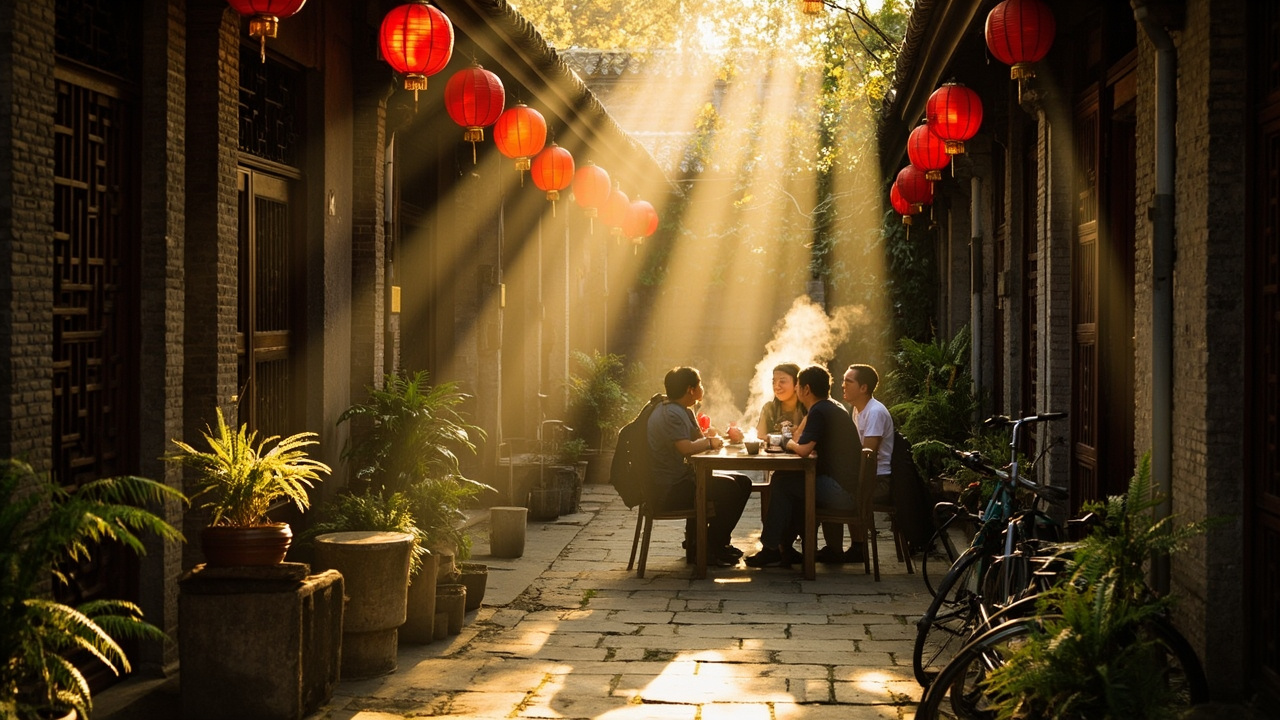
Beijing hostels are hit or miss, and most of the misses are in the hutongs where the plumbing is older than the People’s Republic. Peking Yard is the exception. It’s a restored courtyard house in a quiet hutong near the Drum Tower, and staying there feels less like a hostel and more like sleeping in someone’s grandmother’s house, if that grandmother had excellent taste and a bar.
Why it’s special: the courtyard itself. You eat breakfast under a tree, you meet people from everywhere, and you’re a 10-minute walk from some of the best street food in the city. The dorms are small but the beds are comfortable, and the shared bathrooms are cleaner than most Beijing hotels I’ve paid triple for.
📍 Location: Dongcheng District, near the Drum and Bell Towers 🎫 Entry fee: N/A 🕒 Opening hours: 24-hour reception 🚇 How to get there: Metro Line 8 to Shichahai Station, Exit A2, walk 7 minutes north into the hutongs ⏰ When to visit: April–May and September–October; winter is cold but cheap 💡 Insider tips: Ask the staff to write your destination in Chinese before you take a taxi. The hutong is easy to get lost in at night — screenshot the map. Book the courtyard-facing dorm, not the street-facing one. Bring a VPN if you need Google or Instagram, and set it up before you land.
A receptionist named Wang once drew me a map to a dumpling place that had no English name, and it was the best meal of the trip.
Wada Hostel, Guilin — the base for the karst
Guilin is a transit city for most travelers, but Wada Hostel is the reason to stay a night. It’s a big, friendly place with a garden, a bar, and a tour desk that actually knows what it’s doing. I used it as a base for the Li River cruise and the Longji rice terraces, and both bookings went smoothly.
Why it’s special: the tour desk. Most hostel tour desks are commission machines. This one isn’t — the staff will tell you which tours are worth it and which aren’t, and they’ll help you book train tickets to your next stop. The dorms are spacious, the beds are solid, and the garden is a nice place to recover from a long train ride.
📍 Location: Xiufeng District, near the city center 🎫 Entry fee: N/A 🕒 Opening hours: 24-hour reception 🚇 How to get there: From Guilin Railway Station, take bus 100 or a 15-minute taxi (¥20) ⏰ When to visit: April–October; the rice terraces are greenest in May–June and golden in September 💡 Insider tips: Book the Li River cruise through the hostel, not online — it’s cheaper. The Longji terraces day trip is long; bring snacks. The hostel rents bikes for ¥40/day. Get cash before you arrive; ATMs in Guilin are hit or miss.
I met a German couple here who’d been traveling for eight months, and they convinced me to skip the touristy night cruise. They were right.
Cloudland, Yangshuo — where the mountains are the view
Yangshuo is the kind of place that ruins other places for you. The karst peaks rise straight out of the rice fields, and Cloudland sits right in the middle of it. I stayed in a dorm with a window facing the mountains and woke up to mist on the peaks every morning for three days.
Why it’s special: the setting. You’re a 10-minute bike ride from the Yulong River, and the hostel rents bikes for cheap. The common area is relaxed, the food is decent, and the staff will help you plan hikes that aren’t on the tourist trail. It’s not a party hostel, which is exactly what you want after a long day of cycling.
📍 Location: Yangshuo County, near the Yulong River 🎫 Entry fee: N/A 🕒 Opening hours: 24-hour reception 🚇 How to get there: From Guilin, take a bus to Yangshuo (1.5 hours, ¥30), then a 10-minute taxi to the hostel ⏰ When to visit: April–October; avoid the July–August crowds if you can 💡 Insider tips: Rent a bike and ride to the Yulong River early, before the tour boats. The hostel’s map is better than Google Maps here. Bring mosquito repellent in summer. The nearby cooking school is worth the ¥200 if you have a spare afternoon.
I got caught in a downpour on a bike ride and a local farmer waved me into his shed to wait it out. We couldn’t understand each other and it didn’t matter.
Lazybones, Hangzhou — the tea-and-silence stop
Hangzhou is where Chinese tourists go on holiday, and Lazybones is where you go to slow down. It’s a quiet hostel near West Lake, with a garden, a small library, and a cat that has opinions about everyone. I stayed here for two nights and did almost nothing, which was the point.
Why it’s special: the calm. West Lake is one of the most beautiful urban landscapes in China, and being able to walk there in 15 minutes without dealing with traffic is a luxury. The dorms are simple but clean, the staff are helpful, and the tea in the common area is free and endless.
📍 Location: Xihu District, near West Lake 🎫 Entry fee: N/A 🕒 Opening hours: 24-hour reception 🚇 How to get there: Metro Line 1 to Longxiangqiao Station, Exit B, walk 12 minutes west ⏰ When to visit: March–May and September–November; spring is best for tea 💡 Insider tips: Rent a bike and ride around West Lake early in the morning. The Longjing tea fields are a 20-minute bus ride away. Skip the touristy boat rides and walk the Su Causeway instead. The hostel cat is named Mianbao, which means bread.
I drank more tea in two days here than in the previous two months combined.
Old Street, Suzhou — canals and gardens on foot
Suzhou is the city of gardens, and Old Street Hostel is right in the middle of the canal district, which means you can walk to the best ones. I stayed here in 2023 and spent most of my time just wandering the lanes, which is the correct way to do Suzhou.
Why it’s special: the location is perfect for slow exploration. The Humble Administrator’s Garden and the Master of the Nets Garden are both within walking distance, and the canal-side streets are lovely at night. The hostel itself is small and quiet, with a nice courtyard and a helpful front desk.
📍 Location: Gusu District, near the canal district 🎫 Entry fee: N/A 🕒 Opening hours: 24-hour reception 🚇 How to get there: Metro Line 4 to Chayuanchang Station, Exit 2, walk 8 minutes east ⏰ When to visit: April–May and October; summer is hot and crowded 💡 Insider tips: Buy garden tickets online the day before — they sell out. The night canal cruise is worth it once. The nearby Pingjiang Road is touristy but pretty; the back lanes are better. Bring cash for the small noodle shops.
A shop owner on Pingjiang Road once gave me a free cup of tea because I complimented her calligraphy.
Hantang, Pingyao — sleeping inside the Ming dynasty
Pingyao is a walled city that feels like a film set, and Hantang Hostel is inside the walls, in a traditional courtyard building. I stayed here in winter, when the city was almost empty, and it was one of the most atmospheric nights of my life.
Why it’s special: the building. You’re sleeping in a courtyard house that’s older than most countries, and the staff keep it warm with coal stoves in winter. The dorms are basic but the beds are comfortable, and the location means you can walk the entire old town on foot.
📍 Location: Inside the old city walls 🎫 Entry fee: ¥125 ($17) to enter the old town (valid 3 days) 🕒 Opening hours: 24-hour reception 🚇 How to get there: From Pingyao Railway Station, take a taxi (¥15) or walk 20 minutes to the old town ⏰ When to visit: May and September–October; winter is cold but magical and cheap 💡 Insider tips: The old town entry fee is worth it but keep your ticket — you’ll need it to re-enter. The city walls walk is best at sunset. Bring warm clothes in winter; the courtyard is cold. The nearby beef noodles are a local specialty.
I ate a bowl of Pingyao beef noodles in a tiny shop with no menu and no English, and it cost ¥12.
International Youth, Zhangjiajie — the mountain base camp
Zhangjiajie is the inspiration for the floating mountains in Avatar, and the hostels here are all about getting you to the park early. International Youth Hostel is the best of them, with a tour desk that knows the park inside out and a location close to the main entrance.
Why it’s special: the park logistics. Zhangjiajie National Forest Park is huge and confusing, and the hostel staff will help you plan a route that avoids the worst crowds. The dorms are clean, the beds are fine, and the common area is full of hikers comparing notes.
📍 Location: Wulingyuan District, near the park entrance 🎫 Entry fee: Park ticket ¥228 ($32), valid 4 days 🕒 Opening hours: 24-hour reception 🚇 How to get there: From Zhangjiajie Railway Station, take a bus to Wulingyuan (40 minutes, ¥12) ⏰ When to visit: April–June and September–October; avoid Chinese holidays 💡 Insider tips: Buy park tickets online the night before. Start at the Bailong Elevator before 8am to beat the crowds. The glass bridge is a separate ticket and often sold out. Bring rain gear — the weather changes fast.
I got up at 5am to catch the first elevator and had the mountaintop almost to myself for an hour.
FAQ summary
The best cheap hostels in China cost $6–15 per night for a dorm bed, with Beijing and Shanghai at the higher end. You must have your passport and valid entry (visa or visa-free transit) to check in, and most hostels now prefer Alipay or WeChat Pay over cash. Book your first two nights before you arrive, and set up your payment apps before you land, because hostel staff can help but it’s easier if you’ve done it in advance.
FAQ
Q: Do Chinese hostels accept foreign guests? A: Most do, but not all. Since 2024, regulations have loosened and more hostels are registered to accept foreigners, but some smaller ones still can’t. Always check the listing on Hostelworld or Trip.com for “foreign guests accepted” before booking, and bring your passport — you cannot check in without it.
Q: How much does a hostel in China cost in 2026? A: Expect $6–15 (¥45–110) per night for a dorm bed in most cities, and $12–25 (¥85–180) in Beijing, Shanghai, or during Golden Week. Private rooms run $20–45 (¥145–325). Prices spike during Chinese holidays, so book early if you’re traveling in early October or around Chinese New Year.
Q: Do I need a visa to stay in a hostel in China? A: Yes, you need valid entry — either a tourist visa or visa-free entry. China’s 240-hour visa-free transit now covers 54 countries, and several countries (including France, Germany, and Malaysia) have full visa-free entry. Check the current visa rules before you book, because they change.
Q: Can I pay for a hostel with cash? A: Increasingly, no. Most hostels prefer Alipay or WeChat Pay, and some no longer accept cash at all. Set up Alipay or WeChat Pay before you arrive, linked to an international card. If you can’t, bring enough cash to cover your stay and ask the hostel to help you set up the apps.
Q: Do hostel staff speak English? A: At the hostels on this list, yes — at least one person at the front desk speaks conversational English. Outside the hostel, English is rare. Download a translation app like Pleco or Baidu Translate before you arrive, and learn a few phrases. It makes a huge difference.
Q: Are Chinese hostels safe for solo female travelers? A: Generally yes. China has low violent crime, and hostels are used to solo travelers. Book female-only dorms if you prefer, keep your valuables in a locker, and use the same precautions you would anywhere. The bigger risk is petty theft on crowded trains, not hostels.
Q: How do I get from the airport to my hostel? A: Take the metro if your hostel is near a station — it’s cheap and reliable. From Beijing Capital Airport, take the Airport Express to Dongzhimen, then transfer. From Shanghai Pudong, take Metro Line 2. Taxis are fine but you’ll need your destination written in Chinese. See the China train and metro guide for details.
The Honest Wrap-up
This list is for first-timers who want to save money and meet people, not for travelers who need a private bathroom and a quiet room. If that’s you, book a cheap hotel instead — China has plenty, and the price gap is smaller than you’d think in Beijing and Shanghai. For everyone else, hostels are the fastest way to figure out how China actually works. My one piece of advice: book your first two nights before you fly, and don’t overplan the rest. The best hostels I’ve stayed in were the ones I found because a stranger in a common room told me about them. That’s how this country works. You show up, you ask, and someone points you to the good noodle shop.
More guides you may like

Top 10 Bridges in China
China's bridges are engineering marvels spanning mountains, rivers, and seas. Here are 10 of the most spectacular, from ancient stone to modern steel.
8 min read

Top 10 Buddhist Sites in China
From the Leshan Giant Buddha to the Dunhuang Caves, these 10 Buddhist sites represent 2,000 years of China's spiritual heritage.
9 min read

Top 10 Day Trips from Beijing You Shouldn't Miss
Beijing is packed with history, but some of China's best experiences are just a few hours away. Here are 10 day trips that will transform your visit.
9 min read

Top 10 Hidden Gems in China Off the Beaten Path
Beyond the Great Wall and Terracotta Warriors, China has incredible hidden destinations few tourists ever reach. Here are 10 underrated gems worth the detour.
9 min read

Top 10 Markets and Shopping Streets in China
From Shanghai's Bund to Beijing's Silk Street - 10 markets where foreigners can haggle, explore, and bring home authentic Chinese goods.
9 min read

Top 10 Museums in China You Shouldn't Miss
China's museums span 5,000 years of civilization. These 10 - from the Palace Museum to Xi'an's terracotta gallery - are unmissable for culture lovers.
9 min read