
China 1 Month Itinerary
The old man at the noodle stall in Xi'an watched me struggle with chopsticks for a full two minutes before he stood up, walked over, and silently…
China 1 Month Itinerary
The old man at the noodle stall in Xi’an watched me struggle with chopsticks for a full two minutes before he stood up, walked over, and silently repositioned my fingers. Then he went back to his stool and kept eating. That was day nine of my first month in China, and it’s the moment I stopped treating the country like a checklist and started treating it like a place where people live.
I’ve now spent seven years based in Beijing and taken more than forty trips across the country, and the question I get most from friends back home is still the same: where do you actually go if you have a month? Not a week. A month. That’s enough time to do China properly instead of just doing the famous bits badly.
A month is the sweet spot. Long enough to cross the country by high-speed rail instead of cramming onto budget flights, long enough to have a bad weather day and not panic, long enough to eat the same breakfast three mornings in a row because you liked it. It’s also long enough that you need a real plan, because China is roughly the size of the United States and the distances will humble you if you wing it.
This guide is the itinerary I’d give a friend. Ten stops, in an order that actually works logistically, with the prices, the train stations, the exits, and the mistakes I made so you don’t have to.
Quick answer
For most first-time visitors in 2026, a one-month China itinerary works best as a loop: Beijing → Xi’an → Chengdu → Zhangjiajie → Guilin/Yangshuo → Shanghai → Suzhou → Hangzhou → Hong Kong, with a side trip to the Great Wall and a Yangtze or rural stop if you have slack. Budget roughly $2,500–$4,000 (about ¥18,000–¥29,000) per person for a month including mid-range hotels, high-speed rail, food, and entry fees, not counting international flights. Citizens of 50+ countries, including the US, UK, and most of the EU, currently enter visa-free for up to 30 days under China’s expanded unilateral visa-free scheme, which is exactly why a one-month trip is suddenly realistic — check the current visa-free transit rules before you book, since the 30-day window is tighter than it sounds once you count arrival and departure days.
The Short Version
If you read nothing else: fly into Beijing, spend five days, take the train to Xi’an for three, then Chengdu for four. Fly to Zhangjiajie for the mountains, train to Guilin and Yangshuo for the karst, then finish in Shanghai with day trips to Suzhou and Hangzhou. Book high-speed rail tickets 10–14 days out on Trip.com because popular routes sell out. Set up Alipay and WeChat Pay before you land, because cash is genuinely annoying here now. Skip the tour buses. Eat where there’s a line of locals.
How I Picked These
I didn’t pick these from a listicle. Every stop here is somewhere I’ve slept at least two nights, usually more, and several I’ve returned to three or four times. I’ve taken the trains, missed the trains, gotten food poisoning in one of these cities (Chengdu, obviously), and had a hostel receptionist in Yangshuo named Wei draw me a hand map of a bike route that turned out to be the best afternoon of that whole year.
I weighted four things: how much a first-timer actually gets out of it, how easy it is to reach by public transport, whether it holds up in bad weather, and whether it’s worth the days it costs you. Some famous places didn’t make the cut because they eat too much time for what they give back. Some less-famous ones did.
The Comparison Table
| Rank | Place | Best For | Approx Cost (USD) | Time Needed | When to Go |
|---|---|---|---|---|---|
| 1 | Beijing | History, the Wall, first impressions | $70–110/day | 5 days | Apr–May, Sep–Oct |
| 2 | Xi’an | Terracotta Army, street food | $55–85/day | 3 days | Apr–May, Sep–Oct |
| 3 | Chengdu | Pandas, Sichuan food, slow pace | $50–80/day | 4 days | Mar–May, Sep–Nov |
| 4 | Zhangjiajie | Avatar mountains, hiking | $60–90/day | 3 days | Apr–Jun, Sep–Oct |
| 5 | Guilin & Yangshuo | Karst scenery, cycling, river | $50–80/day | 4 days | Apr–May, Sep–Oct |
| 6 | Shanghai | Modern China, nightlife, museums | $90–140/day | 4 days | Mar–May, Oct–Nov |
| 7 | Suzhou | Classical gardens, canals | $60–90/day | 2 days | Apr–May, Oct |
| 8 | Hangzhou | West Lake, tea culture | $60–90/day | 2 days | Mar–May, Sep–Nov |
| 9 | Hong Kong | Contrast, food, easy exit | $120–180/day | 3 days | Oct–Dec |
| 10 | Yangtze / rural add-on | Slower pace, river scenery | $80–150/day | 3 days | Apr–May, Sep–Oct |
Beijing — Where Every Trip Should Start
The first thing I tell people about Beijing is that it’s bigger and flatter than they picture. I walked 26,000 steps on my first day here and saw three things. Pace yourself.
Beijing is the right opener because it’s the most legible version of China for a first-timer — the subway is bilingual, the taxi apps work, and the scale of the history is right there in front of you. The Forbidden City, the Temple of Heaven, and the Great Wall at Mutianyu all deliver, and none of them are overrated. I’ll die on the hill that Mutianyu is the right Wall section for most people: restored enough to walk safely, wild enough to feel real, and far less crowded than Badaling.
📷 Location: Dongcheng and Xicheng districts for the historic core; Mutianyu is 90 minutes northeast of the city.
🎫 Entry fee: Forbidden City ~$8 (¥60), Temple of Heaven ~$5 (¥35), Mutianyu Wall ~$6 (¥45) plus ~$20 (¥140) for the cable car round trip.
🕐 Opening hours: Forbidden City 8:30am–5pm, closed Mondays. Temple of Heaven park opens at 6am — go early and watch the retirees dance and play jianzi.
🚇 How to get there: For the Forbidden City, take Line 1 to Tian’anmen East, Exit A, walk north 5 minutes. For Mutianyu, book a shared shuttle from Dongzhimen or take a Didi — the public bus is slow and confusing.
⏰ When to visit: April–May and September–October. Avoid the first week of October (National Day) at all costs — the Wall becomes a human traffic jam.
💡 Insider tips: You need your passport to enter Tian’anmen Square and the Forbidden City, and you must book the Forbidden City online in advance — same-day tickets don’t exist. Download a VPN before you arrive if you rely on Google or Instagram. The subway stops around 11pm, so plan your last ride.
I once paid a taxi driver 200 yuan for a 40-yuan ride because I didn’t have Didi set up yet. Set up Didi.
Xi’an — The City That Surprised Me Most
I expected Xi’an to be a one-trick pony: see the Terracotta Army, leave. I ended up staying five days.
The Muslim Quarter at night is the real Xi’an — smoke off the grills, lamb skewers for a dollar, and a chaos of smells that I still think about. The city walls are intact and you can rent a bike and ride the full 14 km loop, which takes about 90 minutes and is worth every minute at sunset. And yes, the Terracotta Army is genuinely astonishing, but go in the afternoon when the tour groups thin out.
📷 Location: Beilin District for the Muslim Quarter and walls; the Terracotta Army is 40 km east in Lintong.
🎫 Entry fee: City wall ~$8 (¥54), Terracotta Army ~$17 (¥120).
🕐 Opening hours: Terracotta Army 8:30am–6pm (last entry 5pm), open daily. City wall 8am–10pm.
🚇 How to get there: For the Terracotta Army, take Line 9 to Huaqingchi then bus 613, or just take a Didi for ~$15 (¥110) each way — much easier. For the Muslim Quarter, Line 2 to Zhonglou (Bell Tower), Exit A.
⏰ When to visit: Spring and autumn. Summer is brutally hot and the pits have no air conditioning.
💡 Insider tips: Buy your Terracotta Army ticket on the official WeChat mini-program, not from touts at the station. Eat biangbiang noodles and roujiamo in the Muslim Quarter, not near the tourist sites. The wall bike rental requires a deposit — bring your passport.
That noodle-stall old man who fixed my chopsticks? Xi’an. I’ve been back twice.
Chengdu — The Pace You Need by Week Two
By the time you reach Chengdu you’ll be tired, and Chengdu is the city that lets you rest without wasting days.
This is the most relaxed major city in China, and I mean that as a compliment. The teahouses in People’s Park are full of locals playing mahjong and getting their ears cleaned by roaming professionals, which is a real service and costs about $5 (¥35). The pandas at the research base are worth the early alarm — go at 7:30am when they’re actually awake, because by 10am they’re asleep and so is the experience. And the food is the best in the country, full stop.
📷 Location: Qingyang and Jinjiang districts for teahouses and food; the Panda Base is 15 km north.
🎫 Entry fee: Panda Base ~$8 (¥55), People’s Park teahouses free (you pay for tea, ~$3/¥20).
🕐 Opening hours: Panda Base 7:30am–6pm daily; arrive by 8am.
🚇 How to get there: Line 3 to Panda Avenue, then a 10-minute walk or a shared shuttle. For People’s Park, Line 2 to People’s Park, Exit B.
⏰ When to visit: March–May and September–November. Summer is humid and hazy.
💡 Insider tips: Book panda tickets online the day before — they cap daily numbers. Ask for “微辣” (wei la, mildly spicy) if you can’t handle heat, and even that will be spicy. The ear-cleaning guys in People’s Park are legitimate; agree on the price first.
I got food poisoning here from a hotpot I insisted was “not that spicy.” It was that spicy.
Zhangjiajie — The Mountains That Look Fake
The first time the cable car broke through the cloud layer and those sandstone pillars appeared, I actually said “no way” out loud. A stranger next to me laughed and said, in English, “everyone does that.”
Zhangjiajie is the inspiration for the floating mountains in Avatar, and the resemblance is not exaggerated. The glass bridge is a tourist trap and I’d skip it, but the Tianzi Mountain and Yuanjiajie areas are the real thing. Give yourself two full days minimum, because the park is enormous and the shuttle system inside it takes time to figure out.
📷 Location: Wulingyuan District, about 4 hours by train from Changsha.
🎫 Entry fee: Park pass ~$32 (¥224) for 4 days, cable cars and elevators ~$10–15 (¥70–100) each.
🕐 Opening hours: 7am–6pm, last entry around 4pm.
🚄 How to get there: High-speed rail from Changsha to Zhangjiajie West, then a 40-minute bus or Didi to Wulingyuan. Or fly into Zhangjiajie Hehua Airport.
⏰ When to visit: April–June and September–October. Avoid Chinese holidays — the queues for the elevators can hit two hours.
💡 Insider tips: Stay in Wulingyuan town, not Zhangjiajie city — you’ll save an hour each way. Buy the multi-day pass, not single-day. Bring cash for the small vendors inside the park; signal is patchy and card readers fail.
The park is genuinely one of the few places in China where I’d say the hype undersells it.
Guilin and Yangshuo — Slow Down Here
I almost skipped Yangshuo because everyone told me it was “too touristy.” They were half right, and I’m glad I went anyway.
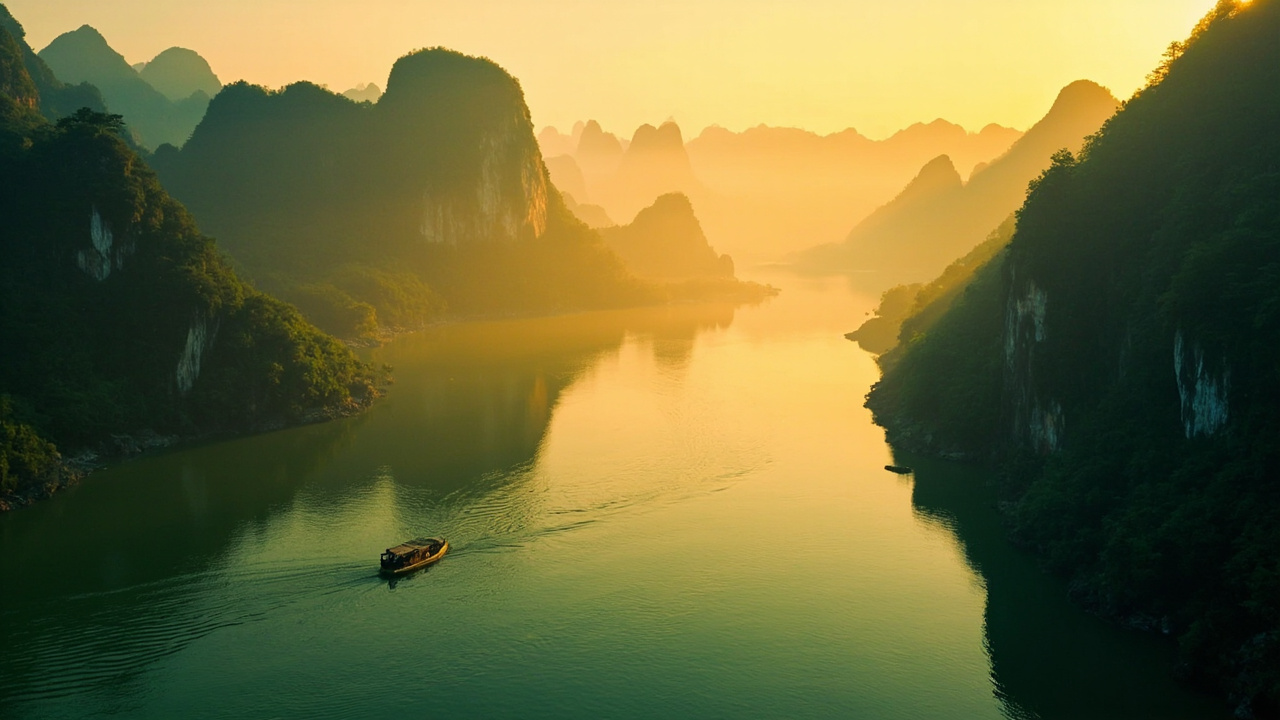
Guilin city itself is a transit hub — see the Reed Flute Cave if you have time, then move on. The magic is in Yangshuo, an hour south, where the Li River karst peaks rise straight out of the rice fields and you can rent a bike for $5 (¥35) a day and just ride. The Yulong River bamboo raft is the one tourist thing here that fully earns its price. And the town itself, once you get off West Street, is genuinely lovely.
📷 Location: Yangshuo County, Guangxi; the countryside villages of Xingping and Fuli are the best day rides.
🎫 Entry fee: Yulong River raft ~$30 (¥210) for two people, bike rental ~$5 (¥35)/day.
🕐 Opening hours: Rafts run 8am–5pm; book the morning slot to avoid the midday sun.
🚄 How to get there: High-speed rail from Guilin to Yangshuo Station, then a 40-minute bus to the town center. From Guilin, it’s 25 minutes by train.
⏰ When to visit: April–May and September–October. The rice fields are greenest in May and golden in October.
💡 Insider tips: Rent an e-bike, not a regular bike, if you’re not a cyclist — the hills are real. The “impression Sanjie Liu” light show is worth it if you like spectacle. Eat beer fish (啤酒鱼) — it’s the local specialty and it’s excellent.
Wei, the hostel receptionist, drew me that bike map. I still have it.
Shanghai — The Version of China That Feels Familiar
After three weeks of smaller cities, Shanghai feels like landing on another planet. It’s the most international city in China, English is everywhere, and the skyline from the Bund at night is the single most photographed view in the country for a reason.
But the real Shanghai is in the former French Concession — the plane-tree-lined streets, the tiny coffee shops, the wet markets tucked between boutiques. Spend a morning walking Wukang Road and Anfu Road, and you’ll understand why people move here and never leave. The Shanghai Museum is free and world-class. The Bund is best at 6am when it’s just you and the tai chi crowd.
📷 Location: Huangpu District for the Bund; Xuhui District for the French Concession.
🎫 Entry fee: The Bund free, Shanghai Museum free (book online), Yu Garden ~$6 (¥40).
🕐 Opening hours: Shanghai Museum 9am–5pm, closed Mondays. The Bund is always open.
🚇 How to get there: Line 2 to East Nanjing Road for the Bund, Exit 2. Line 10 to Shanghai Library for the French Concession.
⏰ When to visit: March–May and October–November. Summer is hot and humid.
💡 Insider tips: Get a Shanghai Public Transport Card or just use Alipay’s transit QR code. The Maglev from Pudong Airport is a fun 8-minute ride but only useful if you’re going to Longyang Road. Skip Nanjing Road pedestrian street unless you love crowds.
Shanghai is the easiest city in China for a first-timer, and the most expensive. Worth it.
Suzhou — The Gardens Are the Point
Suzhou is 25 minutes from Shanghai by high-speed rail, and it’s the single best day trip or overnight in the region. The classical gardens are UNESCO-listed and genuinely beautiful, especially the Humble Administrator’s Garden and the Master of the Nets Garden.
Go early. The gardens open at 7:30am and by 10am they’re packed with tour groups. The canals around Pingjiang Road are lovely in the evening, and the Suzhou Museum (designed by I.M. Pei) is free and worth an hour.
📷 Location: Gusu District for the gardens and canals.
🎫 Entry fee: Humble Administrator’s Garden ~$11 (¥80), Master of the Nets ~$6 (¥40), Suzhou Museum free.
🕐 Opening hours: Gardens 7:30am–5:30pm; museum 9am–5pm, closed Mondays.
🚄 How to get there: High-speed rail from Shanghai Hongqiao to Suzhou, 25 minutes, ~$6 (¥40). Then Line 4 or a Didi to the gardens.
⏰ When to visit: April–May and October. Cherry blossom season in March is pretty but crowded.
💡 Insider tips: Buy garden tickets online the day before — they sell out. The night boat on the canal is a nice way to end the day. Eat Suzhou-style noodles for breakfast; it’s a local ritual.
Hangzhou — West Lake and Tea
Hangzhou is where wealthy Shanghai goes to relax, and once you see West Lake at sunrise you’ll understand why. The lake is free to walk, the causeways are beautiful, and the tea plantations in the hills above (Longjing village) are the birthplace of China’s most famous green tea.
Rent a bike and ride the lake loop — it’s about 15 km and takes two hours at a relaxed pace. Then take a taxi up to Longjing and drink tea at a farmhouse for $5 (¥35). This is the China that doesn’t make it into the guidebooks.
📷 Location: Xihu District for the lake; Longjing village in the hills southwest.
🎫 Entry fee: West Lake free, Lingyin Temple ~$11 (¥75), tea farmhouse tastings ~$5 (¥35).
🕐 Opening hours: Lake always open; Lingyin Temple 7am–6pm.
🚄 How to get there: High-speed rail from Shanghai Hongqiao to Hangzhou East, 45 minutes, ~$11 (¥75). Then Line 1 to Longxiangqiao for the lake.
⏰ When to visit: March–May and September–November. Avoid the May 1 holiday week.
💡 Insider tips: The lake is best before 8am. Don’t buy “Longjing tea” from street vendors — go to the village. The bike-share system requires a Chinese phone number.
Hong Kong — The Right Way to End
I end every long China trip in Hong Kong, and I’d recommend it to anyone. It’s the easiest soft landing back into the West — English is widely spoken, the food is unmatched, and the contrast with the mainland after a month is genuinely jarring in the best way.
Three days is enough. Do the Star Ferry, hike Dragon’s Back, eat dim sum in a cha chaan teng, and wander the markets in Mong Kok. It’s expensive, but it’s the perfect palate cleanser before you fly home.
📷 Location: Central and Sheung Wan for the classic Hong Kong; Mong Kok for markets.
🎫 Entry fee: Star Ferry ~$0.50 (HK$4), most hikes free, Peak Tram ~$11 (HK$88) round trip.
🕐 Opening hours: Varies; most attractions 10am–6pm.
🚄 How to get there: High-speed rail from Shenzhen or Guangzhou directly into West Kowloon Station, or fly into HKIA.
⏰ When to visit: October–December. Summer is hot and typhoon season.
💡 Insider tips: Get an Octopus card at the airport — it works on everything. The Peak Tram queue is brutal; take bus 15 instead. You’ll need a separate visa situation for Hong Kong vs. mainland China — check current rules.
FAQ summary
For a one-month China trip in 2026, the most important practical facts are these: most Western travelers can enter visa-free for up to 30 days, which makes a month-long itinerary feasible without a visa application, but you must count arrival and departure days carefully. Budget $2,500–$4,000 (¥18,000–¥29,000) per person for a month of mid-range travel including transport, hotels, food, and entry fees, excluding international flights. Book high-speed rail tickets 10–14 days in advance on Trip.com, set up Alipay and WeChat Pay before arrival, and download a VPN before you land if you need Google, WhatsApp, or Instagram.
FAQ
Q: Do I need a visa for a one-month trip to China in 2026? A: Most travelers from the US, UK, EU, Australia, and many other countries can currently enter China visa-free for up to 30 days under the expanded unilateral visa-free scheme. That’s exactly one month, so count your arrival and departure days carefully — if your trip is 31 days, you’ll need a visa. Check the latest rules before booking.
Q: How much does a month in China actually cost? A: Expect $2,500–$4,000 (¥18,000–¥29,000) per person for mid-range travel, including hotels, high-speed rail, food, and entry fees. Budget travelers can do it for $1,800 (¥13,000); comfort travelers should plan $5,000+ (¥36,000). International flights are separate.
Q: Is one month enough to see China properly? A: One month is the sweet spot for a first trip. You can cover 8–10 destinations at a reasonable pace without constant travel days. Trying to do more than that means you’ll spend half your trip in train stations.
Q: Can I use my phone and apps in China? A: Yes, but you need a VPN for Google, WhatsApp, Instagram, and most Western apps — download and test it before you arrive, because VPN sites are blocked once you’re inside. Get a local SIM or eSIM for data. See our China SIM and internet guide for specifics.
Q: How do I pay for things in China as a foreigner? A: Alipay and WeChat Pay are now foreigner-friendly and link to international credit cards. Set them up before you arrive and you’ll rarely need cash. Some small vendors and rural areas still prefer cash, so carry a few hundred yuan as backup.
Q: What’s the best time of year for a one-month China trip? A: April–May and September–October are ideal — mild weather, manageable crowds. Avoid the first week of October (National Day) and Chinese New Year, when domestic travel peaks and prices spike.
Q: Is English widely spoken in China? A: In Beijing, Shanghai, and Hong Kong, yes, especially in tourist areas. Elsewhere, expect limited English — download a translation app like Pleco or Baidu Translate and learn a few basic phrases. Pointing at menus and using translation apps works fine.
The Honest Wrap-up
This itinerary is for the first-timer who wants to see the real range of China — the history, the food, the mountains, the cities — without burning out. It’s not for someone who wants a resort vacation, and it’s not for someone who refuses to use a translation app. If you want a two-week trip, cut Zhangjiajie and Hangzhou and keep the rest.
One last thing: don’t over-plan. Leave one day per city unplanned and just walk. The best moments of my seven years here were never on a schedule. Book the flight, set up Alipay, and trust that the country will take care of the rest.
More guides you may like

Top 10 Bridges in China
China's bridges are engineering marvels spanning mountains, rivers, and seas. Here are 10 of the most spectacular, from ancient stone to modern steel.
8 min read

Top 10 Buddhist Sites in China
From the Leshan Giant Buddha to the Dunhuang Caves, these 10 Buddhist sites represent 2,000 years of China's spiritual heritage.
9 min read
Top 10 Day Trips from Beijing You Shouldn't Miss
Beijing is packed with history, but some of China's best experiences are just a few hours away. Here are 10 day trips that will transform your visit.
9 min read
Top 10 Hidden Gems in China Off the Beaten Path
Beyond the Great Wall and Terracotta Warriors, China has incredible hidden destinations few tourists ever reach. Here are 10 underrated gems worth the detour.
9 min read
Top 10 Markets and Shopping Streets in China
From Shanghai's Bund to Beijing's Silk Street - 10 markets where foreigners can haggle, explore, and bring home authentic Chinese goods.
9 min read
Top 10 Museums in China You Shouldn't Miss
China's museums span 5,000 years of civilization. These 10 - from the Palace Museum to Xi'an's terracotta gallery - are unmissable for culture lovers.
9 min read