
Forbidden City Guide Beijing
The first thing I noticed wasn't the scale of the place. It was the smell of dust and old wood, and the sound of my own footsteps on stone worn smooth by…
Forbidden City Guide Beijing
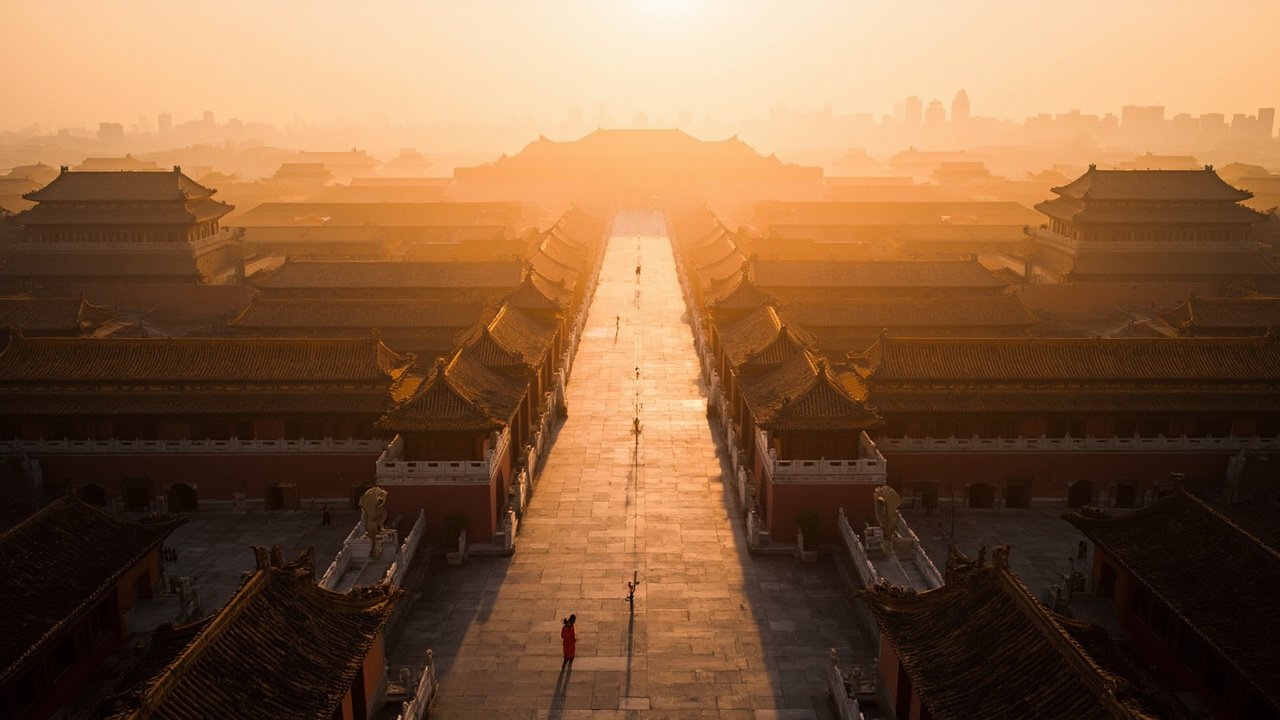
The first thing I noticed wasn’t the scale of the place. It was the smell of dust and old wood, and the sound of my own footsteps on stone worn smooth by six hundred years of people walking the same path. I was standing in the outer courtyard just past the Meridian Gate, and a guard blew a whistle at a guy trying to fly a drone. That whistle echoed off the walls in a way that made the whole courtyard feel like a stage.
I’ve been to the Forbidden City nine times now. The first time, in 2019, I did everything wrong. I showed up at 10 a.m. on a Saturday in July, bought a ticket from a scalper for triple the price, and spent four hours shuffling behind a tour group holding a flag. The ninth time, last November, I walked in at 8:30 a.m. on a Tuesday with snow on the golden roofs and maybe two hundred people in the entire complex. Same place. Completely different experience.
The Forbidden City is the single most important sight in Beijing, and arguably in China. It’s a 72-hectare palace complex that served as the home of 24 emperors across the Ming and Qing dynasties, from 1420 until 1912. Nearly 1 million people visit it on peak days. That number matters, because how you plan around it determines whether you get the postcard version or the version you’ll actually remember.
This guide is for first-time visitors who’ve never been to China. I’ll cover how to get tickets (the hardest part), which route to walk, what to skip, and the small things nobody tells you until you’re already inside.
Quick answer
The Forbidden City requires a timed-entry reservation booked online in advance (usually 7 days ahead) at the official WeChat mini-program or gugong.ktmtech.cn — there is no ticket window on-site for foreign passports, and walk-ups are turned away. Tickets cost 60 CNY ($8.50) in high season (April 1–Oct 31) and 40 CNY ($5.60) in low season, and the palace is closed every Monday except during July–August and public holidays. Enter at the Meridian Gate (south) and exit at the Gate of Divine Prowess (north) — the route is one-way.
The Short Version
Book your ticket exactly 7 days before, at 8 p.m. Beijing time, the moment the slot opens. Bring your passport — it’s your ticket. Enter at 8:30 a.m. when gates open, walk the central axis fast to the Hall of Supreme Harmony, then slow down. Skip the Treasure Gallery if you’re short on time. Exit north into Jingshan Park and climb the hill for the view back over the roofs. That’s the whole thing. Everything else is detail.
How I Picked These
I’ve walked the Forbidden City in every season except deep winter, and I’ve done it as a solo traveler, with a Chinese-speaking friend, and once with my parents who don’t speak a word of Mandarin. I’ve made the ticket mistake, the Monday mistake, the “I’ll just show up” mistake. I’ve also talked to the staff at the audio guide counter, a Beijing taxi driver named Liu who gave me his own route through the side halls, and a woman at the Palace of Heavenly Purity who’s worked there for eleven years. What follows is what actually worked, cross-checked against the official Palace Museum website and my own notes from 2024 and 2025 visits.
Comparison Table
| Rank | Section / Route | Best For | Approx Cost (USD) | Time Needed | When to Go |
|---|---|---|---|---|---|
| 1 | Central Axis (Meridian Gate → Hall of Supreme Harmony → Hall of Preserving Harmony) | First-timers, the “wow” moment | $8.50 (60 CNY) | 2–3 hrs | 8:30–10 a.m. |
| 2 | Inner Court (Palace of Heavenly Purity, Hall of Union, Palace of Earthly Tranquility) | Seeing where emperors actually lived | Included | 1–1.5 hrs | Mid-morning |
| 3 | Six Western Palaces | Quieter courtyards, imperial concubines’ quarters | Included | 45 min | Afternoon |
| 4 | Six Eastern Palaces | Ceramics and clock galleries | Included | 45 min | Afternoon |
| 5 | Treasure Gallery (Ningshougong) | Gold, jade, imperial bling | +$1.40 (10 CNY) | 45 min | Mid-day |
| 6 | Clock Gallery (Fengxian Dian) | Mechanical curiosities, Western clocks | +$1.40 (10 CNY) | 30 min | Mid-day |
| 7 | Imperial Garden | Rest, old cypress trees, rockeries | Included | 20 min | Before exit |
| 8 | Jingshan Park (north exit) | Panorama over the golden roofs | $0.30 (2 CNY) | 45 min | Right after exit |
| 9 | Tiananmen Square (south approach) | Context, flag ceremony | Free | 30 min | Early morning |
| 10 | Audio guide + side halls combo | Understanding what you’re looking at | $5.60 (40 CNY) | +1 hr | Anytime |
The Meridian Gate and the Central Axis — Where the Palace Actually Begins
The Meridian Gate is the one you’ve seen in photos, the massive red U-shaped structure with five arched tunnels. I remember standing there in 2023 watching a school group of about eighty Chinese kids in matching yellow hats pour through the center arch, and a guard quietly redirecting them to the side entrances. Only the emperor used to walk the center. Now it’s mostly tour groups.
This is the entry point for everyone, and it’s where the scale hits you. The gate is 37.95 meters tall, built in 1420, and it opens onto a courtyard that can hold 100,000 people. When you walk through, look up at the ceiling of the central passage — most people don’t, and it’s painted with intricate patterns that survived the Ming dynasty.
Walk straight north across the courtyard, over the Inner Golden Water River (five marble bridges, the center one was for the emperor only), and up to the Hall of Supreme Harmony. This is the largest wooden structure in China, 35 meters tall, sitting on a three-tiered marble terrace. It’s where emperors held their most important ceremonies.
📷 Location: Dongcheng District, north of Tiananmen Square. The whole complex runs north from Tiananmen.
🎫 Entry fee: 60 CNY ($8.50) high season, 40 CNY ($5.60) low season. No separate fee for the central axis.
🕒 Opening hours: 8:30 a.m.–5 p.m. (April–Oct), 8:30 a.m.–4:30 p.m. (Nov–March). Closed Mondays except July–August.
🚇 How to actually get there: Take Subway Line 1 to Tiananmen East (Exit A) or Tiananmen West (Exit B), then walk north through security. Or Line 8 to National Art Museum (Exit C), walk 10 minutes south.
⏰ When to visit: Right at 8:30 a.m. opening. Weekdays in April, September, or October. Avoid Chinese national holidays entirely.
💡 Insider tips: The security line at Tiananmen East is often 30+ minutes. Enter from the east side via the Workers’ Cultural Palace (free, requires ID) — it’s a shortcut most tourists don’t know. Bring your passport; you’ll show it at least three times. There’s no re-entry once you exit.
I once watched an elderly man in a blue Mao jacket stand in front of the Hall of Supreme Harmony for twenty minutes without moving, just looking up. I asked him (through a translation app) what he was thinking. He said his grandfather had been a palace carpenter. That’s the kind of thing this place does to people.
The Inner Court — Where the Emperors Actually Slept
The Inner Court starts after the Hall of Preserving Harmony. This is where the emperor, empress, and concubines lived. It’s less grand than the front halls, but more human. The Palace of Heavenly Purity is where emperors held daily court and, in some cases, died. The Palace of Earthly Tranquility was the empress’s residence.
I’ll be honest: by the time most people reach here, they’re tired. The front halls are overwhelming, and the Inner Court can feel like more of the same. But slow down. Look at the smaller details — the bronze turtles and cranes in the courtyards, the painted eaves, the way the doors are arranged in odd numbers (emperors were yang, so odd numbers). The Hall of Union has a clepsydra (water clock) and a mechanical clock that Qing emperors were obsessed with.
📷 Location: Central axis, north of the three front halls. 🎫 Entry fee: Included. 🕒 Opening hours: Same as the palace. 🚇 How to actually get there: Just keep walking north. You can’t miss it. ⏰ When to visit: 10–11 a.m., after the front halls but before the midday crowds. 💡 Insider tips: The east side of the Inner Court (the Six Eastern Palaces) is usually less crowded than the west. The ceramics gallery in the east has some of the best pieces in the museum, and most tour groups skip it. If you need a bathroom, the ones near the Palace of Earthly Tranquility are less busy than the ones near the entrance. I tried the “imperial” snacks sold near the Inner Court — a packaged pastry shaped like a mini mooncake. It was dry and overpriced at 25 CNY (~$3.50). Skip it.
The Six Western Palaces — Where the Concubines Lived (and Plotted)
This is my favorite part of the Forbidden City, and it’s where most tourists don’t go. The Six Western Palaces are a grid of smaller courtyards where imperial concubines lived, and they feel like a completely different place — intimate, quiet, almost domestic. You can see their bedrooms, their sitting rooms, the small gardens they walked in.
I wandered into the Palace of Gathered Elegance on a Tuesday afternoon in October and had an entire courtyard to myself for fifteen minutes. That never happens at the front halls. The buildings are smaller, the light is softer, and you can actually imagine people living here. The TV drama Empresses in the Palace (甄嬛传) was set largely in these courtyards, and Chinese visitors often come specifically to see them.
📷 Location: Western side of the Inner Court, off the central axis. 🎫 Entry fee: Included. 🕒 Opening hours: Same as the palace. 🚇 How to actually get there: After the Palace of Heavenly Purity, turn left (west) and follow the signs. ⏰ When to visit: 11 a.m.–1 p.m., when tour groups are at lunch. 💡 Insider tips: The courtyards here are numbered and easy to get lost in. Take a photo of the map at the entrance. Some buildings are closed for restoration — check the posted signs. The light in the late morning is beautiful for photos because the courtyards are narrow. A woman working at the Palace of Gathered Elegance told me (in slow Mandarin, with hand gestures) that she’d worked there eleven years and still found new details every week. She pointed at a carved panel above a doorway I’d walked past twice without noticing.
The Six Eastern Palaces and the Ceramics Gallery
The eastern counterpart to the Six Western Palaces is where you’ll find the ceramics and bronzes galleries. If you care about Chinese art at all, this is the section to prioritize. The ceramics collection spans 4,000 years, from Neolithic pottery to Qing porcelain, and it’s displayed in the actual palace buildings, which is a strange and wonderful experience.
I’m not a ceramics person. I went because a friend insisted. I ended up spending forty minutes in one room looking at a single celadon bowl from the Song dynasty. The glaze was this pale green-blue that changed depending on where you stood. That’s the thing about this place — it sneaks up on you.
📷 Location: Eastern side of the Inner Court. 🎫 Entry fee: Included. 🕒 Opening hours: Same as the palace. 🚇 How to actually get there: After the Palace of Heavenly Purity, turn right (east). ⏰ When to visit: Early afternoon, 1–3 p.m. 💡 Insider tips: The ceramics gallery is one of the few places in the palace with English labels on most pieces. The bronzes gallery next door is smaller but equally good. If you only have time for one gallery, pick ceramics. I met a retired teacher from Shanghai here who spent twenty minutes explaining a Ming vase to me in English. She was there on a solo trip. We exchanged WeChat contacts. That’s how travel works sometimes.
The Treasure Gallery (Ningshougong) — Worth the Extra Ticket?
The Treasure Gallery is a separate 10 CNY (~$1.40) ticket inside the palace, and it’s where the imperial bling lives: gold crowns, jade objects, ceremonial robes, and the famous gold cup set. It’s also where you’ll find the Nine Dragon Screen, a 29-meter-long glazed tile wall with nine dragons in relief.
Here’s my honest take: if you have three hours total, skip it. If you have four or more, it’s worth it, especially for the Nine Dragon Screen. The gold and jade objects are impressive but the displays are dark and crowded, and there’s not much English signage. I went once and probably won’t go again.
📷 Location: Northeastern section of the palace, near the exit. 🎫 Entry fee: 10 CNY (~$1.40) extra. 🕒 Opening hours: Same as the palace. 🚇 How to actually get there: Follow signs toward the Gate of Divine Prowess, then turn east before exiting. ⏰ When to visit: Mid-afternoon, after the main halls. 💡 Insider tips: Buy the extra ticket at the same time as your main ticket if possible, or at the small kiosk near the entrance to the gallery. The Nine Dragon Screen is outside the paid area, so you can see it without the extra ticket. I paid the extra 10 CNY, walked through in twenty minutes, and spent most of that time looking at the Nine Dragon Screen, which is free. Make of that what you will.
The Clock Gallery (Fengxian Dian) — The Weirdest Room in the Palace
The Clock Gallery is a small, strange, wonderful room full of mechanical clocks from the 18th and 19th centuries, mostly gifts from European envoys to Qing emperors. There are clocks shaped like elephants, clocks with moving figures, clocks that play music. It’s like a steampunk fever dream inside a Ming dynasty building.
I loved this gallery. It’s small — thirty minutes max — and it’s the one place in the Forbidden City where you can see the emperors as curious people rather than distant figures. They collected these things the way people today collect watches. The craftsmanship is absurd.
📷 Location: Eastern side, near the Six Eastern Palaces. 🎫 Entry fee: 10 CNY (~$1.40) extra. 🕒 Opening hours: Same as the palace. 🚇 How to actually get there: Follow signs from the eastern Inner Court. ⏰ When to visit: Mid-afternoon, when the main halls are packed. 💡 Insider tips: The clocks are delicate and the room is small, so it gets crowded fast. Go early afternoon. The English labels are decent here. If you’re traveling with kids, this is the gallery they’ll actually enjoy. A father and his eight-year-old daughter were in front of me, and the girl kept saying “zài yī gè, zài yī gè” (one more, one more) at each clock. Her dad looked exhausted. I understood.
The Imperial Garden — The Quiet Ending
The Imperial Garden sits at the northern end of the palace, just before the Gate of Divine Prowess. It’s small — about 1.2 hectares — but it’s full of ancient cypress trees, rockeries, pavilions, and stone carvings. It’s where the imperial family actually relaxed.
By the time you reach the garden, you’ll probably be tired. Sit down. The cypresses here are hundreds of years old, and some are propped up with metal supports. There’s a pavilion in the center with a double-eaved roof, and if you sit under it and look back south, you can see the whole palace stretching away behind you. That’s the moment I remember most from my last visit.
📷 Location: Northern end of the palace. 🎫 Entry fee: Included. 🕒 Opening hours: Same as the palace. 🚇 How to actually get there: It’s on the way to the north exit. You can’t miss it. ⏰ When to visit: 3:30–4:30 p.m., just before closing. 💡 Insider tips: The garden is the last place with bathrooms before you exit. Use them. The exit at the Gate of Divine Prowess dumps you onto Jingshan Front Street, where you’ll be swarmed by taxi touts — walk west to the main road and use Didi or the subway instead. I sat on a bench here next to an elderly couple from Chengdu who shared their sunflower seeds with me. We didn’t speak the same language. It didn’t matter.
Jingshan Park — The View You Shouldn’t Skip
Jingshan Park is directly north of the Forbidden City, across the street from the north exit. It costs 2 CNY (~$0.30) to enter, and it’s the single best thing you can do after the palace. Climb the hill — it’s about 45 meters, maybe 15 minutes of stairs — and you’ll get a panoramic view over the golden roofs of the Forbidden City stretching south toward Tiananmen.
I’ve done this three times. The first time, in summer, it was hazy and the view was mediocre. The second time, in October, the air was clear and the roofs glowed. The third time, in November with light snow, it was one of the most beautiful things I’ve seen in China. Go if the air quality is decent. Skip it if it’s not.
📷 Location: North of the Forbidden City, across Jingshan Front Street. 🎫 Entry fee: 2 CNY (~$0.30). 🕒 Opening hours: 6 a.m.–9 p.m. (summer), 6:30 a.m.–8 p.m. (winter). 🚇 How to actually get there: Exit the Forbidden City at the north gate, cross the street, enter the park. ⏰ When to visit: Late afternoon, ideally on a clear day. Sunset is best. 💡 Insider tips: The Wanchun Pavilion at the top is the main viewpoint, but it’s crowded. There’s a smaller pavilion to the east with almost the same view and fewer people. Check the air quality index (AQI) before you go — if it’s above 150, the view will be murky. I watched a Chinese couple get engaged at the top of the hill in October 2024. Everyone clapped. It was a good day.
Tiananmen Square and the Approach — The Context You Need
You’ll walk through Tiananmen Square to get to the Forbidden City, and it’s worth giving it thirty minutes. The square is the largest public square in the world, and the security process to enter is intense — you’ll go through a checkpoint, show your passport, and possibly have your bag searched. Don’t bring a drone, a large tripod, or anything that looks like a political sign.
The flag-raising ceremony at sunrise is a big deal for Chinese visitors. I went once. It’s crowded, it’s early, and unless you’re really into it, I’d skip it. What I would do is walk the square slowly, look at the Monument to the People’s Heroes, and then head north to the Meridian Gate.
📷 Location: South of the Forbidden City. 🎫 Entry fee: Free. 🕒 Opening hours: Open 24 hours, but security checkpoints close overnight. 🚇 How to actually get there: Subway Line 1 to Tiananmen East or Tiananmen West. ⏰ When to visit: Early morning, before the palace opens. 💡 Insider tips: You need your passport to enter the square. There’s no food or drink sold inside, so bring water. The bathrooms are near the subway exits, not in the square itself. If you’re visiting during a political event, the square may be closed entirely — check before you go. I once got stopped at the checkpoint because I had a power bank in my pocket. The guard was polite, checked it, and waved me through. It took two minutes. Don’t stress about it, just be patient.
FAQ summary
The Forbidden City requires an advance online reservation booked through the official WeChat mini-program or gugong.ktmtech.cn, usually released 7 days ahead at 8 p.m. Beijing time — there are no walk-up tickets for foreign passports. Tickets cost 60 CNY ($8.50) in high season and 40 CNY ($5.60) in low season, and the palace is closed on Mondays except during July and August. Enter at the Meridian Gate in the south, exit at the Gate of Divine Prowess in the north, and bring your passport as your ID. Budget 3–4 hours for the palace and another 45 minutes for Jingshan Park next door.
FAQ
Q: Do I need to book Forbidden City tickets in advance? A: Yes, always. Tickets are released 7 days ahead at 8 p.m. Beijing time on the official WeChat mini-program (search “故宫博物院”) or gugong.ktmtech.cn. There is no ticket window for foreign passports on-site, and walk-ups are turned away. Book the moment slots open — they sell out in minutes during peak season.
Q: How much does the Forbidden City cost in 2026?
A: 60 CNY ($8.50) in high season (April 1–October 31) and 40 CNY ($5.60) in low season (November 1–March 31). The Treasure Gallery and Clock Gallery each cost an extra 10 CNY ($1.40). Jingshan Park next door is 2 CNY ($0.30).
Q: Is the Forbidden City closed on Mondays? A: Yes, it’s closed every Monday except during July and August, and except on Chinese public holidays. If your trip is short, plan around this — it’s the most common mistake first-timers make.
Q: How long does it take to walk through the Forbidden City? A: The minimum is about 2 hours if you walk fast and skip the side galleries. Most people spend 3–4 hours. If you add the Treasure Gallery, Clock Gallery, and Jingshan Park, budget 5 hours total.
Q: Do I need a VPN or a Chinese SIM card to book tickets? A: You’ll need a working internet connection to book through the WeChat mini-program, and WeChat itself requires a phone number. Set up your China SIM card and internet access before you arrive, and download a VPN if you want to use Google or WhatsApp. Alipay and WeChat Pay both work for the ticket payment — see the China payment apps guide for setup.
Q: Can I bring a backpack or camera into the Forbidden City? A: Yes, small backpacks and cameras are fine. Drones, large tripods, and anything that looks like a political sign are not. There are free bag checks at the entrance. You can’t re-enter once you exit, so carry everything you need with you.
Q: What’s the best time of year to visit the Forbidden City? A: Late September through October, and April through early May. The weather is mild, the air is often clearer, and the crowds are manageable on weekdays. Avoid Chinese New Year, Golden Week (October 1–7), and July–August, when heat and crowds peak.
The Honest Wrap-up
This guide is for first-time visitors who want to actually see the Forbidden City, not just check it off a list. It’s not for people who want to “do Beijing in three days” — this place deserves half a day minimum, and if you rush it, you’ll remember nothing but the crowds.
If you’re booking the flight right now, here’s my one piece of advice: pick a weekday in late September or October, book your ticket the moment it opens, and get to the Meridian Gate by 8:15 a.m. Everything else — the audio guide, the side galleries, the snacks — is optional. The early entry is not.
And if you’re planning the rest of your China trip, the top 10 must-visit places in China will help you figure out what to pair with Beijing. For the city itself, my Beijing complete travel guide covers everything else — food, transit, neighborhoods, and the Great Wall.
More guides you may like
Top 10 Bridges in China
China's bridges are engineering marvels spanning mountains, rivers, and seas. Here are 10 of the most spectacular, from ancient stone to modern steel.
8 min read

Top 10 Buddhist Sites in China
From the Leshan Giant Buddha to the Dunhuang Caves, these 10 Buddhist sites represent 2,000 years of China's spiritual heritage.
9 min read
Top 10 Day Trips from Beijing You Shouldn't Miss
Beijing is packed with history, but some of China's best experiences are just a few hours away. Here are 10 day trips that will transform your visit.
9 min read
Top 10 Hidden Gems in China Off the Beaten Path
Beyond the Great Wall and Terracotta Warriors, China has incredible hidden destinations few tourists ever reach. Here are 10 underrated gems worth the detour.
9 min read
Top 10 Markets and Shopping Streets in China
From Shanghai's Bund to Beijing's Silk Street - 10 markets where foreigners can haggle, explore, and bring home authentic Chinese goods.
9 min read
Top 10 Museums in China You Shouldn't Miss
China's museums span 5,000 years of civilization. These 10 - from the Palace Museum to Xi'an's terracotta gallery - are unmissable for culture lovers.
9 min read