
China Stargazing Dark Sky
The first time I truly understood what dark meant was at Qinghai Lake, standing on a gravel shore at 2 a.m. with a taxi driver named Mr.
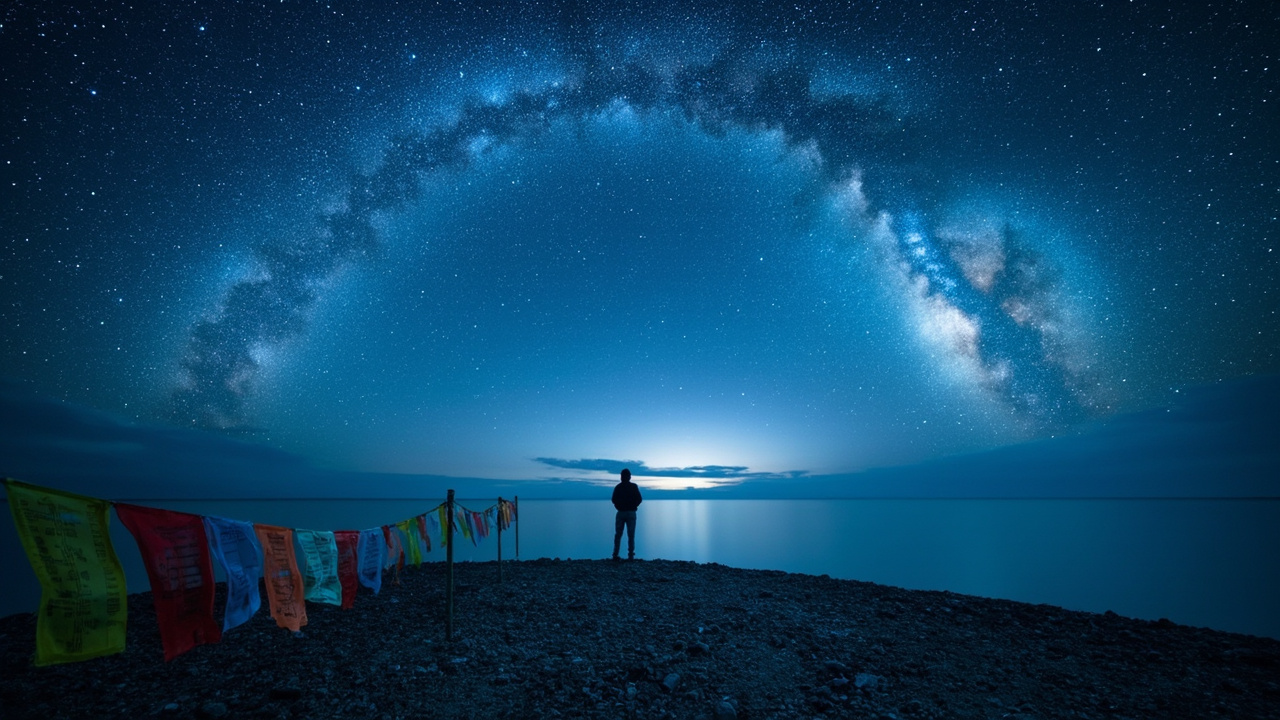
The first time I truly understood what dark meant was at Qinghai Lake, standing on a gravel shore at 2 a.m. with a taxi driver named Mr. Chen who had given up trying to convince me the cold was a bad idea. The Milky Way ran straight over the water, so bright it cast a reflection. I’d been in China for three years by then and had never seen a sky like that inside its borders. Not once. That night changed how I planned every trip afterward.
China is not an obvious stargazing destination. The eastern cities glow like furnaces, and most guidebooks treat the country as a blur of high-speed rail and street food. But the western half, the Tibetan Plateau, the Gobi edges, the deserts of Gansu and Xinjiang, holds some of the clearest skies I’ve found anywhere on earth. The altitude helps. The dryness helps. The sheer emptiness helps.
This guide covers the ten places I’ve actually slept under, with real directions, real costs, and the mistakes I made so you don’t have to. You’ll get specific transport details, honest opinions on which spots are worth the journey, and the practical stuff like SIM cards, payment apps, and what to pack when it’s 40°F at night in July.
Quick answer
China has world-class stargazing in its western deserts and high-altitude plateaus, with the best sites around Qinghai Lake, the Gobi Desert in Gansu, and the Tibetan Plateau. Most international visitors can enter visa-free for up to 240 hours under the 2026 transit policy, and a typical 5-day stargazing trip costs $600–$1,200 (¥4,300–¥8,600) including transport, lodging, and guides. The best season is October through April, when the air is driest and the nights are longest.
The Short Version
If you have 90 seconds, here’s the truth: skip the eastern cities for stargazing entirely. Fly to Xining or Lanzhou, hire a driver, and head for the high desert. Qinghai Lake and the Gobi around Dunhuang are your two best bets. Both are accessible, relatively safe, and genuinely dark. Bring a warm jacket. The cold is the thing nobody warns you about.
How I Picked These
I’ve made eleven dedicated stargazing trips across China since 2019, plus countless nights that turned into stargazing by accident. I’ve been stranded at a rest stop in Inner Mongolia, chased by a Tibetan mastiff in the dark, and once spent four hours waiting for clouds to clear at a site I’d driven six hours to reach. I picked these ten places because I’ve actually stood in them, checked the darkness levels with my own eyes, and talked to the locals who live under these skies. I’ve also included two spots I think are overrated, because someone should tell you.
Comparison Table
| Rank | Place | Best For | Approx Cost (USD) | Time Needed | When to Go |
|---|---|---|---|---|---|
| 1 | Qinghai Lake | Overall experience | $100–$200/day | 2–3 days | Oct–Apr |
| 2 | Dunhuang Gobi | Desert skies | $80–$150/day | 2 days | Oct–May |
| 3 | Ngari Dark Sky Park | Extreme darkness | $200–$300/day | 4–5 days | Apr–Oct |
| 4 | Zhangye Danxia | Unique landscapes | $60–$100/day | 1–2 days | Sep–Oct |
| 5 | Inner Mongolia Grasslands | Summer Milky Way | $70–$120/day | 2 days | Jun–Aug |
| 6 | Lhasa & Namtso Lake | High altitude | $150–$250/day | 3–4 days | Apr–Oct |
| 7 | Sayram Lake | Alpine beauty | $80–$120/day | 2 days | Jun–Sep |
| 8 | Huangshan | Accessible option | $50–$80/day | 1–2 days | Nov–Feb |
| 9 | Kanas Lake | Remote forests | $100–$150/day | 3 days | Sep–Oct |
| 10 | Badain Jaran Desert | Extreme remoteness | $150–$250/day | 3–4 days | Sep–Oct |
1. Qinghai Lake — The One I Keep Going Back To
The first time I visited Qinghai Lake, I made the classic mistake of showing up in July with a thin jacket. By midnight, I was wearing every piece of clothing I’d brought, including a pair of socks on my hands. The Tibetan guesthouse owner laughed at me and poured hot butter tea while I shivered. I’ve since learned to pack for winter no matter the season.
Qinghai Lake sits at 3,200 meters above sea level, which puts you above most of the atmosphere’s water vapor. The result is a sky so clear that the Milky Way looks painted on. The lake itself, China’s largest saltwater lake, stretches 4,500 square kilometers, and the northern shore has almost no light pollution for a hundred kilometers in any direction.
📍 Location: Heimahe Township, Qinghai Province, about 150 km west of Xining 🎫 Entry fee: Free for the lakeshore; ¥100 ($14) for the Erlangjian scenic area 🕒 Opening hours: 24/7 for the lakeshore; scenic areas 8:00–18:00 🚕 Getting there: Take the high-speed train from Xining to Gangcha (about 2 hours), then hire a local driver for ¥300–400 ($42–56) per day. Or rent a car in Xining and drive west on G109. 🌌 When to visit: October through April for the clearest skies. July and August bring rain and clouds. 💡 Insider tips: Stay at a Tibetan family guesthouse in Heimahe, not the tourist hotels. Ask the owner to walk you to the lakeshore after midnight. Bring a red light headlamp; white light ruins your night vision. The altitude will make you breathless; take it slow. Download an offline star chart app before you arrive, because there’s no signal at night.
I met a young Tibetan astronomy student named Tashi who worked at the guesthouse. He showed me how to spot Jupiter’s moons with a pair of binoculars he’d saved three months’ wages to buy.
2. Dunhuang Gobi — Desert Skies and Ancient Echoes
I watched the sun set over the Singing Sand Dunes and thought I’d seen the show. Then the stars came out, and I realized the sunset was just the opening act. The Gobi Desert around Dunhuang is brutally empty, and that emptiness extends upward.
Dunhuang sits at the edge of the Taklamakan Desert, one of the driest places on earth. Annual rainfall is under 40 millimeters. That dryness means almost no atmospheric interference, and the surrounding desert means no artificial light. The Mingsha Mountain area, just outside town, has designated stargazing spots that are easy to reach.
📍 Location: Mingsha Mountain and Crescent Lake Scenic Area, 5 km south of Dunhuang city center 🎫 Entry fee: ¥110 ($15) for the scenic area; free stargazing from the desert edges outside the gates 🕒 Opening hours: Scenic area 6:00–19:30; the desert itself is accessible all night 🚕 Getting there: Fly to Dunhuang Airport (about 2 hours from Lanzhou or Xi’an), then take a 15-minute taxi to Mingsha Mountain. The high-speed rail also connects Dunhuang to Lanzhou in about 4 hours. 🌌 When to visit: October to May. Summer nights are short and can bring sandstorms. 💡 Insider tips: Walk 20 minutes past the main tourist area into the dunes for true darkness. The sand is cold at night; wear closed shoes. Bring a windproof jacket because the desert breeze is constant. The Echoing Sand Mountain has a night ticket option (¥50, $7) that lets you stay after closing. Don’t climb the dunes in sandals, I learned that the hard way.
A camel herder named Old Wang offered me a ride back to town at 1 a.m. for ¥20 ($3). He pointed at the sky and said, in broken Mandarin, “The stars here are the same ones the Silk Road travelers saw.”
3. Ngari Dark Sky Park — The Most Extreme Sky I’ve Found
This one isn’t for everyone. Ngari is in far western Tibet, at an average altitude of 4,500 meters, and getting there requires serious commitment. I spent five days there and lost four pounds. But the sky, the sky is something else entirely.
The Ngari Dark Sky Park, established in 2018, is China’s first officially recognized dark sky reserve. It’s also one of the highest places on earth where you can comfortably (relatively speaking) observe the night sky. The air is so thin and dry that stars don’t twinkle as much as they seem to pulse.
📍 Location: Shiquanhe Town, Ngari Prefecture, Tibet Autonomous Region 🎫 Entry fee: Free 🕒 Opening hours: 24/7, weather permitting 🚕 Getting there: Fly from Lhasa to Ali Kunsha Airport (about 2 hours, ¥1,500–2,500 / $210–350), then hire a driver for the 30-minute trip to the observatory area. This is not a DIY destination; you need a local guide and a Tibet Travel Permit. 🌌 When to visit: April to October. Winter is brutally cold, with nighttime temperatures dropping to -20°F (-29°C). 💡 Insider tips: You need a Tibet Travel Permit, which requires booking through a registered tour agency. Acclimatize in Lhasa for at least three days before coming here. The observatory has a small guesthouse with oxygen tanks; use them. Bring a wide-angle lens if you photograph, the sky is too big for a standard lens. The altitude headache is real; take Diamox if your doctor approves.
I met a French astrophysicist named Claire who had been coming to Ngari for six years. She told me she’d seen the Andromeda Galaxy with her naked eyes here, something she’d only ever seen through telescopes before.
4. Zhangye Danxia — Colorful Rocks, Darker Skies
I’ll be honest: I came to Zhangye for the rainbow mountains during the day and stayed for the stars at night. The Danxia landforms, those striped red and orange cliffs, are famous for their daytime colors. But the area around them, far from any city lights, has a darkness that surprised me.
The Zhangye National Geopark covers 510 square kilometers of surreal rock formations. Most tourists leave by 6 p.m. That’s your advantage. The park’s edges and the surrounding countryside offer excellent stargazing with the added bonus of silhouetted rock formations in your foreground.
📍 Location: Linze County, Zhangye, Gansu Province, about 40 km west of Zhangye city 🎫 Entry fee: ¥74 ($10) for the park; free stargazing from the surrounding countryside 🕒 Opening hours: Park 6:00–18:00; surrounding areas accessible all night 🚕 Getting there: Take the high-speed rail to Zhangye West Station (about 3 hours from Lanzhou), then a 40-minute taxi to the geopark. For stargazing, ask the driver to take you to the farmland roads north of the park. 🌌 When to visit: September and October have the clearest skies. Summer brings afternoon thunderstorms. 💡 Insider tips: The farmland roads north of the park are public and free. Local farmers are used to stargazers; a small tip (¥20–50, $3–7) for parking on their land goes a long way. The rocks glow faintly under moonlight; try a full moon night for a different experience. Bring a tripod; the landscape shots are worth it.
A farmer named Zhang let me set up my telescope in his wheat field. He brought me a bowl of hand-pulled noodles at midnight and asked if the stars were the same ones over his son’s city apartment in Shenzhen.
5. Inner Mongolia Grasslands — Summer Milky Way
The grasslands of Inner Mongolia are where I take friends who want an easy introduction to Chinese stargazing. It’s accessible, affordable, and the summer skies are reliably clear. The trade-off is that you’re not at high altitude, so the sky isn’t quite as crisp as Qinghai or Ngari.
The Xilamuren Grassland, about 90 km from Hohhot, is the most accessible option. It’s a tourist destination during the day, which means there’s infrastructure: guesthouses, restaurants, and tour operators. At night, the tourist crowds vanish, and you’re left with an enormous sky.
📍 Location: Xilamuren Grassland, Darhan Muminggan United Banner, Inner Mongolia 🎫 Entry fee: Free for the grassland; ¥80–150 ($11–21) for a yurt stay 🕒 Opening hours: 24/7 🚕 Getting there: Take the high-speed train to Hohhot East Station (about 2.5 hours from Beijing), then a 1.5-hour taxi to the grassland. Or join a day tour from Hohhot that includes overnight options. 🌌 When to visit: June to August for warm nights and the summer Milky Way. September gets cold fast. 💡 Insider tips: The yurts are warmer than they look, but bring a sleeping bag liner. The grassland is flat, so find a slight rise for a better horizon. Mongolian herders are friendly but keep dogs; don’t wander too far from your accommodation at night. The summer Milky Way is best around 11 p.m. to 1 a.m.
I shared a yurt with a German backpacker named Lukas who had been traveling China for three months. He said this was the first night he’d seen stars since leaving Europe.
6. Lhasa & Namtso Lake — High Altitude, High Reward
Lhasa itself is too bright for serious stargazing, but it’s your gateway to Namtso Lake, one of the highest saltwater lakes in the world at 4,718 meters. The drive from Lhasa takes about four hours, and the last hour is over a mountain pass that feels like the top of the world.
I arrived at Namtso with a pounding headache and doubts about my life choices. Then the sun set, the headache faded, and I watched the sky transform in a way I’d never experienced. The stars here don’t just appear; they seem to materialize in layers, each one brighter than the last.
📍 Location: Namtso Lake, Damxung County, Tibet, about 250 km north of Lhasa 🎫 Entry fee: ¥120 ($17) for the scenic area 🕒 Opening hours: 24/7, but the gate closes at night; stay inside the scenic area 🚕 Getting there: Hire a driver in Lhasa (¥800–1,200 / $112–168 per day) or join a 2-day tour. You need a Tibet Travel Permit and, for this area, a Foreign Affairs Permit. 🌌 When to visit: April to October. The lake freezes in winter, and the road can close. 💡 Insider tips: The guesthouses at Namtso are basic and cold; bring your own bedding. The altitude is no joke; spend a night in Lhasa first. The Tashi Dor Island area has the darkest skies. Bring snacks; food options are limited. The stars reflect off the lake surface, creating a double-sky effect that’s worth the headache.
A monk from the small temple on the lakeshore walked past my tent at midnight, nodded at the sky, and said one word: “Buddha.” I still think about that.
7. Sayram Lake — The One That Made Me Cry
I’m not a crier. But standing on the shore of Sayram Lake in Xinjiang, at 2 a.m., with the Milky Way arcing over the Tianshan Mountains and the lake so still it mirrored every star, I felt something I can’t quite explain. It might have been the altitude. It might have been the beauty. It might have been the three days of instant noodles.
Sayram Lake sits at 2,073 meters in the Tianshan range, surrounded by snow-capped peaks. It’s a popular summer destination for domestic tourists, but the crowds vanish after sunset. The lake is so large, 458 square kilometers, that you can find a secluded shore easily.
📍 Location: Bortala Mongol Autonomous Prefecture, Xinjiang, about 120 km from Yining 🎫 Entry fee: ¥145 ($20) for the scenic area 🕒 Opening hours: 24/7 during summer; the gate closes in winter 🚕 Getting there: Fly to Yining Airport (about 2 hours from Urumqi), then hire a driver for the 2-hour trip. Or take the train to Bole Station and transfer. 🌌 When to visit: June to September. The lake is frozen from December to April. 💡 Insider tips: The southern shore is darker and less visited than the north. Camping is technically not allowed, but the rangers are lenient if you clean up. The water is freezing even in summer; don’t swim. Bring a down jacket; the temperature drops below 50°F (10°C) at night even in July. The sunset over the mountains is worth arriving early for.
I met a retired Uyghur teacher named Gulnara who was camping with her grandchildren. She pointed at the sky and told me her grandfather had taught her the same constellations, passed down through generations.
8. Huangshan — The Accessible Compromise
Huangshan isn’t the darkest place on this list, but it’s the easiest to reach from Shanghai or Hangzhou, and the mountaintop views add drama to your stargazing. The famous granite peaks, silhouetted against a starry sky, make for photographs you can’t get anywhere else.
The mountain is a UNESCO World Heritage site, and the summit has several hotels. That means you can sleep in a real bed, eat a real meal, and still step outside at midnight to a sky that’s surprisingly dark for eastern China.
📍 Location: Huangshan City, Anhui Province, about 300 km from Shanghai 🎫 Entry fee: ¥190 ($27) for the mountain; cable car ¥80–100 ($11–14) each way 🕒 Opening hours: Mountain access 24/7; cable cars operate 6:30–17:30 🚕 Getting there: Take the high-speed train from Shanghai to Huangshan North Station (about 2.5 hours), then a 1-hour bus to the mountain’s east entrance. 🌌 When to visit: November to February for clear winter skies. Summer brings clouds and rain. 💡 Insider tips: Stay at the Beihai Hotel on the summit; it’s the most convenient for night access. The sunrise viewpoint at Dawn Pavilion is also great for stars. Winter visits require crampons; the steps get icy. The summit is cold year-round; bring a hat and gloves. Book your hotel months in advance for weekends.
I shared the summit with a group of Chinese university students who were doing a photography project. They taught me how to use my camera’s manual settings properly, a skill I still use.
9. Kanas Lake — Remote Forests and Alien Landscapes
Kanas Lake in far northern Xinjiang feels like another planet. The turquoise water, the Siberian-style forests, the Kazakh herders on horseback, it’s the most remote place I’ve been in China that still has tourist infrastructure. The stargazing is excellent because there’s simply nothing around for hundreds of kilometers.
The lake sits at 1,374 meters in the Altai Mountains, near the borders of Kazakhstan, Mongolia, and Russia. The nearest city of any size is over 100 kilometers away. At night, the darkness is absolute.
📍 Location: Burqin County, Altay Prefecture, Xinjiang, about 700 km north of Urumqi 🎫 Entry fee: ¥230 ($32) for the scenic area including shuttle bus 🕒 Opening hours: 24/7 during summer; closed in winter 🚕 Getting there: Fly to Kanas Airport (seasonal, about 1.5 hours from Urumqi), or take the overnight train to Beitun and drive 4 hours. This is the hardest place on this list to reach. 🌌 When to visit: September and October for autumn colors and clear skies. The lake freezes in winter. 💡 Insider tips: Stay in the village inside the park, not outside the gates. The Fish Pavilion viewpoint has the best horizon. Kazakh herders sell milk tea and bread; buy some for your night watch. The shuttle buses stop at 8 p.m., so plan your movements accordingly. Bring a power bank; there are limited charging points.
A Kazakh herder named Askar invited me to his family’s yurt for dinner. His grandmother, who spoke no Mandarin, pointed at the stars and made a gesture that I understood meant “the same ones my parents saw.”
10. Badain Jaran Desert — The One That Broke Me
I’m including this one with a warning: it’s the hardest place on this list to reach, and it nearly broke me. But the Badain Jaran Desert, home to the world’s tallest sand dunes and hundreds of desert lakes, has a darkness that defies description. I’ve never seen so many stars.
The desert straddles Inner Mongolia and Gansu, and the main access point is the small town of Alxa Right Banner. From there, you need a 4x4 and a local guide to reach the dunes. The journey takes four to six hours over sand tracks that would be impassable in anything less.
📍 Location: Alxa Right Banner, Inner Mongolia, about 600 km from Yinchuan 🎫 Entry fee: Free for the desert; guide and vehicle hire ¥1,500–2,500 ($210–350) per day 🕒 Opening hours: 24/7, but you should not be out at night without a guide 🚕 Getting there: Fly to Yinchuan or Zhangye, then drive 4–6 hours to Alxa Right Banner. Hire a local guide with a 4x4 for the desert crossing. 🌌 When to visit: September and October for stable weather. Summer brings sandstorms. 💡 Insider tips: You absolutely need a local guide; the desert is dangerous without one. The lakes in the desert reflect the stars beautifully; ask your guide to take you to one at night. Sand gets everywhere; seal your camera in a plastic bag when not in use. Bring more water than you think you need. The nights are cold even in September; pack for winter.
My guide, a Mongol man named Bat, pointed at the sky and told me his people had been reading the stars to navigate this desert for a thousand years. He didn’t need a GPS, he said. The stars were enough.
FAQ summary
China’s best stargazing destinations are concentrated in the western half of the country, particularly Qinghai Lake, the Gobi Desert around Dunhuang, and the Tibetan Plateau around Namtso Lake. Most international visitors can enter visa-free under the 240-hour transit policy, and domestic flights and high-speed rail make these remote areas accessible. The best season is October through April for most sites, with summer reserved for the grasslands and high-altitude lakes. Expect to pay $600–$1,200 for a 5-day stargazing trip, and always bring warm clothing regardless of season.
FAQ
Q: Do I need a special permit to visit stargazing sites in Tibet? A: Yes, you need a Tibet Travel Permit for Lhasa and Namtso, which must be arranged through a registered tour agency. The Ngari Dark Sky Park also requires this permit plus a Foreign Affairs Permit. Allow at least two weeks for permit processing.
Q: Can I use my phone for astrophotography in China? A: Yes, but the newer iPhone and Android flagships handle it best. You’ll need a tripod and a manual camera app. For serious photography, bring a DSLR or mirrorless camera with a wide-angle lens.
Q: Is it safe to stargaze alone in rural China? A: Generally yes, but I recommend staying at a guesthouse or with a local guide, especially in Tibet and Xinjiang. The main risks are weather, altitude, and getting lost, not crime.
Q: What’s the best time of year for stargazing in China? A: October through April for most western sites, when the air is driest and nights are longest. Summer works for the grasslands of Inner Mongolia and high-altitude lakes like Sayram and Namtso.
Q: Do I need to set up WeChat Pay or Alipay before I go? A: Yes, most places in western China don’t accept international credit cards. Set up Alipay or WeChat Pay before you arrive, and link your international card.
Q: Will I have phone signal at these stargazing sites? A: Most sites have 4G or 5G signal during the day, but it often drops at night or in remote areas. Download offline maps and star charts before you go. Consider getting a China SIM card for reliable coverage.
Q: How do I get to the remote western sites from Beijing or Shanghai? A: Fly to the nearest regional hub (Xining for Qinghai, Lanzhou or Dunhuang for the Gobi, Lhasa for Tibet, Urumqi for Xinjiang), then use high-speed rail or local drivers for the final leg. Domestic flights are affordable, usually $80–150 (¥570–1,070).
The Honest Wrap-up
This list isn’t for everyone. If you want luxury resorts and room service, these places will frustrate you. If you want to see the Milky Way and are willing to sleep in a basic guesthouse, eat instant noodles, and wear every piece of clothing you own, then this is the China most tourists never see.
My final advice: start with Qinghai Lake. It’s the best balance of accessibility, darkness, and comfort. Go in October, when the crowds have thinned and the sky is at its clearest. Pack a warm jacket, download a star chart app, and let yourself be surprised. The stars over western China have been waiting for you for a long time.
Topics
More guides you may like
Top 10 Bridges in China
China's bridges are engineering marvels spanning mountains, rivers, and seas. Here are 10 of the most spectacular, from ancient stone to modern steel.
8 min read

Top 10 Buddhist Sites in China
From the Leshan Giant Buddha to the Dunhuang Caves, these 10 Buddhist sites represent 2,000 years of China's spiritual heritage.
9 min read
Top 10 Day Trips from Beijing You Shouldn't Miss
Beijing is packed with history, but some of China's best experiences are just a few hours away. Here are 10 day trips that will transform your visit.
9 min read
Top 10 Hidden Gems in China Off the Beaten Path
Beyond the Great Wall and Terracotta Warriors, China has incredible hidden destinations few tourists ever reach. Here are 10 underrated gems worth the detour.
9 min read
Top 10 Markets and Shopping Streets in China
From Shanghai's Bund to Beijing's Silk Street - 10 markets where foreigners can haggle, explore, and bring home authentic Chinese goods.
9 min read
Top 10 Museums in China You Shouldn't Miss
China's museums span 5,000 years of civilization. These 10 - from the Palace Museum to Xi'an's terracotta gallery - are unmissable for culture lovers.
9 min read