
Wudang Mountain Taoist
The cab dropped me at the base of the mountain, and the first thing I heard wasn't chanting or temple bells. It was the scrape of a bamboo broom on stone.
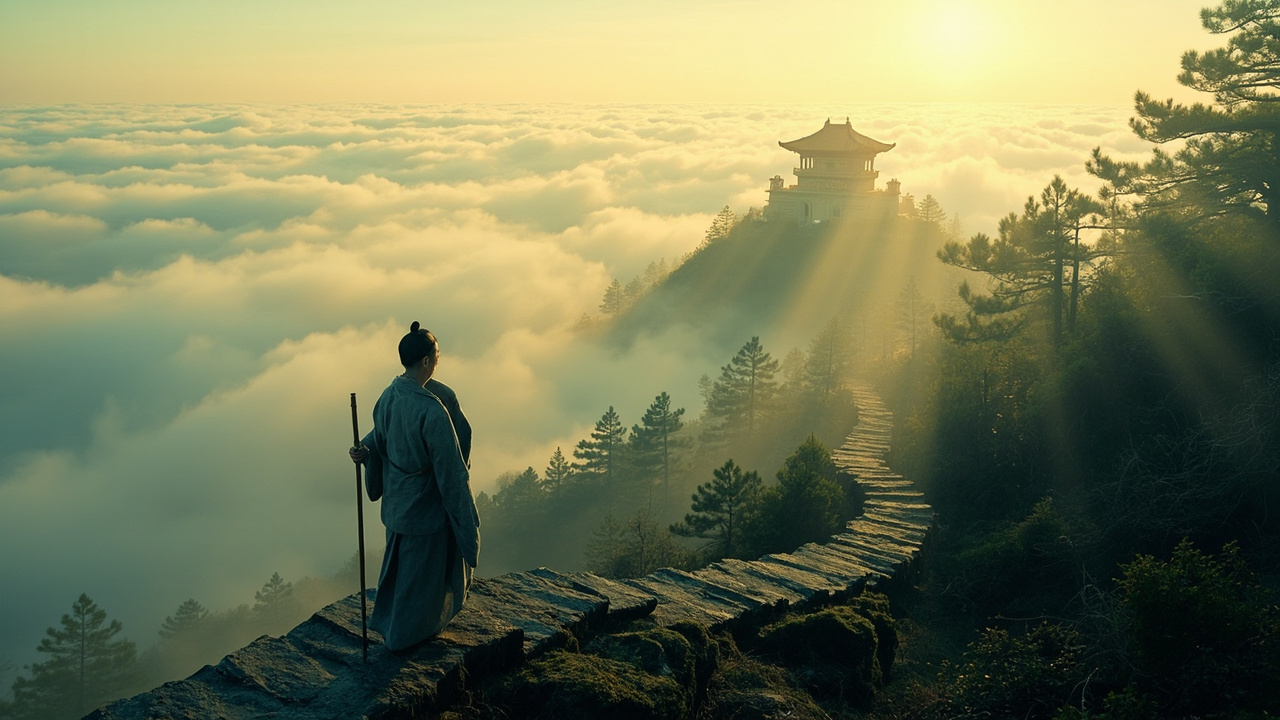
The cab dropped me at the base of the mountain, and the first thing I heard wasn’t chanting or temple bells. It was the scrape of a bamboo broom on stone. An older man in a grey canvas jacket was sweeping the massive entrance plaza at the foot of the Wudang Mountains, moving slowly, methodically, as if the dust had nowhere else to be. Above him, the peaks disappeared into a thick, wet cloud, and the air smelled of rain-soaked earth and incense smoke from a small shrine tucked beside the ticket office. I had come for the kung fu, the clichés, the idea of Taoism. But that quiet, unhurried sweep of the broom is what I remember most clearly.
Wudang Shan, the birthplace of the Zhang Sanfeng legend and the supposed origin of Tai Chi, is a sprawling complex of temples, palaces, and hermitages scattered across 72 peaks in Hubei Province. It is not one site. It is a pilgrimage, a physical test, and a logistical puzzle all wrapped into one. For a first-time visitor to China, it can feel overwhelming. This guide is the result of two separate trips, dozens of conversations with taxi drivers, monks, and hostel owners, and a lot of sore legs. It will tell you exactly where to go, how to get there, what it costs, and which parts you can safely skip.
Quick answer
Wudang Mountain is a UNESCO World Heritage site in Hubei Province, roughly a 2.5-hour high-speed rail ride from Wuhan, and the main Golden Summit entrance fee is about $38 (¥270) plus a mandatory shuttle bus fee of $14 (¥100). The best time to visit is October or April to May, when the weather is clear and the crowds are manageable. The site is fully accessible to foreign tourists without a guide, but you will need WeChat Pay or Alipay for almost everything, and a VPN installed before you arrive if you want Google Maps or WhatsApp to work.
The Short Version
If you only have 90 seconds, here is the truth: Wudang is exhausting and occasionally magical. The Golden Summit is the highlight, but the journey up 1,600 stone steps will test your knees. The South Palace (Nanyan) area is the most atmospheric, with cliff-hugging temples that look like they defied gravity. Skip the cable car if you want the real experience, but take it if you’re short on time or fitness. Stay one night on the mountain at the Purple Cloud Temple guesthouse if you can. The sunrise from the summit, when the clouds sit below you like a white ocean, is worth every penny and every aching muscle.
How I Picked These
I have been to Wudang twice. The first time was in high summer, a mistake I will explain later. The second was in late October, which was closer to perfect. I walked the main pilgrimage route from the South Palace up to the Golden Summit, took the cable car down, and then spent a full day exploring the lower palaces. I also stayed overnight at the Purple Cloud Temple guesthouse, which is the only way to see the mountain without the day-trip crowds. I talked to a local guide named Chen who had grown up in the shadow of the mountain and a monk who had been living at the South Palace for eleven years. Their advice shaped much of what follows.
Comparison Table
| Rank | Place | Best For | Approx Cost (USD) | Time Needed | When to Go |
|---|---|---|---|---|---|
| 1 | Golden Summit (Jinding) | The iconic view, sunrise | $38 entry + $14 shuttle (¥270 + ¥100) | Half day | Oct, Apr-May, weekday mornings |
| 2 | South Palace (Nanyan) | Cliff temples, atmosphere | Included in entry | 2-3 hours | Morning, before 10am |
| 3 | Purple Cloud Temple (Zixiao) | Taoist architecture, stay overnight | $38 entry + $40 dorm bed (¥270 + ¥280) | 2 hours + overnight | Late afternoon, stay the night |
| 4 | Tai Chi Lake | Easy walk, reflections | Included in entry | 1-2 hours | Late afternoon light |
| 5 | Supreme Harmony Palace (Taihe) | Ming dynasty history | Included in entry | 1-2 hours | Mid-morning |
| 6 | Dragon Head Rock | Thrill, photo spot | Included in entry | 30 minutes | Early, before crowds |
| 7 | Five Dragons Palace Ruins | Off-the-beaten-path | Free | Half day | Any dry day |
| 8 | Fuzhen Temple | Kung fu training, quiet | Included in entry | 1-2 hours | Afternoon |
| 9 | Xuanyue Gate | The grand entrance | Included in entry | 30 minutes | Golden hour |
| 10 | The Stone Steps Pilgrimage Route | The real experience | Included in entry | 3-4 hours | Start by 7am |
Golden Summit (Jinding)
I remember standing at the top, surrounded by a sea of selfie sticks, and thinking: this is the most touristy place in Wudang, and it is still worth it. The summit is a small, fortified compound of copper-and-gold halls that have been here since the early 15th century. The main Golden Hall is a marvel of Ming dynasty bronze casting, and the view from the top, on a clear day, stretches over dozens of forested peaks that roll away like green waves.
The summit is the payoff for the entire pilgrimage. It is where the Taoist concept of “ascending to heaven” becomes literal. The climb up the final 1,600 steps from the South Palace is brutal, but the moment you step through the small stone gate and see the golden hall glinting in the sun, you understand why people have been making this journey for 600 years.
- 馃搷 Location: The highest peak of the Wudang range, about 1,612 meters above sea level
- 馃帿 Entry fee: Included in the main ticket ($38 / ¥270). The cable car is an additional $14 (¥100) one-way, $28 (¥200) round trip
- 馃晲 Opening hours: 7:30am – 5:30pm (April-October), 8:00am – 5:00pm (November-March). The cable car runs from 8:00am to 4:30pm
- 馃殕 How to get there: Take the shuttle bus from the main entrance to the cable car station (about 30 minutes). Then take the cable car up (10 minutes) and walk the final 20 minutes to the summit. Or, if you’re feeling strong, hike from the South Palace up the stone steps (2-3 hours)
- 鈴?When to visit: Go as early as possible. The cable car line can be 90 minutes by 9am. October weekdays are the sweet spot
- 馃挕 Insider tips: Bring a light jacket even in summer. The summit is often 10 degrees cooler than the base. The sunrise is spectacular, but you need to stay overnight at the Purple Cloud Temple to catch it. The last cable car down is at 4:30pm, so if you miss it, you’re walking down 6,000 steps in the dark. I almost learned this the hard way.
South Palace (Nanyan)
The South Palace is where Wudang stopped being a tourist attraction and became something else for me. This complex clings to a sheer cliff face, with wooden corridors and stone halls that seem to grow out of the rock itself. The most famous spot is Dragon Head Rock, a narrow stone ledge extending over a thousand-foot drop. In imperial times, Taoist priests would burn incense on a small urn at the very tip. Now there’s a rope and a line of tourists, but the vertigo is still real.
The reason this place matters is the atmosphere. The cliff walls are covered in inscriptions from Ming dynasty emperors, and the sound of wind whistling through the rock corridors is constant. It feels ancient in a way that the more polished Golden Summit does not.
- 馃搷 Location: On the eastern slope of the mountain, about halfway up
- 馃帿 Entry fee: Included in the main ticket
- 馃晲 Opening hours: 7:30am – 5:30pm
- 馃殕 How to get there: Take the shuttle bus from the main entrance to the South Palace stop (about 40 minutes). The complex is a 10-minute walk from the bus stop
- 鈴?When to visit: Morning, before 10am. The tour groups arrive around 10:30am and it gets crowded fast
- 馃挕 Insider tips: The cliff-side corridor on the far left of the complex is usually ignored by tour groups. Walk to the end and you’ll find a small, unmarked shrine where a monk lives. He doesn’t speak English, but he will offer you tea if you sit quietly for a few minutes. The view of the valley from Dragon Head Rock is best in the late afternoon when the light hits the opposite cliff face.
Purple Cloud Temple (Zixiao)
I stayed the night here, in a small dormitory room behind the main hall. The bed was hard, the bathroom was down the hall, and the walls were thin enough to hear the monks chanting at 4am. It was one of the best travel decisions I have ever made. The Purple Cloud Temple is the largest and best-preserved Taoist complex in Wudang, and it is the only place on the mountain where you can sleep.
The temple itself is a masterpiece of Ming architecture, with a main hall that houses a massive gilded statue of the Jade Emperor. But the real magic happens after the day-trippers leave. At dusk, the temple empties out, and you can walk the courtyards alone, listening to the wind in the cypress trees. The monks hold evening prayers in the main hall, and the sound of their chanting, mixed with the clack of wooden fish drums, echoes through the stone corridors.
- 馃搷 Location: On the lower slopes, about 15 minutes by shuttle bus from the main entrance
- 馃帿 Entry fee: Included in the main ticket. Dormitory beds are about $40 (¥280) per night. Private rooms are $80-120 (¥560-840)
- 馃晲 Opening hours: The temple is open 7:30am – 5:30pm, but guests can stay inside the complex after hours
- 馃殕 How to get there: Take the shuttle bus from the main entrance to the Zixiao stop. The temple is a 5-minute walk uphill from the bus stop
- 鈴?When to visit: Arrive in the late afternoon, check in, and explore the temple when it’s quiet. Wake up early for the 4am chanting
- 馃挕 Insider tips: Book the dormitory bed in advance through your hotel or a local agent. The temple guesthouse doesn’t have an online booking system. Bring earplugs. The chanting is beautiful, but it starts very early. The best photo spot is the reflection pond in front of the main hall, especially at sunrise when the mist sits low on the water.
Tai Chi Lake
The lake is the first thing you see after passing through the main entrance gate, and most tourists walk right past it on their way to the shuttle buses. That’s a mistake. The lake is man-made, created in the 1990s as part of a hydroelectric project, but it has become the most photogenic spot in the lower mountain area. The water is a deep, still green, and on calm days it perfectly reflects the surrounding peaks.
The name comes from the Taoist concept of Tai Chi, the balance of yin and yang, and the lake is shaped roughly like the symbol. There’s a small island in the middle with a pavilion, connected by a curved stone bridge. It’s a peaceful place to sit for a few minutes before starting the climb.
- 馃搷 Location: Just inside the main entrance, before the shuttle bus station
- 馃帿 Entry fee: Included in the main ticket
- 馃晲 Opening hours: Always accessible
- 馃殕 How to get there: Walk 5 minutes past the ticket gate. You can’t miss it
- 鈴?When to visit: Late afternoon, when the tour groups have left and the light is golden
- 馃挕 Insider tips: The pavilion on the island is a great spot for a picnic lunch. Bring food from the shops near the entrance, because the prices on the mountain are double. The lake is also the best place to see the local wildlife. I saw a family of wild ducks and a heron on my last visit.
Supreme Harmony Palace (Taihe)
This palace is often overlooked because it’s not on the main tourist route, but it’s one of the most historically significant buildings in Wudang. Built in the early 15th century by the Yongle Emperor, it was the administrative center for the entire mountain complex. The main hall is massive, with thick stone walls and a roof that seems to weigh a thousand tons.
The palace was heavily damaged during the Cultural Revolution, and much of what you see today is reconstruction. But the original stone foundations and some of the bronze statues survived, and there’s a quiet dignity to the place. It feels less polished, more honest, than the other temples.
- 馃搷 Location: On a small plateau below the Golden Summit, about 30 minutes walk from the cable car station
- 馃帿 Entry fee: Included in the main ticket
- 馃晲 Opening hours: 7:30am – 5:30pm
- 馃殕 How to get there: Take the shuttle bus to the cable car station, then walk 30 minutes along the paved path. Or hike up from the South Palace
- 鈴?When to visit: Mid-morning, after the cable car crowds have moved on to the summit
- 馃挕 Insider tips: The side courtyard, which is usually empty, has a small museum with artifacts from the Ming dynasty. It’s not well-labeled in English, but the bronze swords and ritual vessels are worth a look. The best view of the Golden Summit from below is from the back terrace of this palace.
Dragon Head Rock
This is the photo spot. A single stone ledge, carved with a dragon’s head, jutting out over a sheer cliff. In imperial times, Taoist priests would walk out to the end to burn incense, a ritual that required a level of faith I cannot comprehend. Now there’s a rope barrier, and you can’t actually walk on the rock itself. But the view from the platform next to it is still worth the detour.
The rock is located within the South Palace complex, and it’s the single most photographed spot in all of Wudang. The crowds can be intense, especially in the middle of the day. But if you go early, before the tour groups arrive, you can stand there alone and imagine what it must have felt like to be a priest, walking out over that void with nothing but incense and faith.
- 馃搷 Location: Within the South Palace complex, at the far end of the cliff-side corridor
- 馃帿 Entry fee: Included in the main ticket
- 馃晲 Opening hours: Same as South Palace
- 馃殕 How to get there: Follow the signs within the South Palace complex. It’s a 10-minute walk from the main hall
- 鈴?When to visit: Before 9am or after 4pm
- 馃挕 Insider tips: The best photo angle is from the platform to the left of the rock, not directly in front of it. You’ll get the dragon head in profile against the valley. Don’t be tempted to climb over the rope. The drop is real, and the local police take a dim view of it.
Five Dragons Palace Ruins
This is the place I almost didn’t find. The Five Dragons Palace was once the most important Taoist complex in Wudang, but it was destroyed by fire in the 18th century and never rebuilt. Today, only the stone foundations, a few carved pillars, and a single surviving hall remain. It’s a 3-hour hike from the main road, through dense forest, and the path is poorly marked.
If you’re a history buff or a hiker, this is the most rewarding site on the mountain. It’s completely deserted, even in peak season. I sat on a fallen stone pillar for an hour and didn’t see another person. The silence was total, broken only by birds and the wind in the pines. It felt like I was the first person to find the place.
- 馃搷 Location: In a remote valley on the western side of the mountain range
- 馃帿 Entry fee: Free, but you need to pay for the shuttle bus to the trailhead ($14 / ¥100)
- 馃晲 Opening hours: Always accessible, but the trail is not lit and can be dangerous after dark
- 馃殕 How to get there: Take the shuttle bus to the Wulong stop, then hike 3 hours along the forest trail. The path is marked with red paint on trees, but it’s easy to miss. Bring a GPS or download an offline map
- 鈴?When to visit: Any dry day. The trail becomes slippery and dangerous after rain
- 馃挕 Insider tips: Bring plenty of water and snacks. There are no shops on the trail. Wear sturdy hiking boots, not sneakers. The path is rocky and uneven. The surviving hall, which is locked, contains a Ming dynasty mural that is visible through the window. It’s faded, but you can still make out the dragons.
Fuzhen Temple
This is where the kung fu happens. Fuzhen Temple is one of the few places in Wudang where you can see actual Taoist martial arts training. The temple is home to a small group of monks and students who practice Tai Chi and other internal martial arts in the courtyard every morning. It’s not a show. It’s real training, and you can sit and watch for as long as you like.
The temple itself is modest, with a simple main hall and a large stone courtyard. The training usually happens between 6am and 8am, and again in the late afternoon. If you’re lucky, one of the senior students will talk to you. I met a young man from Guangdong who had been studying there for three years. He spoke a little English and told me that the hardest part wasn’t the physical training, but learning to be still.
- 馃搷 Location: On the lower slopes, near the Purple Cloud Temple
- 馃帿 Entry fee: Included in the main ticket
- 馃晲 Opening hours: 7:30am – 5:30pm, but training happens early morning and late afternoon
- 馃殕 How to get there: Take the shuttle bus to the Zixiao stop, then walk 10 minutes downhill
- 鈴?When to visit: Early morning, around 7am, to see the training
- 馃挕 Insider tips: If you want to try a Tai Chi class, ask at the temple office. They offer short sessions for visitors for about $10 (¥70). The classes are in Chinese, but the movements are universal. Bring cash. The temple doesn’t accept cards or mobile payments for the classes.
Xuanyue Gate
This is the grand entrance to the entire Wudang complex, and it’s the most impressive piece of architecture you’ll see before you even buy a ticket. The gate is a massive stone archway, built in the Ming dynasty, with three separate portals. In imperial times, only the emperor could pass through the central portal. Everyone else had to use the side gates.
The gate is located at the base of the mountain, about 500 meters before the main ticket office. Most visitors drive right past it on the way to the shuttle buses. That’s a shame. The gate is beautifully proportioned, and the stone carvings on the pillars are some of the finest in China.
- 馃搷 Location: At the base of the mountain, before the main ticket office
- 馃帿 Entry fee: Free
- 馃晲 Opening hours: Always accessible
- 馃殕 How to get there: Walk 10 minutes from the main parking lot, or ask your driver to stop on the way in
- 鈴?When to visit: Golden hour, just before sunset, when the light hits the stone and turns it amber
- 馃挕 Insider tips: Walk through the central portal. I know it’s technically reserved for emperors, but the guards don’t seem to mind, and it’s a fun photo. The gate is also the best place to see the local vendors selling souvenirs. The prices are better here than at the shops inside the mountain.
The Stone Steps Pilgrimage Route
This is not a single site, but the path that connects the South Palace to the Golden Summit. It’s 1,600 stone steps, carved into the mountainside over centuries, and it is the most physically demanding part of any Wudang visit. The steps are uneven, worn smooth by millions of feet, and in places they are almost vertical.
I did this hike on my second visit, and it took me just over two hours, with several rest stops. The path winds through dense forest, past small shrines and abandoned stone buildings. There are occasional openings in the trees where you can see the valley below. It’s hard, but it’s the closest you’ll get to the experience of a pilgrim. The cable car is faster, but it skips the entire journey.
- 馃搷 Location: Between the South Palace and the Golden Summit
- 馃帿 Entry fee: Included in the main ticket
- 馃晲 Opening hours: Always accessible, but not recommended after dark
- 馃殕 How to get there: Start at the South Palace and follow the signs for Jinding (Golden Summit)
- 鈴?When to visit: Start by 7am to avoid the heat and the crowds. The path is shaded, but it’s still a workout
- 馃挕 Insider tips: There are small stalls along the way selling water, snacks, and fruit. The prices go up the higher you climb. A bottle of water that costs $0.50 (¥3.5) at the bottom will be $2 (¥14) near the top. Bring your own water and refill at the stalls. Wear good shoes. The steps are slippery when wet. Take your time. There’s no shame in stopping to rest.
FAQ summary
Wudang Mountain is a multi-site complex in Hubei Province, accessible by high-speed rail from Wuhan (about 2.5 hours) or by bus from Shiyan city. The main ticket costs approximately $38 (¥270) and includes access to all temples except the cable car, which is an additional $14-28 (¥100-200). The best time to visit is October or April to May, with weekday mornings being the least crowded. Foreign visitors can explore independently without a guide, but should have WeChat Pay or Alipay set up, a VPN installed, and an offline translation app ready. The only accommodation on the mountain is the Purple Cloud Temple guesthouse, which offers dormitory beds for about $40 (¥280) per night.
FAQ
Q: Do I need a visa to visit Wudang Mountain as a tourist? A: Citizens of many countries, including the US, UK, Canada, and most of Europe, can enter China visa-free for up to 30 days if visiting for tourism. This policy is valid through 2026. Check the latest visa-free transit rules before you book, as the rules can change.
Q: How do I get to Wudang Mountain from Wuhan? A: Take the high-speed train from Wuhan Station to Wudangshan Station (about 2.5 hours, $28-45 / ¥200-320). From the station, take the tourist shuttle bus to the mountain entrance (about 30 minutes, $2 / ¥15). Book your train tickets in advance on the China high-speed rail guide.
Q: Can I pay with cash or do I need mobile payment apps? A: You can pay with cash at the ticket office and most shops, but many small vendors and the temple guesthouse prefer WeChat Pay or Alipay. Set up Alipay before you arrive, as it takes a few days to verify your passport.
Q: Is Wudang Mountain suitable for older travelers or people with limited mobility? A: The lower temples and the South Palace are accessible by shuttle bus and short walks. The Golden Summit requires either a cable car plus a 20-minute walk, or a 2-3 hour hike up 1,600 steps. The cable car makes the summit achievable for most people, but the final walk includes some steep sections.
Q: How many days should I spend at Wudang Mountain? A: One day is enough to see the highlights if you take the cable car up and down. Two days is better if you want to hike the pilgrimage route, stay overnight at the Purple Cloud Temple, and see the sunrise from the summit. Three days is only necessary if you’re a serious hiker or want to visit the remote Five Dragons Palace ruins.
Q: Do I need a VPN for my phone in China? A: Yes. Google, WhatsApp, Instagram, and many other Western services are blocked in China. Install a reliable VPN on your phone and laptop before you arrive. You’ll also need a local SIM card or eSIM for data, as your home carrier’s roaming will be slow and expensive.
Q: Is English spoken at Wudang Mountain? A: Very little. The ticket office and major signs have English translations, but most staff, vendors, and monks speak only Chinese. Download an offline translation app like Google Translate (with the Chinese language pack) or Pleco before you arrive.
The Honest Wrap-up
Wudang Mountain is not for everyone. If you want a polished, easy tourist experience with English signs and air-conditioned cable cars, go to the Great Wall instead. But if you’re willing to sweat, get lost, and sit quietly in a temple courtyard while the monks chant, this is one of the most rewarding places in China. The mountain rewards patience and punishes hurry. I’ve seen people rush through the entire complex in four hours and leave disappointed. I’ve also seen people spend two days here and leave changed. My advice: book the overnight stay at the Purple Cloud Temple, wake up early, and watch the sunrise from the summit. It’s worth the hard bed and the early alarm. And when you get home, you’ll find yourself thinking about that bamboo broom, sweeping the dust off the stones, long after you’ve forgotten the crowds.
Topics
More guides you may like

Top 10 Bridges in China
China's bridges are engineering marvels spanning mountains, rivers, and seas. Here are 10 of the most spectacular, from ancient stone to modern steel.
8 min read

Top 10 Buddhist Sites in China
From the Leshan Giant Buddha to the Dunhuang Caves, these 10 Buddhist sites represent 2,000 years of China's spiritual heritage.
9 min read
Top 10 Day Trips from Beijing You Shouldn't Miss
Beijing is packed with history, but some of China's best experiences are just a few hours away. Here are 10 day trips that will transform your visit.
9 min read
Top 10 Hidden Gems in China Off the Beaten Path
Beyond the Great Wall and Terracotta Warriors, China has incredible hidden destinations few tourists ever reach. Here are 10 underrated gems worth the detour.
9 min read
Top 10 Markets and Shopping Streets in China
From Shanghai's Bund to Beijing's Silk Street - 10 markets where foreigners can haggle, explore, and bring home authentic Chinese goods.
9 min read
Top 10 Museums in China You Shouldn't Miss
China's museums span 5,000 years of civilization. These 10 - from the Palace Museum to Xi'an's terracotta gallery - are unmissable for culture lovers.
9 min read