
Lijiang Old Town Guide
The rain came down in thick, gray sheets, turning the stone-paved lanes of Lijiang Old Town into a mirror of shuffling umbrellas and neon signs.
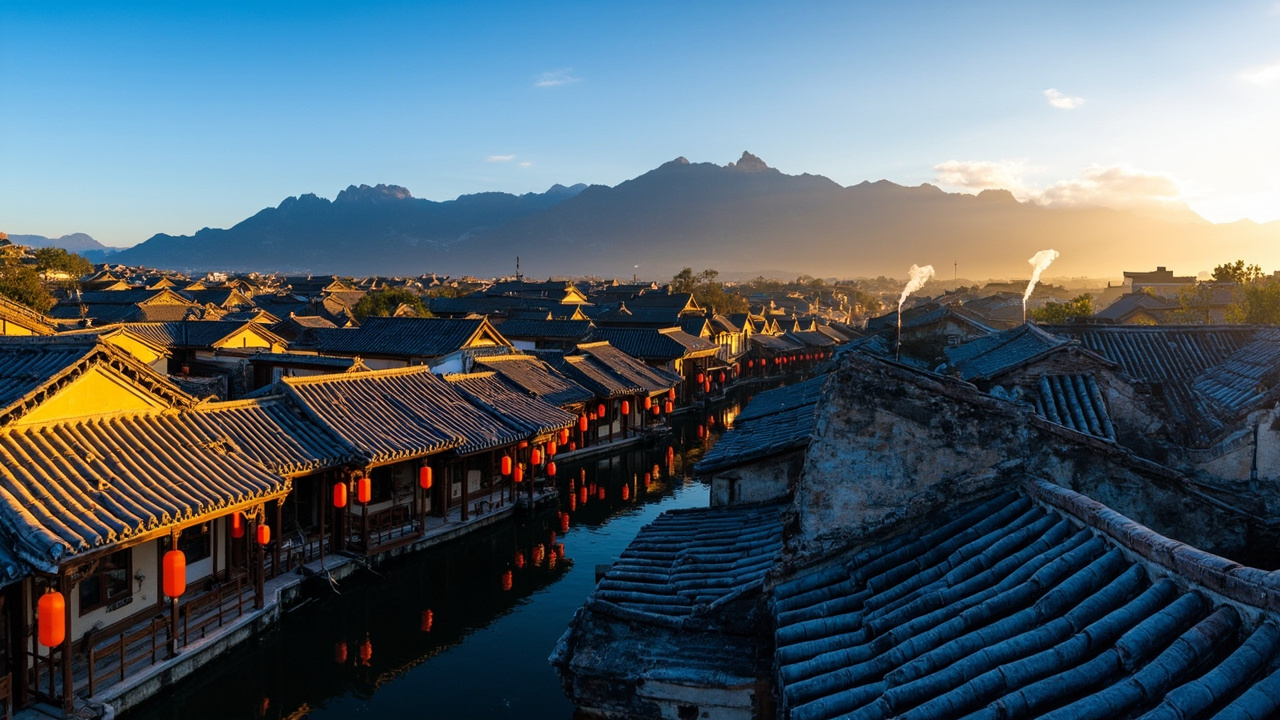
The rain came down in thick, gray sheets, turning the stone-paved lanes of Lijiang Old Town into a mirror of shuffling umbrellas and neon signs. I was huddled under the eaves of a tea house on Sifang Street, watching a Naxi grandmother in a blue apron methodically skewer mushrooms for the grill behind her. The air was thick with the smell of wet wood, sizzling chili oil, and the sweet, cloying scent of jasmine tea being poured for a group of Chinese tourists. A young couple in rented Tibetan robes took a selfie in front of a gushing canal, their laughter cutting through the thunder of the rain on the rooftops. It was chaotic, ancient, and utterly alive. That was my first hour in Lijiang, and it completely rewired my expectations of what a “UNESCO World Heritage Site” in China could feel like.
Lijiang isn’t a museum piece. It’s a living, breathing, slightly chaotic organism. It’s a place where the 800-year-old drainage system still runs crystal-clear water through the cobblestone streets, where the majestic Jade Dragon Snow Mountain looms over the tiled rooftops, and where the local Naxi people share their town with millions of visitors who come to get lost in its labyrinthine alleys. It’s also a place that can feel overwhelming, touristy, and even a bit like a theme park if you don’t know where to look. But if you know where to step off the main drag, it’s one of the most atmospheric and romantic places in China.
This guide is the result of seven years of living in Beijing and over a dozen trips back to Yunnan. I’ve walked every alley, eaten at the hole-in-the-wall noodle shops, and watched the sun set over the old town from every possible vantage point. I’m here to tell you how to see the real Lijiang, avoid the crowds, and make the most of your time in this high-altitude wonderland.
Quick answer
Lijiang Old Town is a 800-year-old Naxi minority town in Yunnan Province, China, famous for its ancient water system, cobblestone streets, and views of Jade Dragon Snow Mountain. It is free to enter, but you must pay a ¥50 “maintenance fee” (approx. $7 USD) which is often included in hotel bookings or checked at major gates. The best time to visit is during the dry season (November to March) for clear mountain views, but expect large crowds during Chinese national holidays (October 1-7 and May 1-5).
The Short Version
Lijiang is a beautiful, ancient maze that is also a massive tourist attraction. Don’t just stay in the old town; use it as a base to explore the surrounding countryside, which is even more spectacular. The old town is best experienced early in the morning (before 9 AM) or late at night (after 10 PM) when the tour groups have left. The food is decent, the coffee is surprisingly good, and the mountains are the real reason to come. If you skip the crowds and head to the quieter corners, it’s a magical place. If you only walk the main streets, you’ll be disappointed by the identical souvenir shops selling the same wooden frogs.
How I Picked These
I didn’t pick these places from a list. I picked them by walking. Over my years of visiting, I’ve stayed in a Naxi courtyard guesthouse, taken cooking classes, and hired a local driver to take me to the lesser-known villages. I’ve spent hours sitting in the same tea shop on Wenzhi Lane, just watching the world go by. I’ve also made plenty of mistakes—I once paid 100 RMB for a “private” tour that was just a bus ticket, and I’ve gotten hopelessly lost in the maze of alleys more times than I can count. This list is a combination of the places I keep going back to, the spots that made me stop and take a photo, and the experiences that felt genuinely authentic amidst the commercialism.
Comparison Table
| Rank | Place | Best For | Approx Cost (USD) | Time Needed | When to Go |
|---|---|---|---|---|---|
| 1 | Sifang Street (Square Street) | First-timers, people-watching | Free | 1-2 hours | Early morning or late evening |
| 2 | Wenzhi Lane | Quiet walks, photography | Free | 1 hour | Mid-morning |
| 3 | Mu Family Mansion | History, architecture | $8 (¥60) | 1.5 hours | Weekday mornings |
| 4 | Wangu Tower | Panoramic views | $7 (¥50) | 1 hour | Sunset |
| 5 | Black Dragon Pool Park | Iconic mountain reflection | Free | 1-2 hours | Early morning |
| 6 | Baisha Village | Authentic Naxi culture, murals | Free (mural fee $4) | Half-day | Weekdays |
| 7 | Shuhe Ancient Town | Quieter alternative to Lijiang | Free (maintenance fee) | Half-day | Any time |
| 8 | Jade Dragon Snow Mountain | Alpine scenery, hiking | $50-100 (¥350-700) | Full day | November-March |
| 9 | Lijiang Impression Show | Cultural performance | $40 (¥280) | 1.5 hours | Afternoon |
| 10 | Dayan Ancient Town (Night Walk) | Nightlife, atmosphere | Free | 2 hours | After 9 PM |
1. Sifang Street 鈥?The Heartbeat of the Old Town
The first time you step onto Sifang Street, you’ll understand why it’s the center of everything. It’s a large, open square paved with worn stones, surrounded by traditional wooden buildings with upturned eaves. In the middle, there’s a small stage where locals perform traditional Naxi music in the evenings. During the day, it’s a sea of people, but it’s also the best place to get your bearings. The famous “Three Wells” are here—a series of connected pools where the locals still wash vegetables in the top one, clothes in the middle, and mops in the bottom. It’s a simple, ancient system that still works.
Why it’s special: It’s the beating heart of the town. All the main canals and streets radiate out from this square. It’s also where you’ll find the best people-watching in all of Yunnan. You’ll see Naxi women in their traditional “star and moon” caps, tour groups following a sea of little red flags, and backpackers haggling over handmade silver jewelry. It’s chaotic, but it’s the good kind of chaos.
- 馃搷 Location: Center of Dayan Old Town
- 馃帿 Entry fee: Free (but part of the old town maintenance fee zone)
- 馃晲 Opening hours: Always open
- 馃殕 How to get there: From the main entrance at the south gate, walk straight for about 10 minutes following the main canal. You can’t miss it.
- 鈴?When to visit: Go at 7 AM when the square is empty and the shopkeepers are just opening their wooden shutters. It’s a completely different experience.
- 馃挕 Insider tips: The “maintenance fee” is checked at the entrances to Sifang Street. If you’re staying in a hotel inside the old town, ask them to register you to avoid paying it twice. Also, don’t buy the wooden frogs here; they’re cheaper in Baisha Village.
I once watched a Naxi man set up his stall here for an hour, carefully arranging his handmade copper teapots. He didn’t look up once, even as hundreds of people walked past. He was a craftsman, not a salesman.
2. Wenzhi Lane 鈥?The Quiet Escape
Just a two-minute walk from the chaos of Sifang Street, Wenzhi Lane feels like a different world. This narrow, winding alleyway is lined with traditional Naxi courtyard houses, many of which have been converted into boutique hotels, art galleries, and quiet cafes. The crowds thin out dramatically here, and you can actually hear the water running in the stone channels that line the street. It’s the perfect place to escape the noise and get a sense of what Lijiang might have felt like a hundred years ago.
Why it’s special: It’s the most atmospheric street in the old town. The architecture is beautifully preserved, and the lack of tacky souvenir shops makes it feel authentic. It’s also a great place to find a quiet courtyard to sit in and write postcards or just watch the locals go about their day. The light in the late afternoon is gorgeous, casting long shadows across the stone walls.
- 馃搷 Location: West side of Dayan Old Town, off the main Sifang Street area
- 馃帿 Entry fee: Free
- 馃晲 Opening hours: Always open
- 馃殕 How to get there: From Sifang Street, head west towards the Lion Hill. You’ll see a sign for Wenzhi Lane. Follow the canal uphill.
- 鈴?When to visit: Mid-morning, after the tour groups have moved on to the main square.
- 馃挕 Insider tips: There’s a fantastic little cafe called “The Bakery” about halfway up the lane. Their apple pie is the best I’ve had in China. Also, many of the art galleries here are run by local painters; they’re happy to chat if you show genuine interest.
I bought a small watercolor of the Jade Dragon Snow Mountain from a gallery here. The artist, a young Naxi woman, told me she paints the mountain every day because it looks different every day. I think about that a lot.
3. Mu Family Mansion 鈥?The “Forbidden City” of the South
The Mu family ruled Lijiang for over 400 years, and their mansion is a sprawling complex of palaces, gardens, and courtyards at the foot of Lion Hill. It’s often called the “Forbidden City of the South” because of its scale and grandeur, but it’s actually more intimate and elegant than its northern counterpart. The buildings are a fascinating mix of Han Chinese and Naxi architectural styles, with intricate wood carvings and beautiful murals. The view from the top of the mansion’s tower, looking over the gray-tiled roofs of the old town towards the snow mountain, is one of the best in Lijiang.
Why it’s special: It gives you a real sense of the power and wealth of the Mu family, who were shrewd politicians and patrons of the arts. The history is fascinating—they managed to maintain their autonomy for centuries by paying tribute to both the Ming and Qing emperors. The gardens are also a masterpiece of Chinese landscape design, with ponds, rockeries, and pavilions that are perfect for a quiet moment.
- 馃搷 Location: Southern end of Dayan Old Town, at the base of Lion Hill
- 馃帿 Entry fee: $8 (¥60)
- 馃晲 Opening hours: 8:30 AM - 6:00 PM (last entry at 5:30 PM)
- 馃殕 How to get there: From Sifang Street, head south for about 5 minutes. You’ll see the large gate with the “Mu” character on it.
- 鈴?When to visit: Weekday mornings are best to avoid tour groups. It gets very crowded after 11 AM.
- 馃挕 Insider tips: The audio guide is worth the extra few dollars. It’s well-produced and gives you a lot of context. Also, the exit of the mansion leads you to a quiet path that connects to the Lion Hill area, which is a nice way to avoid backtracking.
I got lost in the maze of courtyards here for a good 20 minutes. It’s so easy to do. But getting lost is kind of the point.
4. Wangu Tower 鈥?The Best View in Town
Perched on the top of Lion Hill, Wangu Tower is a five-story wooden pagoda that offers a panoramic view of the entire old town and the Jade Dragon Snow Mountain in the distance. The climb up is a bit of a workout, but the view from the top is absolutely worth it. On a clear day, you can see the whole layout of the town, with its intricate network of canals and bridges, and the snow-capped peaks of the mountain range stretching across the horizon. It’s the classic postcard view of Lijiang.
Why it’s special: It’s the only place in the old town where you can get a true bird’s-eye view. The tower itself is also quite beautiful, with intricate carvings and a large bronze bell on the top floor. It’s a great spot for photography, especially at sunset when the light turns the old town a warm golden color. Just be prepared for the crowds; everyone has the same idea.
- 馃搷 Location: Top of Lion Hill, west of the old town
- 馃帿 Entry fee: $7 (¥50)
- 馃晲 Opening hours: 8:00 AM - 8:00 PM (hours may vary seasonally)
- 馃殕 How to get there: From Sifang Street, follow the signs for “Wangu Tower” uphill. It’s about a 15-minute walk.
- 鈴?When to visit: Go about 30 minutes before sunset. You’ll get the daytime view, the sunset, and the lights of the town coming on.
- 馃挕 Insider tips: The cable car from the Black Dragon Pool side of the hill is a bit of a cheat, but it saves your legs. Also, bring a windbreaker; it gets very windy at the top.
I was up there once when a sudden snowstorm rolled in. The whole town disappeared under a white blanket in about ten minutes. It was surreal.
5. Black Dragon Pool Park 鈥?The Iconic Reflection
Just a 15-minute walk north of the old town, Black Dragon Pool Park is where you’ll find the most famous photo of Lijiang: the Jade Dragon Snow Mountain perfectly reflected in the still waters of the pool, with the five-arch Jade Dragon Bridge in the foreground. It’s a stunning sight, and it’s completely free to enter. The park is also home to the Dongba Culture Museum, which is worth a visit if you’re interested in learning about the Naxi people’s unique pictographic script, the only living hieroglyphic language in the world.
Why it’s special: It’s the perfect escape from the crowds of the old town. The park is large and peaceful, with willow trees lining the paths and pavilions where you can sit and enjoy the view. The reflection of the mountain in the water is truly breathtaking, especially on a clear, windless morning. It’s also a great place for a picnic.
- 馃搷 Location: North of Dayan Old Town, across the main road
- 馃帿 Entry fee: Free (you may need to show your old town maintenance fee receipt)
- 馃晲 Opening hours: 7:00 AM - 7:00 PM
- 馃殕 How to get there: Walk north from the old town for about 15 minutes, or take a local bus (Line 4 or 8) to the “Heilongtan” stop.
- 鈴?When to visit: Early morning, before the wind picks up and disturbs the water’s surface. The reflection is best before 9 AM.
- 馃挕 Insider tips: The park is also a great place to see locals practicing Tai Chi or playing traditional instruments. Don’t be shy; they’re usually happy to chat if you show interest. Also, the museum has a small gift shop with some excellent books on Naxi culture.
I sat on a bench here for an hour one morning, just watching the mountain change color as the sun rose. I didn’t take a single photo. Some moments are better in your memory.
6. Baisha Village 鈥?The Real Lijiang
If you want to see what Lijiang was like before the tourists came, take a 30-minute bus ride north to Baisha Village. This is the original Naxi settlement, and it’s much quieter and more authentic than the old town. The main street is lined with small workshops where you can watch craftsmen making silver jewelry, painting murals, or carving wood. The village is also home to the famous Baisha Murals, a collection of Buddhist and Taoist paintings that blend Han, Tibetan, and Naxi styles. They’re a fascinating glimpse into the region’s diverse cultural history.
Why it’s special: It’s the most authentic Naxi experience you can have without going on a multi-day trek. The pace of life is slow, the people are friendly, and the prices are much lower than in Lijiang. It’s also a great base for exploring the surrounding countryside, with its fields of golden wheat and views of the snow mountain. It feels like a real community, not a tourist attraction.
- 馃搷 Location: About 12 km north of Lijiang Old Town
- 馃帿 Entry fee: Free to enter the village. The Baisha Murals are $4 (¥30).
- 馃晲 Opening hours: The village is always open. The murals are open from 8:00 AM to 6:00 PM.
- 馃殕 How to get there: Take bus line 6 from the north gate of the old town to the “Baisha” stop. It takes about 30 minutes.
- 鈴?When to visit: Weekdays are best. It gets busier on weekends with domestic tourists.
- 馃挕 Insider tips: Try the “chicken bean jelly” (鸡豆凉粉) at one of the local stalls. It’s a Naxi specialty and it’s delicious. Also, the silver here is cheaper and better quality than in Lijiang Old Town. Bargain hard.
I watched an old Naxi man paint a mural for an hour. He didn’t use a sketch, just painted freehand. He told me he’d been doing it for 50 years.
7. Shuhe Ancient Town 鈥?The Quieter Sister
Shuhe is another ancient town about 4 km north of Lijiang, and it’s often described as a “quieter version” of the old town. It has the same cobblestone streets, canals, and traditional architecture, but with a fraction of the crowds. It’s a great place to spend a lazy afternoon, wandering the alleys, browsing the boutique shops, and having a coffee in one of the many cafes. It’s also a popular base for people who want to be close to Lijiang but not in the middle of the chaos.
Why it’s special: It’s the perfect compromise. You get the beauty and atmosphere of an ancient town without the sensory overload of Dayan. It’s also more spread out, so it feels less claustrophobic. The main square, Sifang Ting, is a lovely open space with a large tree and a stage where local performances are held. It’s a great place to just sit and soak it all in.
- 馃搷 Location: About 4 km north of Lijiang Old Town
- 馃帿 Entry fee: Free (there is a maintenance fee, but it’s rarely checked)
- 馃晲 Opening hours: Always open
- 馃殕 How to get there: Take bus line 6 from the north gate of Lijiang Old Town to the “Shuhe” stop. A taxi costs about $3 (¥20).
- 鈴?When to visit: Any time. It’s never as crowded as Lijiang.
- 馃挕 Insider tips: The “Three Holy Springs” at the north end of the village are worth a visit. They’re a series of natural springs that are considered sacred. Also, many of the guesthouses here are excellent value for money and much quieter than those in Lijiang.
I met a German couple here who had been traveling in China for six months. They said Shuhe was their favorite place. I can see why.
8. Jade Dragon Snow Mountain 鈥?The Majestic Backdrop
You can’t come to Lijiang and not see the mountain. It’s the constant, looming presence that defines the region. The main attraction is the Glacier Park, which you can reach via a cable car that takes you up to an altitude of 4,506 meters. From there, you can walk along a boardwalk and get up close to the glacier. It’s a stunning, otherworldly landscape. There’s also a lower cable car that takes you to the Spruce Meadow, which is a beautiful alpine meadow with views of the mountain. The mountain is a sacred site for the Naxi people, and you can feel that spiritual energy when you’re up there.
Why it’s special: It’s a truly awe-inspiring natural wonder. The scale of the mountain is immense, and the air is crisp and thin. It’s a completely different world from the old town. The views from the top are breathtaking, with the peaks stretching as far as the eye can see. It’s a physical challenge, but it’s one of the most rewarding experiences in China.
- 馃搷 Location: About 20 km north of Lijiang
- 馃帿 Entry fee: The park entrance fee is $14 (¥100). The Glacier Park cable car is $28 (¥200). The Spruce Meadow cable car is $10 (¥70). A bus from the entrance to the cable car stations is $3 (¥20).
- 馃晲 Opening hours: 7:00 AM - 6:00 PM
- 馃殕 How to get there: Take a bus from the Lijiang bus station (about $5) or hire a taxi for the day (about $50). There are also organized tours.
- 鈴?When to visit: November to March for the clearest views. Avoid weekends and holidays. Go early, as the cable car queues can be long.
- 馃挕 Insider tips: Buy your cable car ticket in advance, online or through your hotel, as they often sell out. Bring oxygen canisters (available at the base) if you’re not used to high altitude. Wear layers; it’s cold at the top even in summer.
I made the mistake of running up the boardwalk at 4,500 meters to get a photo. I was gasping for air for the next ten minutes. Lesson learned.
9. Lijiang Impression Show 鈥?A Spectacle in the Mountains
This is not your typical cultural show. The Lijiang Impression Show is a massive, open-air performance set against the backdrop of the Jade Dragon Snow Mountain. Directed by the famous Chinese filmmaker Zhang Yimou, it features hundreds of local performers, including Naxi, Bai, and Tibetan people, who sing, dance, and act out scenes from their traditional life. The setting is the star of the show; the mountain looms behind the stage, and the performers use the natural landscape as part of their act. It’s a truly spectacular and moving experience.
Why it’s special: It’s a unique blend of high art and folk culture. The scale is enormous, but the performances feel intimate and personal. You’ll hear traditional songs, see intricate costumes, and get a sense of the deep connection these people have to their land. It’s a great way to learn about the local culture in an entertaining and accessible way.
- 馃搷 Location: At the base of Jade Dragon Snow Mountain, about 20 km from Lijiang
- 馃帿 Entry fee: $40 (¥280) for standard seats. VIP seats are more expensive.
- 馃晲 Opening hours: Shows are usually held in the afternoon (around 2 PM and 4 PM), but times vary by season.
- 馃殕 How to get there: Most tours include transport. You can also take a bus to the mountain and walk to the theater.
- 鈴?When to visit: Check the weather forecast. The show goes on in the rain, but it’s more enjoyable on a clear day.
- 馃挕 Insider tips: Sit in the middle rows for the best view. The front rows can get a bit dusty. Also, bring a hat and sunscreen; it’s a sunny, open-air venue.
I was skeptical about this show, but I was genuinely moved by it. The moment the performers started singing in unison, with the mountain behind them, I got chills.
10. A Night Walk Through Dayan 鈥?The Town After Dark
The old town transforms at night. The tour groups leave, the streets empty out, and the lanterns come on, casting a warm, red glow over the canals and cobblestones. It’s a completely different experience from the daytime chaos. The sound of water is louder, the air is cooler, and the atmosphere is almost magical. It’s the perfect time for a romantic stroll or a quiet drink in one of the many bars that line the canal.
Why it’s special: It’s the most atmospheric time to be in the old town. The crowds are gone, and you can finally hear yourself think. The lights reflecting on the water are beautiful, and the quiet hum of the night is a welcome relief from the daytime noise. It’s also a great time to explore the smaller, hidden alleys that you might have missed during the day.
- 馃搷 Location: Throughout Dayan Old Town
- 馃帿 Entry fee: Free
- 馃晲 Opening hours: Always open
- 馃殕 How to get there: Just walk anywhere. The whole town is your playground.
- 鈴?When to visit: After 9 PM, when the day-trippers have gone.
- 馃挕 Insider tips: The bars on Xinhua Street are the liveliest, but they can be loud. For a quieter drink, head to the cafes on Wenzhi Lane. Also, be careful walking on the wet stones; they can be slippery.
I got lost at night here once and stumbled upon a small, hidden courtyard where a group of Naxi musicians were playing traditional music. It was one of the most magical moments of my trip.
FAQ summary
Lijiang Old Town is free to enter but requires a ¥50 ($7) maintenance fee, often covered by hotels. The best time to visit is during the dry season (November-March) for clear views of Jade Dragon Snow Mountain. Key attractions include Sifang Street, the Mu Family Mansion ($8/¥60), and the free Black Dragon Pool Park. For a quieter experience, visit Baisha Village or Shuhe Ancient Town. The Lijiang Impression Show ($40/¥280) is a must-see cultural performance. The old town is best experienced early morning or late evening to avoid crowds.
FAQ
Q: Do I need a visa to visit Lijiang as a tourist? A: Many nationalities are eligible for China’s 24-hour visa-free transit or the 240-hour visa-free policy for certain routes. Check the latest visa-free transit policies to see if you qualify. Otherwise, you’ll need a standard China tourist visa.
Q: How do I get to Lijiang from other parts of China? A: The easiest way is to fly into Lijiang Sanyi International Airport (LJG), which has direct flights from major cities like Beijing, Shanghai, and Chengdu. You can also take a high-speed train from Kunming, which takes about 3 hours. Check the high-speed rail guide for more details.
Q: Is it easy to pay for things in Lijiang? A: Yes, but you’ll need to set up Alipay or WeChat Pay as most places, even small stalls, don’t accept cash or international credit cards. It’s easy to set up these apps with a foreign card.
Q: Do I need a VPN for my phone in Lijiang? A: Yes, you will need a VPN to access Google, WhatsApp, Instagram, and other Western websites. You should install it before you arrive in China. You’ll also need a local SIM card or an international data plan. See our SIM card and internet guide for more.
Q: Is Lijiang Old Town very crowded? A: Yes, it can be extremely crowded, especially during Chinese public holidays like National Day (October 1-7) and Labor Day (May 1-5). To avoid the worst crowds, visit early in the morning or late in the evening, and explore the quieter side streets.
Q: What is the altitude of Lijiang and will I get altitude sickness? A: Lijiang Old Town is at about 2,400 meters (7,900 feet) above sea level. Most people feel fine, but you might get a slight headache or feel short of breath. Take it easy on your first day, drink plenty of water, and avoid alcohol. If you go up to Jade Dragon Snow Mountain (4,506 meters), you should bring oxygen canisters.
Q: Is English widely spoken in Lijiang? A: Not really. In the old town, you’ll find some English speakers in hotels and larger restaurants, but most locals speak only Mandarin or the Naxi language. It’s a good idea to download a translation app like Google Translate (with offline packs) or Pleco.
The Honest Wrap-up
Lijiang is a place that rewards those who look beyond the surface. It’s easy to be cynical about the souvenir shops and the crowds, but if you get off the main paths, you’ll find a town with a deep history, a vibrant culture, and a stunning natural setting. This list is for the traveler who wants to see the highlights but also wants to feel the soul of the place. It’s not for those who want a sanitized, theme-park experience. My final piece of advice? Wake up early one morning, walk to the edge of the old town, and watch the sun rise over the Jade Dragon Snow Mountain. In that quiet moment, you’ll understand why people have been coming here for centuries.
Topics
More guides you may like

Top 10 Bridges in China
China's bridges are engineering marvels spanning mountains, rivers, and seas. Here are 10 of the most spectacular, from ancient stone to modern steel.
8 min read

Top 10 Buddhist Sites in China
From the Leshan Giant Buddha to the Dunhuang Caves, these 10 Buddhist sites represent 2,000 years of China's spiritual heritage.
9 min read

Top 10 Day Trips from Beijing You Shouldn't Miss
Beijing is packed with history, but some of China's best experiences are just a few hours away. Here are 10 day trips that will transform your visit.
9 min read

Top 10 Hidden Gems in China Off the Beaten Path
Beyond the Great Wall and Terracotta Warriors, China has incredible hidden destinations few tourists ever reach. Here are 10 underrated gems worth the detour.
9 min read

Top 10 Markets and Shopping Streets in China
From Shanghai's Bund to Beijing's Silk Street - 10 markets where foreigners can haggle, explore, and bring home authentic Chinese goods.
9 min read

Top 10 Museums in China You Shouldn't Miss
China's museums span 5,000 years of civilization. These 10 - from the Palace Museum to Xi'an's terracotta gallery - are unmissable for culture lovers.
9 min read