
China Car Rental Guide
The first time I tried to rent a car in China, the rental agent in Kunming looked at my international driver's license, then at me, then back at the license.
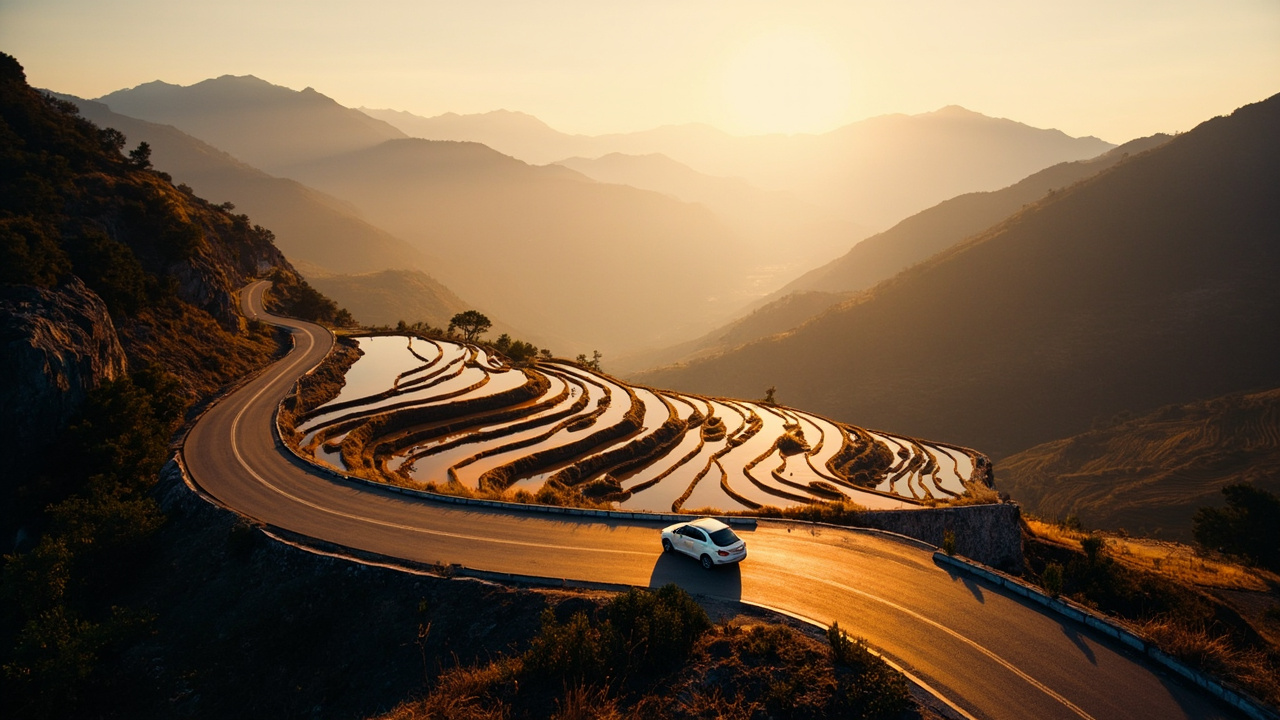
The first time I tried to rent a car in China, the rental agent in Kunming looked at my international driver’s license, then at me, then back at the license, and finally said, very slowly, “No. Not possible.”
I had assumed it would be like renting in Europe. It is not. That was seven years and about forty trips ago. Since then I’ve rented cars in Chengdu, driven the Tibetan plateau in a battered SUV, and navigated Xi’an’s ring roads at rush hour. I’ve learned the hard way that renting a car in China is a completely different animal from anywhere else in the world, and most of the advice you’ll find online is either outdated or simply wrong.
This guide is everything I wish someone had told me before that first failed attempt. I’ll cover the real requirements, the actual costs, which platforms work for foreigners, and the one thing you absolutely must do before you even open a rental app.
Quick answer
Yes, you can rent a car in China as a foreign tourist, but you need a valid Chinese driver’s license. Foreign licenses and International Driving Permits are not legally valid. You can get a Chinese temporary license at major city airports or vehicle management offices with your passport, visa, and home license. Expect to pay $30–80 per day (¥220–580) for a standard sedan through apps like Ctrip or 神州租车 (China Auto Rental). Self-driving is best for scenic regions like Yunnan, Sichuan, or the Gobi Desert, not for Beijing or Shanghai.
The Short Version
Renting a car in China is not like renting in the US or Europe. You need a Chinese driver’s license, which takes about an hour to get at the airport. Use Ctrip or 神州租车, not international brands. Expect to pay $30–80 per day. Self-driving is fantastic in western China and terrible in the big eastern cities. If you’re only visiting Beijing, Shanghai, or Xi’an, take the high-speed rail instead. If you want to explore Yunnan or the Tibetan plateau, a car is the only way to do it properly.
How I Picked These
I’ve rented cars in a dozen Chinese provinces over seven years. I’ve used the major Chinese platforms, the international aggregators, and the local mom-and-pop shops that don’t have English websites. I’ve been refused service, overcharged for damage I didn’t cause, and once spent two hours trying to explain a flat tire to a rental agent who spoke no English. I’ve also had some of the best road trips of my life. This guide is based on what actually worked, not what the brochures say. I’ve cross-checked prices and policies with current users in 2025 and 2026, and I’ve included the real costs I paid, not the advertised rates.
Comparison Table
| Rank | Place | Best For | Approx Cost (USD) | Time Needed | When to Go |
|---|---|---|---|---|---|
| 1 | Yunnan Province | Mountain roads, rice terraces, ethnic villages | $45–70/day | 5–7 days | Mar–May, Sep–Nov |
| 2 | Sichuan (Western) | Tibetan plateau, mountain passes | $50–80/day | 7–10 days | May–Oct |
| 3 | Gansu Corridor | Desert highways, ancient Silk Road towns | $40–60/day | 4–6 days | Apr–Jun, Sep–Oct |
| 4 | Guizhou | Karst landscapes, minority villages | $35–55/day | 4–5 days | Mar–Oct |
| 5 | Xinjiang | Vast open roads, dramatic scenery | $45–70/day | 7–14 days | May–Oct |
| 6 | Fujian Coast | Coastal drives, tea mountains | $40–60/day | 4–6 days | Mar–May, Oct–Nov |
| 7 | Guangxi | Karst peaks, rural villages | $35–55/day | 3–5 days | Apr–Oct |
| 8 | Inner Mongolia | Grasslands, desert edges | $50–70/day | 5–7 days | Jun–Sep |
| 9 | Hainan Island | Tropical coastal driving | $35–60/day | 4–6 days | Nov–Mar |
| 10 | Qinghai | High-altitude lakes, empty roads | $55–80/day | 5–8 days | Jun–Sep |
1. Yunnan Province — The Best First Self-Drive in China
I remember the first time I crested a pass near Dali and saw Erhai Lake spread out below, the old town’s tiled roofs catching the afternoon light. I pulled over, got out, and just stood there. That’s the kind of moment you don’t get on a tour bus.
Yunnan is the perfect introduction to self-driving in China. The roads are well-maintained, the distances are manageable, and the scenery changes every hour. You can drive from Kunming to Dali, then south to the rice terraces of Yuanyang, and loop back through Jianshui’s old town. The highways are excellent, but the real magic is on the smaller county roads that wind through the mountains.
馃搷 Location: Start in Kunming, head west to Dali, then south through Yuanyang and Jianshui.
馃帿 Entry fee: Free to drive; scenic areas like Yuanyang terraces cost about $12 (¥85) per person.
馃晲 Opening hours: Roads are open 24/7, but mountain passes can close briefly during heavy rain.
馃殕 How to actually get there: Fly into Kunming Changshui Airport (KMG), take the metro to the city center, and pick up your rental from a downtown branch. The drive to Dali takes about 3.5 hours on the G56 expressway.
鈴?When to visit: March to May for spring weather, September to November for clear skies. Avoid Chinese national holidays when every scenic spot is packed.
馃挕 Insider tips for foreign visitors:
- Download Amap (高德地图) — it works better than Google Maps in China and shows real-time traffic.
- The toll roads are excellent but add up: budget $15–25 (¥110–180) per day in tolls.
- Fill up at PetroChina or Sinopec stations; they’re everywhere and take Alipay.
- Carry your passport when driving; there are police checkpoints in border areas.
- Learn to say “jiayou” (加油) — it means “fill it up” and you’ll say it a lot.
I once spent an hour in a small garage near Jianshui while a mechanic named Mr. Chen replaced a cracked windshield wiper. He refused to take payment, then insisted I stay for lunch with his family.
2. Western Sichuan — The Tibetan Plateau by Car
The road from Chengdu to Kangding climbs from 500 meters to nearly 3,000 in a few hours. The air thins, the landscape opens up, and suddenly you’re driving through Tibetan villages with prayer flags snapping in the wind. This is not an easy drive, but it’s one of the most rewarding in China.
Western Sichuan is where China’s road trips get serious. You’ll cross passes above 4,000 meters, navigate switchback roads with sheer drops, and share the highway with yak herds. The reward is some of the most dramatic scenery in Asia: snow-capped peaks, alpine lakes, and the vast grasslands of Tagong. This is the region for experienced drivers who want an adventure, not a relaxing cruise.
馃搷 Location: West of Chengdu, from Kangding through Tagong to Danba and beyond.
馃帿 Entry fee: Free to drive; some scenic spots charge $5–15 (¥35–110).
馃晲 Opening hours: Roads are open year-round, but passes can close in winter snow.
馃殕 How to actually get there: Fly into Chengdu Shuangliu Airport (CTU), pick up a rental car from the airport branch, and head west on the G318. The drive to Kangding takes about 4 hours.
鈴?When to visit: May to October. July and August are the warmest, but September has the clearest skies.
馃挕 Insider tips for foreign visitors:
- Rent a car with good ground clearance — an SUV or crossover is worth the extra cost.
- Bring warm clothes even in summer; mountain passes can be near freezing.
- Buy a physical map as backup; cell signal disappears in the valleys.
- Check your brakes before every descent — the roads are steep and long.
- Carry snacks and water; there are long stretches without services.
I got altitude sickness at 4,300 meters near Tagong and had to sit in a tea house for two hours while a Tibetan woman made me sweet butter tea. She didn’t speak a word of English, but she knew exactly what I needed.
3. The Gansu Corridor — Silk Road Driving
The highway between Lanzhou and Dunhuang runs straight through the Hexi Corridor, a narrow strip of land between the Qilian Mountains and the Gobi Desert. It’s a drive through history: the same route that Marco Polo took, lined with ancient fortresses, Buddhist caves, and the remnants of the Great Wall.
This is the road trip for people who like empty roads and big skies. The scenery is stark and beautiful: desert on one side, snow-capped mountains on the other. You can stop at the Mogao Caves near Dunhuang, the Zhangye Danxia rainbow mountains, and the Jiayuguan Fort, the western end of the Great Wall. The distances are long, but the driving is easy and the roads are in excellent condition.
馃搷 Location: The G30 expressway from Lanzhou northwest to Dunhuang.
馃帿 Entry fee: Free to drive; Mogao Caves cost about $30 (¥220) per person, Zhangye Danxia $10 (¥75).
馃晲 Opening hours: Roads open 24/7; most sights open 8am–6pm.
馃殕 How to actually get there: Fly into Lanzhou Zhongchuan Airport (LHW), pick up a rental, and drive northwest on the G30. The full drive to Dunhuang takes about 10 hours, so plan an overnight stop in Zhangye.
鈴?When to visit: April to June and September to October. Summer is brutally hot in the desert.
馃挕 Insider tips for foreign visitors:
- The Zhangye Danxia landform is best photographed at sunset, not midday.
- Book Mogao Caves tickets online in advance; they sell out days ahead.
- The desert gets cold at night, even in summer — bring a jacket.
- Toll booths accept Alipay or WeChat Pay; keep your phone charged.
- Don’t speed on the G30 — there are speed cameras every few kilometers.
At a rest stop near Jiayuguan, a truck driver named Wang shared his lunch with me: hand-pulled noodles, pickled vegetables, and a thermos of jasmine tea. He’d been driving the Silk Road for twenty years.
4. Guizhou — Underrated Karst Country
Guizhou is the province that Chinese tourists keep to themselves. It’s poor, mountainous, and wet, which means it’s also authentic, uncrowded, and covered in the most incredible karst scenery you’ve never seen. The roads are newer than you’d expect, and the driving is genuinely enjoyable.
I drove from Guiyang south to the Miao villages near Kaili, then west to the Huangguoshu Waterfall. The scenery is a constant surprise: limestone peaks rising out of rice paddies, wooden villages clinging to hillsides, and the occasional bridge that spans a valley so deep you can’t see the bottom. This is the place to go if you want to experience rural China without the tourist crowds.
馃搷 Location: South and west of Guiyang, around Kaili, Anshun, and the Miao villages.
馃帿 Entry fee: Free to drive; Huangguoshu Waterfall costs about $25 (¥180) per person.
馃晲 Opening hours: Roads open 24/7; villages are open all day, but the best light is early morning.
馃殕 How to actually get there: Fly into Guiyang Longdongbao Airport (KWE), pick up a rental, and drive south on the G75. Kaili is about 2 hours away.
鈴?When to visit: March to October. The rainy season is May to July, but the mist adds atmosphere.
馃挕 Insider tips for foreign visitors:
- The Miao villages near Kaili are free to visit, but some charge a small fee for the “performance” shows.
- Try the local sour fish soup (酸汤鱼) — it’s a Guizhou specialty.
- The roads can be slippery in rain; drive slower than you think you need to.
- English is rarely spoken here; have your translation app ready.
- Buy the local rice wine from village shops; it’s strong and sweet.
I got hopelessly lost near a village called Xijiang and ended up at a family dinner where I was fed three bowls of rice and told, through gestures, that I was too skinny.
5. Xinjiang — The Big Empty
Xinjiang is China’s largest province and its most dramatic. The roads here are long, straight, and mostly empty. You can drive for hours without seeing another car, just the Tianshan Mountains on one side and desert on the other. It’s the closest thing to a Western road trip you’ll find in China.
The driving is easy, but the logistics are not. You need to register with the police when you arrive, and there are checkpoints on most major roads. Foreigners are welcome, but you’ll get extra attention. The payoff is scenery that rivals anything in the American West: the turquoise lakes of Sayram, the grasslands of Nalati, and the desert highway that runs through the Taklamakan.
馃搷 Location: Around Urumqi, west to Sayram Lake, south to Kashgar.
馃帿 Entry fee: Free to drive; Sayram Lake costs about $12 (¥85) per person.
馃晲 Opening hours: Roads open 24/7; checkpoints operate at all hours.
馃殕 How to actually get there: Fly into Urumqi Diwopu Airport (URC), pick up a rental, and head west on the G30. Sayram Lake is about 5 hours away.
鈴?When to visit: May to October. July and August are best for the grasslands.
馃挕 Insider tips for foreign visitors:
- Carry your passport and a printed copy of your hotel registration at all times.
- The checkpoints are routine; stay calm and follow instructions.
- The food is incredible — try the lamb skewers and naan bread in Kashgar.
- Fuel stations are less frequent than in eastern China; fill up when you see one.
- The time zone is technically the same as Beijing, but locals live two hours behind.
At a checkpoint near Sayram Lake, a young officer named Aikebaer asked to see my passport, then spent five minutes asking about my hometown. He’d never met an American before.
6. The Fujian Coast — Tea Mountains and Coastal Roads
Fujian is the province that most tourists skip, and that’s exactly why you should drive there. The coast has dramatic cliffs, fishing villages, and some of the best seafood in China. Inland, the Wuyi Mountains are covered in tea terraces that are stunning in the early morning mist.
The driving here is a mix of coastal highways and mountain roads. The coastal route from Xiamen to Fuzhou is easy and scenic, with plenty of places to stop for seafood. The inland route to Wuyishan is more challenging but worth it for the tea country. This is a relaxed, underrated road trip that’s perfect for a first-time self-driver.
馃搷 Location: The coast from Xiamen north to Fuzhou, and inland to Wuyishan.
馃帿 Entry fee: Free to drive; Wuyishan scenic area costs about $22 (¥160) per person.
馃晲 Opening hours: Roads open 24/7; tea farms are open during daylight hours.
馃殕 How to actually get there: Fly into Xiamen Gaoqi Airport (XMN), pick up a rental, and drive north on the G15 coastal highway. Fuzhou is about 3 hours away.
鈴?When to visit: March to May and October to November. Avoid the summer typhoon season.
馃挕 Insider tips for foreign visitors:
- The tea farms near Wuyishan are free to visit; you can often join a tasting for a small fee.
- The seafood markets in coastal towns are best visited in the morning.
- The mountain roads can be narrow and winding; take them slowly.
- English is limited outside Xiamen; use your translation app.
- Buy some oolong tea directly from the farmers; it’s cheaper than in the shops.
I stopped at a tea farm near Wuyishan and ended up spending two hours with a farmer named Lin, who showed me how to pick the leaves and then insisted I drink three cups of his best oolong.
7. Guangxi — Karst Peaks and Rice Paddies
Guangxi is the province of the iconic Chinese landscape: the karst peaks that rise out of the rice paddies, the Li River winding through the mountains, and the villages that look like they haven’t changed in centuries. It’s the scenery you’ve seen in a hundred Chinese paintings, and it’s real.
The driving is easy, with good roads connecting the main sights. The most popular route is from Guilin to Yangshuo, but the real magic is in the smaller roads that wind through the countryside. I spent a day driving aimlessly south of Yangshuo and found villages that had never seen a foreign tourist. That’s the kind of experience you can’t book.
馃搷 Location: Around Guilin, Yangshuo, and the Li River valley.
馃帿 Entry fee: Free to drive; Li River cruises cost about $50 (¥360) per person.
馃晲 Opening hours: Roads open 24/7; most sights open 8am–6pm.
馃殕 How to actually get there: Fly into Guilin Liangjiang Airport (KWL), pick up a rental, and drive south to Yangshuo on the G65. It’s about 1.5 hours.
鈴?When to visit: April to October. The rice paddies are green from May to September.
馃挕 Insider tips for foreign visitors:
- The best views of the karst peaks are at sunrise, when the mist is low.
- Skip the touristy Li River cruise and drive the small roads instead.
- The local beer fish (啤酒鱼) is a must-try in Yangshuo.
- Rent a scooter in Yangshuo for a day; it’s the best way to explore the countryside.
- The roads can get busy on weekends with Chinese tourists; go midweek.
I got stuck in a rice paddy near Yangshuo after taking a wrong turn and had to be pulled out by a farmer with a water buffalo. He laughed for a solid five minutes before helping.
8. Inner Mongolia — Grasslands and Desert Edges
Inner Mongolia is the road trip for people who want to see the vastness of China. The grasslands stretch to the horizon in every direction, dotted with yurts and grazing herds. The desert in the west is even emptier. This is the kind of driving where you can go an hour without seeing another car.
The roads are excellent, especially the new expressways that connect the main cities. The driving is easy and relaxing, with long straight stretches and minimal traffic. The challenge is the distance: the province is enormous, and you’ll need to plan your fuel stops carefully. But the reward is a sense of space that you simply don’t get in eastern China.
馃搷 Location: Around Hohhot, west to the desert at Badain Jaran, north to the grasslands.
馃帿 Entry fee: Free to drive; some grassland areas charge a small entrance fee.
馃晲 Opening hours: Roads open 24/7; the grasslands are best visited in daylight.
馃殕 How to actually get there: Fly into Hohhot Baita Airport (HET), pick up a rental, and head north on the G6. The grasslands are about 2 hours away.
鈴?When to visit: June to September. The grass is greenest in July and August.
馃挕 Insider tips for foreign visitors:
- The grassland areas near Hohhot are touristy; drive further north for the real thing.
- Stay in a yurt (蒙古包) overnight; it’s a unique experience.
- The food is heavy on lamb and dairy; pace yourself.
- Fuel stations are sparse in the west; plan your route carefully.
- The desert at Badain Jaran is stunning but requires a 4WD; don’t attempt it in a sedan.
I stayed overnight in a yurt near the grasslands and woke up to the sound of horses outside. The family running the camp fed me breakfast and taught me how to milk a goat.
9. Hainan Island — The Tropical Loop
Hainan is China’s answer to Hawaii: a tropical island with beaches, palm trees, and a laid-back vibe that’s rare in China. The island is small enough to drive around in a few days, and the roads are excellent. It’s the easiest road trip in China, perfect for a first-time self-driver.
The main circuit takes you from Haikou in the north, down the east coast through Boao and Sanya, then back up the west coast through Danzhou. The east coast is the touristy side, with the best beaches and resorts. The west coast is quieter and more authentic. Both are worth driving.
馃搷 Location: The island loop from Haikou, down the east coast to Sanya, back up the west coast.
馃帿 Entry fee: Free to drive; some beaches and parks charge small entrance fees.
馃晲 Opening hours: Roads open 24/7; most sights open 8am–6pm.
馃殕 How to actually get there: Fly into Haikou Meilan Airport (HAK), pick up a rental, and drive south on the G98. Sanya is about 3 hours away.
鈴?When to visit: November to March for the best weather. Summer is hot and humid.
馃挕 Insider tips for foreign visitors:
- The island has no tolls on the main highways; fuel is slightly more expensive to compensate.
- The seafood in Haikou is cheaper and better than in Sanya.
- The west coast is much quieter than the east; go there for a relaxed drive.
- Rent a convertible if you can; the coastal roads are perfect for it.
- English is limited outside the resorts; use your translation app.
I drove the west coast of Hainan in a rainstorm and ended up at a small fishing village where an old woman sold me the best grilled squid I’ve ever had.
10. Qinghai — High-Altitude Lakes and Empty Roads
Qinghai is the province that most tourists never see. It’s high, cold, and sparsely populated, but it’s home to some of the most beautiful scenery in China: the deep blue of Qinghai Lake, the salt flats of Chaka, and the grasslands of the Tibetan plateau. The driving is challenging but unforgettable.
The main route is a loop around Qinghai Lake, which takes about two days at a relaxed pace. From there, you can head south to Chaka and the Qilian Mountains. The roads are good, but the altitude is a factor: most of the province is above 3,000 meters. Take it slow, drink plenty of water, and be prepared for sudden weather changes.
馃搷 Location: The Qinghai Lake loop, south to Chaka, east to the Qilian Mountains.
馃帿 Entry fee: Free to drive; Qinghai Lake scenic areas cost about $15 (¥110) per person.
馃晲 Opening hours: Roads open 24/7; most sights open 8am–6pm.
馃殕 How to actually get there: Fly into Xining Caojiabao Airport (XNN), pick up a rental, and drive west on the G6. Qinghai Lake is about 2.5 hours away.
鈴?When to visit: June to September. The lake is most beautiful in July and August.
馃挕 Insider tips for foreign visitors:
- The altitude is no joke; spend a day in Xining to acclimatize before driving.
- The weather changes fast; bring layers even in summer.
- The salt flats at Chaka are best photographed at sunset.
- The roads can be icy even in summer at high passes; drive carefully.
- The local yogurt is incredible; try it at the roadside stalls.
I drove around Qinghai Lake at sunset and saw a herd of wild donkeys crossing the road. I stopped the car and just watched them for ten minutes.
FAQ summary
The most important thing to know is that you need a Chinese driver’s license, which takes about an hour to get at major airports with your passport, visa, and home license. The cost is roughly $30–80 per day (¥220–580) through apps like Ctrip or 神州租车. Self-driving is best in western and southern China (Yunnan, Sichuan, Gansu, Qinghai), not in the big eastern cities. Always carry your passport, use Amap for navigation, and have Alipay or WeChat Pay set up for tolls and fuel.
FAQ
Q: Can I rent a car in China with my international driver’s license? A: No. China does not recognize international driving permits. You need a Chinese driver’s license, which you can get at major airports or vehicle management offices with your passport, visa, and home license. The process takes about an hour and costs around $10–20 (¥70–145).
Q: How much does it cost to rent a car in China? A: Expect to pay $30–80 per day (¥220–580) for a standard sedan through Chinese platforms like Ctrip or 神州租车. SUVs cost more, around $50–100 per day (¥360–720). You’ll also need a deposit, usually $300–600 (¥2,200–4,300), which is refunded when you return the car.
Q: Do I need a VPN to use navigation apps in China? A: Google Maps doesn’t work well in China. Download Amap (高德地图) or Baidu Maps before you arrive, and they’ll work without a VPN. For other apps like WhatsApp or Instagram, you’ll need a VPN. Check our China SIM card and internet guide for the full setup.
Q: Is it better to rent a car or take the train in China? A: It depends on where you’re going. For big cities like Beijing, Shanghai, and Xi’an, the high-speed rail is faster and easier. For scenic regions like Yunnan, Sichuan, or Gansu, a car gives you the freedom to explore places the train doesn’t reach.
Q: Can I pay for tolls and fuel with Alipay or WeChat Pay? A: Yes, toll booths and fuel stations accept both Alipay and WeChat Pay. Make sure you have these set up before you drive. See our payment guide for step-by-step instructions.
Q: What happens if I get a traffic ticket in China? A: Speed cameras are everywhere, and fines are typically $15–50 (¥110–360). The rental company will usually deduct the fine from your deposit. Avoid parking illegally; the towing fees are steep and the process is a hassle.
Q: Is it safe to drive in China? A: Yes, the roads are generally well-maintained and the driving is orderly compared to some other Asian countries. The main challenges are aggressive drivers in the cities and the sheer scale of the distances. Drive defensively, follow the speed limits, and you’ll be fine.
The Honest Wrap-up
Renting a car in China is not for everyone. If you’re only visiting Beijing, Shanghai, and Xi’an, take the high-speed rail and save yourself the headache of city driving. But if you want to see the real China, the parts that don’t have their own metro stations, a car is the only way. The license process is a minor hurdle, the apps are easy to use once you get the hang of them, and the roads are better than you’d expect. The memories of driving through the rice terraces of Yunnan or the grasslands of Inner Mongolia will stay with you long after you’ve forgotten the traffic jams. Just remember to carry your passport, download Amap, and bring a sense of adventure.
Topics
More guides you may like

Top 10 Bridges in China
China's bridges are engineering marvels spanning mountains, rivers, and seas. Here are 10 of the most spectacular, from ancient stone to modern steel.
8 min read

Top 10 Buddhist Sites in China
From the Leshan Giant Buddha to the Dunhuang Caves, these 10 Buddhist sites represent 2,000 years of China's spiritual heritage.
9 min read

Top 10 Day Trips from Beijing You Shouldn't Miss
Beijing is packed with history, but some of China's best experiences are just a few hours away. Here are 10 day trips that will transform your visit.
9 min read

Top 10 Hidden Gems in China Off the Beaten Path
Beyond the Great Wall and Terracotta Warriors, China has incredible hidden destinations few tourists ever reach. Here are 10 underrated gems worth the detour.
9 min read

Top 10 Markets and Shopping Streets in China
From Shanghai's Bund to Beijing's Silk Street - 10 markets where foreigners can haggle, explore, and bring home authentic Chinese goods.
9 min read

Top 10 Museums in China You Shouldn't Miss
China's museums span 5,000 years of civilization. These 10 - from the Palace Museum to Xi'an's terracotta gallery - are unmissable for culture lovers.
9 min read