
Beijing Xi'an Chengdu Route
The rain was coming down sideways off the hills outside Xi'an when I realized I'd been standing in the same spot for ten minutes, just watching it.
The rain was coming down sideways off the hills outside Xi’an when I realized I’d been standing in the same spot for ten minutes, just watching it. I was supposed to be heading to the Terracotta Warriors, but the bus was late, my shoes were soaked, and a woman selling persimmons from a plastic tub kept trying to hand me one. I took it. It was the best thing I ate that week.
That’s the thing about the Beijing-Xi’an-Chengdu route. It’s the classic first-timer’s triangle for a reason, but it’s not just the headline sights that stick with you. It’s the rain on your face, the persimmon in your hand, the taxi driver who laughs at your Mandarin and then teaches you the right word. I’ve done this loop at least six times over the past seven years, and it still surprises me.
This guide is the one I wish I’d had before my first trip. It covers the three cities, the ten places I’d actually go back to, how to get between them, what it costs, and the small things nobody tells you about traveling in China in 2026. No fluff. Just what works.
Quick answer
The classic Beijing-Xi’an-Chengdu route takes 10-14 days and costs roughly $1,200-$1,800 per person (CNY 8,600-13,000) including transport, accommodation, food, and entry fees. The high-speed rail between Beijing and Xi’an takes about 4.5 hours ($78-110 / CNY 560-790), and Xi’an to Chengdu about 3.5 hours ($65-90 / CNY 470-650). Most visitors from the US, UK, Australia, and 50+ other countries can enter China visa-free for up to 30 days through 2026, so check the current visa-free transit policy before you book anything.
The Short Version
If you have 90 seconds, here’s the deal. Beijing is big, imperial, and exhausting in the best way. Xi’an is the history you actually came for. Chengdu is where you slow down and eat until you hate yourself. Skip the Great Wall at Badaling and go to Mutianyu. Book the Terracotta Warriors for the first slot of the morning. In Chengdu, skip the tourist panda base on weekends and go on a weekday. And for the love of everything, set up Alipay and WeChat Pay before you land. Cash is dying here faster than you think.
How I Picked These
I’ve lived in Beijing since 2018 and traveled this route more times than I can count. I’ve taken friends, family, and colleagues on versions of this itinerary. I’ve also made every mistake in the book: showing up to the Forbidden City without a reservation, eating at the wrong hotpot place in Chengdu, missing the last train back from the Great Wall. The ten places below are the ones I keep returning to, or the ones that genuinely surprised me. I’ve updated all prices and logistics for 2026, and I’ve checked with local friends in each city to make sure nothing has changed recently.
Comparison Table
| Rank | Place | Best For | Approx Cost (USD) | Time Needed | When to Go |
|---|---|---|---|---|---|
| 1 | Great Wall at Mutianyu | Iconic views without the crowds | $15-25 (CNY 110-180) | Half day | Weekday mornings, Apr-May or Sep-Oct |
| 2 | Terracotta Warriors | Ancient history, jaw-dropping scale | $20 (CNY 145) | 3-4 hours | First slot, 8:30 AM, weekday |
| 3 | Forbidden City | Imperial grandeur | $10 (CNY 60, free Nov-Mar) | 3-4 hours | Weekday, book 7 days ahead |
| 4 | Chengdu Panda Base | Giant pandas up close | $7 (CNY 55) | 3 hours | 7:30 AM opening, weekday |
| 5 | Xi’an City Wall | Cycling above the old city | $7 (CNY 54) | 2-3 hours | Late afternoon, golden hour |
| 6 | Temple of Heaven | Local life, morning tai chi | $5 (CNY 34) | 2 hours | 6-8 AM with the locals |
| 7 | Leshan Giant Buddha | Massive, humbling, worth the trip | $12 (CNY 80) | Half day from Chengdu | Weekday, avoid Chinese holidays |
| 8 | Chengdu People’s Park | Teahouses, people-watching | Free | 1-2 hours | Any afternoon |
| 9 | Summer Palace | Lakeside walks, escape the city | $9 (CNY 60, winter cheaper) | 3-4 hours | Weekday, late afternoon |
| 10 | Jinli Street, Chengdu | Snacks, souvenirs, chaos | Free entry, food $5-15 | 2 hours | Evening, after dark |
Great Wall at Mutianyu — the one that doesn’t feel like a theme park
The first time I went to Badaling, I spent more time shuffling behind tour groups than looking at the wall. Mutianyu is different. It’s about 90 minutes from central Beijing, the crowds are thinner, and you can take a cable car up, walk the restored sections, and ride the toboggan down if you’re feeling like a ten-year-old. I’ve done the toboggan three times. No regrets.
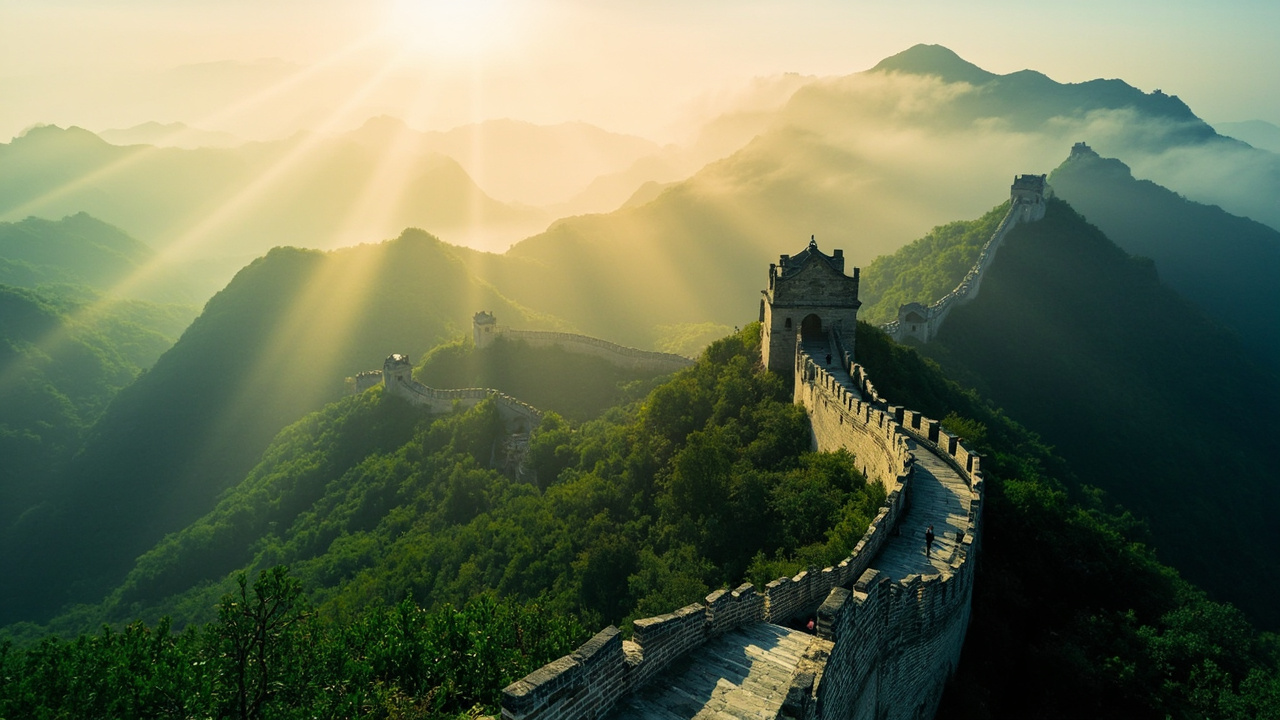
The wall here snakes along the ridge in a way that feels endless, and the watchtowers are well preserved. On a clear day you can see forested hills in every direction. It’s the version of the Great Wall that makes you understand why people built it in the first place.
- 馃搷 Location: Huairou District, about 70 km (43 mi) northeast of central Beijing
- 馃帿 Entry fee: $15 (CNY 110) for the wall, plus $15 (CNY 110) round-trip cable car or chairlift. The toboggan down is included with the chairlift ticket.
- 馃晲 Opening hours: 7:30 AM to 6:00 PM (summer), 8:00 AM to 5:00 PM (winter)
- 馃殕 How to get there: Take a direct bus from Dongzhimen Station (Line 2, Exit B) or book a private driver through your hotel. The bus takes about 2 hours and costs $4 (CNY 30). For a private car, expect $60-80 (CNY 430-580) round trip.
- 鈴?When to visit: Weekday mornings, ideally before 9 AM. April-May and September-October have the best weather. Avoid Chinese national holidays at all costs.
- 馃挕 Insider tips: Bring your passport for the ticket counter. The cable car and chairlift are separate lines, and the chairlift is slower but more fun. There’s a decent restaurant at the base, but the noodles at the small stall near the cable car station are better.
- I once watched a guy in full business attire, briefcase and all, hike the wall in dress shoes. He made it about 200 meters before sitting down and calling someone. I still think about him.
Terracotta Warriors — the reason you came to Xi’an
I’ll be honest: the first time I saw the Terracotta Warriors, I cried a little. It’s not the individual figures that get you. It’s the sheer scale of Pit 1, the rows and rows of soldiers stretching into the distance, each one with a different face. You can’t prepare for it. You just stand there and feel small.
The site is about an hour outside Xi’an, and it’s the single most important archaeological site in China. The warriors were buried with the first emperor, Qin Shi Huang, in 210 BC, and they were only discovered in 1974 by farmers digging a well. The museum complex has three pits plus a bronze chariot exhibition. Pit 1 is the showstopper.
- 馃搷 Location: Lintong District, about 35 km (22 mi) east of Xi’an
- 馃帿 Entry fee: $20 (CNY 145) in peak season, $17 (CNY 120) in winter
- 馃晲 Opening hours: 8:30 AM to 5:00 PM (March-November), 8:30 AM to 4:30 PM (December-February)
- 馃殕 How to get there: Take Metro Line 9 to Huaqingchi Station, then transfer to bus 602 or a taxi (about 10 minutes). Alternatively, take the direct tourist bus from Xi’an Railway Station (north square). A private driver from central Xi’an costs about $40-50 (CNY 290-360) round trip.
- 鈴?When to visit: The first slot at 8:30 AM, before the tour buses arrive. Weekdays are significantly quieter than weekends.
- 馃挕 Insider tips: Go to Pit 1 first, then Pit 3 (smallest), then Pit 2. The bronze chariots are in a separate building and worth the extra walk. Hire a guide at the entrance or download an audio guide app. The souvenir shops outside are overpriced; the ones inside the museum are cheaper. And skip the “fake warriors” photo op outside the main entrance, it’s a tourist trap.
- I met a retired teacher from Xi’an who comes to the museum every month just to look at the faces. She told me she always finds a new one she hasn’t noticed before. I believe her.
Forbidden City — book early or don’t bother
The Forbidden City is the largest imperial palace complex in the world, and it’s genuinely overwhelming. 980 buildings, 8,700 rooms, and more red walls and golden roofs than you can process. But here’s the thing: you can’t just show up. You need to book tickets online at least 7 days in advance during peak season, and they sell out fast. I learned this the hard way when I tried to take my parents in 2023 and we ended up doing the Jingshan Park view instead.
When you do get in, walk through the Meridian Gate, cross the Golden Water Bridge, and make your way north through the halls. The further you go, the quieter it gets. Most tour groups stick to the central axis, so the side halls and gardens are where you’ll find space to breathe.
- 馃搷 Location: Dongcheng District, directly north of Tiananmen Square
- 馃帿 Entry fee: $10 (CNY 60) April-October, free November-March. Audio guide $5 (CNY 40).
- 馃晲 Opening hours: 8:30 AM to 5:00 PM (April-October), 8:30 AM to 4:30 PM (November-March). Closed Mondays.
- 馃殕 How to get there: Take Metro Line 1 to Tiananmen East Station, Exit B, and walk north. You’ll need to pass through security at Tiananmen Square, so bring your passport.
- 鈴?When to visit: Weekdays, early morning. The crowds peak between 10 AM and 2 PM.
- 馃挕 Insider tips: Book tickets on the official website or through the WeChat mini-program. Bring your passport, they check it at the gate. The Imperial Garden at the north end is quieter after 3 PM. If you want the classic photo of the golden roofs, climb Jingshan Park across the street afterward. And if you’re here in winter, the snow makes the red walls look incredible.
- I once saw a woman in full hanfu (traditional Chinese dress) doing a photoshoot in the Hall of Supreme Harmony, and a security guard politely but firmly told her to move along. The look on her face was pure indignation. Rules are rules, even for the aesthetic.
Chengdu Panda Base — go at dawn, beat the crowds
The pandas are the reason most people come to Chengdu, and the base is worth it. But the crowds are no joke. I’ve been three times, and the difference between arriving at 7:30 AM and 10 AM is night and day. The pandas are also more active in the morning. By midday, they’re mostly sleeping in awkward positions, which is still cute, but not the same.
The base is about 10 km (6 mi) north of the city center, and it’s home to more than 80 giant pandas, plus red pandas, which are somehow even more adorable. The breeding center is doing real conservation work, and you can see the nursery through glass windows.
- 馃搷 Location: Chenghua District, about 10 km (6 mi) north of central Chengdu
- 馃帿 Entry fee: $7 (CNY 55)
- 馃晲 Opening hours: 7:30 AM to 6:00 PM (April-November), 8:00 AM to 5:30 PM (December-March)
- 馃殕 How to get there: Take Metro Line 3 to Panda Avenue Station, Exit B, then walk about 10 minutes or take a shuttle bus. A taxi from the city center costs about $6-8 (CNY 45-60).
- 鈴?When to visit: Weekdays, at opening time. The pandas are most active in the morning, and the crowds arrive around 9 AM.
- 馃挕 Insider tips: The shuttle bus inside the park costs $2 (CNY 10) and takes you to the top, so you can walk down. The red panda area is less crowded than the giant panda enclosures. Bring snacks and water, the food options inside are limited and overpriced. And if you want to see the baby pandas, go between July and September when the newborns are in the nursery.
- I watched a toddler have a full meltdown because his parents wouldn’t let him take a panda home. His dad just shrugged at me and said, “Every day.” I felt that.
Xi’an City Wall — rent a bike, see the whole old city
The City Wall is the most complete ancient city wall in China, and it’s the best way to get oriented in Xi’an. It’s 13.7 km (8.5 mi) around, and you can walk it, but renting a bike is the move. I’ve done both. The bike takes about 1.5 hours with stops. The walk takes most of the afternoon and your feet will hate you.
The wall is 12 meters (39 ft) tall and wide enough for six horses to ride abreast, which was the original purpose. From the top, you get views of the old city on one side and the modern skyline on the other. It’s a strange, wonderful contrast.
- 馃搷 Location: The wall surrounds the old city of Xi’an, with gates at the north, south, east, and west
- 馃帿 Entry fee: $7 (CNY 54), bike rental $6 (CNY 45) for 2 hours
- 馃晲 Opening hours: 8:00 AM to 10:00 PM (south gate), other gates close earlier
- 馃殕 How to get there: Take Metro Line 2 to Yongningmen Station (South Gate), Exit D, and walk to the ticket office. The south gate is the main entrance.
- 鈴?When to visit: Late afternoon, around 4-5 PM, so you catch the golden hour light and the sunset. The wall is also beautiful at night when it’s lit up.
- 馃挕 Insider tips: The bike rental requires a deposit, and they’ll hold your passport or a cash deposit. The south gate has the best views. There are snack stalls on the wall near the south gate, but they’re overpriced. Bring your own water. And if you’re not up for the full loop, you can rent a bike for just one section and return it at any gate.
- I once cycled the entire wall in a light rain, and it was one of the most peaceful experiences I’ve had in China. The streets below were quiet, the lights were blurry, and I felt like I had the whole city to myself.
Temple of Heaven — where Beijing comes alive at dawn
The Temple of Heaven is technically a tourist site, but in the morning, it’s a local park. Hundreds of retirees gather at dawn to practice tai chi, play Chinese chess, sing opera, and dance. It’s the best free show in Beijing, and it’s happening every single day.
The temple itself is a masterpiece of Ming Dynasty architecture. The Hall of Prayer for Good Harvests is the iconic round building with the blue roof, and it’s one of the most photographed structures in China. But the real magic is the park around it.
- 馃搷 Location: Dongcheng District, south of the city center
- 馃帿 Entry fee: $5 (CNY 34) for the park, $8 (CNY 60) for the full ticket including the main halls
- 馃晲 Opening hours: 6:00 AM to 9:30 PM (park), 8:00 AM to 5:30 PM (main halls, closed Mondays)
- 馃殕 How to get there: Take Metro Line 5 to Tiantan Dongmen Station, Exit A, and walk 5 minutes to the east gate.
- 鈴?When to visit: 6-8 AM for the local scene, or late afternoon for the golden light on the halls. Weekdays are quieter.
- 馃挕 Insider tips: The Echo Wall and the Circular Mound are part of the main hall ticket, so don’t skip them. The park is free to enter before 8 AM if you just want to see the morning activities. Bring small change for the vendors selling tea and snacks. And if you see a group doing the traditional fan dance, stop and watch. It’s mesmerizing.
- I joined a group of retirees doing tai chi one morning, and they were patient enough to teach me a few moves. I was terrible. They laughed. It was the best part of my week.
Leshan Giant Buddha — the 71-meter face that humbles you
The Leshan Giant Buddha is a day trip from Chengdu, and it’s worth every minute of the 2-hour train ride. The Buddha is 71 meters (233 ft) tall, carved into a cliff face where three rivers converge, and it’s been sitting there since 803 AD. It’s the largest stone Buddha in the world, and it’s genuinely awe-inspiring.
The tricky part is the queue. To see the Buddha from below, you have to descend a narrow staircase carved into the cliff, and it can take 1-2 hours during peak times. The views from the top are good, but the view from the bottom, looking up at that massive face, is something else.
- 馃搷 Location: Leshan, about 150 km (93 mi) south of Chengdu
- 馃帿 Entry fee: $12 (CNY 80)
- 馃晲 Opening hours: 7:30 AM to 6:30 PM (April-October), 8:00 AM to 5:30 PM (November-March)
- 馃殕 How to get there: Take the high-speed train from Chengdu East Station to Leshan Station (about 1 hour, $15-20 / CNY 110-145), then take bus 601 or a taxi to the scenic area.
- 鈴?When to visit: Weekdays, first thing in the morning. The queue for the staircase gets longer as the day goes on.
- 馃挕 Insider tips: Take the boat tour ($10 / CNY 70) for the best view of the full Buddha from the river. It’s a separate ticket, but it’s worth it. The stairs down to the Buddha’s feet are steep and narrow, so wear good shoes. And bring a hat, there’s not much shade.
- I got stuck in the staircase queue for 45 minutes behind a group of monks who were taking photos of every single step. I was annoyed at first. Then I realized they were probably having a better day than me.
Chengdu People’s Park — the art of doing nothing
People’s Park is not a tourist attraction. It’s a place where Chengdu locals go to do nothing, and they do it with remarkable dedication. There’s a teahouse in the center of the park where you can sit for hours with a cup of jasmine tea, watch the world go by, and get your ears cleaned by a guy with a terrifying set of metal tools. Yes, that’s a real thing. I tried it once. It’s weirdly relaxing.
The park is also home to the famous “Matchmaking Corner,” where parents gather on weekends to exchange photos and resumes of their single children. It’s a fascinating window into Chinese society, and you can just stand there and watch.
- 馃搷 Location: Qingyang District, central Chengdu
- 馃帿 Entry fee: Free
- 馃晲 Opening hours: Open all day
- 馃殕 How to get there: Take Metro Line 2 to People’s Park Station, Exit A, and walk 5 minutes.
- 鈴?When to visit: Any afternoon. The teahouse is busiest on weekends, which is also when the Matchmaking Corner is active.
- 馃挕 Insider tips: The teahouse charges about $2-3 (CNY 15-20) for a cup of tea with free refills. The ear cleaning service costs about $5 (CNY 35). The snacks at the park entrance are better than the ones inside. And if you want to see the Matchmaking Corner, go on a Saturday or Sunday afternoon.
- I sat in the teahouse for two hours one afternoon, just watching a group of old men play mahjong. They didn’t say a word to each other for the first hour. Then one of them won a big hand and they all erupted in laughter. It was the most peaceful thing I’ve seen in China.
Summer Palace — the escape from Beijing’s chaos
The Summer Palace is where the Qing Dynasty emperors went to escape the summer heat, and it’s still the best escape from Beijing’s chaos. The centerpiece is Kunming Lake, with the Long Corridor running along its northern shore. The corridor is 728 meters (2,388 ft) long and covered in 14,000 painted scenes. It’s the longest painted corridor in the world.
The palace is big. Really big. You could spend a full day here and not see everything. The key is to pick a few highlights: the Long Corridor, the Marble Boat, the Tower of Buddhist Incense on Longevity Hill, and the Seventeen-Arch Bridge.
- 馃搷 Location: Haidian District, about 15 km (9 mi) northwest of central Beijing
- 馃帿 Entry fee: $9 (CNY 60) peak season, $5 (CNY 30) winter. The combined ticket including the gardens is $14 (CNY 100).
- 馃晲 Opening hours: 6:30 AM to 6:00 PM (April-October), 7:00 AM to 5:00 PM (November-March)
- 馃殕 How to get there: Take Metro Line 4 to Beigongmen Station, Exit D, and walk 5 minutes to the north gate.
- 鈴?When to visit: Weekdays, late afternoon. The light on the lake is beautiful around 4-5 PM, and the crowds thin out.
- 馃挕 Insider tips: Rent a boat on the lake, it’s the best way to see the palace from a different angle. The Suzhou Street shopping area inside the park is a reconstruction, but it’s fun to walk through. Bring snacks, the food inside is overpriced and mediocre. And if you’re visiting in winter, the lake freezes over and locals go ice skating on it. It’s a whole different experience.
- I once took a boat ride on the lake with a group of Chinese tourists who insisted on taking photos of me because I was the only foreigner on board. They were lovely about it. I got a lot of compliments on my jacket.
Jinli Street — the chaos you’ll either love or hate
Jinli Street is a reconstructed ancient street in Chengdu, and it’s a tourist trap. I’ll say it plainly. But it’s also a lot of fun if you go in with the right expectations. The street is lined with shops selling snacks, souvenirs, and traditional crafts, and the atmosphere is pure chaos. Crowds, noise, smells, and more skewered things than you can count.
The food is the main draw. You can eat your way down the street, trying everything from spicy tofu to sugar paintings to stinky tofu (which is an acquired taste I have not acquired). The prices are higher than elsewhere in Chengdu, but it’s still cheap by Western standards.
- 馃搷 Location: Wuhou District, central Chengdu, next to the Wuhou Shrine
- 馃帿 Entry fee: Free
- 馃晲 Opening hours: Open all day, but the shops and food stalls are most active in the evening
- 馃殕 How to get there: Take Metro Line 3 to Gaoshengqiao Station, Exit C, and walk 10 minutes. A taxi from the city center costs about $3-4 (CNY 20-30).
- 鈴?When to visit: Evening, after 6 PM, when the lanterns are lit and the street is at its liveliest.
- 馃挕 Insider tips: The food stalls at the entrance are the most crowded. Go deeper into the street for shorter lines. The sugar paintings (a traditional art form) make great gifts. And if you want to try the famous Chengdu hotpot, skip the restaurants on Jinli and go to a dedicated hotpot place elsewhere in the city.
- I tried stinky tofu here for the first time, and I immediately regretted it. The vendor laughed at my face and gave me a free piece of candied hawthorn to wash it down. I still think about that kindness.
How to get between the three cities
The high-speed rail is the way to go. Beijing to Xi’an takes about 4.5 hours on the G-series trains, with prices from $78 (CNY 560) for second class. Xi’an to Chengdu takes about 3.5 hours, from $65 (CNY 470). Both routes are comfortable, on time, and a lot less stressful than flying when you factor in airport security and transfers.
Book your train tickets through the official China Railway app or through a third-party service like Trip.com. You’ll need your passport number, and you’ll need to collect paper tickets at the station if you book through some services. The stations are big, so give yourself at least 45 minutes before departure. For more details on the system, check out my guide to high-speed rail in China.
FAQ summary
The Beijing-Xi’an-Chengdu route is the best first-time itinerary for China, taking 10-14 days and costing $1,200-$1,800 per person. High-speed rail connects all three cities, with Beijing to Xi’an taking 4.5 hours and Xi’an to Chengdu taking 3.5 hours. Most Western passport holders can enter China visa-free for up to 30 days in 2026, and you’ll need Alipay or WeChat Pay plus a VPN for Google services. Book the Forbidden City and Terracotta Warriors in advance, and visit the pandas at opening time.
FAQ
Q: Do I need a visa for China in 2026? A: Most visitors from the US, UK, Australia, Canada, and 50+ other countries can enter China visa-free for up to 30 days through 2026. Check the latest visa-free policy before booking, as rules can change. If your country isn’t on the list, you’ll need to apply for a standard tourist visa (L visa) at your nearest Chinese embassy.
Q: How many days do I need for this route? A: I’d recommend 10-14 days. Spend 3-4 days in Beijing, 3 days in Xi’an, and 3-4 days in Chengdu, plus a day for travel between cities. If you’re short on time, you can do it in 7 days, but you’ll be rushing and missing out on the slower moments that make these cities special.
Q: Is it safe to travel in China as a tourist? A: Yes, China is very safe for tourists. Violent crime is rare, and the biggest risks are pickpocketing in crowded areas and getting scammed by taxi drivers. Keep your passport on you (hotels may ask for it), use official taxis or ride-hailing apps, and you’ll be fine.
Q: Do I need to speak Chinese? A: No, but it helps. English is not widely spoken outside of major tourist sites and hotels. Download a translation app like Google Translate (which works offline if you download the language pack) or Pleco for Chinese. You’ll also want a SIM card with a VPN set up before you arrive, since Google, WhatsApp, and Instagram are blocked in China.
Q: How do I pay for things in China? A: Mobile payments are king. Set up Alipay and WeChat Pay before you arrive and link your international credit card. Cash is accepted in most places but you’ll get strange looks for using it. Some smaller vendors only accept mobile payments, so don’t skip this step.
Q: What’s the best time of year to do this route? A: April-May and September-October are the best months. The weather is mild, the skies are clearer, and you avoid the summer heat and the winter cold. July-August is hot and crowded, and December-February is cold, especially in Beijing and Xi’an. Chinese national holidays (early October and Chinese New Year) are best avoided entirely.
Q: Is the food too spicy in Chengdu? A: Sichuan food is famously spicy, but you can find mild options everywhere. Just say “bu la” (not spicy) when ordering, and most restaurants will accommodate. The hotpot is the must-try, and you can choose a split pot with a mild broth on one side and spicy on the other. Your taste buds will thank you.
The Honest Wrap-up
This route is for anyone who wants to see the big three of China in one trip. It’s the classic for a reason, and it works. But it’s also a lot. Three cities, three cultures, and more history than you can process. My advice is to slow down. Don’t try to see everything. Pick one thing each day that you really want to see, and let the rest happen.
And when you’re in Chengdu, sit in the teahouse for an hour and do nothing. That’s the China you’ll remember. Not the crowds at the Forbidden City, not the queue at the Buddha. The tea, the rain, the persimmon. Those are the moments that last.
Topics
More guides you may like

Top 10 Bridges in China
China's bridges are engineering marvels spanning mountains, rivers, and seas. Here are 10 of the most spectacular, from ancient stone to modern steel.
8 min read

Top 10 Buddhist Sites in China
From the Leshan Giant Buddha to the Dunhuang Caves, these 10 Buddhist sites represent 2,000 years of China's spiritual heritage.
9 min read
Top 10 Day Trips from Beijing You Shouldn't Miss
Beijing is packed with history, but some of China's best experiences are just a few hours away. Here are 10 day trips that will transform your visit.
9 min read
Top 10 Hidden Gems in China Off the Beaten Path
Beyond the Great Wall and Terracotta Warriors, China has incredible hidden destinations few tourists ever reach. Here are 10 underrated gems worth the detour.
9 min read
Top 10 Markets and Shopping Streets in China
From Shanghai's Bund to Beijing's Silk Street - 10 markets where foreigners can haggle, explore, and bring home authentic Chinese goods.
9 min read
Top 10 Museums in China You Shouldn't Miss
China's museums span 5,000 years of civilization. These 10 - from the Palace Museum to Xi'an's terracotta gallery - are unmissable for culture lovers.
9 min read