
China Snow Festival Harbin
The taxi driver from the airport looked at me like I was insane when I told him my destination. "You came all the way from Beijing...
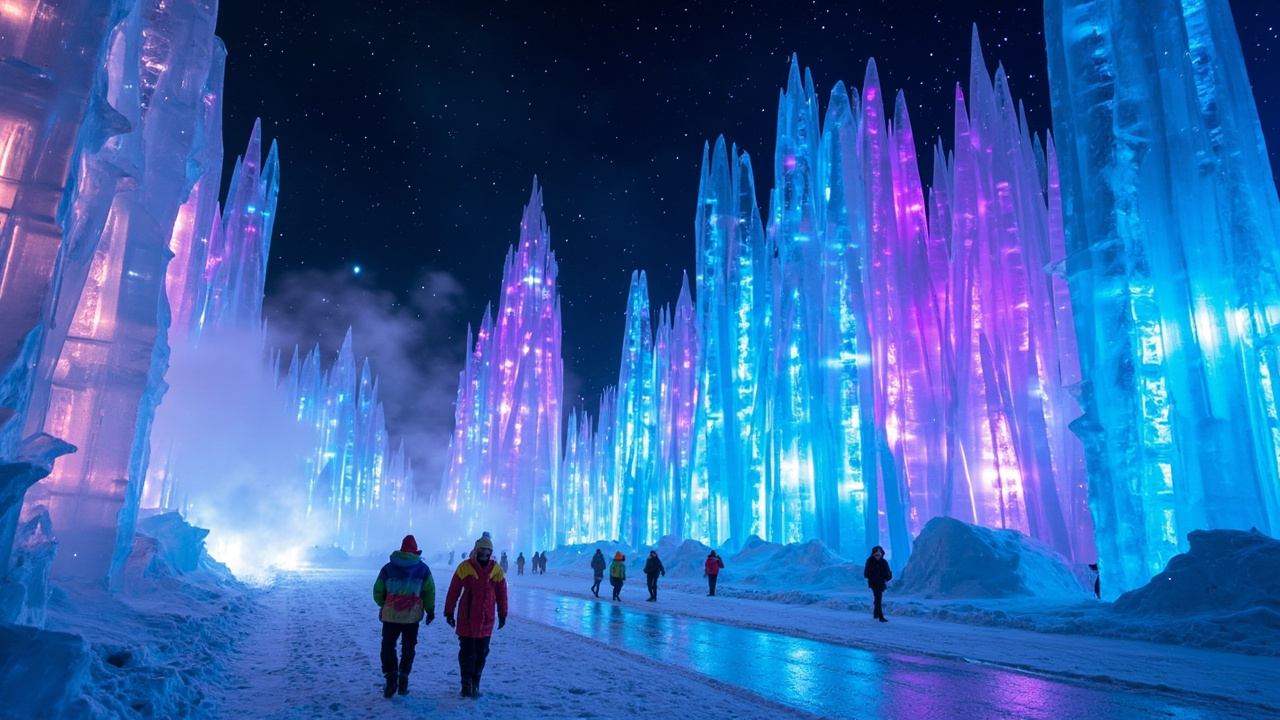
The taxi driver from the airport looked at me like I was insane when I told him my destination. “You came all the way from Beijing… for ice?” he asked, half-laughing, as he pointed his windshield wipers at the snow coming down sideways. It was minus 22 degrees Fahrenheit, my eyelashes were freezing together, and I had never been happier to see a city made entirely of frozen water.
That was my first Harbin Ice and Snow Festival, and I’ve been back three times since. This city in China’s far northeast doesn’t just build snow sculptures. It builds entire cathedrals out of ice blocks carved from the Songhua River, lights them up like a fever dream, and dares you to stay outside long enough to see it all. The festival runs from early January through late February, with the main ice world staying open until the ice starts melting in early March.
This guide covers the ten things you actually need to see and do, how to get around without freezing, what it costs, and the mistakes I made so you don’t have to. I’ll be honest about what’s worth your money and what you can skip.
Quick answer
The Harbin International Ice and Snow Festival runs from January 5 to late February 2026, with the main attractions being Ice and Snow World (冰雪大世界), Sun Island Snow Expo, and Zhaolin Park Ice Lanterns. Most international visitors can enter China visa-free for up to 30 days through the 2026 visa-free transit policy, and the festival costs roughly $30–50 (¥215–360) per major attraction. The single most important thing to know: book your trip between January 5 and February 10, when all attractions are fully built and the weather is reliably cold enough for the ice to hold.
The Short Version
If you only have 90 seconds, here’s the deal. Harbin is brutally cold in January, often hitting minus 20°F (-29°C), but that’s exactly what makes it magical. The Ice and Snow World at night is the main event, and it’s worth every penny. Sun Island during the day shows what artists can do with snow. And the Russian-influenced old town on Central Street gives you a reason to warm up with hot dumplings and Harbin beer between outdoor sessions. Budget $100–150 (¥720–1080) per day for tickets, food, and transport. Dress like you’re going to the Arctic, not a ski resort. And whatever you do, don’t skip the ice slides.
How I Picked These
I’ve visited Harbin in January three times over the past seven years, including once during Chinese New Year week (busy, don’t do it) and once during a cold snap that hit minus 35°F (-37°C). I’ve walked the frozen Songhua River, argued with ticket sellers, gotten lost in the snow maze at Sun Island, and eaten more hot pot in one week than most people eat in a year. I talked to local tour guides, taxi drivers, and students at Harbin Institute of Technology about what they actually do during festival season versus what’s just for tourists. This list reflects what I’d tell a friend visiting for the first time, not what the tourism board wants you to see.
Comparison Table
| Rank | Place | Best For | Approx Cost (USD) | Time Needed | When to Go |
|---|---|---|---|---|---|
| 1 | Ice and Snow World | The main spectacle | $30 (¥215) | 3-4 hours | Night, Jan-Feb |
| 2 | Sun Island Snow Expo | Snow sculptures in daylight | $25 (¥180) | 2-3 hours | Late morning |
| 3 | Zhaolin Park Ice Lanterns | Classic ice lantern tradition | $10 (¥70) | 1-2 hours | Evening |
| 4 | Central Street | Architecture, food, people-watching | Free | 2-3 hours | Afternoon |
| 5 | Siberian Tiger Park | Seeing tigers up close | $15 (¥110) | 2 hours | Morning feeding |
| 6 | Songhua River Activities | Ice fishing, sledding, skating | Free-$10 | 1-2 hours | Daytime |
| 7 | Harbin Grand Theatre | Modern architecture, photo ops | Free outside | 1 hour | Late afternoon |
| 8 | Saint Sophia Cathedral | Russian history, photos | $5 (¥35) inside | 30-45 min | Morning light |
| 9 | Russian Town | Quirky cultural immersion | $10 (¥70) | 1-2 hours | Afternoon |
| 10 | Harbin Polarland | Beluga whales, polar bears | $20 (¥145) | 2 hours | Midday show |
Ice and Snow World — The Reason You Came
The first time I walked through the gates of Ice and Snow World, I forgot I was cold. That doesn’t sound impressive until you understand that it was minus 25°F and I’d been shivering for three days straight. The ice structures tower over you, some reaching 150 feet high, carved into replicas of the Forbidden City, Russian cathedrals, and fantasy castles. Everything glows from within, lit by LED lights embedded in the frozen blocks.
This is the largest ice architecture park in the world, and it’s rebuilt every single year with a new theme. The 2026 edition is expected to be bigger than ever, with the park expanding its footprint along the Songhua River. The ice blocks come from the river itself, cut into massive slabs and transported by truck before being sculpted into place.
The best experience is simple: arrive at 4 PM when it opens, watch the sunset turn the ice pink, then stay as darkness falls and the lights come on. The transformation is genuinely emotional. I’ve seen grown adults cry at the sheer scale of it.
📍 Location: North bank of the Songhua River, Songbei District 🎫 Entry fee: $30 (¥215) for evening tickets; slightly cheaper before 2 PM 🕒 Opening hours: 11 AM to 9:30 PM daily, January through late February 🚕 How to get there: Take Metro Line 2 to Ice and Snow World Station, Exit 3. The station was built specifically for this attraction. Or take bus 29 from Central Street area. 🌡️ When to visit: Night is non-negotiable. The lights are the whole point. Weekdays are less crowded than weekends. 💡 Insider tips: Rent a set of ice spikes for your shoes at the entrance for about $3 (¥20). The paths get polished to mirror smoothness by midnight. Buy hand warmers in bulk before you arrive, they sell out near the exit. Bring a power bank, your phone battery dies fast in extreme cold. The ice slides near the back are less crowded and just as fast. 🍜 I ate a candied hawthorn stick while walking through the ice castle maze, and it froze solid within two minutes. Eating it was like biting into glass. I don’t regret it.
Sun Island Snow Expo — Where Snow Becomes Art
If Ice and Snow World is the rock concert, Sun Island is the art gallery. This is where you see what master sculptors can do with snow rather than ice. The sculptures here are massive, intricate, and somehow delicate all at once. I watched one artist carve a phoenix’s feathers with what looked like a modified kitchen knife, and the detail was staggering.
The expo runs from late December through February, and the quality varies by year. Some years are spectacular. Others feel like they ran out of budget halfway through. The 2025 edition was one of the best I’ve seen, with a full-scale replica of a Tibetan monastery carved entirely from packed snow.
The key difference from Ice and Snow World: you need daylight to appreciate this. The snow sculptures are white on white, and the details only show in natural light. Go in the late morning when the sun is high enough to create shadows across the carved surfaces.
📍 Location: Sun Island Scenic Area, across the river from downtown 🎫 Entry fee: $25 (¥180) for the snow sculpture area; the island itself has free walking paths 🕒 Opening hours: 8 AM to 5 PM daily 🚕 How to get there: Take Metro Line 2 to Sun Island Station, Exit 1. Or take the cable car across the Songhua River from the city side, which is worth doing once. 🌡️ When to visit: Late morning on a weekday. The light is best and the tour groups haven’t arrived yet. 💡 Insider tips: The snow maze at the back is surprisingly challenging and almost nobody does it. The best photo spot is the elevated platform near the main entrance, not the ground level where everyone crowds. Bring sunglasses, the glare off the snow is intense. The indoor exhibition halls have warm-up areas with actual seating. The ice cream stand near the exit sells frozen yogurt that somehow doesn’t freeze solid in the cold. 🐅 I met a sculptor from Jilin who’d been carving snow for 22 years. He told me the secret is packing the snow at exactly the right temperature, too warm and it won’t hold detail, too cold and it cracks. He pointed at a dragon’s whisker thinner than my finger and shrugged.
Zhaolin Park Ice Lanterns — The Original Festival
Before the mega-parks and the international crowds, there was Zhaolin Park. This is where the Harbin Ice Festival started in 1963, with simple lanterns carved from ice and lit with candles. The tradition continues every winter, and while the scale is smaller than Ice and Snow World, the charm is completely different.
The park fills with traditional ice lanterns, smaller sculptures, and ice slides that feel like they belong in a different era. It’s less polished, more local. On any given night, you’ll see families with kids, old couples walking arm in arm, and teenagers taking photos for their social media accounts.
I like Zhaolin Park because it feels like the festival before it became an international phenomenon. The ice here is less engineered, more handmade. You can see the tool marks in the blocks, the small imperfections that make it feel human.
📍 Location: Zhaolin Park, Daoli District, near the river 🎫 Entry fee: $10 (¥70) 🕒 Opening hours: 1 PM to 9 PM daily during festival season 🚕 How to get there: From Central Street, walk east for 10 minutes. Or take bus 8 or 64 to Zhaolin Park stop. 🌡️ When to visit: Evening, after the lights come on at 4:30 PM. The park is smaller than the big attractions, so you can cover it in an hour. 💡 Insider tips: The ice slides here are free and much shorter lines than the big ones at Ice and Snow World. The lanterns near the lake reflect beautifully on the frozen surface, best photo spot in the park. There’s a small food court near the north gate with hot soybean milk that will save your life. The park gets crowded after 7 PM with local families, go earlier. 🥟 I bought a bag of frozen dumplings from a vendor near the south gate and ate them while watching an old man skate figure eights on the park’s ice rink. He was at least 70 and moved like he’d been doing it his whole life.
Central Street — The Heart of Harbin
Central Street is a pedestrian boulevard that looks like it was airlifted from early 20th century Russia. Baroque and Byzantine facades line both sides, housing bakeries selling Russian bread, souvenir shops, and the famous Harbin sausage stands. The street runs about a mile from the flood control monument at the river down to the old town.
This is where you come to warm up, eat, and watch the city’s daily life unfold. In January, the street is packed with tourists wrapped in every conceivable type of winter gear, steam rising from their mouths as they eat grilled skewers and drink hot drinks from paper cups.
The street is free, open 24 hours, and best visited in the afternoon when the light hits the facades and the food stalls are in full swing. The ice sculptures that line the street during the festival are smaller but free, and they’re replaced regularly as they wear down.
📍 Location: Daoli District, running from Jingwei Street to the Songhua River 🎫 Entry fee: Free 🕒 Opening hours: Always open; shops typically 9 AM to 9 PM 🚕 How to get there: Take Metro Line 2 to Central Street Station, Exit 1. Walk straight ahead and you’ll hit the pedestrian zone. 🌡️ When to visit: Late afternoon is best. The light is golden, the street is lively, and you can watch the sunset over the frozen river at the north end. 💡 Insider tips: The Modern Hotel at the south end has a famous Russian restaurant on the second floor that’s worth the splurge. The Harbin sausage stands near the river end are the originals, the ones further south are tourist traps. The ice cream shop called Madison sells frozen yogurt that locals eat even in minus 20 weather. The side alleys off Central Street have cheaper food and fewer crowds. 🍺 I tried Harbin beer straight from a street vendor’s cooler, the bottle so cold it hurt my hand through my glove. It tasted like nothing I’d ever had, crisp and clean, and I understood why the locals drink it year-round.
Siberian Tiger Park — The Unexpected Highlight
I almost skipped this one. I thought it would be a sad zoo experience. I was wrong. The Siberian Tiger Park is a breeding and conservation center that houses over 500 Amur tigers, and the way you see them is from a bus that drives through their enclosure while they literally climb onto the vehicle.
The tigers here are not tame, but they are accustomed to humans. The bus has bars on the windows, and the tigers will press their faces against them, looking for the meat that the guides throw out through special slots. It’s terrifying and thrilling in equal measure.
The best time to visit is during the feeding sessions, which happen several times a day. The guides toss chunks of meat into the enclosure, and you watch the tigers sprint, jump, and fight for their food. It’s raw in a way that feels honest.
📍 Location: Songbei District, about 20 minutes from downtown 🎫 Entry fee: $15 (¥110) for the bus tour; $25 (¥180) for the “close encounter” option 🕒 Opening hours: 8:30 AM to 4:30 PM daily 🚕 How to get there: Take Metro Line 2 to Tiger Park Station, Exit 1. The park entrance is a 5-minute walk from the station. 🌡️ When to visit: Morning feeding sessions are the most active. The tigers are lazier in the afternoon. 💡 Insider tips: The “close encounter” ticket lets you feed the tigers through a special cage on the bus, worth it if you want the full experience. The park also has lions and leopards, but the tigers are the main event. The gift shop sells tiger-themed souvenirs, but the prices are inflated, buy elsewhere. The bus ride takes about 30 minutes and you’ll want to sit on the left side for the best views. 🐅 A tiger jumped onto the hood of our bus and stared through the windshield at me for what felt like a full minute. The guide laughed and said, “He’s checking if you’re food.” I have never felt more alive.
Songhua River Activities — The Frozen Playground
When the Songhua River freezes solid, it becomes the city’s biggest playground. Locals set up ice rinks, sledding hills, and even ice fishing holes right on the river surface. You can rent ice bikes, wooden sleds, or just walk out onto the ice and feel like you’re in another world.
The river activities are scattered along the stretch between the flood control monument and the Ice and Snow World. You’ll see families pulling their kids on sleds, teenagers playing ice hockey, and old men sitting on stools next to holes in the ice, fishing for the small fish that live beneath.
This is free to access, though individual activities cost money. The ice bikes are about $5 (¥35) for 30 minutes, and the sleds are similar. You can also walk across the river to Sun Island if you’re feeling adventurous, though the cable car is warmer.
📍 Location: Songhua River, between the flood control monument and Ice and Snow World 🎫 Entry fee: Free to walk on the ice; activities $3–10 (¥20–70) 🕒 Opening hours: Daylight hours, roughly 8 AM to 4 PM 🚕 How to get there: Walk north from Central Street to the flood control monument, then step onto the ice. 🌡️ When to visit: Midday when the sun is highest. The river is coldest and most crowded in the early morning. 💡 Insider tips: The ice is thick enough to drive a truck on, so don’t worry about falling through. The ice fishing guys will sometimes let you try if you’re friendly and offer to buy them a drink. The sledding hills near the riverbank are steeper and more fun than the ones in the parks. Wear ice cleats, the river surface is polished smooth by thousands of feet. 🐟 An old fisherman named Wang offered me a sip of his baijiu while we watched his line. He’d been fishing the same spot for 30 years and said the fish taste better in winter because they’re “lazy and fat.”
Harbin Grand Theatre — Architecture Worth the Trip
The Harbin Grand Theatre looks like a sand dune made of glass and steel, rising from the wetlands on the north side of the river. Designed by MAD Architects, it’s one of the most striking modern buildings in China, and it’s completely free to photograph from the outside.
The building’s curves echo the surrounding landscape, and when it’s covered in snow, it looks like something from another planet. The interior is equally impressive, with a sweeping staircase and performance halls that host opera, ballet, and symphony concerts throughout the year.
During the festival, the theatre hosts special performances, but even if you don’t catch a show, the building itself is worth the trip. The surrounding wetland park has walking paths that offer different views of the structure.
📍 Location: Songbei District, near the river 🎫 Entry fee: Free to view exterior; performances $15–80 (¥110–575) 🕒 Opening hours: Exterior always accessible; box office 10 AM to 6 PM 🚕 How to get there: Take Metro Line 2 to Grand Theatre Station, Exit 2. Walk 10 minutes east through the park. 🌡️ When to visit: Late afternoon for the best light. The building glows at dusk. 💡 Insider tips: The best photo spot is from the bridge to the east, which gives you the full silhouette. The wetland paths are less crowded than the main approach. Check the performance schedule online, some shows are surprisingly affordable. The cafe inside has good coffee and a warm place to sit. 📸 I spent an hour photographing this building as the light changed, and a local photographer named Li showed me his favorite angle from the riverbank. He’d been shooting the theatre for years and still found new perspectives.
Saint Sophia Cathedral — A Piece of Russia in China
Saint Sophia Cathedral is the most photographed building in Harbin, and for good reason. The green onion domes and red brick walls look like they were transplanted from Moscow, which they basically were. Built in 1907 by Russian settlers, the cathedral now serves as a museum of Harbin’s architectural history.
The exterior is free to photograph, and it’s spectacular at any time of day. The interior costs a small fee and houses a modest museum with photographs and artifacts from the city’s Russian period. It’s not a functioning church anymore, so don’t expect religious services.
The square around the cathedral is always lively, with street performers, food vendors, and locals practicing their English on tourists. It’s a good place to warm up and people-watch.
📍 Location: 88 Toulong Street, Daoli District 🎫 Entry fee: $5 (¥35) for interior; exterior free 🕒 Opening hours: 8:30 AM to 5 PM daily, closed Mondays 🚕 How to get there: Take Metro Line 2 to Central Street Station, Exit 2. Walk 5 minutes south. 🌡️ When to visit: Early morning for the best light on the red brick. The square gets crowded after 10 AM. 💡 Insider tips: The museum inside is small, don’t feel obligated to pay if you just want photos. The best angle is from the southwest corner of the square, which captures the domes against the sky. The pigeons in the square are used to being fed, but the vendors selling feed overcharge. There’s a Starbucks across the street with good window seats for watching the square. 📷 A Chinese tourist asked me to take her photo in front of the cathedral, then insisted on taking mine. We compared shots and laughed at how red our noses were in every picture.
Russian Town — Quirky and Worth an Hour
Russian Town is a strange place. It’s a recreation of a Russian village, complete with wooden houses, a small church, and actors in period costumes. It’s kitschy, slightly odd, and somehow charming in a way that’s hard to explain.
The town was built in the early 2000s as a tourist attraction, and it shows its age. But there’s something endearing about its earnestness. The actors play their roles with enthusiasm, the houses are decorated with authentic Russian artifacts, and the whole place feels like a time capsule of a very specific moment in Chinese tourism.
I wouldn’t make a special trip for this, but if you’re in the area, it’s a fun hour. The wooden architecture is genuinely beautiful, and the crafts demonstrations are interesting.
📍 Location: Sun Island Scenic Area, near the snow expo 🎫 Entry fee: $10 (¥70) 🕒 Opening hours: 8 AM to 5 PM daily 🚕 How to get there: Take Metro Line 2 to Sun Island Station, Exit 1. Walk 15 minutes through the park. 🌡️ When to visit: Afternoon, when the actors are most active. 💡 Insider tips: The actors speak Chinese and Russian, not English, but they’re happy to pose for photos. The wooden houses are actual historical buildings moved from the Russian settlements in the area. The gift shop sells decent Russian nesting dolls at reasonable prices. The whole thing takes about an hour, don’t plan more. 🎭 An actor playing a Russian peasant offered me a shot of “vodka” that turned out to be water. He laughed so hard he broke character, and we ended up talking about his real job as a school teacher.
Harbin Polarland — Belugas and Penguins
Harbin Polarland is an indoor aquarium and polar animal park that’s a good escape from the cold, even though it’s a bit of a contradiction. The main attractions are the beluga whales, which perform shows several times a day, and the penguins, which waddle around their enclosure looking perpetually confused.
The beluga show is genuinely impressive. The whales are enormous and graceful, and their trainers work with them in ways that seem almost telepathic. The penguin feeding sessions are also fun, with the birds competing for fish with surprising aggression.
The park is smaller than similar attractions in other Chinese cities, but it’s well-maintained and the animals seem healthy. It’s a good option for families or anyone who needs a break from the outdoor cold.
📍 Location: Songbei District, near the Sun Island cable car station 🎫 Entry fee: $20 (¥145) 🕒 Opening hours: 9 AM to 5 PM daily 🚕 How to get there: Take Metro Line 2 to Sun Island Station, Exit 1. Walk 10 minutes east. 🌡️ When to visit: Check the show schedule when you arrive and plan around the beluga performances. 💡 Insider tips: The beluga show times vary by season, check the board at the entrance. The penguin feeding is at 11 AM and 2 PM. The park is warm inside, so use it as a midday break from the cold. The gift shop has surprisingly good quality plush belugas. 🐋 I watched a beluga whale make eye contact with a toddler pressed against the glass. The whale seemed to smile, and the kid lost his mind with joy. Worth the ticket price just for that moment.
FAQ summary
The Harbin Ice and Snow Festival runs from early January to late February 2026, with the main attractions being Ice and Snow World, Sun Island Snow Expo, and Zhaolin Park Ice Lanterns. Most international visitors can enter China visa-free for up to 30 days under the 2026 visa-free transit policy, and major attractions cost between $10–30 (¥70–215) each. The best time to visit is between January 5 and February 10, and you should budget at least 3 days to see the main sites without rushing.
FAQ
Q: Do I need a visa to visit the Harbin Ice and Snow Festival in 2026? A: Most international visitors can enter China visa-free for up to 30 days under the visa-free transit policy extended through 2026. Check the China visa-free transit 144-hour 240-hour guide for the latest rules, and confirm your country’s eligibility before booking.
Q: How cold does it actually get in Harbin during the festival? A: January temperatures typically range from minus 4°F to minus 22°F (-20°C to -30°C). The wind makes it feel colder, especially at night. You need serious winter gear: thermal layers, down jacket, insulated boots, hat, gloves, and a face mask.
Q: What’s the best way to get to Harbin from Beijing or Shanghai? A: High-speed trains from Beijing take about 5 hours and cost $80–120 (¥575–865) for second class. Flights from Shanghai take 3 hours and cost $150–300 (¥1080–2160). Check the China train travel guide for booking details.
Q: Can I use my credit card or do I need cash? A: Use Alipay or WeChat Pay, which are accepted everywhere. Set up these apps before you arrive, as they require foreign card linking. See the China travel payment guide for step-by-step instructions. Keep some cash as backup for small vendors.
Q: Will I need a VPN for my phone in China? A: Yes, Google, WhatsApp, Instagram, and many Western apps are blocked. Install a reliable VPN before you arrive, and consider getting a local SIM card for better coverage. See the China SIM card and internet guide for recommendations.
Q: Is English widely spoken in Harbin? A: Not really. Harbin has fewer English speakers than Beijing or Shanghai. Download a translation app like Google Translate (with offline packs) or Pleco before you arrive. Most signs at major attractions have English, but menus and transport signs often don’t.
Q: How many days should I spend in Harbin for the festival? A: Three full days is the minimum. Day one for Ice and Snow World at night, day two for Sun Island and Zhaolin Park, day three for the river activities and Central Street. If you want to visit the tiger park and Polarland, add a fourth day.
The Honest Wrap-up
This list is for anyone who wants to see something genuinely extraordinary, a city that turns its harshest season into its greatest celebration. It’s not for people who hate cold weather, no amount of hand warmers will fix that. It’s not for people who want a relaxing vacation, this is an active trip where you’re outside in extreme conditions for hours at a time.
If you’re on the fence, here’s my advice: go. Book your flights, buy the warmest coat you can afford, and prepare for an experience you will never forget. The ice will melt, the snow will fade, but you’ll remember standing under a cathedral made of frozen river water, lit up like a dream, for the rest of your life.
And whatever you do, don’t skip the ice slides. Trust me.
Topics
More guides you may like
Top 10 Bridges in China
China's bridges are engineering marvels spanning mountains, rivers, and seas. Here are 10 of the most spectacular, from ancient stone to modern steel.
8 min read

Top 10 Buddhist Sites in China
From the Leshan Giant Buddha to the Dunhuang Caves, these 10 Buddhist sites represent 2,000 years of China's spiritual heritage.
9 min read
Top 10 Day Trips from Beijing You Shouldn't Miss
Beijing is packed with history, but some of China's best experiences are just a few hours away. Here are 10 day trips that will transform your visit.
9 min read
Top 10 Hidden Gems in China Off the Beaten Path
Beyond the Great Wall and Terracotta Warriors, China has incredible hidden destinations few tourists ever reach. Here are 10 underrated gems worth the detour.
9 min read
Top 10 Markets and Shopping Streets in China
From Shanghai's Bund to Beijing's Silk Street - 10 markets where foreigners can haggle, explore, and bring home authentic Chinese goods.
9 min read
Top 10 Museums in China You Shouldn't Miss
China's museums span 5,000 years of civilization. These 10 - from the Palace Museum to Xi'an's terracotta gallery - are unmissable for culture lovers.
9 min read