
Shanghai Hangzhou Suzhou Loop
The cab pulled over on the Yan'an Elevated, and even through the smog and the rain, I could see the Oriental Pearl Tower glowing pink and purple like something.
The cab pulled over on the Yan’an Elevated, and even through the smog and the rain, I could see the Oriental Pearl Tower glowing pink and purple like something from a video game. That was my first night in Shanghai, seven years ago. I remember thinking: this is not the China I read about in textbooks. Three days later I was in Suzhou, watching an old man paint calligraphy with water on the stone pavement of Pingjiang Road, and the characters evaporated before he finished the last stroke. Then Hangzhou, where I sat on a bench by West Lake and watched a woman in a silk dress feed breadcrumbs to swans while a group of retirees played a card game so loud it drowned out the temple bells.
These three cities form the classic eastern China loop, and for good reason. Shanghai is the future, Suzhou is the past, and Hangzhou is the place where the Chinese themselves go to breathe. Together they give you a version of China that’s manageable for a first-timer: excellent high-speed rail connections, decent English signage in the main tourist zones, and enough variety that you won’t get bored by day four.
This guide covers the ten best experiences across the three cities, with exact directions, honest prices, and the kind of advice I wish someone had given me before my first trip. I’ve done this loop at least a dozen times, with my parents, with friends, and solo. Here’s what’s actually worth your time.
Quick answer
Yes, the Shanghai-Hangzhou-Suzhou loop is the best first-time China itinerary, and you can do it comfortably in 5-7 days. High-speed trains connect all three cities in under an hour, tickets cost $15-25 (CNY 110-180) per leg, and the entire loop costs roughly $80-120 per day per person including hotels, food, and entry fees. Most US, UK, Australian, and European passport holders can enter China visa-free for up to 30 days through 2026, so check the current visa-free transit policy before you book. The best season is late March through May, or September through November.
The Short Version
If you have 90 seconds: Spend 3 days in Shanghai, 2 in Hangzhou, and 1-2 in Suzhou. Take the high-speed rail between them, not the bus, not a car. Book your first night’s hotel in Shanghai near People’s Square or the Bund, not in Pudong, because you’ll want to walk everywhere. Download Alipay and link your international card before you arrive, because nobody in China uses cash anymore. Skip the Shanghai Tower observation deck (overpriced, always foggy) and go to the bar at the top of the Waldorf Astoria instead. In Hangzhou, rent a bike and ride around West Lake at sunrise. In Suzhou, get lost in the alleys behind Pingjiang Road, not just on it. And for the love of god, learn to say “xiè xie” (thank you) before you land.
How I Picked These
I’ve lived in Beijing since 2019 and have traveled through these three cities more times than I can count. For this guide, I spent three weeks in October 2025 doing the loop again, this time with a notebook and a critical eye. I rode every train, visited every site on this list, and had conversations with at least two dozen locals, taxi drivers, hostel receptionists, and shop owners about what they’d recommend to a foreign visitor. I also went back to a few places I’d previously dismissed (looking at you, Zhujiajiao) to see if my opinion had changed. It hadn’t. Some entries on this list are famous for good reasons. Others are places most tourists walk right past, and that’s exactly why they made the cut.
Comparison Table
| Rank | Place | Best For | Approx Cost (USD) | Time Needed | When to Go |
|---|---|---|---|---|---|
| 1 | West Lake, Hangzhou | The classic China experience | Free | 1 full day | Spring or autumn, weekday mornings |
| 2 | The Bund, Shanghai | First-night wow factor | Free | 2-3 hours | Sunset to 10pm |
| 3 | Suzhou Gardens | Classical Chinese aesthetics | $7-10 (CNY 50-70) | Half day | Weekday mornings |
| 4 | Yu Garden & Old City, Shanghai | Ming dynasty atmosphere | $5 (CNY 40) | 3-4 hours | Early morning before crowds |
| 5 | Longjing Tea Village, Hangzhou | Tea culture, hiking | Free (tea tasting extra) | Half day | Late March-April for harvest |
| 6 | Pingjiang Road, Suzhou | Canal-side wandering | Free | 2-3 hours | Evening, after 6pm |
| 7 | Former French Concession, Shanghai | Cafés, plane trees, people-watching | Free | Half day | Any time, but Sunday brunch is special |
| 8 | Lingering Garden, Suzhou | Quieter alternative to the famous gardens | $7 (CNY 55) | 2 hours | Early morning opening |
| 9 | Lingyin Temple, Hangzhou | Buddhist pilgrimage site | $6 (CNY 45) + $6 (CNY 45) for the grottoes | 3 hours | Early morning, before tour groups |
| 10 | Zhujiajiao Water Town | Day trip from Shanghai | Free (boat rides $15-20) | Half day | Weekday, avoid weekends entirely |
1. West Lake, Hangzhou 鈥?The Lake That Made Poets Cry
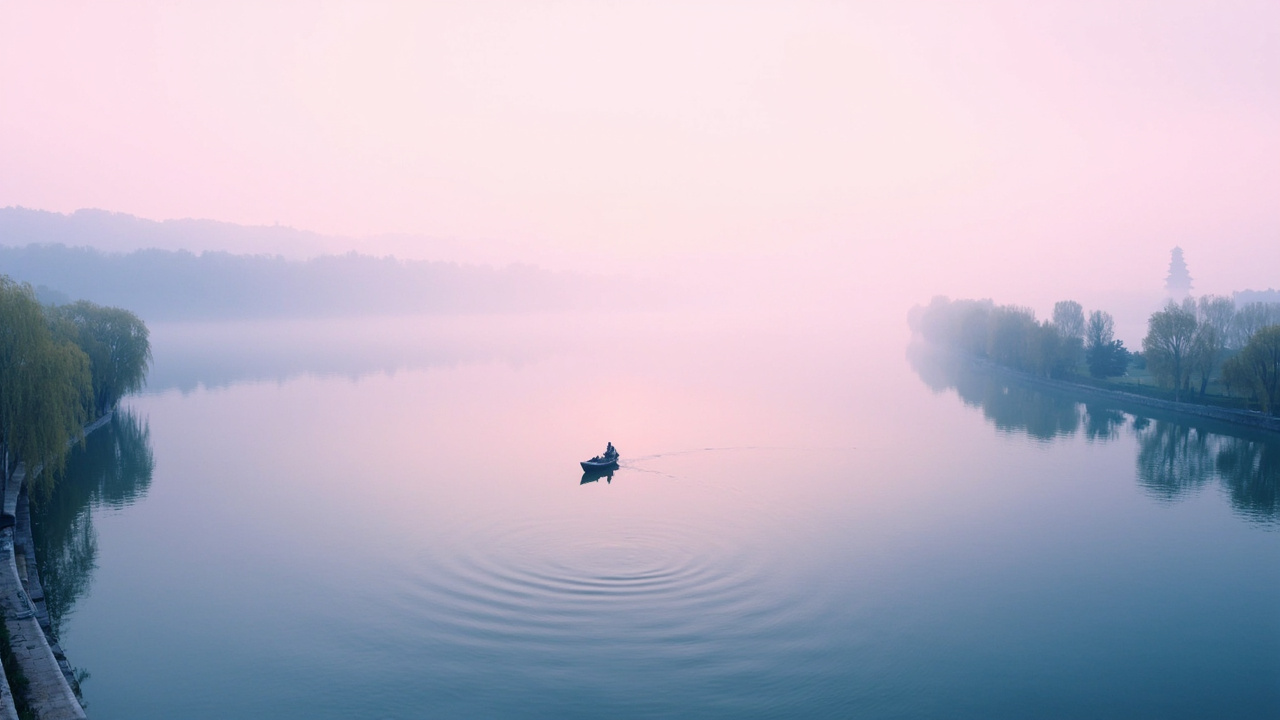
The first time I saw West Lake, it was raining. Not a dramatic rain, just a persistent drizzle that turned the water gray and the hills into watercolor smudges. A group of Chinese tourists in matching red hats were taking photos of each other under a willow tree, and an old man was flying a kite shaped like a phoenix. I stood there for twenty minutes, not doing anything, and I understood why the Song dynasty poet Su Shi compared the lake to a beautiful woman 鈥?it’s not about any single view, it’s about the way the whole scene holds together.
West Lake is free, which feels almost criminal given how much it gives you. The full loop around the lake is about 10 kilometers (6 miles), and you should walk or bike at least part of it. The classic route starts at Broken Bridge in the north, follows the Bai Causeway south, then cuts across to Su Causeway. Rent a bike from one of the public stations (you’ll need Alipay set up, which you should do anyway), or just walk. The lake is best at sunrise, when the tour groups haven’t arrived and the water is still. I watched a man practicing tai chi on a platform near the Quyuan Garden entrance, and he didn’t notice me for a full ten minutes.
- 馃搷 Location: Central Hangzhou, bounded by the city on the east and hills on the west
- 馃帿 Entry fee: Free. Boat rides cost $8-15 (CNY 60-110) depending on route
- 馃晲 Opening hours: Always open. The lakeside promenade never closes
- 馃殕 How to get there: Take Metro Line 1 to Longxiangqiao Station, Exit C, walk east for 5 minutes. You’ll hit the lake at the Hubin area
- 鈴?When to visit: Sunrise (5:30-7:00am) or late afternoon. Avoid weekends, especially sunny ones, when the paths get crowded
- 馃挕 Insider tips: The “Impression West Lake” night show is touristy but genuinely impressive 鈥?book tickets online. Rent a boat with a driver for $20-30 an hour and let them take you to the less crowded parts. The Leifeng Pagoda on the south shore is worth the climb for the view, but the pagoda itself is a modern reconstruction
I ate the most perfect xiaolongbao of my life at a tiny shop near the Hubin entrance, and I still don’t know the name of it. The lady who served me saw me struggling with chopsticks and brought me a fork without me asking.
2. The Bund, Shanghai 鈥?Where Old Shanghai Meets the Future
I’ve been to the Bund at least thirty times, and it still gets me. The colonial buildings on the west side, all granite and Art Deco details, face the skyscrapers of Pudong across the river like two different centuries arguing with each other. Every time I bring a visitor here, they stand at the railing and just stare. Nobody talks. That’s the effect it has.
The classic view is from the promenade looking toward the Oriental Pearl Tower and the Shanghai Tower, but the better view is actually from the other direction. Walk to the south end of the Bund, near the old customs house, and look back north. The way the buildings curve along the river is more dramatic from there. Go at sunset, watch the lights come on across the river, and stay until the crowds thin out around 9pm.
- 馃搷 Location: Zhongshan East 1st Road, along the Huangpu River in central Shanghai
- 馃帿 Entry fee: Free
- 馃晲 Opening hours: Always open. The promenade is lit until late
- 馃殕 How to get there: Take Metro Line 2 or 10 to Nanjing East Road Station, Exit 1, walk east for 10 minutes. You’ll hit the river at the north end of the Bund
- 鈴?When to visit: Sunset to 10pm. Weekday evenings are calmer than weekends
- 馃挕 Insider tips: The Peace Hotel at the north end has a jazz bar that’s been running since the 1920s 鈥?go for one drink, it’s worth the price. The tunnel under the river to Pudong is a tourist trap, skip it and take the metro instead. If you want a drink with a view, the bar at the Waldorf Astoria on the Bund has windows facing Pudong and costs less than the observation decks
I once watched a Chinese wedding photoshoot on the Bund at 7am, the bride in a red qipao, the groom in a suit, both of them shivering in the November cold while the photographer shouted directions. They looked miserable and ecstatic at the same time.
3. Suzhou Gardens 鈥?A Miniature World of Rocks and Silence
The first time I visited the Humble Administrator’s Garden, I didn’t get it. I walked through, looked at the rocks and the water and the pavilions, and thought, “That’s nice, I guess.” It wasn’t until my third visit, when I sat on a bench in the corner for twenty minutes without moving, that I understood. These gardens aren’t meant to be walked through quickly. They’re meant to be sat in, contemplated, and slowly absorbed.
The Humble Administrator’s Garden is the most famous, and it’s worth seeing, but it’s also the most crowded. The Lingering Garden, a 15-minute walk away, is quieter and, in my opinion, more beautiful. The Master of the Nets Garden is the smallest and most intimate, and it’s the one I’d recommend if you only have time for one. The gardens are all variations on the same theme: rocks, water, pavilions, and plants arranged to create a sense of infinite space within a finite area.
- 馃搷 Location: Various locations in Suzhou’s old city, concentrated around the northeast section
- 馃帿 Entry fee: Humble Administrator’s Garden $10 (CNY 70), Lingering Garden $7 (CNY 55), Master of the Nets Garden $5 (CNY 40)
- 馃晲 Opening hours: 7:30am-5:30pm (varies slightly by season, check before you go)
- 馃殕 How to get there: Take Metro Line 1 to Lindun Road Station for the Humble Administrator’s Garden, or Line 2 to Shantang Street Station for the Lingering Garden
- 鈴?When to visit: Weekday mornings, right at opening time. The gardens get packed with tour groups by 10am
- 馃挕 Insider tips: The gardens are busiest in April and October during Chinese holidays, avoid those months if you can. Hire a guide at the entrance for $20-30, they’ll explain the symbolism you’d otherwise miss. The Master of the Nets Garden has an evening performance with traditional music and dance from April to October, it’s touristy but atmospheric
I met a retired calligraphy teacher at the Lingering Garden who spent an hour explaining the difference between the “scholar’s rocks” and the “garden rocks” while his wife rolled her eyes and drank tea. He was the kind of person who makes you wish you’d studied Chinese harder.
4. Yu Garden & Old City, Shanghai 鈥?Ming Dynasty in the Middle of Modern Shanghai
The first time I went to Yu Garden, I hated it. It was a Saturday in October, and I was packed into the narrow streets of the old city like a sardine, surrounded by selfie sticks and screaming children and the smell of fried squid. I swore I’d never go back. Then a friend dragged me there on a Tuesday morning in March, and I fell in love.
The key is timing. Yu Garden itself, the classical Ming dynasty garden, is genuinely beautiful, with its dragon walls and rockeries and koi ponds. But the surrounding old city, with its maze of shops and teahouses and food stalls, is the real attraction. Go early, before the crowds arrive, and you’ll feel like you’ve stepped into a different era. The Huxinting Teahouse, in the middle of the lake, is one of the most photographed buildings in Shanghai, and for good reason.
- 馃搷 Location: Old City area, northeast of the modern city center, near the City God Temple
- 馃帿 Entry fee: Yu Garden $5 (CNY 40). The surrounding old city streets are free
- 馃晲 Opening hours: Garden 8:30am-5:00pm (last entry 4:30pm). The old city area is always open
- 馃殕 How to get there: Take Metro Line 10 to Yuyuan Garden Station, Exit 1, walk 5 minutes east
- 鈴?When to visit: Weekday mornings before 10am. The area transforms after dark, when the lanterns come on and the crowds thin out
- 馃挕 Insider tips: The xiaolongbao at Nanxiang Steamed Bun Restaurant on the square is famous for a reason, but the queue is always long. Go to the second floor, where the seating is better and the line is shorter. The City God Temple next door is worth a quick visit, and the area around it has some of the best street food in Shanghai. Don’t buy anything from the shops on the main tourist street, the prices are double what you’d pay elsewhere
I once watched a street performer in the old city swallow a sword while a crowd of Chinese tourists filmed him on their phones. He finished, bowed, and immediately started selling his CDs. The whole thing took about four minutes.
5. Longjing Tea Village, Hangzhou 鈥?Where the Tea Comes From
The hills west of West Lake are covered in tea fields, and the village of Longjing is the heart of it all. This is where Dragon Well tea, the most famous green tea in China, is grown. The village itself is a strange mix of working tea farms and tourist infrastructure, with old ladies selling tea eggs on the street and fancy teahouses charging $50 for a pot of the good stuff.
The best way to experience Longjing is to walk through the fields, not just visit the village. Start at the village center, follow the path up into the hills, and you’ll find yourself surrounded by neat rows of tea bushes, with farmers in wide-brimmed hats picking leaves. The views over the valley toward West Lake are spectacular. In late March and April, during the harvest season, you can watch the tea being processed in the village, the leaves being hand-roasted in huge woks.
- 馃搷 Location: Longjing Village, about 15 minutes west of West Lake by taxi
- 馃帿 Entry fee: Free to walk through the village and fields. Tea tastings and meals cost extra
- 馃晲 Opening hours: Always open. The tea museum is open 9am-5pm, closed Mondays
- 馃殕 How to get there: Take bus 27 from the Hangzhou city center to the Longjing Tea Village stop. Or take a taxi from West Lake, about $6-8 (CNY 45-60)
- 鈴?When to visit: Late March to April for the harvest season. Early morning, before the tour buses arrive
- 馃挕 Insider tips: The tea sold in the village ranges from $20 to $200 per 500 grams, and you can’t tell the difference without tasting. Ask for a tasting before you buy, and be suspicious of anything too cheap. The “Longjing 18” variety from the village itself is the most prized, but the tea from the surrounding hills is nearly as good for a fraction of the price. If you’re not a tea person, the walk through the hills is still worth it for the scenery
I bought tea from a woman named Auntie Wang who insisted on making me a cup before she’d let me buy anything. We sat in her courtyard for an hour, drinking tea and communicating through a translation app, while her grandson did his homework on a tablet.
6. Pingjiang Road, Suzhou 鈥?The Canal Street That Tourists Haven’t Ruined (Yet)
Pingjiang Road is the kind of street that makes you want to move to Suzhou and become a poet. It runs alongside a canal, with stone bridges crossing every hundred meters, and the buildings on either side are traditional white-walled, black-tiled structures that have been there for centuries. The shops are a mix of tourist kitsch and genuine local businesses, and somehow the balance still works.
The main street gets crowded by mid-morning, but the magic is in the side alleys. Duck into any of the narrow lanes that run perpendicular to the canal, and you’ll find yourself in a quieter world of residential courtyards, small temples, and old women hanging laundry out to dry. This is the real Suzhou, the one that existed before the tourists came.
- 馃搷 Location: Pingjiang Road, running north-south through the old city of Suzhou
- 馃帿 Entry fee: Free
- 馃晲 Opening hours: Always open. Shops typically open 9am-9pm
- 馃殕 How to get there: Take Metro Line 1 to Xiangmen Station, Exit 3, walk west for 10 minutes
- 鈴?When to visit: Evening, after 6pm, when the lanterns come on and the day-trippers have left
- 馃挕 Insider tips: The boat rides along the canal are $15-20 for a half-hour trip, and worth it once. The “bookstore” at the south end of Pingjiang Road is actually a teahouse with a hidden courtyard, go in and ask for a table outside. The egg puff stand near the north end makes the best version I’ve found in China, crispy on the outside, custardy on the inside
I watched a calligrapher on Pingjiang Road paint a customer’s name in Chinese characters for $5, and the customer, a young Chinese woman, burst into tears when she saw the result. The calligrapher looked embarrassed and gave her a discount.
7. Former French Concession, Shanghai 鈥?The Most European Neighborhood in Asia
The French Concession is where Shanghai goes to feel like Paris, except with better food and worse traffic. The plane trees that line the streets were planted by the French a century ago, and they’ve grown into a canopy that filters the light into a green glow. The buildings are a mix of Art Deco apartments, garden villas, and converted warehouses, and the whole area feels like a movie set.
This is my favorite part of Shanghai, and the one I’d recommend to anyone who wants to understand why the city feels different from anywhere else in China. The main drags, Huaihai Road and Fuxing Road, are lined with boutiques and cafés, but the real pleasure is in the side streets. Wander down Wukang Road, Anfu Road, or Taian Road, and you’ll find hidden courtyards, independent bookstores, and some of the best coffee in Asia.
- 馃搷 Location: The area bounded by Huaihai Road to the north, Zhaojiabang Road to the south, the elevated road to the west, and the Huangpu River to the east
- 馃帿 Entry fee: Free
- 馃晲 Opening hours: Always open. Cafés typically open 8am-10pm
- 馃殕 How to get there: Take Metro Line 10 to Shanghai Library Station, Exit 1, and walk south into the neighborhood
- 鈴?When to visit: Sunday morning, when the streets are quiet and the brunch places are buzzing
- 馃挕 Insider tips: The “Sinan Mansions” complex near Fuxing Park is a restored row of garden villas with restaurants and bars, worth a wander. The Shanghai Propaganda Poster Art Centre, hidden in a basement on Huashan Road, is one of the most fascinating museums in China, and it’s free. The best coffee in the neighborhood is at Manner Coffee on Nanyang Road, a tiny stand that somehow makes the best flat white in Shanghai
I once spent an entire Sunday afternoon in a café on Anfu Road, reading a book and watching the parade of stylish Shanghai residents walk past the window. A woman in a Chanel jacket walked her tiny dog, a group of teenagers filmed a dance video, and an old man rode by on a bicycle with a cage of birds hanging from the handlebars.
8. Lingering Garden, Suzhou 鈥?The Garden That Doesn’t Try So Hard
The Lingering Garden is the quiet sibling of the Humble Administrator’s Garden. It’s smaller, less famous, and, in my opinion, more beautiful. The garden was built in the 16th century and has been restored multiple times, but it retains a sense of intimacy that the bigger gardens lack. The centerpiece is a massive rock formation called the “Cloud-Capped Peak,” a piece of porous limestone that was considered so valuable in imperial times that it was said to be worth more than gold.
The garden is designed to be experienced in sections, with each courtyard revealing a new view. The trick is to slow down. Sit on a bench, watch the koi fish, listen to the wind in the bamboo. The garden rewards patience in a way that few tourist attractions do.
- 馃搷 Location: 338 Liuyuan Road, in the northwest of Suzhou’s old city
- 馃帿 Entry fee: $7 (CNY 55)
- 馃晲 Opening hours: 7:30am-5:30pm (varies by season)
- 馃殕 How to get there: Take Metro Line 2 to Shantang Street Station, Exit 1, walk south for 10 minutes
- 鈴?When to visit: Right at opening time, when the garden is empty and the morning light is soft
- 馃挕 Insider tips: The garden is connected to the Shantang Street canal area, which is worth exploring after you finish. The teahouse inside the garden serves decent tea at reasonable prices, a good place to rest your feet. The “Mandarin Duck Hall” in the center of the garden has some of the finest woodcarving in China, don’t rush past it
I overheard a guide telling her group that the rock in the center of the garden was worth “more than a hundred Beijing apartments,” which I’m pretty sure was an exaggeration, but it made everyone look at it with new respect.
9. Lingyin Temple, Hangzhou 鈥?The Temple That Smells Like Incense and History
Lingyin Temple is one of the most important Buddhist temples in China, and it’s been here since 328 AD. The name means “Temple of the Soul’s Retreat,” and you can feel why. The temple complex is set in a forested valley at the foot of the hills west of West Lake, and the air is thick with incense smoke and the sound of chanting.
The temple itself is impressive, with its massive halls and gilded Buddhas, but the real treasure is the Feilai Feng grottoes next door. This limestone hill is covered in Buddhist carvings dating from the 10th to 14th centuries, hundreds of statues carved directly into the rock. Some are weathered almost beyond recognition, others are remarkably preserved. The most famous is the “Laughing Buddha” statue, which is said to bring good luck to those who rub his belly.
- 馃搷 Location: Lingyin Road, about 20 minutes west of West Lake by taxi
- 馃帿 Entry fee: $6 (CNY 45) for the temple, plus $6 (CNY 45) for the Feilai Feng grottoes. You need both tickets to see everything
- 馃晲 Opening hours: 7:00am-6:00pm (varies by season)
- 馃殕 How to get there: Take bus 7 or 807 from the Hangzhou city center to the Lingyin Temple stop. Or take a taxi, about $5-7 (CNY 35-50)
- 鈴?When to visit: Early morning, before the tour groups arrive. The temple is especially atmospheric on Buddhist holidays, when pilgrims come from all over China
- 馃挕 Insider tips: The vegetarian restaurant inside the temple complex is surprisingly good, try the “mock meat” dishes made from tofu and mushrooms. The climb up the hill behind the temple leads to a viewpoint over the valley, worth the effort. If you’re interested in Buddhism, hire one of the guides at the entrance, they’ll explain the iconography you’d otherwise miss
I watched a monk sweep the courtyard at Lingyin Temple with a bamboo broom, moving in slow, deliberate strokes. He didn’t look up once, even when a group of tourists walked past him taking photos.
10. Zhujiajiao Water Town 鈥?The Venice of Shanghai, Without the Crowds (If You Go on a Weekday)
Zhujiajiao is the most accessible of the water towns around Shanghai, and it’s the one I’d recommend for a day trip. The town is built on a network of canals, with stone bridges connecting the narrow streets. The buildings are traditional Ming and Qing dynasty structures, and the whole place feels like it hasn’t changed in centuries.
The main tourist street, Beidajie, is a zoo on weekends, packed with tour groups from Shanghai and beyond. But if you go on a weekday, or better yet, stay overnight in one of the guesthouses, you’ll see a different side. The town empties out after 5pm, and the canals reflect the lights of the buildings in a way that’s genuinely magical.
- 馃搷 Location: Qingpu District, about 45 minutes west of central Shanghai
- 馃帿 Entry fee: Free to enter the town. Individual attractions cost $3-5 each, or buy a combined ticket for $15 (CNY 100)
- 馃晲 Opening hours: Always open. Shops typically open 9am-6pm
- 馃殕 How to get there: Take Metro Line 17 to Zhujiajiao Station, Exit 1, walk 10 minutes east to the old town. The metro takes about an hour from central Shanghai
- 鈴?When to visit: Weekdays, any time. If you can only go on a weekend, go early, before 9am, or late, after 5pm
- 馃挕 Insider tips: The boat rides through the canals are $15-20 for a 20-minute trip, worth it once. The “Ke Zhi Garden” in the south of the town is the best-preserved classical garden in Zhujiajiao, and most tourists miss it. The local specialty is “zha rou,” a pork dish steamed in lotus leaves, try it at one of the riverside restaurants
I stayed overnight in Zhujiajiao once, in a guesthouse with a view over the canal. At 6am, I watched an old woman wash vegetables in the canal water while her husband swept the stone steps in front of their house. The tour groups arrived at 9am, and the town transformed into something else entirely.
FAQ summary
The Shanghai-Hangzhou-Suzhou loop is China’s most accessible itinerary for first-time visitors, with high-speed rail connections under an hour between all three cities and most major attractions costing under $10. Most Western passport holders can enter China visa-free for up to 30 days through 2026, but you must set up Alipay and WeChat Pay before arrival since cash is rarely accepted. The best time to visit is spring (March-May) or autumn (September-November), and you can complete the loop comfortably in 5-7 days for roughly $80-120 per day.
FAQ
Q: Do I need a visa to visit Shanghai, Hangzhou, and Suzhou? A: Most US, UK, Australian, Canadian, and European passport holders can enter China visa-free for up to 30 days through 2026. Check the latest visa-free transit policy before booking, as rules can change. If your country isn’t on the visa-free list, you’ll need to apply for a tourist visa at your nearest Chinese embassy.
Q: How many days should I spend in each city? A: I’d recommend 3 days in Shanghai, 2 in Hangzhou, and 1-2 in Suzhou. That gives you time to see the highlights without rushing. If you only have 5 days, cut Suzhou to a day trip from Shanghai or skip it entirely and spend more time in Hangzhou.
Q: How do I get between Shanghai, Hangzhou, and Suzhou? A: High-speed trains are the way to go. Shanghai to Suzhou takes about 30 minutes ($15-20), Shanghai to Hangzhou takes about 45 minutes ($20-25), and Suzhou to Hangzhou takes about 90 minutes ($25-30). Book tickets through the official China Railway app or at the station, and check my China train travel guide for details.
Q: Can I use my credit card in China? A: Not reliably. China is a cashless society, and most places only accept Alipay or WeChat Pay. Set up both apps before you arrive and link your international credit card. See my payment guide for step-by-step instructions. Carry some cash as backup, but expect to use your phone for almost everything.
Q: Is English widely spoken in these cities? A: In tourist areas and hotels, yes. Elsewhere, not so much. Download a translation app like Pleco or Google Translate (with the Chinese language pack downloaded for offline use) before you arrive. Most restaurant menus have pictures, and pointing works surprisingly well.
Q: Do I need a VPN for my phone in China? A: Yes, if you want to use Google, WhatsApp, Instagram, or Facebook. China blocks these services, and you’ll need a VPN installed before you arrive. See my SIM card and internet guide for recommendations on which VPN to use and how to get a local SIM card.
Q: What’s the best time of year to do this loop? A: Late March through May, or September through November. The weather is mild, the skies are clearer, and the crowds are thinner than in summer. Avoid the first week of October (Chinese National Day) and the week around Chinese New Year, when the entire country is on holiday and everything is packed.
The Honest Wrap-up
This loop is the right choice for most first-time visitors to China. It’s easy to navigate, the infrastructure is excellent, and you get three very different versions of the country in one trip. But it’s also the most touristy part of China, and you’ll be surrounded by other foreigners at every major sight. If you want something more off the beaten path, consider adding a few days in Chengdu or Guilin instead. But for a first taste of China, this is where you should start.
My final advice: don’t try to see everything. Pick two or three things per day, and leave time to sit in a café, wander down a random street, or just watch the world go by. The best moments of my trips to these cities have never been at the famous sights. They’ve been in the in-between moments, the conversations with strangers, the unexpected discoveries. China rewards the curious and the patient. Go with an open mind, and you’ll leave with more questions than answers, which is exactly how it should be.
Topics
More guides you may like

Top 10 Bridges in China
China's bridges are engineering marvels spanning mountains, rivers, and seas. Here are 10 of the most spectacular, from ancient stone to modern steel.
8 min read

Top 10 Buddhist Sites in China
From the Leshan Giant Buddha to the Dunhuang Caves, these 10 Buddhist sites represent 2,000 years of China's spiritual heritage.
9 min read

Top 10 Day Trips from Beijing You Shouldn't Miss
Beijing is packed with history, but some of China's best experiences are just a few hours away. Here are 10 day trips that will transform your visit.
9 min read

Top 10 Hidden Gems in China Off the Beaten Path
Beyond the Great Wall and Terracotta Warriors, China has incredible hidden destinations few tourists ever reach. Here are 10 underrated gems worth the detour.
9 min read

Top 10 Markets and Shopping Streets in China
From Shanghai's Bund to Beijing's Silk Street - 10 markets where foreigners can haggle, explore, and bring home authentic Chinese goods.
9 min read

Top 10 Museums in China You Shouldn't Miss
China's museums span 5,000 years of civilization. These 10 - from the Palace Museum to Xi'an's terracotta gallery - are unmissable for culture lovers.
9 min read