
China Food Tour Itinerary
TODO: Extract from article (100-160 chars)
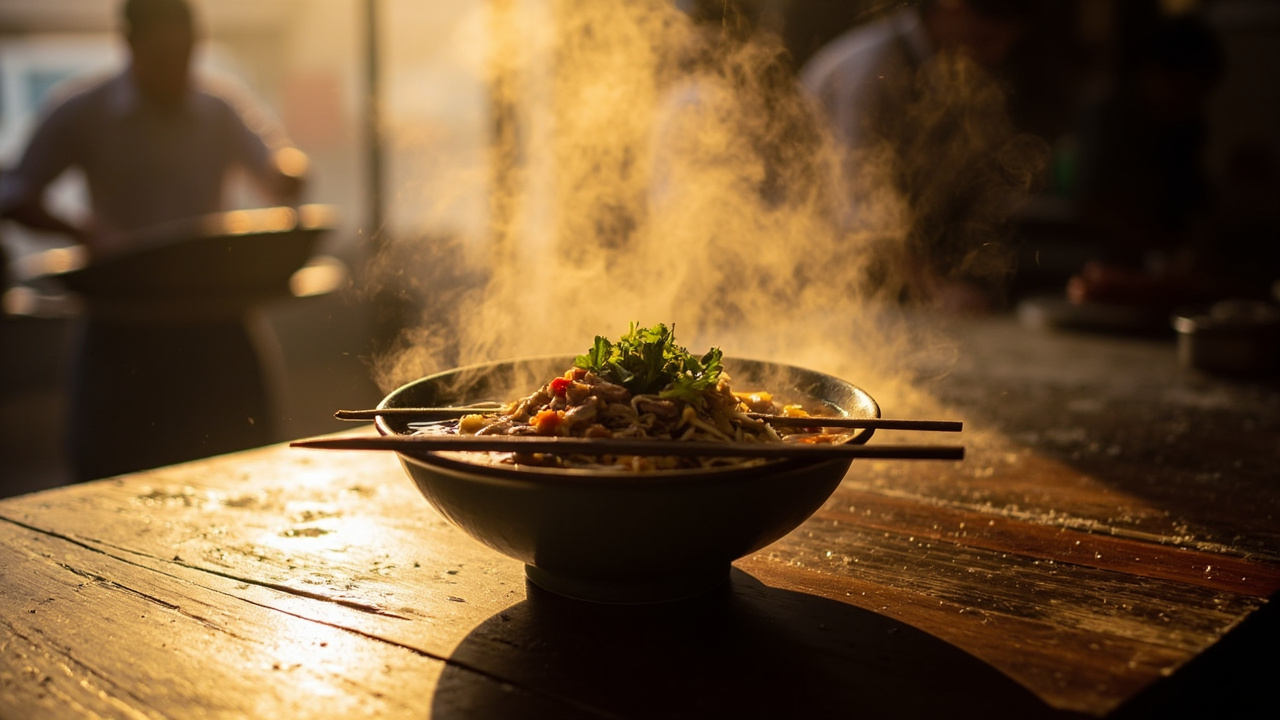
China Food Tour Itinerary
I was standing in a Xi’an alley at 7am, watching a man slap a lump of dough against a steel drum until it stretched into a translucent sheet, then folded it eight times and cut it into noodles with a cleaver the size of my forearm. He didn’t look up once. His wife took my 12 yuan ($1.70) without a word and pointed at a plastic stool. That bowl of biang biang noodles, eaten on a stool too small for me, in a city I’d arrived in 11 hours earlier, is the reason I plan entire trips around food now.
China is not one cuisine. It’s at least eight, and they argue with each other. A Sichuanese chef will tell you Cantonese food is bland. A Cantonese chef will tell you Sichuanese food is all chili and no skill. A Xi’an local will tell you both of them are wrong and that the real Chinese food starts at the Silk Road. They’re all right and all wrong, and the only way to settle it is to eat your way across the country, which is what this itinerary is for.
This is a food-first route through six cities, built around what I’ve actually eaten on the ground over seven years and 40+ trips. It assumes you want to eat well, don’t mind getting lost, and are willing to plan around meal times rather than monuments.
Quick answer
The best first-timer food tour runs Beijing → Xi’an → Chengdu → Chongqing → Guangzhou → Hong Kong over 14-18 days, using high-speed rail between cities (Beijing to Xi’an is 4.5 hours, about $75/540 CNY). Budget $60-90 per day for food if you eat where locals eat, and set up Alipay or WeChat Pay before you land, because most street stalls no longer take cash. Citizens of 40+ countries (including the US, UK, Australia, and most of the EU) can currently enter visa-free for 30 days, but check the current visa-free rules before booking, since the policy has changed three times since 2023.
The Short Version
If you have 90 seconds: go to Chengdu and Chongqing first, not Beijing. The food is better, cheaper, and more fun. Beijing is worth two days for duck and breakfast, then leave. Xi’an is one full day of noodles and lamb. Guangzhou is for people who think they don’t like Chinese food, because Cantonese cooking will change their mind. Skip Shanghai for food unless you want soup dumplings and money to burn. Book everything around lunch and dinner, not the other way around.
How I Picked These
I’ve eaten in all ten of these places, most of them more than once, and I’ve gone back to six of them specifically to eat. I don’t trust listicles written from a desk, so I don’t write them. Every entry here comes from a meal I actually paid for, usually badly, sometimes with a local who ordered for me and refused to let me see the bill.
I also ran this list past three people who grew up in these cities: a Chengdu chef, a Guangzhou taxi driver who used to cook in a hotel kitchen, and a Xi’an hostel receptionist who laughed at my first biang biang order. Two of my original picks got cut because they told me the version tourists eat is not the version locals eat. That’s the filter.
Comparison Table
| Rank | Place | Best For | Approx Cost (USD) | Time Needed | When to Go |
|---|---|---|---|---|---|
| 1 | Chengdu | Chili, mala, hotpot, tea houses | $25-40/day | 3-4 days | Mar-May, Sep-Nov |
| 2 | Chongqing | Numbing hotpot, street BBQ, night markets | $20-35/day | 2-3 days | Oct-Apr |
| 3 | Xi’an | Noodles, lamb, Muslim Quarter | $15-25/day | 1-2 days | Apr-May, Sep-Oct |
| 4 | Guangzhou | Dim sum, roast meats, Cantonese classics | $30-50/day | 2-3 days | Oct-Dec |
| 5 | Beijing | Peking duck, jianbing, imperial cuisine | $30-50/day | 2-3 days | Sep-Oct, Apr-May |
| 6 | Hong Kong | Cha chaan teng, dai pai dong, roast goose | $50-80/day | 3-4 days | Oct-Dec |
| 7 | Shanghai | Soup dumplings, sheng jian bao, hu cuisine | $40-60/day | 2 days | Mar-May, Oct-Nov |
| 8 | Shunde | The actual best Cantonese food in China | $25-40/day | 1 day | Oct-Dec |
| 9 | Lanzhou | Hand-pulled beef noodles, Hui Muslim food | $10-20/day | 1 day | May-Sep |
| 10 | Yangzhou | Huaiyang cuisine, morning tea, knife skills | $20-30/day | 1-2 days | Apr-May, Oct |
Chengdu — Where the Whole Trip Should Start
The first thing I ate in Chengdu was a bowl of dan dan noodles from a stall with no sign, no menu, and a woman who held up two fingers to mean “two yuan” and then added a third finger when I looked confused. It cost 8 yuan ($1.10). It was better than any Chinese food I’d eaten in the US, ever, and I’d been eating “Sichuan” in New York for a decade.
Chengdu is the food capital of China and it’s not close. The city runs on a specific kind of chili oil (cauliflower-red, fragrant, not just hot) and Sichuan peppercorn that numbs your lips in a way that sounds unpleasant and is actually addictive. The local philosophy is that food should be “mala” — numbing and spicy at once — and once you calibrate to it, everything else tastes flat. Hotpot here is a social event that lasts three hours. Tea houses are where old men sit for six hours over one cup. The city’s pace is slow, which is why the food is good: nobody’s rushing.
📍 Location: Jinjiang and Qingyang districts, especially around Kuanzhai Alley and the Yulin neighborhood 🎟️ Entry fee: Free (you’re paying for food) 🕒 Opening hours: Street stalls 6am-10am and 5pm-midnight; restaurants 11am-2pm and 5pm-9pm 🚇 How to get there: Fly into Chengdu Tianfu (TFU) or Shuangliu (CTU); metro Line 3 to Chunxi Road for the center ⏰ When to visit: March-May or September-November; avoid July-August humidity 💡 Insider tips: Ask for “wei la” (微辣, mildly spicy) if you can’t handle heat — it’s still spicy. Bring your own chopsticks if you’re squeamish about street stalls. The best hotpot is at 10pm, not 7pm. Download a translation app; English is rare outside hotels. I met a chef named Wang who ran a 12-seat restaurant in Yulin and refused to let me pay for the second bowl of mapo tofu, saying it was “on the house because you finished the first one.”
Chongqing — The City That Eats at Midnight
Chongqing is Chengdu’s louder, rougher cousin, and the hotpot is different: more beef tallow, more heat, less subtlety. I ate at a place near Hongya Cave at 1am where the tables were plastic and the floor was slick with grease, and a group of taxi drivers at the next table kept refilling my beer without asking. The bill for four people was 180 yuan ($25).
This is a city built on hills, so you’re always climbing stairs to get to food, which somehow makes it taste better. The signature dish is Chongqing hotpot, but the real local move is street BBQ (shaokao) — skewers of lamb, tofu skin, and lotus root grilled over charcoal and dusted with cumin and chili. The night markets here run until 4am and the city doesn’t really sleep. It’s also the birthplace of xiaomian, a bowl of spicy noodles that locals eat for breakfast, which tells you everything about the local attitude.
📍 Location: Yuzhong and Jiangbei districts, especially around Jiefangbei and Nan’an 🎟️ Entry fee: Free 🕒 Opening hours: Hotpot 5pm-3am; street BBQ 8pm-4am; noodle shops 6am-11am 🚇 How to get there: Fly into Chongqing Jiangbei (CKG); metro Line 2 to Linjiangmen for Hongya Cave ⏰ When to visit: October-April; summer is brutally hot and humid 💡 Insider tips: Order “mao du” (tripe) and “huang hou” (beef throat) at hotpot — they’re the local test. Ask for “wei la” if you’re not ready. Cash is nearly useless; Alipay works everywhere. Bring antacids. A taxi driver named Liu drove me 20 minutes out of his way to a noodle shop he swore was the best in the city, then waited outside while I ate.
Xi’an — One Perfect Day of Noodles and Lamb
Xi’an is where the Silk Road ended and Chinese food got interesting. The Muslim Quarter is the obvious stop, and yes it’s touristy, but the food is real if you go one street back from the main drag. I ate yangrou paomo (lamb soup with torn bread) at a place where the owner made me tear my own bread into pieces the size of my thumbnail, then took it away and came back with a bowl of broth. It cost 28 yuan ($4).
The city’s signature is biang biang noodles — wide, hand-pulled, named after a character so complicated it doesn’t exist on most keyboards. The other must-eat is roujiamo, which is often called a “Chinese hamburger” and is nothing like a hamburger: shredded pork in a flatbread, cumin-heavy, 10 yuan ($1.40). Xi’an is also the only place in China where you’ll find a large, genuinely local Muslim food scene, which makes it a good break from pork-heavy menus elsewhere.
📍 Location: Lianhu District, especially Beiyuanmen and Sajinqiao streets 🎟️ Entry fee: Free (Terracotta Warriors separately, 120 yuan/$17) 🕒 Opening hours: Muslim Quarter 10am-10pm; noodle shops 7am-9pm 🚇 How to get there: High-speed rail from Beijing West to Xi’an North, 4.5 hours, ~540 CNY ($75); metro Line 2 to Yongningmen ⏰ When to visit: April-May or September-October; summer is hot and crowded 💡 Insider tips: Skip the main Muslim Quarter street and eat on Sajinqiao instead. Tear your own paomo bread — it’s part of the ritual. Bring cash for small stalls. The high-speed rail from Beijing is worth the ticket for the food alone. I made the mistake of ordering “extra spicy” at a noodle stall and spent the next hour drinking yogurt from a bag to cool my mouth.
Guangzhou — Where Cantonese Food Actually Lives
Guangzhou is the city that will change your mind if you think you don’t like Chinese food. Cantonese cooking is about restraint — steam, poach, roast — and the flavors are clean and specific. I ate dim sum at a 100-year-old teahouse at 7am, surrounded by old men reading newspapers, and the bill for six dishes was 88 yuan ($12).
The city’s signature is roast goose and char siu (BBQ pork), both of which are better here than anywhere else in China. The other must-do is morning tea (yum cha), which is not actually about tea — it’s about eating small plates for two hours while drinking pu’er. Guangzhou is also the gateway to Shunde, a district 30 minutes away that many Chinese people consider the best food city in the country. If you only have time for one Cantonese city, make it this one, not Hong Kong.
📍 Location: Liwan and Yuexiu districts, especially around Shangxiajiu and Beijing Road 🎟️ Entry fee: Free 🕒 Opening hours: Dim sum 6:30am-11am; roast meat shops 10am-8pm; night markets 6pm-midnight 🚇 How to get there: Fly into Guangzhou Baiyun (CAN); metro Line 1 to Changshou Lu for Shangxiajiu ⏰ When to visit: October-December; avoid summer humidity and typhoon season 💡 Insider tips: Order “char siu” and “roast goose” at the same shop to compare. Dim sum is a morning thing — don’t go at 2pm. English is more common here than in Chengdu but still rare. Bring a translation app. A taxi driver named Chen, who used to cook in a hotel kitchen, told me the best roast goose in the city was at a shop with no English name and no sign, and he was right.
Beijing — Two Days, Then Leave
Beijing gets a bad food reputation and it’s mostly deserved, but there are two things you must eat here: Peking duck and jianbing (a breakfast crepe). I ate duck at a restaurant near Qianmen where the chef carved it tableside and the skin was so crisp it shattered. The whole meal for two was 380 yuan ($53), which is expensive by Chinese standards but cheap for what it is.
The city’s food is imperial and northern — wheat-based, lamb-heavy, less spicy than the south. The best breakfast is jianbing, a crepe with egg, scallion, and crispy cracker, sold from carts for 8 yuan ($1.10). Beijing is also where you’ll find the most English signage and the easiest payment app setup, which makes it a good first stop if you’re nervous. But two days is enough. The food gets better everywhere else.
📍 Location: Dongcheng District, especially around Qianmen, Nanluoguxiang, and Gui Street 🎟️ Entry fee: Free 🕒 Opening hours: Duck restaurants 11am-2pm and 5pm-9pm; jianbing carts 6am-9am 🚇 How to get there: Fly into Beijing Capital (PEK) or Daxing (PKX); metro Line 2 to Qianmen ⏰ When to visit: September-October or April-May; winter is cold and dry 💡 Insider tips: Book duck restaurants a day ahead. Eat jianbing from a cart, not a restaurant. The Beijing guide covers the non-food logistics. Skip Wangfujing snack street — it’s for tourists. I paid 60 yuan ($8.50) for a “traditional” jianbing at a tourist stall before a local told me the cart down the street sold the same thing for 8 yuan.
Hong Kong — The Best Two Days of Eating in Asia
Hong Kong is technically not mainland China and the food is its own thing: cha chaan teng (tea restaurants), dai pai dong (street stalls), and a roast goose culture that’s unmatched. I ate at a dai pai dong in Sham Shui Po where the menu was on a wall in Chinese only and a woman at the next table ordered for me. The bill was HK$85 ($11).
The city’s signature dishes are roast goose, wonton noodles, and pineapple buns with butter. The best eating is in the older neighborhoods — Sham Shui Po, Mong Kok, Wan Chai — not the tourist areas. Hong Kong is also the most expensive place on this list, but the food is worth it. Two full days of eating here will ruin you for Chinese food anywhere else, which is a problem if you’re continuing to the mainland.
📍 Location: Sham Shui Po, Mong Kok, and Wan Chai districts 🎟️ Entry fee: Free 🕒 Opening hours: Cha chaan teng 7am-6pm; dai pai dong 11am-10pm; roast goose shops 10am-8pm 🚇 How to get there: Fly into Hong Kong International (HKG); MTR to Sham Shui Po or Mong Kok ⏰ When to visit: October-December; summer is hot and typhoon-prone 💡 Insider tips: Bring cash — many dai pai dong don’t take cards. Order “yuanyang” (coffee-tea mix) at cha chaan teng. The Hong Kong guide has the transit details if you’re combining cities. English is widely spoken here, unlike the mainland. A woman at a Sham Shui Po stall ordered for me in Cantonese, then refused to let me pay for her own meal when I tried to thank her.
Shanghai — Soup Dumplings and Money to Burn
Shanghai food is subtle and sweet, which is why a lot of people find it boring after Chengdu. But the soup dumplings (xiaolongbao) here are the best in the world, and sheng jian bao (pan-fried pork buns) are a close second. I ate at a place near Yu Garden where the dumplings were 25 yuan ($3.50) for eight, and the line was 40 minutes long.
The city’s food is Hu cuisine — braised, soy-heavy, slightly sweet. It’s not the most exciting regional cuisine in China, but it’s the most accessible for foreign palates, which makes it a good first stop if you’re nervous. Shanghai is also the most expensive city on this list and the most international, so English is more common here than anywhere else in the mainland. Two days is enough for food; the rest of your time is better spent elsewhere.
📍 Location: Huangpu District, especially around Yu Garden and Tianzifang 🎟️ Entry fee: Free 🕒 Opening hours: Dumpling shops 7am-8pm; restaurants 11am-2pm and 5pm-9pm 🚇 How to get there: Fly into Shanghai Pudong (PVG) or Hongqiao (SHA); metro Line 10 to Yuyuan Garden ⏰ When to visit: March-May or October-November; summer is hot and humid 💡 Insider tips: Eat xiaolongbao by biting a small hole first to release steam. Sheng jian bao are best from a street stall, not a restaurant. The Shanghai guide covers the non-food side. Bring cash for small shops. I burned the roof of my mouth on my first xiaolongbao because I didn’t know to bite a hole first, and a local woman laughed and showed me how.
Shunde — The Best Cantonese Food in China
Shunde is a district of Foshan, 30 minutes by train from Guangzhou, and many Chinese people consider it the best food city in the country. I ate a whole steamed fish here that was so fresh it was still moving when it hit the table, and the bill for four people was 220 yuan ($31). The city is famous for its raw fish salad, its double-skin milk, and its roast goose.
This is not a tourist destination — there’s almost no English and no foreign visitors. That’s the point. The food is Cantonese at its purest: steam, poach, minimal seasoning, maximum ingredient quality. If you care about food and have one extra day in Guangdong, come here instead of another day in Guangzhou. It’s the kind of place where the best restaurant has no sign and the chef has been doing the same three dishes for 30 years.
📍 Location: Daliang and Ronggui neighborhoods, Shunde District, Foshan 🎟️ Entry fee: Free 🕒 Opening hours: Restaurants 11am-2pm and 5pm-9pm; some close Mondays 🚇 How to get there: High-speed rail from Guangzhou South to Shunde, 10 minutes, ~20 CNY ($3); then taxi ⏰ When to visit: October-December; avoid summer heat 💡 Insider tips: Order the steamed fish and the roast goose. Bring a translation app — no English anywhere. Cash is essential. Go with a local if you can; the best places are hard to find. A shop owner named Li refused to let me pay for dessert, saying it was “for the guest from far away,” which is a thing that happens here more than you’d expect.
Lanzhou — The Best Bowl of Noodles in China
Lanzhou is in Gansu, in the northwest, and it’s the birthplace of hand-pulled beef noodles — the dish that’s been copied (badly) all over China. I ate a bowl here for 8 yuan ($1.10) that was better than any noodle soup I’ve had anywhere, including Japan. The broth is clear, the beef is tender, the noodles are pulled to order.
The city is majority Hui Muslim, so the food is lamb-heavy and pork-free. The signature is beef noodles, but the other must-eat is lamb skewers and hand-pulled noodles with a side of pickled vegetables. Lanzhou is not on most tourist itineraries, which is exactly why you should go. It’s a one-day stop, and the food is cheap enough that you can eat five meals.
📍 Location: Chengguan District, especially around Zhangye Road 🎟️ Entry fee: Free 🕒 Opening hours: Noodle shops 6am-2pm (they sell out); skewer stalls 6pm-midnight 🚇 How to get there: Fly into Lanzhou Zhongchuan (LHW); taxi to city center, ~30 minutes ⏰ When to visit: May-September; winter is cold and dry 💡 Insider tips: Beef noodles are a breakfast food — go before 10am. Ask for “er xi” (thin) or “jiu ye” (wide) noodles. No English anywhere; bring a translation app. Cash is essential. I made the mistake of ordering noodles at 3pm and was told, politely, that the shop had sold out at noon.
Yangzhou — The Most Refined Food in China
Yangzhou is a small city in Jiangsu, and its cuisine — Huaiyang — is considered the most refined in China. It’s the food of knife skills and subtlety: paper-thin tofu, intricate vegetable carvings, and a morning tea culture that rivals Guangzhou’s. I ate a bowl of yangzhou fried rice here that was nothing like the version you get abroad — light, delicate, with tiny shrimp and egg.
The city’s signature is morning tea, which is a two-hour affair of small plates and tea. The other must-eat is lion’s head meatballs, which are huge, tender, and braised in broth. Yangzhou is quiet and not touristy, and the food is cheap. It’s a one-day stop, best combined with Shanghai or Nanjing.
📍 Location: Hanjiang District, especially around Dongguan Street 🎟️ Entry fee: Free 🕒 Opening hours: Morning tea 6:30am-10am; restaurants 11am-2pm and 5pm-9pm 🚇 How to get there: High-speed rail from Shanghai to Yangzhou, 2 hours, ~120 CNY ($17) ⏰ When to visit: April-May or October; spring is best for morning tea 💡 Insider tips: Morning tea is a morning thing — don’t go at noon. Order lion’s head meatballs and yangzhou fried rice. English is rare; bring a translation app. Cash is useful for small shops. A waiter at a morning tea house spent 10 minutes explaining the difference between two kinds of tea to me, in Chinese, using hand gestures, and I understood maybe half of it.
FAQ summary
The most important things to know: this itinerary works best over 14-18 days, uses high-speed rail between cities, and costs roughly $60-90 per day for food if you eat where locals eat. Chengdu and Chongqing are the best food cities in China, Xi’an is the best one-day stop, and Guangzhou is the best introduction if you’re nervous about spice. Set up Alipay or WeChat Pay before you land, since most stalls no longer take cash, and check the current visa-free rules before booking, since the policy has changed multiple times since 2023.
FAQ
Q: How much should I budget for food per day in China? A: If you eat at street stalls and local restaurants, $25-40 per day is realistic in Chengdu or Chongqing, and $50-80 in Hong Kong or Shanghai. Add $10-15 per day if you want one sit-down restaurant meal. Budget $60-90 per day as a comfortable average across the whole trip.
Q: Do I need to speak Chinese to do this food tour? A: You can get by with a translation app (Pleco or Google Translate with offline Chinese downloaded), but you’ll eat better if you learn 10 phrases: “zhege” (this one), “duoshao qian” (how much), “wei la” (mildly spicy), and “hao chi” (delicious). English is rare outside hotels and Hong Kong.
Q: Is street food in China safe for foreigners? A: Yes, if you eat where locals eat and the stall is busy. High turnover means fresh food. Avoid anything that’s been sitting out, and stick to cooked food. I’ve eaten street food across China for seven years and gotten sick twice, both times from a hotel buffet, not a stall.
Q: What’s the best time of year for a China food tour? A: March-May and September-November are best — comfortable temperatures, good produce, and no major holidays. Avoid Chinese New Year (late January or February, depending on the year) because many restaurants close, and avoid July-August because of heat and crowds.
Q: Can I do this itinerary in two weeks? A: Yes, if you cut it to five cities: Beijing (2 days), Xi’an (1 day), Chengdu (3 days), Chongqing (2 days), and Guangzhou (2 days), with travel days in between. That’s 12-14 days and covers the best food. Add Hong Kong only if you have 18+ days.
Q: Do I need a VPN in China? A: Yes, if you want to use Google, Instagram, WhatsApp, or most Western apps. Download and set up a VPN before you arrive, because VPN websites are blocked inside China. See the SIM card and internet guide for specifics.
Q: Is cash still accepted in China? A: Rarely. Most stalls and restaurants now use Alipay or WeChat Pay, and many won’t take cash at all. Set up one of the two apps before you land, link an international card, and you’re fine. Keep 200-300 yuan in cash for emergencies.
The Honest Wrap-up
This itinerary is for people who plan trips around meals, not monuments. If you want to see the Great Wall and the Terracotta Warriors and eat whatever’s nearby, this isn’t your list — you’ll be happier with a standard tourist route. If you’re the kind of person who books a flight because you read about a noodle shop, this is for you.
One last thing: don’t overplan. The best meals I’ve had in China were the ones I stumbled into because I was lost, or because someone pointed at a door and said “eat there.” Book your trains and your first two nights, then leave the rest open. The food will find you.
More guides you may like

Top 10 Bridges in China
China's bridges are engineering marvels spanning mountains, rivers, and seas. Here are 10 of the most spectacular, from ancient stone to modern steel.
8 min read

Top 10 Buddhist Sites in China
From the Leshan Giant Buddha to the Dunhuang Caves, these 10 Buddhist sites represent 2,000 years of China's spiritual heritage.
9 min read

Top 10 Day Trips from Beijing You Shouldn't Miss
Beijing is packed with history, but some of China's best experiences are just a few hours away. Here are 10 day trips that will transform your visit.
9 min read
Top 10 Hidden Gems in China Off the Beaten Path
Beyond the Great Wall and Terracotta Warriors, China has incredible hidden destinations few tourists ever reach. Here are 10 underrated gems worth the detour.
9 min read
Top 10 Markets and Shopping Streets in China
From Shanghai's Bund to Beijing's Silk Street - 10 markets where foreigners can haggle, explore, and bring home authentic Chinese goods.
9 min read
Top 10 Museums in China You Shouldn't Miss
China's museums span 5,000 years of civilization. These 10 - from the Palace Museum to Xi'an's terracotta gallery - are unmissable for culture lovers.
9 min read