
China WeChat Guide for Tourists
China WeChat Guide for Tourists
China WeChat Guide for Tourists
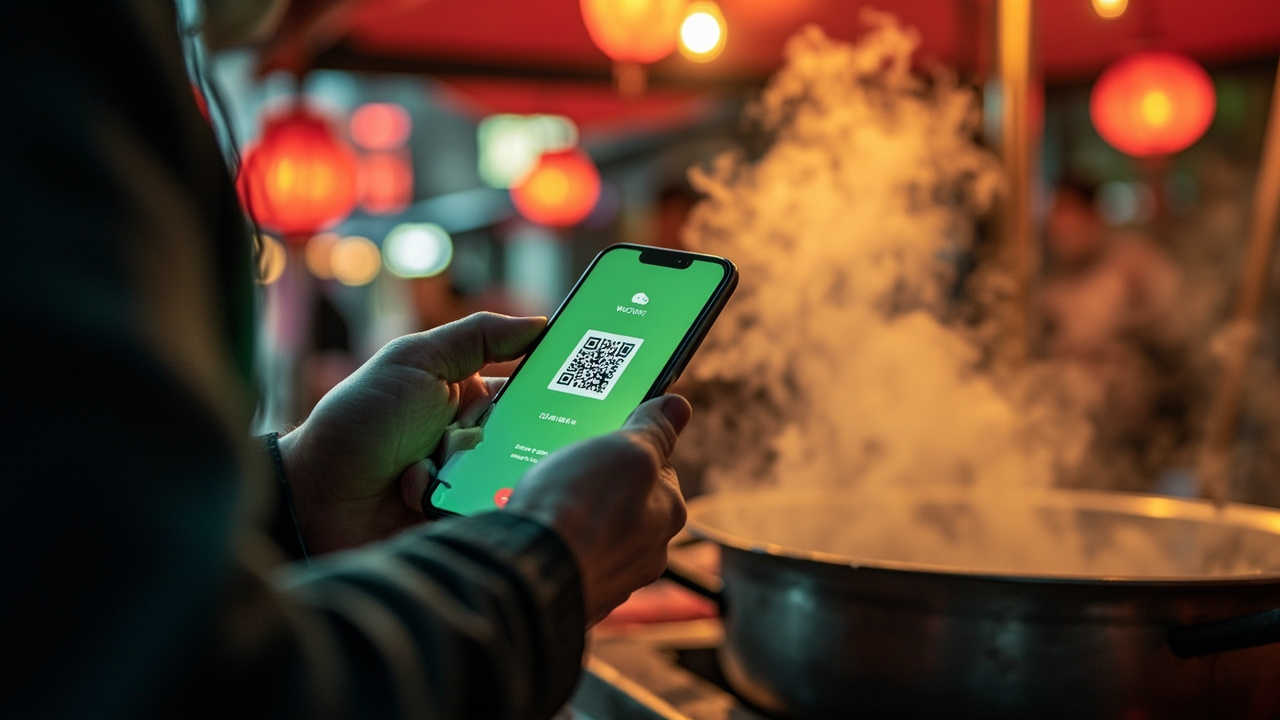
The first time I tried to pay for noodles in Chengdu, I stood at the counter holding a 50-yuan note while the owner pointed at a QR code taped to the wall and said, in English she’d clearly rehearsed, “WeChat. No cash.” I had WeChat installed. I had not set up WeChat Pay. I ended up walking twenty minutes to a bank, missing the noodles, and eating convenience store baozi on a curb. That was 2019. By my next trip I’d learned the lesson, and it’s the single most useful lesson I can pass on: in China, WeChat is not a messaging app you might use. It’s the operating system of daily life, and if you don’t set it up before you land, you’ll spend your trip solving a problem you could have solved at home.
WeChat (Weixin, 微信) is used by roughly 1.4 billion people. It handles messaging, payments, ride-hailing, restaurant menus, museum tickets, train bookings, and the little QR codes that open doors, order food, and let you into your hotel. For a foreign tourist in 2026, the good news is that it’s dramatically easier to use than it was five years ago. The bad news is that it still trips up first-timers in predictable ways, and most of those ways cost you an hour and a bowl of noodles.
This guide is what I wish someone had handed me before my first trip. It covers how to set up WeChat Pay as a foreigner, what actually works without a Chinese bank account, how it compares to Alipay, and the specific mistakes I’ve made so you don’t have to.
Quick answer
WeChat Pay now works for foreign tourists using an international Visa, Mastercard, or Amex card, and you can set it up in about 10 minutes before you fly. Download WeChat, register with your home phone number, then add a card under Me → Services → Wallet → Bank Cards. Transaction fees are roughly 3% on payments over 200 CNY (~$28) per transaction, and free below that. You do not need a Chinese bank account. Set it up at home, not at the airport, because verification sometimes needs a working SMS to your home number.
The Short Version
Set up WeChat Pay AND Alipay before you leave home. Use WeChat for messaging, restaurant menus, and small vendors. Use Alipay for bigger purchases, transport, and anything where you want a cleaner English interface. Keep 200–300 CNY (~$28–42) in physical cash as a backup. Download a VPN before you arrive if you want Google, Instagram, or WhatsApp, because they’re blocked on Chinese networks. That’s the whole game. Everything else is detail.
How I Picked These
This isn’t a list of places. It’s a list of the things that actually matter when you’re standing in a Chinese subway station at 11pm trying to pay for a ticket. I’ve been through this setup process on four separate trips since 2019, including one trip where my card got declined and I had to rebuild everything from a hotel lobby. I’ve compared notes with hostel receptionists in Xi’an, a taxi driver in Beijing who patiently walked me through his own QR code, and the staff at a Shanghai phone shop who sold me my first Chinese SIM. I’ve also watched friends fail at this in real time. What follows is the version that works.
Comparison Table
| Rank | Tool / Task | Best For | Approx Cost | Time Needed | When to Set Up |
|---|---|---|---|---|---|
| 1 | WeChat Pay | Small vendors, menus, messaging | 3% fee over 200 CNY | 10–15 min | Before you fly |
| 2 | Alipay | Transport, big purchases, English UI | 3% fee over 200 CNY | 10 min | Before you fly |
| 3 | Physical cash | Backup, tiny stalls, temples | Face value | 5 min at ATM | On arrival |
| 4 | VPN | Google, WhatsApp, Instagram | $5–12/month | 15 min | Before you fly |
| 5 | eSIM / local SIM | Data, maps, translation | $10–30 | 10 min | Before or on arrival |
WeChat Pay setup for foreigners — the actual steps
Here’s the part everyone gets wrong. You can’t set up WeChat Pay after you’ve already landed and you’re standing in a taxi queue with no data. Do it at home, on wifi, with your home phone number active.
Download WeChat from your app store. Register with your real phone number (US, UK, EU, Australian, and most Southeast Asian numbers all work). Verify with the SMS code. Then go to Me → Services → Wallet → Bank Cards and add an international Visa, Mastercard, or American Express. You’ll enter your card details, your passport name, and your passport number. Verification takes a few minutes and sometimes a few hours.
One thing that trips people up: WeChat’s interface is in Chinese by default. You can switch to English under Me → Settings → General → Language, but some payment screens stay in Chinese regardless. Screenshot them and use your phone’s built-in translation, or just learn the four characters you’ll see most: 支付 (pay), 确认 (confirm), 取消 (cancel), 完成 (done).
If your card gets declined, it’s usually because your bank flagged it as a foreign transaction. Call them before you fly and tell them you’ll be using the card in China. I learned this the hard way in 2023 when my card worked fine in Hong Kong and then failed in Shenzhen for no apparent reason.
For the broader payment picture, including how Alipay differs, see the China travel payment guide.
WeChat Pay vs Alipay — which should you actually use?
Honest answer: set up both, but if you only do one, do Alipay. I know that’s a slightly unpopular take among people who’ve been here longer, but for a first-time tourist, Alipay’s English interface is genuinely better, its transport integration (metro QR codes in most major cities) is smoother, and its dispute resolution is more forgiving.
WeChat wins on one thing that matters a lot: it’s where the people are. Restaurant menus, small shop QR codes, group chats with your hostel, and the little “add me on WeChat” exchange that happens with every guide, driver, and new friend — all of that lives in WeChat. If you want to actually talk to people, you need WeChat.
So: Alipay for transactions, WeChat for humans. Both take foreign cards. Both charge roughly 3% over 200 CNY per transaction. Both have single-transaction limits around 3,000–6,000 CNY (~$420–840) and annual limits in the tens of thousands, which you will not hit on a two-week trip.
The one real gotcha: some small vendors only accept one or the other. A noodle stall in Chongqing might have a WeChat QR code and nothing else. A convenience store in Shanghai might only take Alipay. Cash solves both, which is why you keep some.
How do you pay for things without a Chinese bank account?
You use your foreign card through WeChat Pay or Alipay, and it just works. This is the single biggest change since 2019, when foreign cards were essentially useless outside of hotels. As of 2026, both apps accept international cards for almost all transactions.
The 3% fee only kicks in above 200 CNY (~$28) per transaction. Below that, it’s free. So a 15-yuan bowl of noodles costs you exactly 15 yuan, and a 500-yuan hotel deposit costs you 500 plus about 15 yuan in fees. Over a two-week trip, expect to pay maybe $10–20 total in transaction fees. It’s negligible.
What you can’t easily do: send money to another person’s WeChat wallet (red packets, splitting bills) without a Chinese bank account. This matters if you’re traveling with Chinese friends who want to split a bill. In that case, just pay the whole thing and let them buy dinner.
ATMs work fine with foreign cards. Bank of China, ICBC, and China Construction Bank are the most reliable. Withdraw 500–1,000 CNY (~$70–140) at a time and keep it as backup. Don’t rely on cash as your primary method — half the places you’ll want to eat won’t take it.
Setting up a VPN and SIM card before you land
This is the other thing that ruins first trips. Google, Gmail, WhatsApp, Instagram, Facebook, and most Western news sites are blocked on Chinese networks. Your home SIM will roam onto a Chinese network and, depending on your carrier, may or may not route around the block. Don’t gamble on it.
Install a VPN before you fly. Once you’re in China, the VPN websites are blocked, so you can’t download one there. I use a paid service (roughly $5–12/month) and install it on both my phone and laptop. Test it at home first.
For data, you have two options. An eSIM (Airalo, Holafly, and similar) is the easiest — buy it before you fly, activate on landing, and you have data without touching a Chinese SIM. A local SIM from China Mobile or China Unicom is cheaper for long trips and gives you a Chinese phone number, which some apps want. You’ll need your passport to buy one at a carrier shop.
The full breakdown, including which carriers work best for tourists, is in the China SIM card and internet guide. Read it before you book anything else.
What can you actually do inside WeChat as a tourist?
More than you’d expect. WeChat has “Mini Programs” — lightweight apps that live inside WeChat and don’t require a separate download. For tourists, the useful ones are:
Didi (ride-hailing) has a WeChat Mini Program. You can hail a car without downloading the Didi app, pay through WeChat, and see the driver’s plate number in the chat. This is how I get around most Chinese cities now.
Restaurant menus. At most mid-range restaurants, you scan a QR code at the table, a menu opens in WeChat, you order and pay in the same screen. No waiter interaction needed. This is fantastic if you don’t speak Mandarin and mildly terrifying the first time.
Train tickets. The official 12306 app has a WeChat Mini Program. You can book high-speed rail tickets with your passport and pick them up at the station. For a full walkthrough, see the China train travel guide.
Museum and attraction tickets. The Palace Museum in Beijing, the Terracotta Warriors in Xi’an, and most major sites now require advance booking through WeChat or a Mini Program. Show up without a reservation and you’ll be turned away.
Translation. WeChat’s built-in translate function (long-press a message → Translate) handles Chinese-to-English reasonably well. It’s not as good as a dedicated app, but it’s right there.
The mistakes I’ve made so you don’t have to
I’ve messed this up in almost every way possible. Here’s the list.
I tried to set up WeChat Pay at Beijing Capital Airport on arrival, on airport wifi, with a card my bank hadn’t been told about. It failed three times. Set it up at home.
I assumed cash would work everywhere because it’s legal tender. It is, technically. In practice, a lot of small vendors genuinely can’t make change, don’t want to handle it, or will sigh audibly. Carry cash, but don’t lead with it.
I forgot to install a VPN before a trip and spent two days without Gmail. Install it before you fly. Every time.
I didn’t screenshot my hotel’s Chinese name and address. My taxi driver couldn’t read the English booking confirmation, and I couldn’t pronounce the Chinese. Screenshot the Chinese name and address of everywhere you’re staying. Show it to drivers. This one tip will save you more frustration than anything else in this guide.
I tried to use WeChat Pay to split a bill with a Chinese friend. You can’t easily send money to another person without a Chinese bank account. Just pay the whole thing.
Do you need WeChat if you have Alipay?
Yes, and here’s why. Alipay is a payment and services app. WeChat is a social app that happens to do payments. If you want to actually interact with Chinese people — get a recommendation from a hostel receptionist, stay in touch with a guide, join a hiking group, ask a stranger for directions and have them send you a pin — that happens on WeChat.
I’ve made genuine friends through WeChat on trips. A woman who ran a tea shop in Hangzhou added me after I bought oolong, and two years later she messaged me when she was visiting San Francisco. That doesn’t happen on Alipay.
So: Alipay for money, WeChat for people. If you only have time to set up one before your trip, set up WeChat, because you can always fall back on cash and Alipay is easier to set up on arrival if you have data. But ideally, do both.
FAQ summary
For a first-time tourist in 2026, WeChat Pay works with international Visa, Mastercard, and Amex cards and can be set up in about 10 minutes before you fly — no Chinese bank account required. Transaction fees are roughly 3% on payments above 200 CNY (~$28) and free below that. Set up both WeChat Pay and Alipay before departure, install a VPN before you land (Google, WhatsApp, and Instagram are blocked in China), and keep 200–300 CNY in cash as backup. WeChat is essential for messaging, restaurant menus, and Mini Programs like Didi and train booking; Alipay is better for transport and larger purchases.
FAQ
Q: Can I use WeChat Pay as a foreign tourist without a Chinese bank account? A: Yes. As of 2026, WeChat Pay accepts international Visa, Mastercard, and American Express cards. You add the card under Me → Services → Wallet → Bank Cards, enter your passport details, and you’re set. No Chinese bank account is needed.
Q: How much does WeChat Pay charge in fees? A: Transactions under 200 CNY (~$28) are free. Above that, WeChat charges roughly 3% per transaction. On a typical two-week trip, expect to pay $10–20 total in fees, which is negligible.
Q: Do I need a VPN to use WeChat in China? A: No, WeChat itself works fine on Chinese networks. You need a VPN for Google, Gmail, WhatsApp, Instagram, Facebook, and most Western news sites. Install the VPN before you fly, because VPN websites are blocked once you’re in China.
Q: What if my foreign card gets declined on WeChat Pay? A: Call your bank before you travel and tell them you’ll be using the card in China. Declines are almost always fraud flags, not a WeChat problem. If it still fails, try Alipay with the same card, or fall back on cash.
Q: Is WeChat or Alipay better for tourists? A: Alipay has a cleaner English interface and better transport integration. WeChat is essential for messaging, restaurant menus, and Mini Programs. Set up both. If you can only do one, do WeChat, because it’s where the people are.
Q: Can I send money to another person on WeChat without a Chinese bank account? A: Not easily. Sending money to another WeChat user (red packets, splitting bills) generally requires a Chinese bank account. You can pay merchants fine, but peer-to-peer transfers are restricted for foreign cards.
Q: How much cash should I carry in China? A: Keep 200–300 CNY (~$28–42) as backup. Cash works at most places legally, but many small vendors prefer QR codes and some can’t make change. Use WeChat Pay or Alipay as your primary method.
The Honest Wrap-up
This guide is for the tourist who wants to actually function in China, not just survive it. If you’re on a fully guided tour where someone else handles every payment and booking, you can skim this. If you’re going independent — booking your own trains, eating at street stalls, wandering into temples — read it twice and do the setup before you fly.
The one thing I’d tell a friend about to book the flight: spend 30 minutes at your kitchen table setting up WeChat Pay, Alipay, and a VPN before you go. That half hour is the difference between a trip where you’re constantly solving logistics and a trip where you’re actually in China. The noodles are better when you can pay for them.
More guides you may like

Top 10 Bridges in China
China's bridges are engineering marvels spanning mountains, rivers, and seas. Here are 10 of the most spectacular, from ancient stone to modern steel.
8 min read

Top 10 Buddhist Sites in China
From the Leshan Giant Buddha to the Dunhuang Caves, these 10 Buddhist sites represent 2,000 years of China's spiritual heritage.
9 min read

Top 10 Day Trips from Beijing You Shouldn't Miss
Beijing is packed with history, but some of China's best experiences are just a few hours away. Here are 10 day trips that will transform your visit.
9 min read

Top 10 Hidden Gems in China Off the Beaten Path
Beyond the Great Wall and Terracotta Warriors, China has incredible hidden destinations few tourists ever reach. Here are 10 underrated gems worth the detour.
9 min read

Top 10 Markets and Shopping Streets in China
From Shanghai's Bund to Beijing's Silk Street - 10 markets where foreigners can haggle, explore, and bring home authentic Chinese goods.
9 min read

Top 10 Museums in China You Shouldn't Miss
China's museums span 5,000 years of civilization. These 10 - from the Palace Museum to Xi'an's terracotta gallery - are unmissable for culture lovers.
9 min read