
Things to Do in Nanjing
The first thing I noticed in Nanjing was the plane trees. Thick, gnarled, planted in double rows along Zhongshan Road, their branches knitting together over…
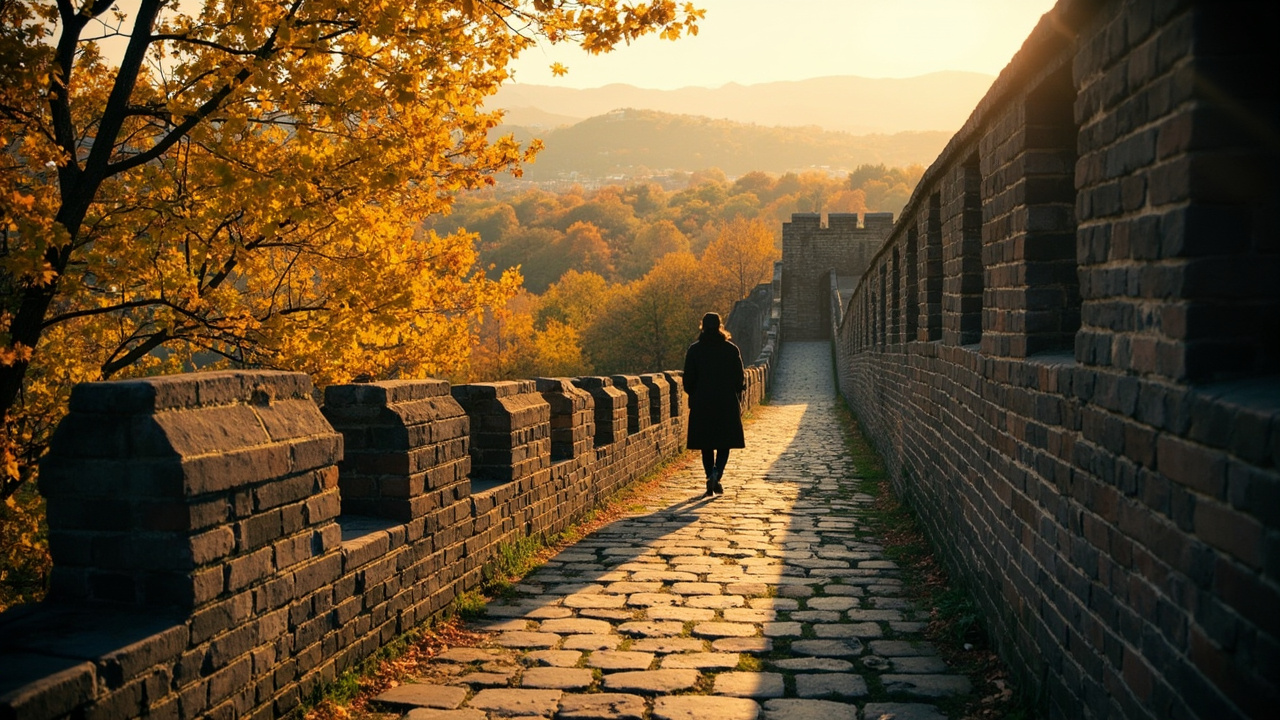
The first thing I noticed in Nanjing was the plane trees. Thick, gnarled, planted in double rows along Zhongshan Road, their branches knitting together over the traffic like a ceiling. I’d arrived on the high-speed train from Shanghai, 70 minutes door to door, and stepped out of Nanjing South Railway Station expecting another generic Chinese megacity. Instead I got a city that feels like it’s been sitting quietly with its own history for 1,800 years and doesn’t need to shout about it.
That’s the thing about Nanjing. It was the capital of China six different times, most recently under the Republic of China until 1949. It has one of the most beautiful lakes in the country, a Ming dynasty wall you can actually walk on, the world’s longest surviving ancient city wall, and a museum that’s arguably the best in China. And yet most first-time visitors skip it entirely, spending their whole trip on the Beijing-Shanghai-Xi’an triangle.
I think that’s a mistake. Nanjing is 70 minutes from Shanghai by high-speed rail, has fewer crowds than any of the big three, and costs less. You can see the essential stuff in two days. Three if you want to slow down.
This guide covers the ten things I’d tell a friend to do here — with real prices, real directions, and the stuff I wish someone had told me before my first visit. If you’re still planning your broader route, my top 10 must-visit places in China guide puts Nanjing in context.
Quick answer
Nanjing’s must-sees are the Sun Yat-sen Mausoleum and Ming Xiaoling in the Purple Mountain scenic area, the Nanjing Museum, the Confucius Temple district, and the Ming city wall. Most foreign visitors can enter China visa-free for up to 30 days under the current policy (check your nationality), and two full days in Nanjing costs roughly $120-180 (¥870-1,300) per person including a mid-range hotel, entry fees, and food. Best season is late March to May or September to November.
The Short Version
If you only have 90 seconds: come for two days. Spend day one on Purple Mountain (Sun Yat-sen Mausoleum, Ming Xiaoling, Linggu Temple), day two in the old city (Nanjing Museum, city wall, Confucius Temple at night). Eat duck. Drink the local salted duck and duck blood soup even if you think you won’t like it. Skip the Zifeng Tower observation deck. Get a metro card or set up Alipay before you arrive.
How I Picked These
I’ve been to Nanjing four times over seven years, twice solo and twice with friends who’d never been to China. The list below is what survived all four trips. I cut the Zifeng Tower, the Nanjing Massacre Memorial (worth visiting but emotionally heavy — I’ve written about it separately and won’t fold it into a “things to do” list), and the various “ancient streets” that are really just shopping malls with fake tile roofs. I kept the places I’d go back to on a fifth visit. Prices are what I paid in late 2025 and early 2026, converted at roughly 7.2 CNY to the dollar.
Comparison Table
| Rank | Place | Best For | Approx Cost (USD) | Time Needed | When to Go |
|---|---|---|---|---|---|
| 1 | Sun Yat-sen Mausoleum | Scale, history, views | Free (¥0) | 2-3 hrs | Weekday morning |
| 2 | Nanjing Museum | Chinese art and history | Free (¥0) | 3-4 hrs | Weekday, opens 9am |
| 3 | Ming Xiaoling Mausoleum | Ming architecture, autumn color | $10 (¥70) | 2 hrs | Oct-Nov |
| 4 | Confucius Temple (Fuzimiao) | Night atmosphere, snacks | Free (¥0) | 2-3 hrs | Evening |
| 5 | Ming City Wall (Zhonghua Gate) | Walking history | $7 (¥50) | 1.5 hrs | Late afternoon |
| 6 | Purple Mountain Scenic Area | Hiking, temples | Free-$15 | Half day | Spring/fall |
| 7 | Xuanwu Lake | Locals, cycling, sunsets | Free (¥0) | 2 hrs | Sunset |
| 8 | Presidential Palace | Modern Chinese history | $5 (¥35) | 2 hrs | Weekday |
| 9 | Laomendong | Old-style streets, food | Free (¥0) | 2 hrs | Evening |
| 10 | Qixia Temple & Mountain | Buddhist site, fall leaves | $4 (¥25) | Half day | Nov |
Sun Yat-sen Mausoleum — 392 Steps and a Lot of Silence
The first time I climbed the 392 steps to Sun Yat-sen’s tomb, an elderly man in a blue jacket stopped halfway, turned around, and just stood there looking back down at the forest. I did the same. From that point you can see the whole mausoleum complex laid out below you like a blueprint, and beyond it, on a clear day, the sprawl of Nanjing fading into haze.
Sun Yat-sen is the founding father of modern China, and this mausoleum, completed in 1929, is one of the most impressive pieces of architecture in the country. The design is deliberately symmetrical — you climb through a series of gates, each one taller than the last, until you reach the tomb chamber itself. The blue-tiled roof is the same blue as the sky on a good day, which is not an accident.
📷 Location: Xuanwu District, inside the Purple Mountain scenic area, about 7 km east of downtown. 🎟️ Entry fee: Free. The shuttle bus inside the scenic area costs $2 (¥15) one way. 🕒 Opening hours: 8:30am-5pm, closed Mondays (except public holidays). 🚇 How to actually get there: Take Metro Line 2 to Muxuyuan Station (苜蓿园), Exit 1, then walk 10 minutes to the scenic area entrance, or take the sightseeing shuttle. Don’t try to walk the whole way from the metro — it’s further than it looks. ⏰ When to visit: Weekday mornings before 10am. Weekends in cherry blossom season (late March) are genuinely packed. 💡 Insider tips: The 392 steps are symbolic — there are 392 million people who could theoretically fit in the Republic of China at the time. Bring water; there’s very little shade on the climb. The tomb chamber itself is small and quiet, and you’re expected to walk through in silence. Photography is allowed everywhere except inside the chamber.
I made the mistake of going on a Saturday in April my first time. It took 40 minutes just to get through the entry gate. Go on a Tuesday.
Nanjing Museum — The Best Museum in China You’ve Never Heard Of
I’m going to say something that might annoy people in Beijing and Taipei: the Nanjing Museum is the best general-history museum in China. It’s not as famous as the Palace Museum, but it’s better organized, less crowded, and the collection is extraordinary. The Ming and Qing porcelain alone is worth the trip.
The museum sits on the site of the former National Central Museum, founded in 1933. It has around 430,000 objects, including a jade burial suit sewn with silver thread from the Han dynasty and one of the best collections of Republican-era painting anywhere. The main building is a beautiful 1930s structure with a yellow-tiled roof, and the newer extension underground is where the big-ticket galleries live.
📷 Location: 321 Zhongshan East Road, Xuanwu District. 🎟️ Entry fee: Free, but you must reserve a slot online in advance (via the museum’s WeChat account or official website). Slots open 7 days ahead and fill fast in peak season. 🕒 Opening hours: 9am-5pm, closed Mondays. Last entry 4pm. 🚇 How to actually get there: Metro Line 2 to Minggugong Station (明故宫), Exit 1, walk 5 minutes east. You’ll see the yellow roof. ⏰ When to visit: Weekday mornings. Avoid the first weekend of any school holiday. 💡 Insider tips: Bring your passport — you’ll need it to enter. There’s a free English audio guide you can scan with WeChat. The Republican-era gallery on the second floor is the one most tourists skip and shouldn’t. The basement café does a decent coffee and is a good place to sit out the afternoon rush.
I went with a friend who teaches Chinese history at a university in the UK. She spent three hours in the porcelain gallery alone. I spent most of mine in the Republican section, which tells the story of Nanjing as the capital of the Republic of China from 1927 to 1937, before the Japanese occupation.
Ming Xiaoling Mausoleum — The One With the Elephants
The approach to Ming Xiaoling is a 600-meter walk lined with stone animals — elephants, camels, lions, horses — each pair carved from a single block of stone in the 15th century. The elephants are the size of actual elephants. I watched a small child try to climb one and get gently but firmly removed by a guard.
This is the tomb of Zhu Yuanzhang, the founding emperor of the Ming dynasty, and it’s the model for basically every Ming and Qing imperial tomb that came after, including the Ming Tombs outside Beijing. The site is enormous — you walk through a series of gates and courtyards before reaching the burial mound itself, which is a forested hill you can’t actually enter.
📷 Location: Purple Mountain scenic area, Xuanwu District. 🎟️ Entry fee: $10 (¥70). Combined ticket with Sun Yat-sen Mausoleum and Linggu Temple is $15 (¥100). 🕒 Opening hours: 6:30am-6:30pm (shorter in winter, roughly 7am-5:30pm). 🚇 How to actually get there: Metro Line 2 to Muxuyuan Station, Exit 1, then the scenic area shuttle or a 25-minute walk. The shuttle is worth it. ⏰ When to visit: Late October to mid-November for the ginkgo and maple color. Weekday mornings otherwise. 💡 Insider tips: The stone animal walk is the best part and it’s before you reach the ticket gate, so technically you can see it for free if you’re short on time. The Sacred Way continues past the animals to a pair of stone pillars — most people turn back too early. Wear real shoes; the paths are uneven.
I ate a bag of roasted chestnuts on the walk back to the shuttle stop. It was November, cold, and they were the best chestnuts I’ve had in China. The vendor was an old woman who’d been selling them at the same spot for, she said, 22 years.
Confucius Temple District (Fuzimiao) — Go at Night, Eat Everything
Fuzimiao during the day is a tourist trap. At night, with the Qinhuai River lit up and the boats moving slowly under the bridges, it becomes something else. I don’t usually go in for “atmosphere” as a reason to visit a place, but this one earns it.
The Confucius Temple itself dates to 1034, though the current building is a reconstruction. The surrounding district is a maze of snack stalls, tea houses, and shops selling everything from calligraphy brushes to plastic light-up rabbit ears. It’s loud, crowded, and slightly ridiculous. It’s also one of the most fun evenings you can have in Nanjing.
📷 Location: Qinhuai District, south of the old city center. 🎟️ Entry fee: Free to walk the district. Temple entry is $4 (¥30). 🕒 Opening hours: District is always open; most stalls run 10am-10pm. Temple 9am-9pm. 🚇 How to actually get there: Metro Line 3 to Fuzimiao Station (夫子庙), Exit 2, walk 3 minutes. You’ll know you’re there. ⏰ When to visit: After 7pm, any day. Lantern Festival (15th day of the first lunar month, usually February) is spectacular but insanely crowded. 💡 Insider tips: The boat ride on the Qinhuai River is $12 (¥80) for about 40 minutes and is genuinely worth it at night. Eat the duck blood soup (鸭血粉丝汤) — it’s a Nanjing specialty and costs about $2 (¥15) from a street stall. The “imperial examination museum” nearby is skippable unless you’re really into exam history. Bring cash for the smallest stalls; not all take WeChat Pay.
I bought a paper lantern from a woman who insisted I take a photo of her stall before I paid. She then gave me a second lantern for free “because you’re polite.” I have no idea if this is a regular thing or if I just got lucky.
Ming City Wall at Zhonghua Gate — Walk on 600-Year-Old Bricks
Nanjing’s city wall is the longest surviving ancient city wall in the world — about 25 km of it remains, and you can walk on top of significant stretches. The best section for a first visit is at Zhonghua Gate (中华门), the largest surviving city gate in China. It’s a fortress within a fortress, with four concentric walls and 27 soldier stations built into the structure.
I walked the wall from Zhonghua Gate east toward the Confucius Temple one afternoon. It took about 90 minutes and I saw maybe 15 other people the whole way. You’re walking on bricks that were laid in the 1360s, each one stamped with the name of the kiln that made it — a quality-control system that Zhu Yuanzhang introduced so he could trace any failing brick back to its maker.
📷 Location: Zhonghua Gate is at the south end of Zhonghua Road, Qinhuai District. 🎟️ Entry fee: $7 (¥50) for Zhonghua Gate. The wall walk east is included in the same ticket. 🕒 Opening hours: 8:30am-8:30pm (shorter in winter). 🚇 How to actually get there: Metro Line 1 to Zhonghuamen Station (中华门), Exit 2, walk 5 minutes. The gate is unmissable. ⏰ When to visit: Late afternoon, an hour or so before sunset. The light on the wall is beautiful and the crowds thin out. 💡 Insider tips: The wall is exposed — bring a hat in summer. There are very few places to buy water on the wall itself, so stock up before you go up. The Zhonghua Gate interior has a small museum about the wall’s construction that’s worth 20 minutes. If you’re into this kind of thing, the Beijing city wall sections are a good comparison.
I got mildly lost trying to find the exit at the east end and ended up walking an extra 20 minutes. Worth it. The view of the city from up there at dusk, with the lights coming on and the plane trees below, is one of my favorite memories of Nanjing.
Purple Mountain Scenic Area — More Than Just the Mausoleum
Most people treat Purple Mountain as a single destination — go see Sun Yat-sen, leave. That’s a mistake. The whole scenic area is about 30 square km of forest, temples, and trails, and you could spend two full days here without running out of things to do.
The highlights beyond the mausoleum: Linggu Temple, with its beamless hall built in 1381 entirely from brick and stone; the Linggu Pagoda, which you can climb for a view over the whole area; and the various hiking trails that connect everything. In spring the cherry blossoms along the road up to the mausoleum are spectacular. In autumn the ginkgo trees turn the whole area gold.
📷 Location: Eastern edge of Nanjing, Xuanwu District. 🎟️ Entry fee: Free to enter the scenic area. Individual sites charge separately ($4-10 each). Combined ticket $15 (¥100). 🕒 Opening hours: Scenic area 24 hours; individual sites 8am-5:30pm. 🚇 How to actually get there: Metro Line 2 to Muxuyuan Station, Exit 1. From there, shuttle buses run to the different sites, or you can walk. ⏰ When to visit: Spring (March-April) or autumn (October-November). Summer is brutally hot and humid. 💡 Insider tips: The shuttle bus system inside the scenic area is confusing — each line goes to a different site and they don’t all connect. Ask at the visitor center near the entrance. Bring mosquito repellent in summer. The trails between sites are well-marked but steep in places.
I once spent an entire afternoon just sitting by the lake near Linggu Temple, watching turtles. I have no regrets.
Xuanwu Lake — Where Locals Actually Go
Xuanwu Lake is the biggest park in Nanjing and the one place on this list where you’ll see more locals than tourists. It’s a 3.7 square km lake with five islands connected by causeways, surrounded by the city wall on one side and Purple Mountain on the other. On a Sunday afternoon it’s full of families, joggers, old men playing cards, and couples on rented pedal boats.
I rented a bike here on my second visit and cycled the full loop, which takes about an hour at a relaxed pace. The path is flat and mostly shaded. Halfway around I stopped at a tea house on one of the islands and had a cup of local green tea for $3 (¥20) while a group of retirees did tai chi on the lawn nearby.
📷 Location: North of the city center, Xuanwu District. 🎟️ Entry fee: Free. 🕒 Opening hours: 24 hours, though the gates to some islands close around 9pm. 🚇 How to actually get there: Metro Line 1 to Xuanwumen Station (玄武门), Exit 3, and you’re at the south gate. Or Line 3 to Nanjing Forestry University Station for the north side. ⏰ When to visit: Late afternoon into sunset. Weekends for the local scene, weekdays for quiet. 💡 Insider tips: Bike rental is about $3 (¥20) per hour and there are rental stands near most gates. The north side of the lake has the best views of Purple Mountain. There’s a small bonsai garden on one of the islands that almost no tourists visit. Bring snacks — the food options inside the park are limited.
A man named Liu, who was fishing off one of the causeways, told me he’d been coming to the lake every morning for 30 years. He hadn’t caught anything that day. He didn’t seem to mind.
Presidential Palace — Where Modern China Was Born
The Presidential Palace is where Sun Yat-sen was sworn in as provisional president in 1912, and where Chiang Kai-shek ran the Republic of China government until 1949. It’s a strange, layered place — part imperial garden, part Republican-era office building, part museum of the revolution that ended the Republic.
I found it more interesting than I expected. The gardens are lovely, and the Republican-era offices have been preserved with desks and documents in place. But the most affecting part is the small exhibit on the final days of the Republic in 1949, when the government fled to Taiwan. It’s told from the mainland perspective, obviously, but it’s more nuanced than I’d anticipated.
📷 Location: 292 Changjiang Road, Xuanwu District. 🎟️ Entry fee: $5 (¥35). 🕒 Opening hours: 8:30am-5pm, closed Mondays. 🚇 How to actually get there: Metro Line 2 or 3 to Daxinggong Station (大行宫), Exit 5, walk 5 minutes. ⏰ When to visit: Weekday mornings. Weekends are busy with domestic tour groups. 💡 Insider tips: The English signage is decent but the audio guide (about $4/¥30) adds a lot. The garden in the back is the quietest part of the complex. Photography is fine everywhere. There’s a decent café on site.
I went with a friend who is Taiwanese-American and hadn’t been to mainland China before. It was a strange experience for both of us. We talked about it for hours afterward.
Laomendong — The “Old Street” That Actually Works
I’m usually skeptical of reconstructed old streets. Laomendong is one, technically — it was rebuilt in the 2010s — but it’s done well enough that it doesn’t feel like a theme park. The architecture is based on the Ming and Qing styles that were actually here, the streets are narrow and winding, and the food is genuinely good.
Come in the evening. The lanterns come on, the crowds are manageable on weekdays, and the whole place feels warm and alive. There’s a good mix of snack stalls, small restaurants, tea shops, and craft stores. I bought a hand-painted fan here for $8 (¥60) that I still use.
📷 Location: Qinhuai District, next to the city wall and a 10-minute walk from Confucius Temple. 🎟️ Entry fee: Free. 🕒 Opening hours: Always open; most shops 10am-10pm. 🚇 How to actually get there: Metro Line 3 to Wudingmen Station (武定门), Exit 2, walk 5 minutes. ⏰ When to visit: Weekday evenings. Weekends are packed. 💡 Insider tips: The best food is in the side alleys, not on the main drag. Try the Nanjing salted duck (盐水鸭) — it’s the city’s signature dish and costs about $5 (¥35) for a portion. There’s a small temple at the north end that most people miss. The wall walk connects here, so you can combine the two.
I had a bowl of duck blood soup here that was better than the one at Confucius Temple. I don’t know why. Maybe it was the cold evening.
Qixia Temple and Mountain — The One Most Tourists Skip
Qixia Temple is 22 km northeast of the city center, and almost no foreign tourists go. That’s a shame, because it’s one of the most important Buddhist sites in eastern China and the mountain it sits on is beautiful. The temple was founded in 489 AD and has been rebuilt many times, but the stone carvings in the cliff behind it — the Thousand Buddha Cliff — date to the 5th and 6th centuries.
I went in November specifically for the maple leaves, which turn the whole mountain red and orange. The walk up from the temple to the cliff carvings takes about 30 minutes and is steep in places. I passed maybe five other people the whole way. At the top, the carvings are weathered but still visible — hundreds of small Buddha figures cut into the rock face.
📷 Location: Qixia District, northeast of the city. 🎟️ Entry fee: $4 (¥25) for the temple, plus $7 (¥50) for the mountain area in peak autumn season. 🕒 Opening hours: 7am-5:30pm. 🚇 How to actually get there: Metro Line 1 to Maigaoqiao Station, then bus 206 or a taxi (about $8/¥60). The bus takes 45 minutes. ⏰ When to visit: Late October to late November for the leaves. Weekday mornings year-round. 💡 Insider tips: This is a half-day trip minimum. Bring water and snacks — there’s very little on the mountain. The temple serves a vegetarian lunch for about $3 (¥20) that’s worth timing your visit around. Wear proper shoes; the paths are uneven and can be slippery.
I ate the vegetarian lunch in the temple dining hall, surrounded by monks and a few local families. It was one of the best meals I had in Nanjing and cost less than a coffee in Shanghai.
FAQ summary
Nanjing is best visited over two full days, with day one on Purple Mountain (Sun Yat-sen Mausoleum, Ming Xiaoling, Linggu Temple) and day two in the old city (Nanjing Museum, Ming City Wall, Confucius Temple, Laomendong). Most foreign visitors can enter China visa-free for up to 30 days under the current policy, and Nanjing is 70 minutes from Shanghai by high-speed rail. Budget roughly $60-90 (¥430-650) per person per day including a mid-range hotel, food, and entry fees. The best seasons are spring (March-May) and autumn (September-November). Set up Alipay or WeChat Pay before you arrive, and download a VPN if you need Google, WhatsApp, or Instagram.
FAQ
Q: Do I need a visa to visit Nanjing? A: Most foreign visitors from the US, UK, EU, Australia, and much of Southeast Asia can enter China visa-free for up to 30 days under the current policy (as of 2026). Check your specific nationality before booking. If you’re only transiting, the 240-hour visa-free transit policy covers Nanjing too. See the visa-free transit guide for details.
Q: How do I get from Shanghai to Nanjing? A: High-speed trains run every 10-20 minutes from Shanghai Hongqiao Station to Nanjing South Station. The trip takes 60-75 minutes and costs $20-35 (¥145-250) depending on class. Book on the official Railway 12306 app or Trip.com. See the China train travel guide for how to book.
Q: Is English widely spoken in Nanjing? A: Less than in Shanghai or Beijing. Hotel staff at international chains speak English, but most restaurants, taxis, and small shops do not. Download a translation app (Google Translate works with a VPN, or use Baidu Translate which works without one) and have your hotel address written in Chinese to show drivers.
Q: How much does a day in Nanjing cost? A: Budget $60-90 (¥430-650) per person per day for a mid-range hotel, three meals, entry fees, and metro. Backpackers can do it on $35-50 (¥250-360). Luxury hotels push it to $200+ per day.
Q: Do I need a VPN in Nanjing? A: Yes, if you want to use Google, Gmail, WhatsApp, Instagram, or Facebook. Download and install a VPN before you arrive — they’re harder to get once you’re in China. See the SIM card and internet guide for setup.
Q: What’s the best time of year to visit Nanjing? A: Late March to May for cherry blossoms and mild weather, or September to November for autumn color and comfortable temperatures. Avoid July and August — it’s hot, humid, and crowded with domestic tourists. Winter is cold and gray but the crowds are gone.
Q: Is Nanjing worth visiting if I only have two days in China? A: Probably not — with only two days, stick to Beijing or Shanghai. But if you have four or more days and are already planning Shanghai, Nanjing is a perfect two-day add-on. It’s cheaper, less crowded, and gives you a version of China that isn’t the usual tourist circuit.
The Honest Wrap-up
This list is for the traveler who’s already done Beijing and Shanghai and wants to see a Chinese city that isn’t on every itinerary. It’s not for someone with three days total in China, or someone who wants a checklist of Instagram spots. Nanjing rewards slow travel. The best moments I’ve had here were unplanned — a conversation with a fisherman, a bowl of soup in a side alley, an hour sitting on the city wall watching the light change.
If you’re booking the flight, my one piece of advice: give Nanjing three days, not two. Day one for Purple Mountain, day two for the old city, day three for Qixia or a repeat visit to whatever you loved most. And eat the duck. All of it.
More guides you may like
Top 10 Bridges in China
China's bridges are engineering marvels spanning mountains, rivers, and seas. Here are 10 of the most spectacular, from ancient stone to modern steel.
8 min read

Top 10 Buddhist Sites in China
From the Leshan Giant Buddha to the Dunhuang Caves, these 10 Buddhist sites represent 2,000 years of China's spiritual heritage.
9 min read
Top 10 Day Trips from Beijing You Shouldn't Miss
Beijing is packed with history, but some of China's best experiences are just a few hours away. Here are 10 day trips that will transform your visit.
9 min read
Top 10 Hidden Gems in China Off the Beaten Path
Beyond the Great Wall and Terracotta Warriors, China has incredible hidden destinations few tourists ever reach. Here are 10 underrated gems worth the detour.
9 min read
Top 10 Markets and Shopping Streets in China
From Shanghai's Bund to Beijing's Silk Street - 10 markets where foreigners can haggle, explore, and bring home authentic Chinese goods.
9 min read
Top 10 Museums in China You Shouldn't Miss
China's museums span 5,000 years of civilization. These 10 - from the Palace Museum to Xi'an's terracotta gallery - are unmissable for culture lovers.
9 min read