
Best Street Food in Xi'an
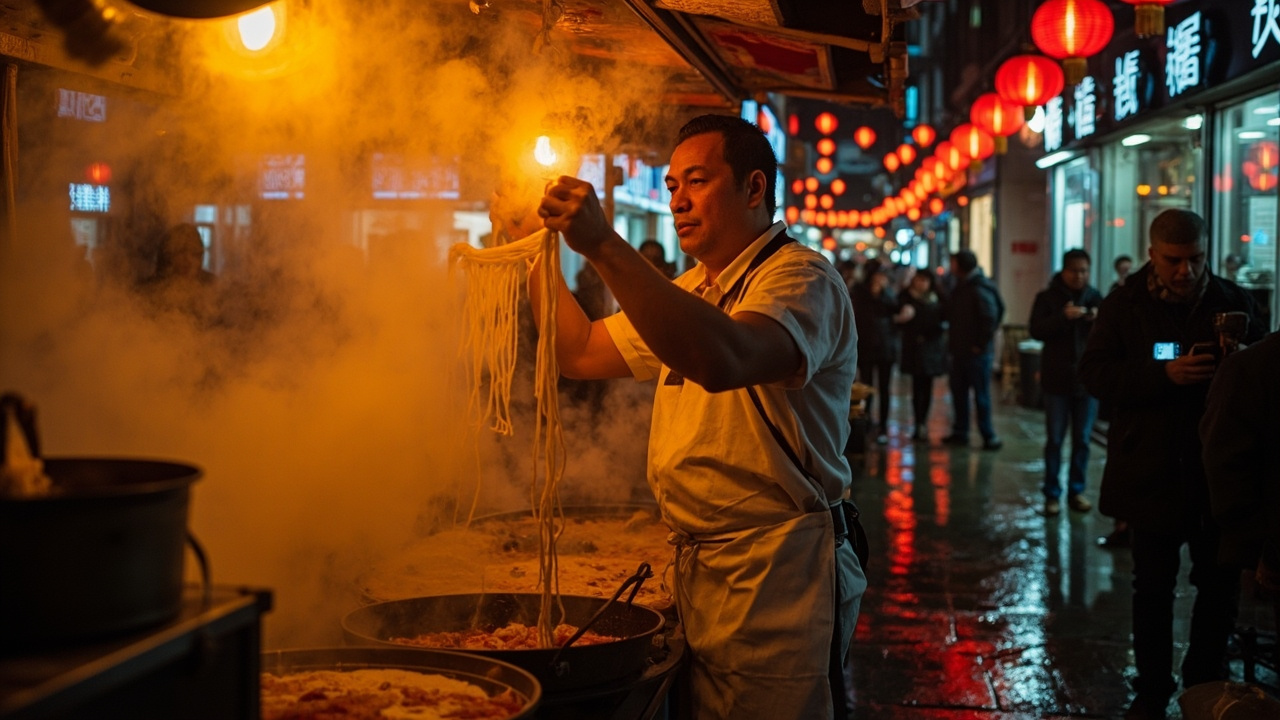
The first thing I noticed wasn't the smell. It was the sound of dough hitting a metal countertop, over and over, like a slow drumbeat. I was standing in the…
Best Street Food in Xi’an
The first thing I noticed wasn’t the smell. It was the sound of dough hitting a metal countertop, over and over, like a slow drumbeat. I was standing in the Muslim Quarter at 7pm on a Tuesday, watching a man in his sixties stretch a single rope of dough into sixteen strands without ever looking down at his hands. His stall had no English sign, no menu, no prices on the wall. Just a line of locals holding their phones up to scan a QR code taped to a plastic stool. I pointed at what the person in front of me was eating, held up two fingers, and paid about $1.40 (10 CNY) for the best bowl of noodles I’ve had in seven years of living in China.
That’s Xi’an. It’s a city of 13 million people that most first-time visitors treat as a two-day stopover between Beijing and Chengdu, and then they leave having eaten at the hotel buffet. Which is a genuine tragedy, because Xi’an is arguably the best street food city in China. Not Beijing, not Chengdu, not Guangzhou. Xi’an. The city sits at the eastern end of the Silk Road, and you can taste 1,400 years of Persian, Central Asian, and Han Chinese influence in every bowl of lamb soup and every flatbread slapped against a clay oven wall.
This guide is for people who have never been to China before. It covers ten specific places, what they cost in 2026, how to get there on the metro, and the small things that will keep you from standing awkwardly at a counter while a vendor waits for you to figure out how WeChat Pay works. I’ve eaten at all of these. Some I go back to every trip. One I think is genuinely overrated, and I’ll say so.
Quick answer
The best street food in Xi’an is concentrated in two areas: the Muslim Quarter (回民街, Huimin Jie) near the Drum Tower, and the streets around Yongxingfang and Sajinqiao, both a short taxi or metro ride from the city center. Budget $8–15 (55–105 CNY) per person for a full street food crawl, and expect most individual dishes to cost $1–4 (7–28 CNY). China currently offers 240-hour (10-day) visa-free transit for citizens of 54 countries including the US, UK, and most of the EU, which is more than enough time to eat your way through Xi’an.
The Short Version
If you only have one night: go to the Muslim Quarter at dusk, start at the Drum Tower end, and eat your way north. Get the roujiamo (Chinese “hamburger”) first, then yangrou paomo (lamb soup with torn bread), then biangbiang noodles, then finish with a cold bowl of liangpi. Skip anything with a photo menu and English translations plastered on the front. The best stalls have no English at all. Bring your phone with Alipay or WeChat Pay set up before you arrive — most vendors no longer take cash, and some will genuinely not know what to do if you hand them a 100 CNY note.
How I Picked These
I’ve been to Xi’an eleven times since 2019, usually for three or four days at a stretch, and I’ve eaten at probably 60+ street stalls there. This list is filtered down from my own notes and from recommendations I got from a Xi’anese friend named Wei, who grew up in the Beilin district and refuses to eat anywhere near the main tourist strip. I’ve excluded places that got famous on TikTok and then raised prices, and I’ve excluded a few that are genuinely good but impossible to find without a Chinese-speaking friend. What’s left is a mix of tourist-friendly classics and local spots that a first-timer can actually reach. Prices are 2026 estimates based on my most recent trip.
Comparison Table
| Rank | Place | Best For | Approx Cost (USD) | Time Needed | When to Go |
|---|---|---|---|---|---|
| 1 | Lao Sun Jia (Muslim Quarter) | Yangrou paomo | $4–6 (28–42 CNY) | 45 min | Lunch, 11am–1pm |
| 2 | Yangrou Paomo Alley (Sajinqiao) | Local lamb soup | $3–5 (21–35 CNY) | 1 hr | Breakfast, 7–9am |
| 3 | Biangbiang Noodle stalls (Yongxingfang) | Hand-pulled noodles | $2–4 (14–28 CNY) | 30 min | Dinner, 6–8pm |
| 4 | Roujiamo stalls (Muslim Quarter) | Chinese “burger” | $1.50–3 (10–21 CNY) | 15 min | Anytime |
| 5 | Liangpi vendors (Beiyuanmen) | Cold noodles | $1.50–2.50 (10–18 CNY) | 20 min | Summer lunch |
| 6 | Jia San Guan Tang Bao | Soup dumplings | $4–7 (28–49 CNY) | 40 min | Breakfast |
| 7 | Muslim Quarter BBQ skewers | Late-night meat | $5–10 (35–70 CNY) | 1 hr | 9pm–midnight |
| 8 | Huimin Jie persimmon cakes | Sweet snack | $1–2 (7–14 CNY) | 10 min | Afternoon |
| 9 | Sajinqiao night market | Everything | $6–12 (42–84 CNY) | 2 hr | 6–10pm |
| 10 | Yongxingfang | Modernized classics | $8–15 (55–105 CNY) | 2 hr | Dinner |
1. Lao Sun Jia — The Yangrou Paomo That Started It All
I made a mistake my first time here. I sat down, ordered yangrou paomo, and when the bowl of bread arrived I started eating it with my hands like a tourist. The woman at the next table leaned over, took my bowl, and tore the bread into pieces the size of my thumbnail herself. Then she handed it back and said something I didn’t understand but clearly meant “now give it to the kitchen.”
Yangrou paomo (羊肉泡馍) is Xi’an’s signature dish, and Lao Sun Jia has been making it since 1898. You get a bowl of dense flatbread, you tear it yourself into tiny pieces (this takes 10 minutes and is part of the ritual), and the kitchen pours boiling lamb broth over it with slices of braised lamb and glass noodles. The tearing matters — smaller pieces absorb more broth.
It’s not cheap by street food standards, but it’s a full meal. The broth is rich and slightly gamey, and if you don’t like lamb, this is not the dish for you. I’ve seen people order it and then push it away after two bites because they expected something more like beef noodle soup. It isn’t.
📍 Location: 85 Beiyuanmen, Lianhu District (inside the Muslim Quarter, about 200m north of the Drum Tower) 🍜 Entry fee: Free entry; dish costs $4–6 (28–42 CNY) 🕒 Opening hours: 10am–9pm daily, no rest days 🚇 How to get there: Metro Line 2 to Zhonglou (Bell Tower) Station, Exit A1, walk northwest 8 minutes ⏰ When to visit: Weekday lunch, 11am–1pm. Weekends are packed with tour groups 💡 Insider tips: Tear the bread small. Ask for “shao” (少) if you want less lamb fat. Bring cash as backup — the QR code reader occasionally fails. Sit at a shared table; it’s normal.
The woman who tore my bread didn’t give her name, but I’ve thought about her every time I’ve eaten this dish since.
2. Sajinqiao Breakfast Alley — Where Locals Actually Eat
Sajinqiao is not on any tourist map. It’s a long, narrow street in the northwest of the old city, and at 7am it’s packed with men in construction vests and grandmothers carrying plastic bags of vegetables. There is no English signage anywhere. This is the real Xi’an breakfast scene, and it’s worth the 15-minute taxi ride from the Bell Tower.
The star is a small stall with no name that serves yangrou paomo’s rougher cousin: a bowl of lamb broth with chunks of bread, chili oil, and pickled garlic on the side, for $3 (21 CNY). It’s hotter, spicier, and less refined than the Lao Sun Jia version, and I honestly prefer it. There’s also a woman selling jianbing (savory crepes) with egg and crispy fried dough for $1.20 (8 CNY), and a man with a giant wok of fried dough sticks that you dip in soy milk.
Come here if you want to see what Xi’anese people eat when no one is watching. Don’t come here if you need English menus or a place to sit down comfortably — most stalls are standing only, and the seating that exists is plastic stools on the sidewalk.
📍 Location: Sajinqiao Street, Lianhu District (northwest of the old city wall) 🍜 Entry fee: Free; individual dishes $1–4 (7–28 CNY) 🕒 Opening hours: 6:30am–10am only. By 10:30 the stalls are gone 🚇 How to get there: Metro Line 1 to Sajinqiao Station, Exit B, walk 3 minutes west ⏰ When to visit: Any weekday, 7–9am. Weekends are slightly less crowded because locals sleep in 💡 Insider tips: Bring small bills. Most vendors here still take cash. Point at what you want — no one speaks English. The lamb broth stall with the blue plastic awning is the best one. Don’t wear white.
I once watched a man in a suit eat three bowls of lamb soup standing up, then get on a scooter and ride off. That’s the vibe.
3. Biangbiang Noodles at Yongxingfang — The Noodle With the Impossible Character
The character for “biang” is the most complicated Chinese character in existence — 58 strokes, and it doesn’t appear in most dictionaries. It’s a marketing gimmick, but the noodles are real and they’re excellent. Biangbiang mian are wide, hand-pulled, belt-like noodles served with chili oil, garlic, vinegar, and usually a scoop of braised pork or tomato-egg sauce.
Yongxingfang is a “modernized” food court near the city wall that opened in 2016. It’s cleaner than the Muslim Quarter, has English menus, and is more expensive. I have mixed feelings about it — it’s a bit sanitized, and some locals roll their eyes at it. But for a first-timer who wants to try biangbiang noodles without navigating a chaotic street stall, it’s a solid introduction. The noodle-pulling demonstration at the entrance is genuinely fun to watch.
The noodles themselves are chewy and slightly slippery, and the chili oil is fragrant rather than painfully hot. A bowl costs $3–4 (21–28 CNY). Get the version with pork.
📍 Location: 8 Yongningmen, Beilin District (just inside the South Gate) 🍜 Entry fee: Free entry; dishes $2–6 (14–42 CNY) 🕒 Opening hours: 10am–10pm daily 🚇 How to get there: Metro Line 2 to Yongningmen Station, Exit D1, walk 5 minutes east ⏰ When to visit: Weekday dinner, 6–8pm. It gets very crowded on weekends 💡 Insider tips: Order at the counter, not the table. The noodle-pulling demo is at the front entrance every hour on the hour. Vegetarian versions exist but aren’t clearly labeled — ask. There’s a decent craft beer stall on the second floor.
I brought a friend from Berlin here who had never eaten Chinese food outside of Germany. She ordered a second bowl.
4. Roujiamo Stalls in the Muslim Quarter — The Original Chinese Burger
Roujiamo (肉夹馍) is often called a “Chinese hamburger,” which is technically wrong (the bread is more like an English muffin crossed with a pita) but gets the point across. It’s a slow-braised pork or beef filling stuffed into a flat, flaky bun that’s been crisped in a clay oven. It costs $1.50–3 (10–21 CNY) and it’s the single best cheap eat in Xi’an.
The Muslim Quarter version uses beef or lamb instead of pork, since the neighborhood is predominantly Hui Muslim. The best stalls are the ones with a visible pile of meat on a cutting board and a clay oven behind the counter. If the meat is pre-shredded and sitting in a warming tray, walk away. You want to see the vendor chop it fresh.
I have a strong opinion here: the roujiamo at the famous stalls on Beiyuanmen (the main Muslim Quarter street) is fine but overpriced. Walk one block east to the parallel street, where the same sandwich costs 30% less and tastes better. The stall I go back to is on a side alley off Dapiyuan, run by a man named Ma who has been doing this for 22 years.
📍 Location: Throughout the Muslim Quarter, best on side streets off Beiyuanmen and Dapiyuan 🍜 Entry fee: Free; sandwich $1.50–3 (10–21 CNY) 🕒 Opening hours: 10am–10pm, most stalls closed on Fridays until 2pm (prayer) 🚇 How to get there: Metro Line 2 to Zhonglou Station, Exit A1, walk northwest into the Muslim Quarter ⏰ When to visit: Anytime, but 3–5pm is quietest 💡 Insider tips: Ask for “jia mo” and point at the meat you want. Say “bu yao la” (不要辣) if you don’t want chili. The bread should be hot and slightly crunchy. Eat it immediately — it gets soggy fast.
Ma wouldn’t let me pay the second time I visited. I’ve been back four times since.
5. Liangpi Vendors on Beiyuanmen — Cold Noodles for Hot Days
Liangpi (凉皮) is a cold noodle dish made from wheat or rice starch, served with chili oil, vinegar, cucumber, and gluten cubes. It’s Xi’an’s summer food, and it’s incredibly refreshing when it’s 38°C and you’ve been walking around the city wall for three hours.
The texture is what surprises first-timers — the noodles are slippery and slightly chewy, almost like a cross between pasta and jelly. The sauce is sour, spicy, and garlicky. It costs $1.50–2.50 (10–18 CNY) per bowl. There are dozens of liangpi vendors on Beiyuanmen, and honestly most of them are fine. The best ones make their own noodles fresh in the morning.
I’ll be honest: I think liangpi is a bit overrated compared to the other dishes on this list. It’s good, but it’s not the thing I’d fly back to Xi’an for. If you’re only eating five things in the city, this isn’t one of them. But if you’re here in July and you need something cold, it’s perfect.
📍 Location: Beiyuanmen Street and surrounding alleys, Lianhu District 🍜 Entry fee: Free; bowl $1.50–2.50 (10–18 CNY) 🕒 Opening hours: 11am–8pm, seasonal (some stalls close in winter) 🚇 How to get there: Metro Line 2 to Zhonglou Station, Exit A1, walk 5 minutes northwest ⏰ When to visit: Summer lunch, 12–2pm 💡 Insider tips: Ask for less chili if you’re sensitive (“shao la”). The gluten cubes are the best part — don’t leave them. Pair with a cold bottle of local Bingfeng soda ($0.70 / 5 CNY).
I watched a French tourist eat an entire bowl in 90 seconds in August heat. Respect.
6. Jia San Guan Tang Bao — Soup Dumplings for Breakfast
Guan tang bao (灌汤包) are Xi’an’s answer to Shanghai’s xiaolongbao — thin-skinned dumplings filled with pork and hot broth. Jia San is the most famous shop in the city, open since 1935, and it’s a proper sit-down restaurant rather than a street stall. A steamer basket of 8 dumplings costs $4–7 (28–49 CNY).
The trick with guan tang bao is that you have to bite a small hole in the side first, sip the broth, then eat the rest. If you bite straight in, you’ll burn your mouth. I learned this the hard way in 2021 and couldn’t taste anything for two days.
Jia San is a Xi’an institution, and it’s worth one visit. It’s not street food in the strict sense, but it’s the kind of place where locals go on Sunday mornings with their families, and the atmosphere is worth experiencing. The dumplings are excellent. The service is brusque. That’s part of it.
📍 Location: 229 Beiyuanmen, Lianhu District 🍜 Entry fee: Free; dumplings $4–7 (28–49 CNY) 🕒 Opening hours: 9am–9pm daily 🚇 How to get there: Metro Line 2 to Zhonglou Station, Exit A1, walk 10 minutes northwest ⏰ When to visit: Weekday breakfast, 8:30–10am 💡 Insider tips: Bite a hole first, sip, then eat. Order the pork version, not the “assorted.” There’s usually a line — put your name on the list at the door. Cash accepted.
A local grandmother at the next table corrected my dumpling technique. She was right.
7. Muslim Quarter BBQ Skewers — Late Night Meat on Sticks
After 9pm, the Muslim Quarter turns into a giant open-air grill. Lamb skewers, beef skewers, chicken wings, squid, tofu, and things I genuinely cannot identify are cooked over charcoal and sold for $0.50–1 (3.50–7 CNY) each. You point, they grill, you eat standing up. It’s the best late-night food scene in China outside of Chengdu.
The lamb skewers are the classic — heavily seasoned with cumin and chili, fatty, and slightly charred. Order 10 at a time. The vendors will try to upsell you to the more expensive cuts, which are fine but not better. Stick with the basics.
This is the one place on this list where I’d warn you about scams. Some stalls near the main entrance charge tourists 3x the normal price. Walk 200m deeper into the quarter and prices drop immediately. If a vendor quotes you more than $1 (7 CNY) per skewer, walk away.
📍 Location: Throughout the Muslim Quarter, densest between Beiyuanmen and Dapiyuan 🍜 Entry fee: Free; skewers $0.50–1 (3.50–7 CNY) each 🕒 Opening hours: 6pm–1am, busiest 9pm–midnight 🚇 How to get there: Metro Line 2 to Zhonglou Station, Exit A1, walk 5 minutes northwest ⏰ When to visit: Friday or Saturday night, 9–11pm 💡 Insider tips: Bring wet wipes — you’ll need them. Order in multiples of 10. Beer is sold at the convenience stores, not the stalls. Watch your phone; pickpockets work the crowd.
I once ate 30 skewers and regretted nothing except the next morning.
8. Huimin Jie Persimmon Cakes — The Sweet Snack You’ll Crave Later
Shizi bing (柿子饼) are small fried cakes made from persimmon pulp, filled with either red bean paste or walnut, and dusted with sugar. They cost $1–2 (7–14 CNY) each and they’re the best sweet snack in the Muslim Quarter. They’re only available from October to January, when fresh persimmons are in season.
The texture is what makes them — crispy on the outside, soft and slightly sticky inside, with a deep caramelized sweetness that isn’t cloying. Get the walnut version if you can. Two is enough; three is too many.
This is a small entry, but it’s the one I miss most when I’m not in Xi’an. There’s a woman near the Gao family courtyard who has been making them for 30 years, and she’ll wrap them in paper for you to take away.
📍 Location: Scattered throughout the Muslim Quarter; best near the Gao Family Courtyard 🍜 Entry fee: Free; cake $1–2 (7–14 CNY) 🕒 Opening hours: 10am–8pm, October–January only 🚇 How to get there: Metro Line 2 to Zhonglou Station, Exit A1, walk northwest ⏰ When to visit: Autumn and early winter, mid-afternoon 💡 Insider tips: Eat them hot. The walnut filling is better than red bean. They don’t keep well — eat within an hour. Cash preferred.
The woman who makes them once gave me an extra one for free because I came back three days in a row.
9. Sajinqiao Night Market — The Local Alternative
If the Muslim Quarter feels too touristy (and by 2026 it does, at least on weekends), Sajinqiao is the answer. The same street that hosts the best breakfast in Xi’an turns into a night market around 6pm, with grilled seafood, stir-fried noodles, dumplings, and a dozen other things that don’t appear on any English menu.
It’s louder, rougher, and cheaper than the Muslim Quarter. A full meal costs $6–12 (42–84 CNY). There are almost no foreign tourists. The vendors are friendlier because they’re not exhausted by the same questions every night. This is where I’d send a friend who has already done the tourist circuit and wants to see the real thing.
The downside: no English, harder to reach, and the food quality is more variable. Some stalls are excellent, some are mediocre. Trust the lines — if locals are queuing, it’s good.
📍 Location: Sajinqiao Street, Lianhu District 🍜 Entry fee: Free; dishes $1–5 (7–35 CNY) 🕒 Opening hours: 6–10pm daily 🚇 How to get there: Metro Line 1 to Sajinqiao Station, Exit B, walk 3 minutes west ⏰ When to visit: Any weeknight, 7–9pm 💡 Insider tips: Bring a translation app. Cash is more useful here than in the Muslim Quarter. The grilled fish stall at the north end is the standout. Go with a local if you can.
I brought Wei here on my fourth trip and she said it was the first time she’d eaten on this street since she was a kid.
10. Yongxingfang — The Sanitized Version, and Why It’s Still Worth It
I have a complicated relationship with Yongxingfang. It’s a food court, not a street market. It’s clean, air-conditioned, has English menus, and is priced 40% higher than the Muslim Quarter. Purists hate it. But for a first-time visitor to China who is jet-lagged, doesn’t speak Mandarin, and hasn’t set up WeChat Pay yet, it’s a soft landing that still serves genuinely good food.
The biangbiang noodles are excellent. The roujiamo is solid. The liangpi is fine. There’s also a decent selection of Shaanxi regional dishes that don’t appear elsewhere in the city, including a very good cold buckwheat noodle dish called heluo that I’ve only seen here.
Come here on your first night, get your bearings, then spend the rest of your trip eating in the Muslim Quarter and Sajinqiao. That’s the right order. Don’t skip it out of snobbery, and don’t stay here for every meal.
📍 Location: 8 Yongningmen, Beilin District 🍜 Entry fee: Free; dishes $2–8 (14–56 CNY) 🕒 Opening hours: 10am–10pm daily 🚇 How to get there: Metro Line 2 to Yongningmen Station, Exit D1, walk 5 minutes east ⏰ When to visit: First night in the city, 6–8pm 💡 Insider tips: Set up Alipay or WeChat Pay before you arrive — see our China payment guide. English menus everywhere. The craft beer on the second floor is a nice break from baijiu. Credit cards accepted at the entrance kiosk.
I ate here my first night in Xi’an in 2019 and thought I’d discovered the city. I was wrong, but it was a good start.
FAQ summary
The best street food in Xi’an is in the Muslim Quarter (near the Drum Tower) and Sajinqiao, with Yongxingfang as a beginner-friendly alternative. Expect to spend $8–15 (55–105 CNY) per person for a full crawl, with individual dishes at $1–4 (7–28 CNY). Most vendors only accept Alipay or WeChat Pay, so set up a payment app before you arrive. China’s 240-hour visa-free transit covers 54 nationalities including the US, UK, and EU, giving you plenty of time to eat your way through the city.
FAQ
Q: Do I need a visa to visit Xi’an in 2026? A: If you’re a citizen of the US, UK, most EU countries, Australia, or Japan, you can enter China visa-free for up to 240 hours (10 days) under the transit policy, as long as you’re continuing to a third country. Xi’an is a major entry point. For longer stays or other nationalities, see our China visa guide.
Q: Is Xi’an street food safe to eat? A: Yes, generally. Xi’an has a strong food safety record, and the stalls I’ve listed are established operations. Avoid anything that’s been sitting out unrefrigerated for hours, and stick to busy stalls where turnover is high. I’ve eaten street food in Xi’an on 11 trips and never gotten sick.
Q: Can I pay with cash or credit card at street stalls? A: Cash is accepted at some stalls but not all — many vendors only take Alipay or WeChat Pay. Credit cards are almost never accepted at street level. Set up Alipay or WeChat Pay before you arrive; both work with foreign cards. See our payment guide for setup instructions.
Q: Do I need a VPN in Xi’an? A: Yes, if you want to use Google, Instagram, WhatsApp, or most Western apps. China blocks them. Install a VPN before you arrive — you can’t download one once you’re inside the country. See our SIM and internet guide for details.
Q: How do I get from Beijing to Xi’an? A: High-speed trains run every 30–60 minutes from Beijing West Station to Xi’an North Station, taking about 4.5 hours and costing $75–120 (515–825 CNY) for second class. Book through the 12306 app or Trip.com. See our high-speed rail guide for booking tips.
Q: Is English spoken at Xi’an street food stalls? A: Almost never. You’ll need a translation app (Google Translate works offline if you download Chinese before arrival, or use Pleco). Pointing works fine. Learn two phrases: “duo shao qian” (how much) and “zhe ge” (this one).
Q: What’s the best time of year to visit Xi’an for street food? A: Spring (April–May) and autumn (September–October) have the best weather. Summer is hot (up to 38°C) but liangpi and cold noodles are at their peak. Winter is cold but the Muslim Quarter is less crowded and the lamb soup is perfect.
The Honest Wrap-up
This list is for people who are willing to eat standing up, point at food they can’t pronounce, and accept that the best meal of their trip will cost less than a coffee in Manhattan. It’s not for people who need English menus, air conditioning, and a chair. If that’s you, go to Yongxingfang and you’ll still eat well.
If you’re booking the flight right now, do one thing before you go: set up Alipay or WeChat Pay with your home credit card. It takes 15 minutes and it will change your entire trip. Everything else — the food, the chaos, the woman who tears your bread for you — you can figure out when you get there.
More guides you may like

Top 10 Bridges in China
China's bridges are engineering marvels spanning mountains, rivers, and seas. Here are 10 of the most spectacular, from ancient stone to modern steel.
8 min read

Top 10 Buddhist Sites in China
From the Leshan Giant Buddha to the Dunhuang Caves, these 10 Buddhist sites represent 2,000 years of China's spiritual heritage.
9 min read

Top 10 Day Trips from Beijing You Shouldn't Miss
Beijing is packed with history, but some of China's best experiences are just a few hours away. Here are 10 day trips that will transform your visit.
9 min read

Top 10 Hidden Gems in China Off the Beaten Path
Beyond the Great Wall and Terracotta Warriors, China has incredible hidden destinations few tourists ever reach. Here are 10 underrated gems worth the detour.
9 min read

Top 10 Markets and Shopping Streets in China
From Shanghai's Bund to Beijing's Silk Street - 10 markets where foreigners can haggle, explore, and bring home authentic Chinese goods.
9 min read

Top 10 Museums in China You Shouldn't Miss
China's museums span 5,000 years of civilization. These 10 - from the Palace Museum to Xi'an's terracotta gallery - are unmissable for culture lovers.
9 min read