
China Autumn 2027 Guide
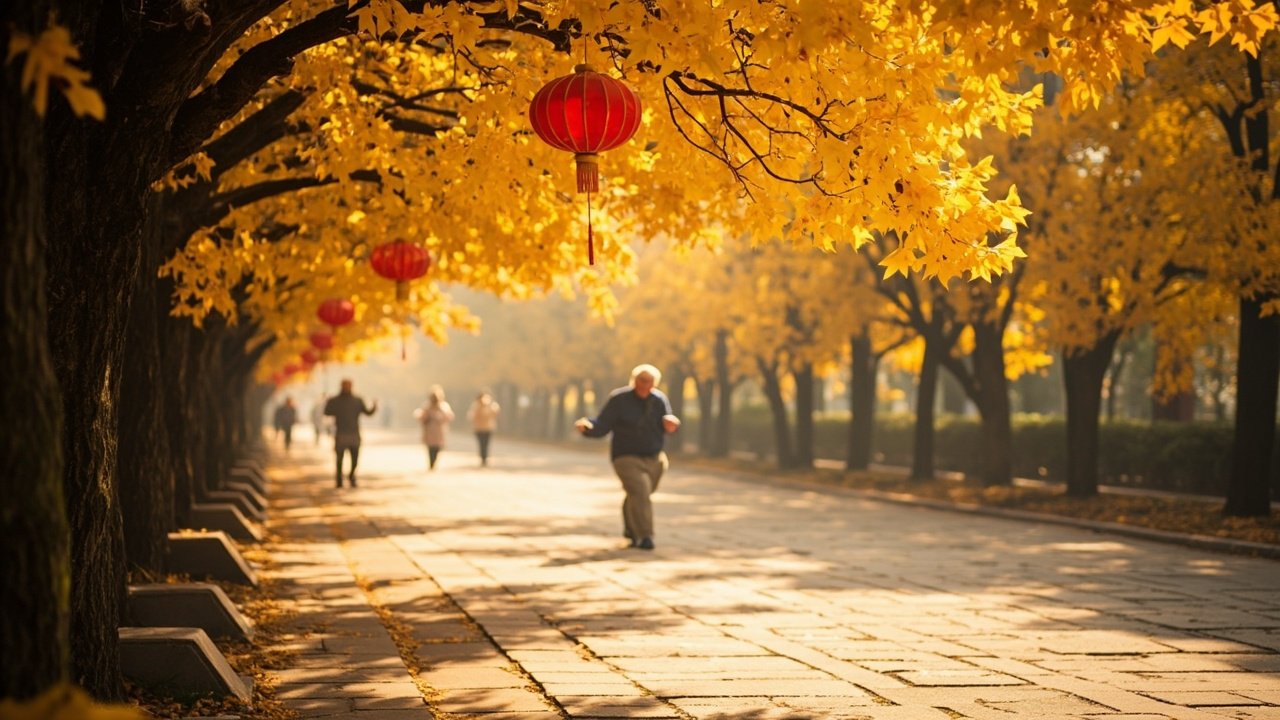
The old man in the yellow vest waved me off the path at the Badaling gate, pointing a plastic rake at a maple that had gone the color of a coal fire. He…
China Autumn 2027 Guide
The old man in the yellow vest waved me off the path at the Badaling gate, pointing a plastic rake at a maple that had gone the color of a coal fire. He didn’t speak English. I didn’t need him to. He just wanted me to look up. That was October, my third autumn in Beijing, and I’d spent the first two walking past the trees with my eyes on my phone, hunting for the next photo spot. This time I stopped for maybe four minutes and watched the wind move through the canopy in a slow wave, the way water moves when you drop a stone in a pond.
Autumn is the reason I tell people to book China for September, October, or early November and not summer. The crowds thin out after Golden Week, the haze lifts, and the temperature settles into something your body actually likes. Beijing turns gold. The Yellow Mountains turn into a scroll painting. Guilin’s karst hills get a softness that summer humidity never gives them.
This guide is for first-timers. People who’ve never set foot in China, who are nervous about the visa, the payment apps, the language, the trains. I’ve made all the mistakes so you don’t have to. Below you’ll find ten places I’d send a friend to in autumn 2027, with real prices, real directions, and the small stuff nobody tells you until you’re standing in the wrong line at the wrong station.
Quick answer
Autumn (September to early November) is the best season for a first China trip: mild temperatures, low rainfall, and clear skies in the north. Most Western passport holders can enter visa-free for up to 30 days under the current trial policy, but check your nationality before booking. Budget roughly $120–180 (about ¥850–1,300) per day for mid-range travel including hotels, food, trains, and entry tickets.
The Short Version
Go in October, not September. September is still hot in the south and crowded with domestic tour groups. October after Golden Week (which ends around October 7) is the sweet spot: cool, dry, and quiet. Skip the Great Wall at Badaling, go to Mutianyu or Jinshanling. Book high-speed rail tickets the day they open (usually 15 days out). Set up Alipay before you land, because you will not be able to pay for anything with cash at most places.
How I Picked These
I’ve been based in Beijing for seven years and I’ve done maybe 40 trips around the country, most of them in autumn because that’s when I get the itch. I picked these ten based on three things: whether I’d send a first-timer there without hesitation, whether autumn actually improves the place (some spots are better in spring), and whether the logistics are manageable for someone who doesn’t speak Mandarin. I talked to a Chengdu hostel owner named Wei, a Xi’an tour guide named Zhang, and a Hangzhou tea farmer named Chen while writing this. A few of these places I’ve been to four or five times. A couple I’ve only been to once, and I’ll say so.
Comparison Table
| Rank | Place | Best For | Approx Cost (USD/day) | Time Needed | When to Go |
|---|---|---|---|---|---|
| 1 | Beijing | First-timers, history, Great Wall | $150–200 | 4–5 days | Mid-Oct to early Nov |
| 2 | Xi’an | Terracotta Warriors, food | $100–140 | 2–3 days | Late Sep to Oct |
| 3 | Guilin & Yangshuo | Karst scenery, cycling | $90–130 | 3–4 days | Oct to early Nov |
| 4 | Huangshan | Mountain hiking, photography | $120–160 | 2–3 days | Mid-Oct to mid-Nov |
| 5 | Shanghai | Modern China, food, nightlife | $160–220 | 3–4 days | Oct to Nov |
| 6 | Chengdu | Pandas, Sichuan food, teahouses | $90–130 | 3 days | Sep to Nov |
| 7 | Zhangjiajie | Avatar mountains, glass bridge | $110–150 | 3 days | Oct to Nov |
| 8 | Hangzhou | Tea, West Lake, day trips | $110–150 | 2 days | Oct to Nov |
| 9 | Suzhou | Classical gardens, canals | $100–140 | 2 days | Oct to Nov |
| 10 | Jiuzhaigou | Lakes, autumn color, Tibetan culture | $140–180 | 3 days | Mid-Oct to early Nov |
1. Beijing — Where Autumn Actually Means Something
I’ve written about Beijing before, and I’ll say the same thing here: autumn is the only season I’d voluntarily walk the city. Summer is a wet blanket. Winter is brutal. Spring brings sandstorms. But mid-October, when the ginkgo trees along Diaoyutai turn yellow and the air finally clears, Beijing becomes a different city.
The Great Wall at Mutianyu is the version I send everyone to. It’s a 90-minute drive from central Beijing, the cable car saves your legs, and the crowds are a fraction of Badaling’s. Go on a Tuesday or Wednesday if you can. Weekends in October are still busy with domestic tourists.
The Forbidden City needs a reservation, booked through the official WeChat mini-program about a week ahead. It’s ¥60 ($8.50) in autumn, closed Mondays. Enter through the Meridian Gate (south) and exit north into Jingshan Park, where you can climb the hill for the postcard view back over the palace roofs.
The Temple of Heaven is where locals actually hang out. On a Saturday morning you’ll find retirees doing tai chi, playing erhu, and arguing over chess. Entry to the park is ¥15 ($2), the main hall is another ¥20 ($3).
📍 Location: Dongcheng and Xicheng districts for most sights; Mutianyu is in Huairou, about 70 km northeast. 🎫 Entry fee: Forbidden City ¥60 ($8.50); Mutianyu Wall ¥45 ($6.50) plus cable car ¥120 ($17) round trip. 🕒 Opening hours: Forbidden City 8:30am–5pm (last entry 3:30pm), closed Mondays. Mutianyu 7:30am–5:30pm. 🚕 How to get there: For Mutianyu, take a Didi or a pre-booked car from your hotel (about ¥400/$57 round trip). For the Forbidden City, take Line 1 to Tian’anmen East, Exit A, walk 5 minutes north. ⏰ When to visit: Mid-October to early November. Weekday mornings for the Wall. 💡 Insider tips: Download the Forbidden City mini-program in advance. Bring your passport everywhere — you’ll need it for entry. The hutong bars around Nanluoguxiang are touristy but the side alleys behind them have real courtyard restaurants. Cash is nearly useless; set up Alipay or WeChat Pay before you arrive.
I once watched a Beijing taxi driver named Liu refuse to take my money after I left my wallet at a restaurant. He drove me back, waited, and then drove me home. I tried to tip him. He looked genuinely offended.
2. Xi’an — The City That Feeds You and Then Shows You an Army
The Terracotta Warriors are the reason most people come. They’re worth it, but they’re also a two-hour round trip from the city center and you’ll spend more time in a bus than looking at the pits. Go early. The site opens at 8:30am and the first hour is the only hour you’ll have breathing room.
What surprised me about Xi’an is the food. The Muslim Quarter gets dismissed as a tourist trap, and parts of it are, but if you walk two blocks off the main drag you’ll find lamb skewers for ¥3 ($0.40) each and hand-pulled noodles that cost less than a coffee back home. I ate biangbiang noodles three times in two days. No regrets.
The city wall is the best thing to do at sunset. Rent a bike on top (¥45/$6.50 for two hours) and ride the 14 km loop. It takes about 90 minutes at a relaxed pace, and you get the whole city laid out below you.
📍 Location: Beilin District for the wall and Muslim Quarter; Lintong District for the warriors. 🎫 Entry fee: Terracotta Warriors ¥120 ($17); City Wall ¥54 ($7.70); bike rental extra. 🕒 Opening hours: Warriors 8:30am–6pm (last entry 5pm). Wall 8am–10pm in autumn. 🚕 How to get there: For the warriors, take Line 2 to Beidajie, transfer to Line 1 to Fangzhicheng, then bus 307. Or just take a Didi for about ¥120 ($17). For the wall, Line 2 to Yongningmen, Exit D. ⏰ When to visit: Late September through October. Avoid the first week of October (Golden Week). 💡 Insider tips: Book warrior tickets on the official WeChat account at least 3 days ahead. The pit 1 viewing platform is best from the far right corner. English signage is decent but a translation app helps. The high-speed rail from Beijing takes 4.5 hours and drops you at Xi’an North.
A guide named Zhang told me the warriors were discovered by farmers digging a well in 1974. One of those farmers still signs autographs at the site on slow days. I didn’t see him. I bought a fridge magnet instead.
3. Guilin & Yangshuo — The Postcard That Actually Looks Like the Postcard
The Li River cruise from Guilin to Yangshuo is the famous thing, and it’s fine, but I think the real magic is in Yangshuo itself. Rent a bike and ride out into the countryside. You’ll pass through villages where old women sell pomelos from wooden carts and water buffalo stand in the rice paddies like they’re posing for a painting.
Autumn is when the rice turns gold before the harvest, usually mid-to-late October. The karst hills behind the fields look exactly like the ¥20 note. Bring the note. Take the photo. Everyone does it.
The town of Yangshuo is small enough to walk in an afternoon. West Street is the tourist strip, loud and neon at night. The side streets behind it have better food and cheaper beer. I stayed at a guesthouse run by a woman named Li who made me breakfast every morning and refused to charge me for it.
📍 Location: Guilin is the transport hub; Yangshuo is 65 km south, reachable by bus or boat. 🎫 Entry fee: Li River cruise ¥210–450 ($30–64) depending on boat class. Bike rental ¥30 ($4.30) per day. 🕒 Opening hours: Cruise boats depart 9am–11am. Most sights open 8am–6pm. 🚕 How to get there: Fly into Guilin Liangjiang Airport or take high-speed rail from Guangzhou (2.5 hours) or Shenzhen (3 hours). From Guilin to Yangshuo, buses leave every 20 minutes from the main station, ¥30 ($4.30), 90 minutes. ⏰ When to visit: Mid-October to early November. The rice harvest is usually the last week of October. 💡 Insider tips: Skip the big cruise and take the bamboo raft from Yangdi to Xingping instead (¥180/$26 per person). It’s shorter, more scenic, and less crowded. Bring small bills for tips and snacks. English is limited outside hotels.
I made the mistake of booking the cruise on a rainy day. The hills disappeared into fog. It was beautiful, in a moody way, but I’d have preferred the postcard version.
4. Huangshan — The Mountain That Breaks Your Legs and Fixes Your Head
I’ll be honest: Huangshan is hard. The steps are steep, there are thousands of them, and the cable cars don’t take you all the way. But the autumn color up there, when the maples and sweetgums turn, is the reason Chinese painters have been climbing this mountain for a thousand years.
The classic route is to take the Yungu Cable Car up, walk the loop past the Greeting Pine and Bright Summit, and stay overnight at one of the summit hotels. The sunrise from Bright Summit in late October is worth the ¥1,200 ($170) you’ll pay for a basic room. Book that room at least a month ahead.
If you’re not up for the summit hotel, do it as a day trip from Tunxi (Huangshan city). It’s a long day but doable.
📍 Location: Huangshan Scenic Area, about 60 km from Tunxi. 🎫 Entry fee: ¥190 ($27) in high season, plus ¥80–100 ($11–14) per cable car segment. 🕒 Opening hours: 6:30am–4:30pm for cable cars in autumn. Trails close at dusk. 🚕 How to get there: High-speed rail to Huangshan North, then bus 30 minutes to the scenic area transfer center, then shuttle to the cable car base. ⏰ When to visit: Mid-October to mid-November. Weekdays are noticeably quieter. 💡 Insider tips: Bring layers — summit temperatures drop to near freezing at night in late October. Pack light; you’ll be carrying everything up steps. The summit restaurants are expensive and mediocre, so bring snacks. English signage is limited but the trails are well-marked.
A woman I met at the summit, maybe 70, had climbed the whole thing without the cable car. She offered me a hard-boiled egg. I accepted. It was the best egg I’ve ever eaten.
5. Shanghai — The City That Doesn’t Care If You Like It
Shanghai is not charming in the way Xi’an is charming. It’s a working city, and it knows it. The Bund at night is the obvious thing, and you should do it once, but the real Shanghai is in the French Concession, where plane trees line the streets and old lane houses hide coffee shops and wine bars.
October is when the humidity finally breaks. You can walk for hours without sweating through your shirt. The West Bund museums (Long Museum, Yuz Museum) are worth a half day. The Propaganda Poster Art Centre is small and weird and I loved it.
The food scene is the best in China for variety. Soup dumplings at Jia Jia Tang Bao, scallion oil noodles at A Niang Mian, and a proper Sichuan meal at any of the hundred places that don’t have English menus.
📍 Location: Huangpu District for the Bund; Xuhui District for the French Concession. 🎫 Entry fee: Most sights free. Museums ¥20–100 ($3–14). 🕒 Opening hours: Museums typically 10am–6pm, closed Mondays. 🚕 How to get there: Metro is excellent. Line 2 connects Pudong Airport, Hongqiao Airport, and the Bund area. Get a transportation card at any station. ⏰ When to visit: October to November. Avoid the first week of October. 💡 Insider tips: Get a SIM card at the airport if you need data — most foreign SIMs won’t work without a VPN. The Bund is best at 10pm when the tour groups leave. The metro stops around 11pm, so plan your night accordingly.
I once paid ¥80 ($11) for a cup of coffee in the French Concession and felt like a fool. Then I had a ¥12 ($1.70) bowl of noodles the next morning that was better than anything I’d eaten all week.
6. Chengdu — Pandas, Peppercorns, and the Art of Doing Nothing
Chengdu is the city I’d move to if I left Beijing. It’s slower, cheaper, and the food is the best in the country. The pandas are the obvious draw — the breeding base opens at 7:30am and you want to be there when it opens, because by 10am they’re asleep and so are you.
But the real Chengdu is the teahouse culture. People’s Park has a teahouse where you can sit for three hours with a ¥20 ($3) cup of jasmine tea and nobody will rush you. Old men play mahjong. Someone will offer to clean your ears for ¥50 ($7). Say yes. It’s a whole thing.
Sichuan food in Chengdu is not the same as Sichuan food abroad. It’s numbing, not just spicy. The peppercorns (huajiao) make your mouth buzz. Order mapo tofu, dan dan noodles, and hotpot at a place where the menu is in Chinese only. Point at what the next table has.
📍 Location: Chenghua District for the panda base; Qingyang District for People’s Park. 🎫 Entry fee: Panda Base ¥55 ($8); People’s Park free; teahouse tea ¥20–60 ($3–9). 🕒 Opening hours: Panda Base 7:30am–6pm. Teahouses all day. 🚕 How to get there: Metro Line 3 to Panda Avenue for the base, then a 10-minute walk. People’s Park is on Line 2, Exit B. ⏰ When to visit: September to November. Pandas are most active in the morning. 💡 Insider tips: Buy panda base tickets online the day before. Bring cash for the teahouse ear cleaning. English is limited outside hotels and the panda base. The high-speed rail from Chongqing takes 1.5 hours.
A hostel owner named Wei told me the best hotpot in the city is in a basement with no sign, and he was right. I won’t tell you where it is. Ask a local.
7. Zhangjiajie — The Mountains That Became Avatar
I’ll be blunt: Zhangjiajie is a circus. The glass bridge is a tourist trap, the queues for the elevators are absurd, and the whole place has been optimized for selfies. But the mountains themselves, the sandstone pillars rising out of the mist, are genuinely unlike anything else I’ve seen.
Go in mid-October when the fog is dramatic but the trails aren’t icy. The Yuanjiajie area has the famous “Avatar Hallelujah Mountain” viewpoint, and the Tianzi Mountain area has the best sunrise. Stay in Wulingyuan town, not Zhangjiajie city, so you’re close to the park entrance.
The Bailong Elevator, a glass lift built into the cliff, is worth doing once even though it’s ¥72 ($10) and the line can be 45 minutes. The alternative is a two-hour hike up.
📍 Location: Wulingyuan District, about 40 km from Zhangjiajie city. 🎫 Entry fee: Park pass ¥228 ($33) for 4 days, plus ¥72 ($10) for the elevator. 🕒 Opening hours: Park 7am–6pm. Last elevator up around 5pm. 🚕 How to get there: Fly to Zhangjiajie Hehua Airport or take high-speed rail to Zhangjiajie West, then bus to Wulingyuan (40 minutes, ¥12/$1.70). ⏰ When to visit: October to early November. Avoid weekends if possible. 💡 Insider tips: Buy the park pass online. Bring rain gear — the weather changes fast. The park is huge; plan your routes the night before. English signage is decent at major viewpoints.
I got lost on the second day and ended up on a trail with no other foreigners for three hours. A group of Chinese hikers adopted me, shared their oranges, and pointed me back to the bus. I never learned their names.
8. Hangzhou — The Tea Capital That Locals Actually Love
Hangzhou is where Chinese people go on holiday. West Lake is the centerpiece, and yes, it’s crowded, but if you walk 20 minutes away from the main causeway you’ll find quiet corners where old men fish and couples rent paddle boats.
The real reason to come is Longjing tea. The village of Longjing, just outside the city, is where the famous green tea is grown. October is not harvest season, but the tea houses are open and the hills are green. A farmer named Chen let me sit in his yard and drink three rounds of tea for ¥80 ($11). He talked about his grandfather, who planted the bushes in the 1950s.
The city itself is walkable and bike-friendly. Rent a shared bike (¥1.50/$0.20 per 30 minutes) and ride the lake loop. It takes about two hours at a relaxed pace.
📍 Location: Xihu District for the lake and tea villages. 🎫 Entry fee: West Lake free; tea village tastings ¥50–150 ($7–21). 🕒 Opening hours: Lake area always open. Tea houses 9am–6pm. 🚕 How to get there: High-speed rail from Shanghai takes 45 minutes to Hangzhou East. Metro Line 1 to Longxiangqiao for the lake. ⏰ When to visit: October to November. Weekday mornings for the tea villages. 💡 Insider tips: Skip the boat tours and walk. The Su Causeway is the prettiest stretch. Bring mosquito repellent in early October. English is limited outside hotels.
Chen refused to let me pay for the third cup of tea. He said it was for the road.
9. Suzhou — The Gardens That Make You Slow Down
Suzhou is a 25-minute train ride from Shanghai and most people do it as a day trip. That’s a mistake. The gardens are small and the city is quiet, and you need at least one night to actually feel it.
The Humble Administrator’s Garden is the famous one, and it’s worth the ¥80 ($11), but go at opening (7:30am) before the tour buses. The Master of the Nets Garden is smaller and I liked it more. The canals around Pingjiang Road are the postcard version of old China, though the shops are all selling the same souvenirs.
Autumn in Suzhou is mild and the gardens are less crowded than spring. The osmanthus flowers bloom in October and the whole city smells sweet.
📍 Location: Gusu District for the gardens and canals. 🎫 Entry fee: Humble Administrator’s Garden ¥80 ($11); Master of the Nets ¥40 ($6). 🕒 Opening hours: Gardens 7:30am–5:30pm. 🚕 How to get there: High-speed rail from Shanghai to Suzhou Station (25 minutes), then metro Line 4 to Beisita for the gardens. ⏰ When to visit: October to November. Weekday mornings. 💡 Insider tips: Buy garden tickets online. The night version of the Master of the Nets Garden (¥100/$14) is worth it if you’re there in summer, less so in autumn. English signage is good at major gardens.
I spent an hour sitting on a bench in the Master of the Nets Garden doing nothing. A cat slept next to me. It was the best hour of the trip.
10. Jiuzhaigou — The Lakes That Look Photoshopped
Jiuzhaigou is the most beautiful place I’ve been in China, and I say that knowing it’s a pain to get to. The valley is in northern Sichuan, near the Tibetan plateau, and the lakes are every shade of blue and green you can imagine. In mid-to-late October the forests turn gold and red, and the reflections in the water are unreal.
The downside: it’s crowded, the altitude is 2,000–3,000 meters, and the 2017 earthquake closed parts of the park for years. Most of it is open now, but check before you go. The park uses a shuttle bus system, and you’ll spend a lot of time waiting.
The nearby Huanglong scenic area is also worth a day if you have time. The travertine pools are a different kind of beautiful.
📍 Location: Jiuzhaigou County, Aba Prefecture, about 8 hours by bus from Chengdu. 🎫 Entry fee: ¥169 ($24) in autumn, plus ¥90 ($13) for the shuttle. 🕒 Opening hours: 7am–6pm. Last shuttle down around 5pm. 🚕 How to get there: Fly to Jiuzhaigou Huanglong Airport (flights from Chengdu, 1 hour) or take a long-distance bus from Chengdu (8–10 hours). The new high-speed rail to Huanglong Jiuzhai station opened in 2024 — check current schedules. ⏰ When to visit: Mid-October to early November for peak color. Book accommodation months ahead. 💡 Insider tips: Altitude sickness is real — take it slow the first day. Bring cash; ATMs are unreliable. The park is huge; plan which valleys to prioritize. English signage is limited.
I met a Tibetan woman selling yak butter tea near the Long Lake. She poured me a cup and told me to drink it before it got cold. It tasted like salted butter and smoke. I finished it.
FAQ summary
Autumn 2027 is the best time for a first China trip, with mild weather and clear skies from September through early November. Most Western passport holders can currently enter visa-free for up to 30 days, but policies change — verify before booking. Budget $120–180 per day for mid-range travel, set up Alipay or WeChat Pay before you arrive, and book high-speed rail tickets as soon as they open (usually 15 days in advance). Avoid the first week of October due to Golden Week crowds.
FAQ
Q: Do I need a visa to visit China in autumn 2027? A: Most European, American, and Southeast Asian passport holders can currently enter China visa-free for up to 30 days under a trial policy that has been extended through 2026 and is expected to continue. Check your specific nationality on the Chinese embassy website before booking, and note that the 144-hour and 240-hour transit visa-free options also apply if you’re passing through.
Q: What’s the weather like in China in October? A: Beijing averages 10–20°C (50–68°F) with low rainfall. Shanghai is 18–24°C (64–75°F). Guilin and Chengdu are warmer, 20–26°C (68–79°F). Northern mountains like Huangshan drop near freezing at night. Bring layers.
Q: How much does a 2-week trip to China cost? A: Mid-range travelers should budget $1,700–2,500 (about ¥12,000–18,000) for two weeks, including hotels, food, trains, and entry tickets, but excluding international flights. Budget travelers can do it for $1,000–1,400. Luxury is open-ended.
Q: Can I use my credit card in China? A: Rarely. Most places accept only Alipay or WeChat Pay, both of which you can link to a foreign Visa or Mastercard. Set them up before you arrive — see our payment guide. Carry a few hundred yuan in cash as backup.
Q: Do I need a VPN in China? A: Yes, if you want to use Google, Instagram, WhatsApp, or most Western apps. Download and test a VPN before you arrive — they’re hard to install once you’re inside. Alternatively, buy a tourist SIM with built-in roaming, which often bypasses the firewall.
Q: Is English widely spoken? A: In hotels, major attractions, and big-city restaurants, yes. Everywhere else, no. Download a translation app (Pleco, Baidu Translate, or Google Translate with offline Chinese) and learn a few phrases. Pointing at menus works fine.
Q: What’s the best way to get around China? A: High-speed rail for intercity travel. It’s fast, cheap, and reliable. Book on the official 12306 app or Trip.com. For cities, use the metro and Didi (China’s Uber). See our train guide for details.
The Honest Wrap-up
This list is for first-timers who want a real trip, not a tour bus. If you want everything in English, every meal pre-arranged, and someone to hold your hand, this isn’t the guide for you. If you’re willing to get a little lost, eat something you can’t identify, and use a translation app to ask for directions, you’ll have the best two weeks of your year.
My one piece of advice: don’t try to do all ten. Pick three or four, give each one real time, and leave room for the unplanned afternoon. The best moments I’ve had in China were the ones I didn’t schedule.
Book the flight. The trees are already turning.
More guides you may like
Top 10 Bridges in China
China's bridges are engineering marvels spanning mountains, rivers, and seas. Here are 10 of the most spectacular, from ancient stone to modern steel.
8 min read

Top 10 Buddhist Sites in China
From the Leshan Giant Buddha to the Dunhuang Caves, these 10 Buddhist sites represent 2,000 years of China's spiritual heritage.
9 min read
Top 10 Day Trips from Beijing You Shouldn't Miss
Beijing is packed with history, but some of China's best experiences are just a few hours away. Here are 10 day trips that will transform your visit.
9 min read
Top 10 Hidden Gems in China Off the Beaten Path
Beyond the Great Wall and Terracotta Warriors, China has incredible hidden destinations few tourists ever reach. Here are 10 underrated gems worth the detour.
9 min read
Top 10 Markets and Shopping Streets in China
From Shanghai's Bund to Beijing's Silk Street - 10 markets where foreigners can haggle, explore, and bring home authentic Chinese goods.
9 min read
Top 10 Museums in China You Shouldn't Miss
China's museums span 5,000 years of civilization. These 10 - from the Palace Museum to Xi'an's terracotta gallery - are unmissable for culture lovers.
9 min read