
Chinese Hotpot Dip Sauce
The first time I ate hotpot in Chengdu, I made a mistake that still embarrasses me. I filled my entire bowl with sesame paste, added a spoonful of chili…
Chinese Hotpot Dip Sauce
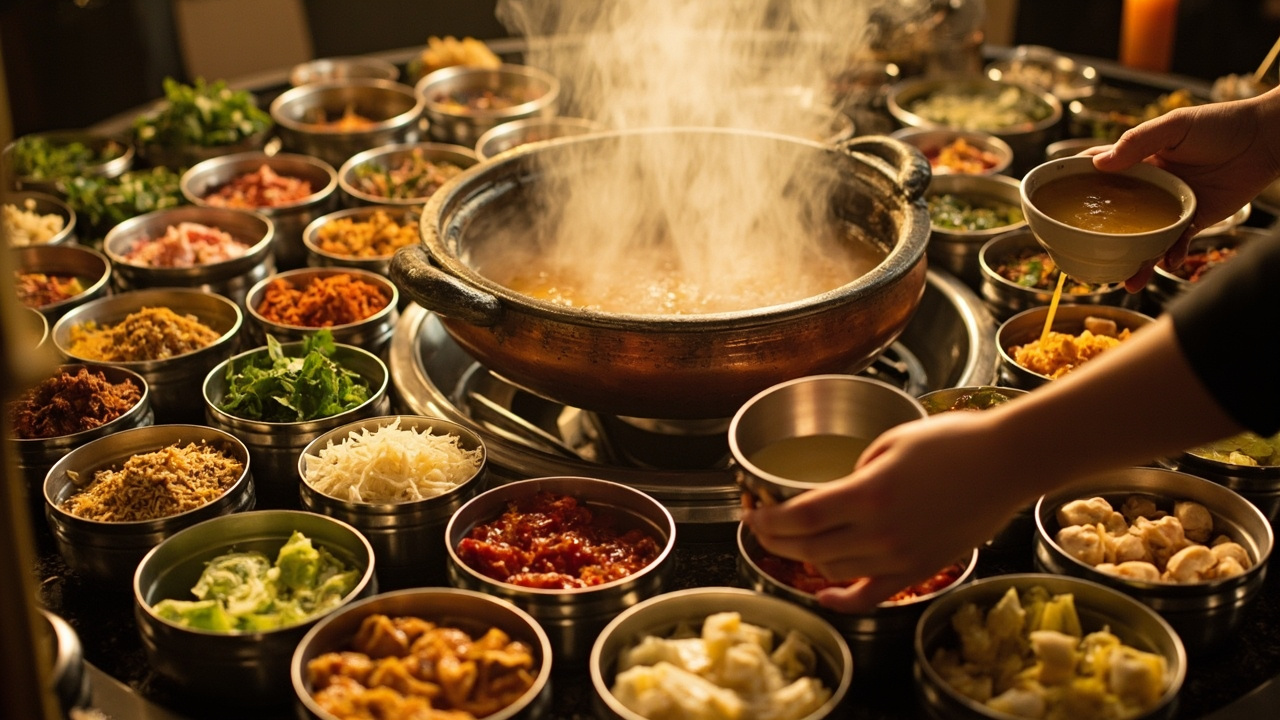
The first time I ate hotpot in Chengdu, I made a mistake that still embarrasses me. I filled my entire bowl with sesame paste, added a spoonful of chili oil, and thought I’d cracked the code. The woman at the next table — mid-60s, cardigan, watching me the whole time — leaned over, took my bowl, dumped half of it out, and rebuilt it for me. Sesame paste, yes, but also garlic, cilantro, a splash of vinegar, a pinch of sugar, a spoonful of the broth from the pot itself. She said something I didn’t catch and patted my arm. It was the best sauce I’ve ever tasted.
That’s the thing about hotpot in China. The broth gets all the attention in travel guides, but the sauce is where you actually eat. A good dip station can hold 20-plus ingredients, and every region, every family, every person builds theirs differently. Some people go heavy on sesame. Some drown everything in chili. Some — and this is the real flex — mix a tiny bit of everything and somehow nail it every time.
This guide is for anyone who’s about to sit down at their first Chinese hotpot restaurant and has no idea what to do at that sauce bar. I’ll walk you through the regional styles, the specific ingredients, how to build a sauce that works for your palate, and the small etiquette things nobody tells you. By the end you’ll be able to walk up to that station with confidence instead of panic.
Quick answer
Chinese hotpot dip sauce (蘸料, zhàn liào) is a self-serve mix you build at a sauce bar before eating. The base is usually sesame paste (北方, northern style) or a chili-garlic-vinegar blend (川渝, Sichuan-Chongqing style). Most restaurants charge a small per-person sauce fee of about $1–2 (¥8–15), and the bar is unlimited. For a first-timer, the safest build is two parts sesame paste, one part soy sauce, a spoon of garlic, cilantro, and a splash of vinegar — then adjust from there.
The Short Version
If you only remember one thing: don’t fill your bowl with one ingredient. Hotpot sauce is about balance — something creamy, something salty, something acidic, something aromatic. Sesame paste for body. Soy for salt. Vinegar for cut. Garlic and cilantro for punch. Chili oil if you want heat. That’s it. You can build a great sauce in 30 seconds once you know the formula.
How I Picked These
I’ve eaten hotpot in Beijing, Chengdu, Chongqing, Guangzhou, Shanghai, and a tiny town in Yunnan where nobody spoke a word of English and I ordered by pointing. I’ve also spent a lot of time standing at sauce bars watching locals — what they reach for first, what they skip, how much they take. The regional breakdowns below come from those trips plus conversations with restaurant staff and a couple of very patient Chengdu friends who corrected my technique more than once. This isn’t a list of “top 10 hotpot restaurants.” It’s a guide to the sauce itself, because that’s the part tourists get wrong most often.
Comparison Table: Regional Hotpot Sauce Styles
| Rank | Region | Best For | Approx Cost (USD) | Time Needed | When to Go |
|---|---|---|---|---|---|
| 1 | Sichuan/Chongqing (川渝) | Chili lovers, bold flavors | $1–2 (¥8–15) | 5 min to build | Year-round |
| 2 | Beijing/Northern (北方) | Creamy, mild, sesame-forward | $1–2 (¥8–15) | 3 min to build | Oct–Mar |
| 3 | Cantonese (粤式) | Seafood, light dipping | $1–2 (¥8–15) | 3 min to build | Year-round |
| 4 | Yunnan (云南) | Mushroom-based, earthy | $1–2 (¥8–15) | 4 min to build | Year-round |
| 5 | Chaoshan (潮汕) | Beef hotpot, minimal sauce | $1–2 (¥8–15) | 2 min to build | Year-round |
Sichuan and Chongqing Style — The One Everyone Means When They Say “Hotpot”
I watched a guy in Chongqing build his sauce in about eight seconds. Sesame oil, garlic, a mountain of fresh chili, a pinch of MSG, done. He didn’t even look at the bar. That’s the local baseline: sesame oil as the carrier, garlic and chili as the payload, almost nothing else.
Why it’s special: Sichuan and Chongqing hotpot is served with a bubbling pot of beef tallow and Sichuan peppercorns that will numb your lips within two bites. The sauce isn’t there to add flavor — it’s there to cool the food down and cut the grease. That’s why locals keep it simple. Sesame oil (香油, xiāng yóu) coats your tongue and protects it from the heat. Garlic (蒜泥, suàn ní) adds bite. Fresh chili or chili oil adds more heat if you’re brave. Some people add a splash of vinegar (醋, cù) for acidity, and a few add oyster sauce for sweetness.
📍 Location: Any hotpot restaurant in Chengdu or Chongqing. In Chengdu, the Shujiuxiang (蜀九香) chain and Xiaolongkan (小龙坎) are reliable for first-timers. In Chongqing, look for small neighborhood spots with plastic stools and a line out the door.
🍲 Entry fee: The sauce bar is usually included in a per-person “sauce fee” of about $1–2 (¥8–15). The hotpot itself runs $15–30 (¥100–200) per person depending on what you order.
🕒 Opening hours: Most hotpot restaurants open around 11am and close late — 11pm or midnight. Some stay open until 2am.
🚕 How to actually get there: In Chengdu, take Metro Line 2 or Line 3 to Chunxi Road Station (春熙路站), Exit D, and walk into the surrounding alleys. In Chongqing, the Jiefangbei (解放碑) area has dozens of options within a 10-minute walk of the metro station of the same name.
⏰ When to visit: Weeknights are calmer. Weekends after 7pm mean a 45-minute wait at popular spots. Winter is peak season — hotpot is a cold-weather food here.
💡 Insider tips for foreign visitors: Ask for 微辣 (wēi là, mildly spicy) if you can’t handle heat — it’s still spicy. Order a split pot (鸳鸯锅, yuānyāng guō) with one mild half. The sauce bar is unlimited, so build a small bowl first, taste, then rebuild. Bring your phone — menus are often QR-code only. Set up Alipay or WeChat Pay before you go, because many hotpot places don’t take cash or foreign cards.
The woman who fixed my sauce in Chengdu was named Li. I never got her full name, but I think about her every time I eat hotpot.
Beijing and Northern Style — Sesame Paste Is the Whole Point
Northern hotpot is a different animal. The pot is usually copper, the broth is plain water with a few scallions and ginger, and the meat is thinly sliced lamb. The flavor comes almost entirely from the sauce. If you skimp on the sauce here, you’re eating boiled lamb.
Why it’s special: Beijing-style hotpot sauce is built on 芝麻酱 (zhī má jiàng, sesame paste), which is thicker and nuttier than tahini. You thin it with a little hot broth or water, then add fermented bean curd (腐乳, fǔ rǔ) for funk and salt, a splash of soy sauce, chopped scallions, cilantro, and sometimes a little chili oil. The result is creamy, savory, and slightly tangy. It’s the comfort-food version of hotpot sauce.
📍 Location: Donglaishun (东来顺) is the classic Beijing chain, with locations near Wangfujing and Qianmen. For something less touristy, try Jubaoyuan (聚宝源) in the Niujie area.
🍲 Entry fee: Sauce bar fee is about $1–2 (¥8–15). A full meal runs $20–35 (¥140–250) per person.
🕒 Opening hours: Typically 11am–10pm, with last orders around 9:30pm.
🚕 How to actually get there: For Donglaishun near Qianmen, take Metro Line 2 to Qianmen Station (前门站), Exit C, and walk south for about 5 minutes. For Jubaoyuan, take Line 7 to Guang’anmennei Station (广安门内站), Exit B, then walk 10 minutes.
⏰ When to visit: Northern hotpot is best in winter — it’s a warming food. Lunch is quieter than dinner. Avoid weekends during peak dinner hours (6–8pm).
💡 Insider tips for foreign visitors: Ask for 麻酱 (má jiàng) if you want the sesame paste base. If the paste is too thick, add a spoonful of hot broth from your pot and stir. Don’t skip the 糖蒜 (táng suàn, sweet pickled garlic) that comes as a side — it’s meant to be eaten between bites of lamb. English menus are rare outside tourist areas, so a translation app helps. If you haven’t sorted out a SIM card and internet access, do that before you sit down.
I once watched a Beijing cab driver named Liu eat an entire bowl of sesame paste with a spoon before his meat even arrived. He said the sauce was the meal.
Cantonese Style — Light, Seafood-Friendly, and Underrated
Cantonese hotpot is the quiet one. The broth is often a clear chicken or seafood stock, the ingredients lean toward shrimp, fish balls, and fresh vegetables, and the sauce is lighter to match. You’re not trying to bury anything here.
Why it’s special: Cantonese dipping sauce usually centers on soy sauce, sometimes light soy (生抽, shēng chōu) rather than dark, with ginger, scallions, and a little sugar. Some places offer a ginger-scallion oil (姜葱油, jiāng cōng yóu) that’s incredible with poached chicken or fish. Chili is optional and usually mild. If you find Sichuan hotpot overwhelming, start here.
📍 Location: In Guangzhou, the Haizhu and Tianhe districts have the best concentration. In Shanghai, Cantonese-style hotpot chains like Cunkou (村口) are easy to find in shopping malls.
🍲 Entry fee: Sauce bar fee is about $1–2 (¥8–15). Meals run $18–30 (¥130–210) per person.
🕒 Opening hours: 11am–10pm, sometimes later on weekends.
🚕 How to actually get there: In Guangzhou, take Metro Line 3 to Tiyu Xilu Station (体育西路站), Exit D, and walk into the Tianhe shopping district. In Shanghai, take Line 2 to Jing’an Temple Station (静安寺站), Exit 2, and head into the mall.
⏰ When to visit: Cantonese hotpot works year-round. It’s a good lunch option — lighter than Sichuan and less likely to put you in a food coma.
💡 Insider tips for foreign visitors: Ask for 清汤 (qīng tāng, clear broth) if you want the mildest option. The sauce bar here often has fresh seafood-friendly condiments like XO sauce — try a small spoon. English is more common in Guangzhou and Shanghai than in Chengdu, but still not guaranteed. If you’re visiting multiple cities, the high-speed rail network makes hopping between them easy.
I ate Cantonese hotpot with a hostel receptionist in Guangzhou who insisted I try the ginger-scallion oil on everything. She was right.
Yunnan Style — Mushroom Broth and Earthy Dips
Yunnan hotpot is built around mushrooms. The broth is often a wild mushroom stock, sometimes with chicken, and the flavor is deep and earthy rather than spicy. The sauce follows suit — less chili, more fermented and umami-heavy ingredients.
Why it’s special: Yunnan dipping sauce often includes fermented bean paste, chopped herbs like mint or perilla, and sometimes a bit of pickled vegetable. It’s tangier and more herbal than the northern or Sichuan styles. If you’re in Kunming or Dali, this is the local version and it’s worth trying even if you think you don’t like mushrooms.
📍 Location: In Kunming, the Guandu and Wuhua districts have plenty of options. In Dali, the old town has several mushroom hotpot restaurants aimed at domestic tourists.
🍲 Entry fee: Sauce bar fee is about $1–2 (¥8–15). Meals run $15–25 (¥100–180) per person.
🕒 Opening hours: 11am–9:30pm, with some places closing mid-afternoon.
🚕 How to actually get there: In Kunming, take Metro Line 1 or Line 2 to Dongfeng Square Station (东风广场站) and walk into the surrounding streets. In Dali, most mushroom hotpot spots are within the old town walls, a 10-minute walk from the South Gate.
⏰ When to visit: Mushroom season is June–October, when fresh wild mushrooms are available. Outside that window, you’ll get dried or cultivated mushrooms, which are still good but less exciting.
💡 Insider tips for foreign visitors: If you’re not sure which mushrooms are safe, stick to cooked hotpot — never eat raw mushrooms in China. Ask for 微辣 or 不辣 (bù là, not spicy) if you want zero heat. Yunnan is more relaxed about English than Sichuan, but a translation app still helps. If you’re combining Yunnan with other regions, check the visa-free transit rules — they’ve expanded significantly for 2026.
A shop owner in Dali refused to let me pay for my sauce bar fee after I complimented her mushroom broth. She just waved me off and said something about guests.
Chaoshan Style — Beef Hotpot With Almost No Sauce
Chaoshan hotpot, from the Shantou area in Guangdong, is the minimalist’s hotpot. The broth is clear, the beef is sliced paper-thin and cooked for seconds, and the sauce is often just a light soy or a tiny bit of satay. The point is the beef, not the dip.
Why it’s special: This style is increasingly popular in cities like Shenzhen and Shanghai. The beef is the star — different cuts cooked for different lengths of time. The sauce is there to enhance, not dominate. If you’re a steak person, this is your hotpot.
📍 Location: In Shantou, the Jinping district has the classic spots. In Shenzhen, Chaoshan beef hotpot chains like Baheli (八合里) are everywhere.
🍲 Entry fee: Sauce bar fee is about $1–2 (¥8–15). Meals run $20–35 (¥140–250) per person, higher if you order premium cuts.
🕒 Opening hours: 11am–10pm, sometimes later.
🚕 How to actually get there: In Shenzhen, take Metro Line 1 to Gouwugongyuan Station (购物公园站), Exit B, and walk into the surrounding commercial area. In Shantou, most spots are a short taxi ride from the city center.
⏰ When to visit: Year-round. Lunch is quieter. This style is popular with families, so weekends can be busy.
💡 Insider tips for foreign visitors: Ask the server which cuts to order — they’ll often guide you through the timing. The sauce bar is minimal here, so don’t expect 20 ingredients. If you want more flavor, ask for satay sauce (沙茶酱, shā chá jiàng), which is the local favorite. English menus are rare, so have your translation app ready.
I ate Chaoshan hotpot in Shenzhen with a friend who grew up in Shantou. She corrected my cooking time on every single piece of beef.
How to Build Your First Sauce — A Step-by-Step Formula
Standing at a sauce bar for the first time is overwhelming. Here’s the formula I wish someone had given me.
Start with a base. In northern China, that’s sesame paste. In Sichuan, it’s sesame oil. In Cantonese and Chaoshan spots, it’s light soy sauce. Take two spoonfuls.
Add salt. Soy sauce, fermented bean curd, or oyster sauce. One spoonful.
Add acid. Black vinegar (陈醋, chén cù) or rice vinegar. Half a spoonful — you can always add more.
Add aromatics. Minced garlic, chopped cilantro, scallions. As much as you want. This is where the flavor lives.
Add heat. Chili oil, fresh chopped chili, or chili flakes. Start with a little.
Add texture. Crushed peanuts, sesame seeds, fried shallots. Optional but good.
Taste it. Use a clean spoon. Adjust. Rebuild if you hate it — nobody’s watching.
FAQ summary
The most important things to know: Chinese hotpot dip sauce is self-serve and usually costs $1–2 (¥8–15) per person, unlimited. The base varies by region — sesame paste in the north, sesame oil and chili in Sichuan/Chongqing, light soy in Cantonese and Chaoshan styles. A balanced sauce has something creamy, salty, acidic, and aromatic. First-timers should start mild and adjust. Most restaurants accept Alipay or WeChat Pay, not foreign cards, so set those up before your trip. English menus are rare outside major tourist areas — a translation app is essential.
FAQ
Q: How much does the sauce bar cost at a Chinese hotpot restaurant? A: Usually about $1–2 (¥8–15) per person, charged as a flat “sauce fee” (蘸料费, zhàn liào fèi). It’s unlimited — you can go back as many times as you want. Some higher-end restaurants include it in the meal price.
Q: What if I don’t like spicy food? A: Order a split pot (鸳鸯锅) with one mild half, and build a sauce without chili oil. Sesame paste, soy sauce, garlic, and cilantro make a great mild sauce. Ask for 不辣 (bù là) if you want zero heat in the broth.
Q: Do I need to speak Chinese to eat hotpot? A: Not fluently, but you’ll need a translation app. Menus are often QR-code only, and staff rarely speak English outside major tourist areas. Pointing at ingredients at the sauce bar works fine.
Q: Can I pay with a credit card at hotpot restaurants? A: Rarely. Most places accept Alipay or WeChat Pay, and some take cash. Foreign credit cards are usually not accepted. Set up Alipay or WeChat Pay before your trip.
Q: Is the sauce bar safe for vegetarians? A: Mostly yes, but watch for oyster sauce, fish sauce, and meat-based broths. The sauce bar itself is usually vegetarian-friendly — sesame paste, soy, vinegar, garlic, and cilantro are all plant-based. Ask about the broth separately.
Q: How do I know which sauce ingredients go together? A: Follow the formula: creamy base, salty element, acidic element, aromatics, optional heat. Taste as you go. If it’s too thick, add broth. If it’s too salty, add vinegar or sugar.
Q: Do I need a VPN to use translation apps in China? A: Google Translate and most Western apps are blocked without a VPN. Download a VPN before you arrive, and consider a Chinese translation app like Baidu Translate as a backup. Also sort out your SIM and internet setup before you land.
The Honest Wrap-up
This guide is for the traveler who’s about to sit down at their first hotpot restaurant and doesn’t want to look clueless. It’s not for people who already know their way around a sauce bar — you’ve got this. If you’re booking a trip and feeling nervous about the food, my advice is simple: go anyway. Order a split pot. Build a small sauce. Taste it. Rebuild it. Nobody at that table is judging you, and if they are, they’ll probably just fix your bowl like Li did for me. That’s the thing about hotpot in China — it’s a shared meal, and people want you to enjoy it. Bring an appetite, a translation app, and a willingness to try something new. You’ll be fine.
More guides you may like

Top 10 Bridges in China
China's bridges are engineering marvels spanning mountains, rivers, and seas. Here are 10 of the most spectacular, from ancient stone to modern steel.
8 min read

Top 10 Buddhist Sites in China
From the Leshan Giant Buddha to the Dunhuang Caves, these 10 Buddhist sites represent 2,000 years of China's spiritual heritage.
9 min read

Top 10 Day Trips from Beijing You Shouldn't Miss
Beijing is packed with history, but some of China's best experiences are just a few hours away. Here are 10 day trips that will transform your visit.
9 min read

Top 10 Hidden Gems in China Off the Beaten Path
Beyond the Great Wall and Terracotta Warriors, China has incredible hidden destinations few tourists ever reach. Here are 10 underrated gems worth the detour.
9 min read

Top 10 Markets and Shopping Streets in China
From Shanghai's Bund to Beijing's Silk Street - 10 markets where foreigners can haggle, explore, and bring home authentic Chinese goods.
9 min read

Top 10 Museums in China You Shouldn't Miss
China's museums span 5,000 years of civilization. These 10 - from the Palace Museum to Xi'an's terracotta gallery - are unmissable for culture lovers.
9 min read