
Fuzhou Travel Guide
The old man at the jasmine tea stall on Shangxiahang didn't look up when I sat down. He just slid a tiny porcelain cup across the worn wooden counter,…
Fuzhou Travel Guide
The old man at the jasmine tea stall on Shangxiahang didn’t look up when I sat down. He just slid a tiny porcelain cup across the worn wooden counter, poured from a kettle held a foot above it, and went back to his newspaper. The tea was so floral it almost tasted sweet. I’d been in Fuzhou for two hours and had already walked past a temple, a river, and three separate shops selling the same fish balls. Nobody had tried to sell me a tour. Nobody had asked where I was from. It was the least touristy Chinese city I’d visited in seven years of living here.
Fuzhou is the capital of Fujian province, a city of about 8 million people on the Min River, roughly 900 km south of Shanghai. Most foreign visitors skip it entirely, heading straight to Xiamen on the coast or up to the Wuyi Mountains. That’s their loss. Fuzhou has 2,200 years of history, a genuinely walkable old quarter, the best jasmine tea in China, and a food culture that locals will argue about for hours. It’s also the gateway to Fujian’s tulou — those circular earthen buildings you’ve probably seen in photos without knowing where they were.
This guide covers the ten places worth your time in and around Fuzhou, with real prices, real directions, and the stuff I wish someone had told me before my first trip. I’ve been back three times since.
Quick answer
Fuzhou is visa-free for most Western tourists under China’s 240-hour transit policy (or the 30-day unilateral visa-free scheme for citizens of 40+ countries as of 2026). Plan 2–3 days in the city itself, plus a day trip to the Fujian tulou. Budget around $60–90 (430–650 CNY) per day for a mid-range trip including hotel, food, and transport. The best months are October–November and March–April. Set up Alipay or WeChat Pay before you arrive — cash is technically accepted but nobody wants it.
The Short Version
Come for the tea, the old streets, and the tulou. Skip it if you only have a week in China and want the greatest hits — Fuzhou rewards slower travel. Two full days minimum. Stay near Shangxiahang or the Three Lanes and Seven Alleys. Eat fish balls, lychee pork, and anything with jasmine. Bring a translation app; English is rare here even by Chinese standards.
How I Picked These
I’ve been to Fuzhou three times between 2019 and 2025, most recently for nine days in October. I don’t trust top-ten lists written from a desk, so everything here comes from actually standing in the place. I asked a taxi driver named Chen to take me to his favorite noodle shop, which turned into a two-hour detour and the best bowl of ban mian I’ve had. I got lost in the tulou villages for an afternoon because I misread the bus schedule. I paid too much for tea the first time and learned to buy from the small shops instead. The entries below are ranked by how much I’d tell a friend to prioritize, not by TripAdvisor ratings.
Comparison Table
| Rank | Place | Best For | Approx Cost (USD) | Time Needed | When to Go |
|---|---|---|---|---|---|
| 1 | Three Lanes and Seven Alleys | Old architecture, atmosphere | Free (paid sites $3–6) | 3–4 hours | Weekday morning |
| 2 | Fujian Tulou (Yongding) | Day trip, photography | $45–70 (320–500 CNY) | Full day | Oct–Apr |
| 3 | Shangxiahang Historic District | Riverside walks, tea | Free | 2–3 hours | Late afternoon |
| 4 | Yongquan Temple | Buddhist culture, hiking | $6 (40 CNY) | 2–3 hours | Early morning |
| 5 | West Lake Park | Local life, free | Free | 1–2 hours | Sunset |
| 6 | Fuzhou National Forest Park | Nature escape | $4 (30 CNY) | Half day | Spring/autumn |
| 7 | Lin Zexu Memorial Hall | History | Free | 1 hour | Any |
| 8 | Sanfang Qixiang Tea Houses | Jasmine tea | $8–25 (60–180 CNY) | 1–2 hours | Afternoon |
| 9 | Gushan (Drum Mountain) | Hiking, views | $6 (40 CNY) | Half day | Clear days |
| 10 | Pingtan Island | Beaches, seafood | $30–50 (220–360 CNY) | Full day | May–Oct |
Three Lanes and Seven Alleys — The Old Quarter That Actually Feels Old
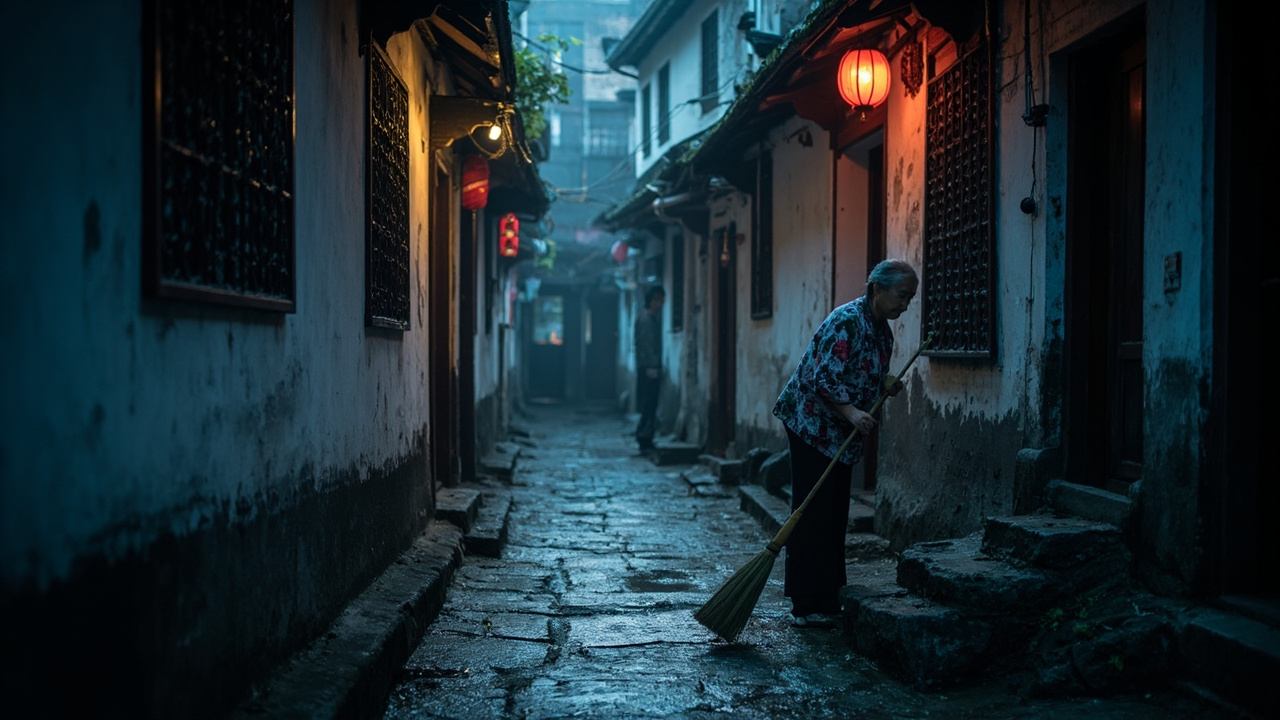
I turned a corner at 7am and walked into a lane so narrow my shoulders almost brushed both walls. An old woman was hanging laundry from a second-floor window. A cat watched me from a stone step. This is Sanfang Qixiang, the “Three Lanes and Seven Alleys,” and it’s the reason Fuzhou is worth the detour.
The district is a preserved Ming and Qing-era neighborhood — 40 hectares of white-walled courtyard houses, narrow alleys, and stone-paved lanes. It’s been restored, which means some of it feels a bit polished, but the residential lanes at the edges are still lived-in. The main drag (Nanhou Street) is touristy and crowded on weekends. Skip it. Walk the side alleys instead.
📷 Location: Gulou District, central Fuzhou, near Dongjiekou 🎫 Entry fee: Free to walk; individual residences like the Lin Juemin Former Residence cost $3–6 (20–40 CNY) 🕐 Opening hours: Open 24 hours; paid sites typically 8:30am–5pm 🚇 How to get there: Metro Line 1 to Dongjiekou Station, Exit A, walk 5 minutes south. Or Line 2 to Nanmendou, Exit B, walk 8 minutes north. ⏰ When to visit: Weekday mornings before 9am. Weekends are packed with domestic tour groups. 💡 Insider tips: The jasmine tea shops on the quieter lanes sell the same tea as the fancy ones for half the price. Bring cash for the tiny family-run snack stalls — some don’t take QR codes. The alley cats are friendly but don’t feed them. If you want photos without crowds, come on a rainy weekday; the wet stone looks incredible.
I bought a small tin of jasmine tea from a woman named Auntie Lin for $12 (85 CNY). She insisted I smell three different grades before choosing. I still think about that tea.
Fujian Tulou — The Round Buildings You’ve Seen in Photos
The bus from Fuzhou to Yongding took four hours and I slept through most of it. When I woke up, we were winding through green hills and I could see them — enormous circular earthen buildings, some four stories tall, scattered across the valley like dropped coins.
The tulou are communal Hakka dwellings built between the 12th and 20th centuries. Some housed 800 people. They’re made of rammed earth, rice, and stone, with a single entrance and a central courtyard. UNESCO listed them in 2008. The most famous clusters are in Yongding and Nanjing counties, both reachable from Fuzhou but easier from Xiamen.
Why go? Because nowhere else in China looks like this. The scale is hard to convey in photos — the biggest ones are 70 meters across. And the villages around them are still farming communities, not theme parks. I watched a woman shell peanuts in a courtyard while tourists wandered past her front door.
📷 Location: Yongding District, Longyan, about 300 km southwest of Fuzhou 🎫 Entry fee: $13–15 (90–110 CNY) per cluster; combo tickets available 🕐 Opening hours: 8am–6pm daily 🚇 How to get there: High-speed train from Fuzhou Station to Longyan (2 hours, $18–25 / 130–180 CNY), then a 1.5-hour bus or taxi to Hongkeng village. Or join a day tour from Xiamen. ⏰ When to visit: October–April for cooler weather. Avoid Chinese New Year and Golden Week. 💡 Insider tips: Stay overnight in a tulou guesthouse if you can — the villages empty out after tour buses leave. Bring cash for the small family restaurants. The “tulou king” (Chengqi Lou) is the most famous but also the most crowded; Hongkeng village has several quieter ones. Wear shoes with grip; the stairs are steep and worn.
I made the mistake of trying to do it as a day trip from Fuzhou. Don’t. Stay at least one night.
Shangxiahang — Where Fuzhou Actually Lives
This is the neighborhood I’d move to if I moved to Fuzhou. Shangxiahang is a restored riverside district along the Min River, a mix of old warehouses, temples, and tea houses that somehow hasn’t been overrun yet. The architecture is a blend of Chinese and colonial-era styles — Fuzhou was a treaty port, and you can see the European influence in the arched windows and iron balconies.
I spent a whole afternoon here doing nothing. Sat in a tea house, watched boats on the river, ate fish balls from a stall, walked the length of the old street twice. The lighting at sunset is beautiful — the buildings glow orange and the river turns silver.
📷 Location: Taijiang District, along the north bank of the Min River 🎫 Entry fee: Free 🕐 Opening hours: Open 24 hours; shops and tea houses typically 10am–10pm 🚇 How to get there: Metro Line 1 to Dadao Station, Exit C, walk 10 minutes west toward the river ⏰ When to visit: Late afternoon into evening. Weekday evenings are quiet and lovely. 💡 Insider tips: The fish ball stalls near the river are the real deal — look for the ones with the biggest crowds of locals. The small temple at the eastern end is free and rarely visited. If you want to buy tea, the shops here are cheaper than Sanfang Qixiang. Bring mosquito repellent in summer.
A shop owner named Mr. Wu refused to let me pay for a second cup of tea. “You’re a guest,” he said in Mandarin I barely understood. I bought a bag of tea on the way out anyway.
Yongquan Temple — The One Locals Actually Go To
Yongquan Temple sits at the base of Gushan (Drum Mountain), about 8 km east of downtown. It’s one of the most important Buddhist temples in Fujian, founded in 908 AD, and it’s still an active monastery. Monks live here. They chant at 4am. You can hear it if you’re nearby.
The temple complex is large — halls, courtyards, a small museum, a vegetarian restaurant, and a trailhead for the hike up Gushan. The main hall has a 7-meter-tall Buddha and the smell of incense is overwhelming in the best way. I sat on a stone step for 20 minutes just watching people pray.
📷 Location: Jin’an District, at the foot of Gushan 🎫 Entry fee: $6 (40 CNY); free if you hike up from the back entrance 🕐 Opening hours: 6:30am–5:30pm daily 🚇 How to get there: Metro Line 2 to Gushan Station, Exit A, then bus 70 or a 10-minute taxi ($3 / 20 CNY) ⏰ When to visit: Early morning (before 9am) for the chanting and fewer people. Avoid weekends. 💡 Insider tips: The vegetarian restaurant inside is excellent and cheap — about $5 (35 CNY) for a set meal. Dress modestly; shoulders and knees covered. The hike up Gushan from the temple takes about 90 minutes and is worth it on a clear day. There’s a cable car if you don’t want to walk.
A monk nodded at me as I left. I don’t know why it felt significant, but it did.
West Lake Park — Not the Famous One, But the Local One
Hangzhou’s West Lake gets all the attention. Fuzhou has its own, smaller and quieter, and it’s where locals actually hang out. I went on a Sunday afternoon and found retirees playing cards, kids on paddle boats, and a group of women doing tai chi under a willow tree.
It’s not a must-see. It’s a nice place to decompress after a day of temples and alleys. The park is free, central, and has a small island you can walk to via a bridge. There’s a tea house on the water that serves decent jasmine tea for $4 (30 CNY).
📷 Location: Gulou District, west of the city center 🎫 Entry fee: Free 🕐 Opening hours: 5am–10pm 🚇 How to get there: Metro Line 1 to Pingshan Station, Exit B, walk 5 minutes west ⏰ When to visit: Sunset or early morning 💡 Insider tips: The paddle boats cost about $8 (55 CNY) for 30 minutes — fun but not essential. The park is a good place to practice using your translation app with friendly strangers. Bring snacks; the food options inside are limited.
I tried to explain to an old man that I was American. He nodded enthusiastically and said something about basketball. We parted as friends.
Fuzhou National Forest Park — The Green Escape
After four days of city noise, I needed trees. Fuzhou National Forest Park is 2,900 hectares of forest, bamboo groves, and trails about 15 km north of downtown. It’s not as dramatic as China’s famous mountain parks, but it’s quiet, cheap, and easy to reach.
The main trail loops past a small lake and up to a viewpoint. I saw maybe a dozen other people in three hours. The air smelled like eucalyptus and wet earth. There’s a bamboo forest section that’s genuinely beautiful in the late afternoon light.
📷 Location: Jin’an District, north of the city 🎫 Entry fee: $4 (30 CNY) 🕐 Opening hours: 8am–5pm daily 🚇 How to get there: Bus 72 from downtown, or a 30-minute taxi ($12 / 85 CNY) ⏰ When to visit: Spring (March–May) or autumn (October–November). Summer is humid and buggy. 💡 Insider tips: Bring water and snacks — there’s very little inside. The trails are well-marked in Chinese and pinyin. Wear long pants; the mosquitoes are serious. The bamboo grove is at the far end of the main loop, about 40 minutes’ walk from the entrance.
I got slightly lost and ended up on a service road. A park worker pointed me back without laughing. Much.
Lin Zexu Memorial Hall — The History Most Tourists Miss
Lin Zexu is the guy who tried to stop the British opium trade in 1839, which kicked off the First Opium War. He was born in Fuzhou, and his former residence is now a small, free museum. It’s not flashy. It’s a courtyard house with exhibits in Chinese and some English, and it takes about an hour.
I went because I wanted context for the treaty port history I kept seeing in Shangxiahang. It delivered. The exhibits are sober and well-curated. The courtyard itself is peaceful — a good place to sit and think.
📷 Location: Gulou District, near Sanfang Qixiang 🎫 Entry fee: Free 🕐 Opening hours: 9am–5pm, closed Mondays 🚇 How to get there: Metro Line 1 to Dongjiekou, Exit A, walk 10 minutes ⏰ When to visit: Any weekday 💡 Insider tips: Most signage is in Chinese; download a translation app with camera OCR. The museum is small — combine it with Sanfang Qixiang next door. The courtyard is a nice spot for a quiet break.
I spent 20 minutes trying to translate one placard before giving up and just looking at the objects.
Sanfang Qixiang Tea Houses — Where to Actually Drink Jasmine Tea
Fuzhou is the jasmine tea capital of China. The city has been scenting green tea with jasmine flowers for over 1,000 years. You can buy it anywhere, but the experience of drinking it properly — in a small tea house, with someone who knows what they’re doing — is worth seeking out.
The tea houses in Sanfang Qixiang range from touristy to genuinely good. I found one on a side lane with no English signage, six seats, and a woman who poured tea for me for an hour while explaining the different grades. She charged me $15 (110 CNY) and I would have paid triple.
📷 Location: Sanfang Qixiang, Gulou District 🎫 Entry fee: Free to enter; tea sets $8–25 (60–180 CNY) 🕐 Opening hours: Most open 10am–10pm 🚇 How to get there: Same as Sanfang Qixiang — Metro Line 1 to Dongjiekou, Exit A ⏰ When to visit: Afternoon, when it’s slow 💡 Insider tips: Ask to smell the tea before buying. The best jasmine is scented multiple times — ask “ji ci?” (how many times?). Avoid the shops with English menus and photos of foreigners. Bring cash for the smallest shops.
I bought 100g of the good stuff for $18 (130 CNY). It lasted me four months.
Gushan (Drum Mountain) — The Hike Locals Do on Weekends
Gushan is the mountain behind Yongquan Temple, and the hike up is a Fuzhou institution. It’s about 900 meters of elevation gain on stone steps, and it takes 90 minutes to two hours depending on your pace. Locals do it in the morning, often before work.
The trail passes small shrines, tea stands, and viewpoints over the city. At the top there’s a temple, a restaurant, and a cable car down if your knees are done. I hiked up on a Tuesday morning and shared the trail with maybe 30 other people, mostly retirees in matching tracksuits.
📷 Location: Jin’an District, east of downtown 🎫 Entry fee: $6 (40 CNY) if entering via Yongquan Temple; free from other trailheads 🕐 Opening hours: Trails open 24 hours; cable car 8am–5pm 🚇 How to get there: Metro Line 2 to Gushan Station, then taxi to the trailhead ($3 / 20 CNY) ⏰ When to visit: Early morning, any season except peak summer 💡 Insider tips: Bring water — the stands on the trail charge tourist prices. The stone steps are uneven; wear proper shoes. The cable car down is $8 (55 CNY) and worth it after a long hike. Locals start around 6am; join them if you want the mountain to yourself.
An old man passed me on the stairs going up. He was 70 and carrying a thermos. I did not keep up.
Pingtan Island — The Beach Day You Didn’t Expect in Fujian
Pingtan is a 270-square-km island about two hours south of Fuzhou by car, connected to the mainland by a bridge. It has real beaches, seafood restaurants, and a windswept, slightly wild feel that’s different from the rest of Fujian. The wind is constant — this is a kitesurfing destination.
I went for a day in late September. The water was warm enough to swim, the seafood was excellent, and I had a beach almost to myself on a weekday. The island also has a small stone village (Beigang) that’s worth an hour.
📷 Location: Pingtan County, about 120 km south of Fuzhou 🎫 Entry fee: Free; some beaches charge $3–5 (20–35 CNY) 🕐 Opening hours: Beaches open 24 hours; restaurants 11am–9pm 🚇 How to get there: High-speed train from Fuzhou to Pingtan (1 hour, $10 / 70 CNY), then taxi or bus to the beaches ⏰ When to visit: May–October for swimming; spring and autumn for cooler weather 💡 Insider tips: The seafood is the point — eat at the small family restaurants near the fishing harbor. Bring cash; some places don’t take QR codes. The wind is relentless; bring a jacket even in summer. Weekdays are much quieter than weekends.
I ate a whole steamed fish for $12 (85 CNY) and watched the sun go down. Best meal of the trip.
FAQ summary
Fuzhou is visa-free for most Western tourists under China’s 240-hour transit policy or the 30-day unilateral visa-free scheme (as of 2026). Plan 2–3 days in the city plus one day for the Fujian tulou. Budget $60–90 (430–650 CNY) per day. The best seasons are October–November and March–April. Set up Alipay or WeChat Pay before arrival, download a translation app, and expect very little English. The must-sees are Sanfang Qixiang, Shangxiahang, and the tulou.
FAQ
Q: Do I need a visa to visit Fuzhou? A: Most Western passport holders can enter China visa-free for 30 days under the unilateral visa-free scheme, or for 240 hours (10 days) under the transit policy if continuing to a third country. Check your specific nationality — the list changes. See the visa-free transit guide for details.
Q: How do I get to Fuzhou from Shanghai or Xiamen? A: High-speed trains run frequently. Shanghai to Fuzhou takes about 4.5 hours ($55–75 / 400–540 CNY). Xiamen to Fuzhou takes 1.5–2 hours ($25–35 / 180–250 CNY). Book on the official 12306 app or Trip.com. See the China train guide for how to book.
Q: Is English spoken in Fuzhou? A: Rarely. Even by Chinese standards, English is uncommon here. Download a translation app with camera OCR (Google Translate or Baidu Translate) and learn a few basic Mandarin phrases. Hotel staff at international chains will speak some English.
Q: What’s the best time of year to visit? A: October–November and March–April. Summers are hot and humid (35°C/95°F) with typhoon risk. Winters are mild but damp. Avoid Chinese New Year and the first week of October (Golden Week) — everything is packed.
Q: How much does a day in Fuzhou cost? A: Mid-range: $60–90 (430–650 CNY) per day including a 3-star hotel ($35–50 / 250–360 CNY), three meals ($15–25 / 110–180 CNY), and transport ($5–10 / 35–70 CNY). Budget travelers can do $35–45 (250–320 CNY). The city is cheaper than Beijing or Shanghai.
Q: Do I need a VPN or a local SIM card? A: Yes to both if you want to use Google, Instagram, or WhatsApp. Buy a tourist SIM at the airport or set up an eSIM before you arrive. See the SIM and internet guide for options.
Q: Can I do the Fujian tulou as a day trip from Fuzhou? A: Technically yes, but it’s a 4-hour bus each way and you’ll be rushed. Better to stay one night in a tulou guesthouse. Alternatively, base yourself in Xiamen for the tulou and visit Fuzhou separately.
The Honest Wrap-up
Fuzhou isn’t for everyone. If you have five days in China and want the Great Wall, the Terracotta Warriors, and the Bund, skip it. If you have two weeks and want to see a side of the country that hasn’t been optimized for tourists, come. The city rewards people who slow down — who sit in a tea house for two hours, who get a little lost in the alleys, who eat fish balls from a stall with no English menu. My advice: book three nights, not two. The first day you’ll wonder why you came. By the third, you’ll be planning your return. And bring an empty bag for the tea.
More guides you may like
Top 10 Bridges in China
China's bridges are engineering marvels spanning mountains, rivers, and seas. Here are 10 of the most spectacular, from ancient stone to modern steel.
8 min read

Top 10 Buddhist Sites in China
From the Leshan Giant Buddha to the Dunhuang Caves, these 10 Buddhist sites represent 2,000 years of China's spiritual heritage.
9 min read
Top 10 Day Trips from Beijing You Shouldn't Miss
Beijing is packed with history, but some of China's best experiences are just a few hours away. Here are 10 day trips that will transform your visit.
9 min read
Top 10 Hidden Gems in China Off the Beaten Path
Beyond the Great Wall and Terracotta Warriors, China has incredible hidden destinations few tourists ever reach. Here are 10 underrated gems worth the detour.
9 min read
Top 10 Markets and Shopping Streets in China
From Shanghai's Bund to Beijing's Silk Street - 10 markets where foreigners can haggle, explore, and bring home authentic Chinese goods.
9 min read
Top 10 Museums in China You Shouldn't Miss
China's museums span 5,000 years of civilization. These 10 - from the Palace Museum to Xi'an's terracotta gallery - are unmissable for culture lovers.
9 min read